

Lin Xiaozhen, Chairwoman of Vitavitro: Emphasizing After-Sales Support and Scientific Training to Accelerate the Localization and Innovation of ART Medical Devices

VitaVitro
Developer of Related Products and Technologies for Assisted Reproductive Technology (ART) Laboratories
With the nationwide implementation of the two-child policy and high infertility rates driven by factors such as social pressure and environmental pollution, China’s assisted reproductive technology (ART) industry has become the fastest-growing potential market in the country’s healthcare services sector. Focusing on issues related to the ART industry, VCBeat jointly organized the 5th Future Healthcare 100 Conference · Forum on the Development of the Assisted Reproductive Technology Industry with Weituo Bio, an upstream R&D manufacturer of ART devices, on April 17, 2021.
At this year’s Assisted Reproductive Technology (ART) Industry Development Forum, leaders from government regulatory bodies overseeing ART, renowned industry entrepreneurs, and seasoned investors were invited to focus on current hot topics such as ART regulatory policies, the localization of upstream medical devices, institutional brand effects, new business models in internet healthcare, and market development opportunities. Together, they explored the global landscape, policy regulation, industry growth, and investment trends.
At the conference, as a representative of upstream device developers for ARTMs. Lin Xiaozhen, Chairwoman of Weituo Bio, delivered a presentation titled “The Path to Domestication of Medical Devices for Assisted Reproductive Technology”Delivered a presentation, providing the first interpretation of the global commercial landscape and regulatory frameworks for assisted reproductive technology (ART) medical devices, and used Vetuo Biotech as a case study to analyze how domestic brands are accelerating import substitution and expanding into the global market.
It is reported that Weituo Bio’s independently developed ART medical device products have taken the lead in being sold to major global regions, including Europe, the Americas, and the Asia-Pacific. Moreover, the products have achieved multiple “firsts” in China—The first to complete clinical trials for vitrification freezing and thawing solutions used in sterile reagents for assisted reproduction; the first to achieve registration of a Class III sterile reagent vitrification system.。
From Best-Selling in Europe and America to Returning Home: Weituo Bio, as a domestic brand, has steadily expanded from China to the global market, truly embodying the slogan “Global Reach, Made in China” through concrete actions. Against the backdrop where foreign brands occupy 95% of the domestic market for assisted reproductive technology (ART) devices, Weituo Bio’s achievements in the localization of ART instruments hold greater representativeness and reference value.
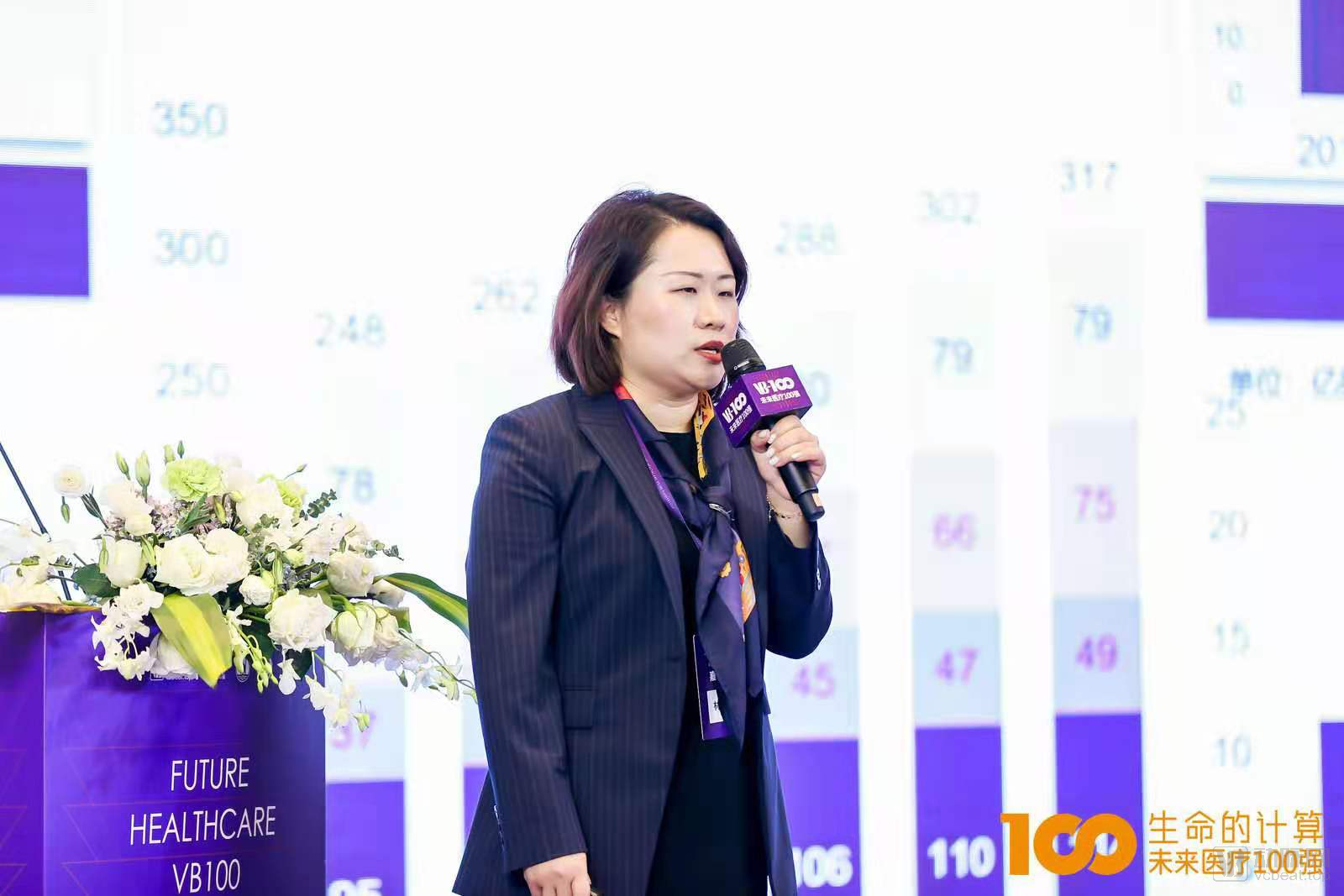
Ms. Lin Xiaozhen, Chairman of Weituo Bio
VCBeat (WeChat ID: vcbeat) has compiled the highlights of Ms. Lin Xiaozhen, Chairwoman of Weituo Biotech’s, insightful speech at the Assisted Reproductive Technology Industry Development Forum, for our readers’ benefit.
Accelerating the Localization of Assisted Reproductive Technology (ART) Devices in China by Referencing International Regulatory Standards
In the global assisted reproductive technology (ART) industry, China’s ART penetration rate is lower than that of other developed countries. With the rising prevalence of infertility among couples in China, the annual growth rate of the country’s ART market is projected to reach at least 14% in the future.
As an upstream manufacturer of ART medical devices, our clients are assisted reproductive embryology laboratories. The assisted reproduction laboratory is the core of assisted reproductive treatment and a key determinant of its success. While different procedures in assisted reproduction utilize distinct technologies and products, these products can be broadly categorized into three main types: reagents, consumables, and equipment.
In 2020, the global market for reagents and consumables was approximately $8 billion, with China accounting for 20%, or about $1.5–2 billion. Given the wide variety of assisted reproductive technology (ART) laboratory equipment and the broad scope of technological innovation, the overall ART medical device market—including ART equipment—exceeds $10 billion.
In terms of regulatory oversight for assisted reproductive technology (ART), most ART devices and consumables in China and the United States are classified as Class II medical devices. However, culture media used in assisted reproduction are classified as Class III sterile medical devices in both China and under the European Union’s CE marking system. Notably, this year, with the EU’s transition from the Medical Devices Directive (MDD) to the new Medical Devices Regulation (MDR), all assisted reproductive medical devices in the EU are now regulated under the stricter standards applicable to Class III combination products (medical devices incorporating medicinal substances). Consequently, when applying for CE certification, manufacturers must undergo review by both the drug regulatory authorities and the medical device regulatory authorities. This demonstrates that the EU imposes more stringent controls on assisted reproductive culture media, resulting in higher barriers to product approval.
FromAssisted Reproductive Technology (ART) ReagentsFrom this perspective, product suppliers in China and globally are predominantly dominated by European and American brands, with limited involvement from Japanese brands;Assisted Reproductive Technology (ART) EquipmentFrom a global perspective, the market is also dominated by European and American companies. Some European and Japanese manufacturers of assisted reproductive technology (ART) medical devices have been in operation for 10–20 years and are highly specialized; whereas fromAssisted Reproductive Technology ConsumablesIt is worth noting that most consumable medical devices in China are classified as Class II medical devices by the National Medical Products Administration. Consequently, the development of consumables for assisted reproductive technology (ART) in China has progressed rapidly, with many industry peers having already achieved domestic production. In other words, domestically produced alternatives are gradually replacing imported products for consumables used in ART laboratory equipment.
It is essential to localize the production of ART devices in China, as this holds significant importance for establishing industry standards, driving economic value, and delivering social benefits. The first step toward achieving localization is ensuring compliance with China’s regulatory requirements.
Since 2015, China’s National Medical Products Administration has progressively issued numerous industry standards and registration guidelines for the assisted reproductive technology (ART) sector, providing upstream manufacturers with guidance on establishing product performance specifications and determining registration strategies. We hope that in the future, as more enterprises participate in the localization of ART medical devices in China,The government should promptly issue more product guidelines and industry standards to provide clear direction and accelerate the registration process for the localization of ART devices in China.
For domestic brands to achieve globalization, they must diligently study and understand the medical device regulatory frameworks of other countries and regions worldwide.
The United States was the first to implement regulations on ART-related technologies and products. Most assisted reproductive products regulated by the U.S. FDA are classified as Class II medical devices. The FDA has established clear framework requirements for assisted reproductive medication devices and consumables, thereby making the registration pathway for companies highly transparent.
The European Union has its own specific regulatory requirements for ART devices. In 2012, the EU issued guidelines on the conformity assessment of assisted reproductive technology products. These guidelines particularly emphasize the management of ART medical devices from a risk management perspective, stressing that product risks must be addressed at the original research and design stage. Specifically, the assessment of adverse effects and the acceptability of the risk-benefit profile must be adequately validated through preclinical evaluations or clinical data to demonstrate safety and efficacy.
The EU has adopted such regulations because adverse events associated with assisted reproductive technology (ART) products do not necessarily occur immediately after the procedure, but may manifest at or even long after the time of birth.
Finally, let us examine the regulatory framework for ART devices in Australia. In 2008, the Australian Government Department of Health and Ageing issued safety guidelines and registration requirements for liquid products used in in vitro fertilization (IVF). These guidelines include specific requirements for risk analysis, all constituent components—particularly those of animal or human origin—and even the water used. They also provide detailed provisions for product performance testing and specific quality control measures for each solution.
In Australia, management is achieved through pre-market access and post-market surveillance risk control measures, while also providing regulatory standards and guidance to enterprises, emphasizing that companies are the primary entities responsible for product quality.
Weituo Bio’s Global Strategy: Emphasizing After-Sales Support and Scientific Research Training, with Future ART Devices to Be Automated
Founded in 2015, Weituo Bio is currently the only domestically produced ART brand in China to have simultaneously obtained regulatory certifications from the U.S. FDA, the EU CE, and China’s NMPA. The company primarily provides one-stop technical services and products for assisted reproductive technology laboratories, including reagents, consumables, and equipment.
Since 2018, multiple products from Weituo Biotechnology have successively obtained U.S. FDA 510(k) clearance and EU CE certification. In 2021, Weituo Biotechnology’s vitrification freezing and thawing solutions received the first NMPA registration certificate for a domestically produced product in China, marking a significant milestone for the company.
As an international brand, the first step toward localization is to expand overseas. Assisted reproduction is a globalized industry, but how can we successfully go global? Two key actions are required.
First, companies must intensify their registration and R&D efforts within a short timeframe to ensure that their products promptly meet foreign regulatory standards and obtain U.S. FDA registration certificates.
Second, our products must offer superior after-sales service and support compared to imported foreign products in order to win over overseas markets.
Since Vito Biotech began its overseas expansion in 2018, two years have passed. Currently, Vito Biotech’s products have reached 15 countries and regions worldwide, gradually realizing global brand impact.
We at Weituo Bio place great emphasis on the local implementation and promotion of our products, particularly at academic research and training conferences. From 2017 to 2019, we participated in the American Society for Reproductive Medicine (ASRM) Annual Meeting for three consecutive years; we also attended the European Society of Human Reproduction and Embryology (ESHRE) Annual Meeting for two consecutive years. In 2018, we took part in the Spanish Fertility Society Annual Conference, and in 2019, we participated in the Austrian Society for Sterility, Fertility and Endocrinology Annual Meeting.
In 2019, our Chief Scientist was honored as a distinguished guest at the Annual Meeting of the Indian Society for Reproductive Medicine, where we shared key embryo laboratory technologies with attendees to educate and train the Indian market.
Therefore, within Weituo Bio’s global strategy, we aim to strengthen in-depth engagement with local partners through meticulous market cultivation. The company is gradually building its brand image overseas by means of training and on-the-ground promotional activities. Amidst intense international competition, we continue to drive technological innovation, with our technologies even achieving a leading position in the United States, Sweden, and Japan.
For example, in the United States, we, Weituo Bio, as the importer, assure local end customers that as long as funds are secured within a week, we can ship immediately from Shenzhen on the following Monday, with delivery to customers in Florida by Thursday. This level of efficiency may be difficult for even domestic U.S. manufacturers to match. Through this approach, we have already captured a portion of the U.S. market.
So, how can we leverage local advantages in China to facilitate the “domestic circulation”? Vituo Biotech has primarily adopted the following strategies in China.
First, we have strengthened our collaboration with Chinese researchers, placing greater emphasis on clinical and scientific evidence in our marketing efforts to let the data speak for itself.
In terms of after-sales service and educational training, we have leveraged our overseas experience to implement localized strategies in China. In 2018, we pioneered the first nationwide clinical trial. At the 2020 Annual Meeting of the Chinese Society of Reproductive Medicine, we presented Vitot Biotech’s outstanding clinical results, demonstrating that our domestically produced products and technologies are equally excellent compared to foreign counterparts, thereby enhancing Chinese healthcare professionals’ confidence in domestic brands. Moving forward, we will continue to increase our investment in clinical research and scientific development in the Chinese market, aiming to use clinical data to prove the safety and efficacy of our products.
Meanwhile, we place significant emphasis on both online and offline training. We have independently developed auxiliary reproductive cryopreservation technology, leveraging localized advantages to promote its adoption through our online learning platform and partnerships with offline assisted reproductive technology (ART) training institutions. This approach enables us to provide 24/7 responsiveness, addressing all technical inquiries from clients.
What Is the Future Direction of Medical Device Development?Over the next five years, we believe innovation will be a key driver in the development of medical devices for assisted reproductive technology.
Most assisted reproductive technology (ART) laboratories rely on manual operations, requiring embryologists to handle all products manually. This approach not only incurs substantial labor costs but also makes it difficult to ensure standardization and accuracy. Therefore, we believeThe Future Direction of Assisted Reproductive Technology Is AutomationBy leveraging chip and AI technologies, automated equipment replaces manual handling of assisted reproductive products to address labor shortages in assisted reproduction laboratories. Meanwhile, AI technology also assists medical professionals with certain tasks, such as embryo grading.
We at Weituo Biotech are also strengthening our automation research. The company plans to launch chip-based technologies—such as automated cryopreservation and automated cell culture—in the future, with the aim of securing a place among global medical device suppliers.
Overall, I believe that for manufacturers of ART medical devices, the most fundamental requirement is compliance. We at Weituo Biotech are not only committed to establishing a strong foothold in China but also to leveraging the leading role of our Chinese brand internationally, thereby making our own contribution to the reputation of Chinese brands. We remain steadfast in our original aspiration to uphold our responsibilities toward patients and healthcare professionals, forging ahead with determination.
Localization is the prevailing trend in the ART industry. We hope more peers will join us in contributing to the assisted reproductive technology sector. Thank you all!