

Baidu Health Unveils New Strategy: Deepening Internet Hospital Layout to Empower Public Hospitals and Expand Integrated Healthcare Services
Baidu Health has unveiled a new strategic layout.
Yesterday, at the “2021 Baidu Mobile Ecosystem Wanxiang Conference,” Baidu unveiled its “X+Y” strategic framework for its mobile ecosystem, which entails “horizontally expanding user scale and vertically deepening engagement in industry-specific verticals” to drive the entire ecosystem toward a more service-oriented and personified upgrade.
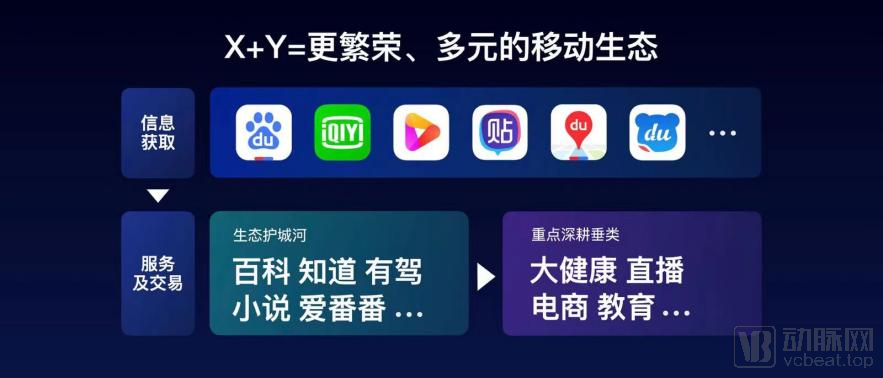
In the vertical layout, VCBeat observedThe broader health and wellness sector has become a key vertical for Baidu’s in-depth development, with three of the nine support initiatives announced for partners focusing on healthcare and wellness.
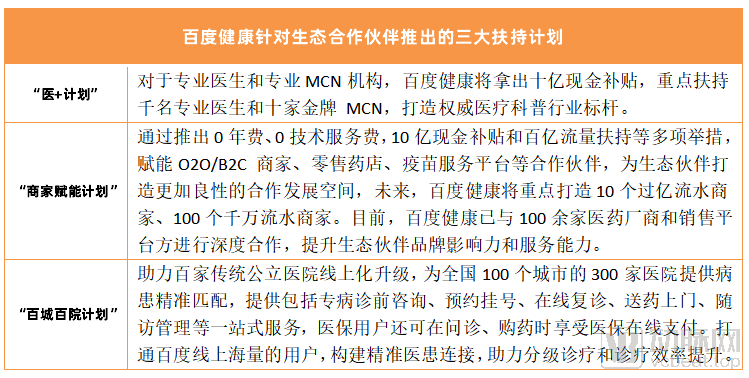
As can be seen from the image, behind the three major support initiatives lies Baidu Health’s strategic consideration to perfect its “Internet + Healthcare” service chain and comprehensively enhance the platform’s healthcare service capabilities. It is worth noting that Baidu Health, having accumulated abundant resources from authoritative institutions and experts, has already achieved industry leadership in content development; its pharmaceutical e-commerce business has also become relatively mature within the internet healthcare sector; andPromoting the establishment of internet hospitals by public hospitals is the most striking highlight of this strategic layout, and also represents a new growth driver for Baidu Health.
It is important to recognize that internet hospitals are entering a period of explosive growth. Data substantiates this shift. According to the National Health Commission, as of March 2021, the number of internet hospitals across China had surpassed 1,100, compared with 269 in October 2019, representing an increase of over 300%.Unlike the previous phase, which was primarily driven by third-party internet health companies establishing internet hospitals, the most prominent feature of this stage is the large-scale entry of public hospitals.
However, as public hospitals lack traffic entry points, many of their online platforms face challenges such as user scarcity and low operational efficiency. The underlying reason for this is that,The advantage of public hospitals lies in providing authoritative and professional medical and health services offline, whereas they lack capabilities in areas such as patient traffic acquisition, internet operations, and technology., Baidu Health undoubtedly aims to fill this ecological niche.
Amid the surge in internet hospital development, what challenges remain for public hospitals? Can Baidu Health excel in this sector? What impact will it have on the industry? VCBeat will analyze these questions below.
Public hospitals are accelerating the launch of internet hospitals, primarily for two reasons: first, the drive from pandemic prevention and control requirements last year; and second, the encouragement and mandates of relevant policies.
As is well known, public hospitals possess a natural advantage in physician resources. Therefore, actively embracing digital transformation yields significant benefits, whether for advancing tiered diagnosis and treatment, supporting public health services, expanding the service reach of public hospital physicians, or reducing patient costs.
However, the issue lies in that,Public hospitals have relatively weak capabilities in areas such as online traffic acquisition and internet-based operations.As a result, many public hospitals have found that user engagement and retention rates on their newly launched internet hospital platforms remain discouraging. On the other hand, the lack of user activity has dampened physicians’ enthusiasm for ongoing platform maintenance and operation.
“Patient volume at individual public hospitals is limited, physicians’ time is finite, and overall resources can easily reach their ceiling. Therefore, while public hospitals can build internet hospitals effectively, they cannot scale them up significantly,” Duan Tao, former president of Shanghai First Maternity and Infant Hospital and founder of Chuntian Medical Management, previously told VCBeat.
It is evident that it is undoubtedly challenging for public hospitals to independently oversee the entire process of operating an internet hospital. Therefore,The key to resolving the operational challenges of internet hospitals lies in the deep integration of public hospitals, with their robust offline medical service capabilities, and internet enterprises that excel in traffic acquisition, brand building, and technological expertise.
So, how does Baidu Health support the digital transformation of public hospitals? “First, in terms of partner selection, we arePartnering with top-tier, authoritative public hospitals, we tailor smart mini-programs for them, enabling users to access one-stop services—including pre-consultation for specific conditions, appointment registration, online follow-up visits, medication delivery, and follow-up management—directly through search entry points., medical insurance users can also enjoy online payment through their medical insurance during consultations and medication purchases. By leveraging Baidu’s massive online user base, connections can be established between patients who need to visit these hospitals and the hospitals themselves, particularly for those whose conditions are suitable for such facilities. This represents a form of tiered diagnosis and treatment,” said Yang Minglu, General Manager of Baidu Health, in an interview with VCBeat.
In other words, by joining Baidu Health, public hospitals can gain access to its vast user base with health-related needs and extend their services further along the continuum of care, starting from these initial user inquiries.
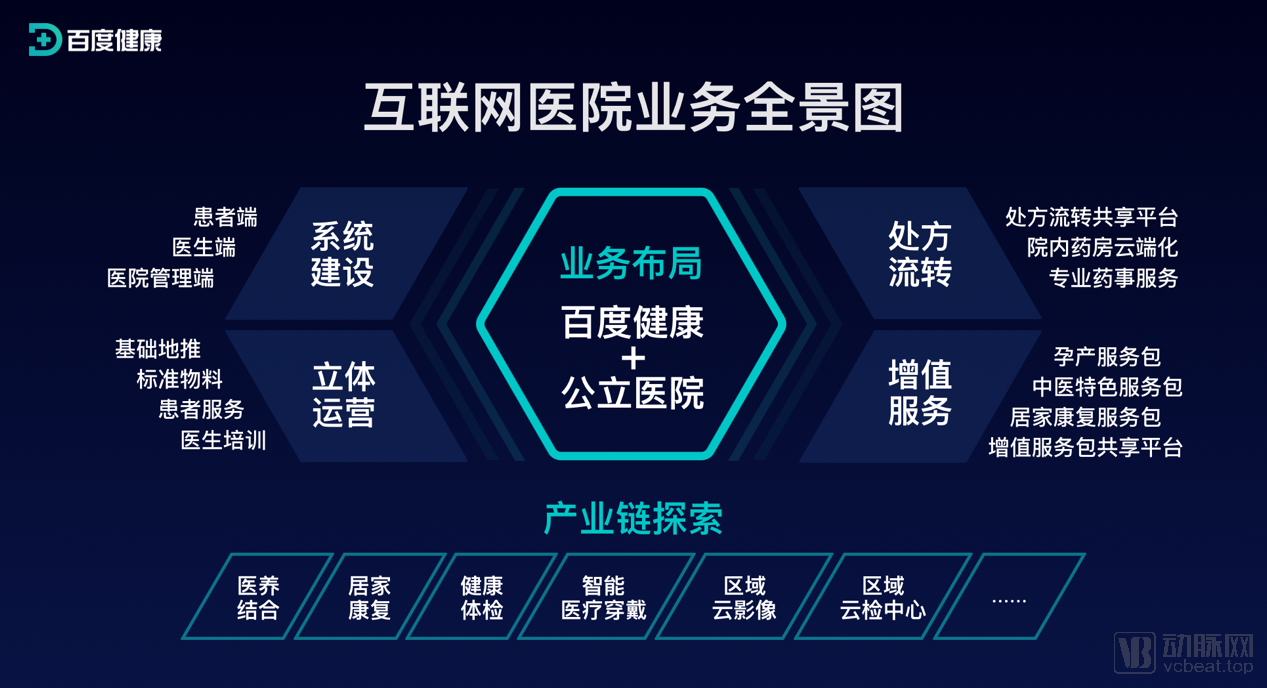
(Baidu Health Internet Hospital Business Panorama)
How much traffic is there? According to data disclosed at the Wanjing Conference, Baidu Health serves 100 million users daily and meets an average of 200 million health content search requests per day. At this scale, Baidu Health can resolve the challenge of patient acquisition faced by public hospitals.
“For online platforms of public hospitals, what they need is precise traffic entry points. Baidu Health’s traffic comes from Baidu, which excels in search services and aggregates users oriented toward health-related questions and needs, thereby making the connection between doctors and patients more convenient and efficient,” Yang Minglu, General Manager of Baidu Health, told VCBeat. In Baidu Health’s live streaming sessions, 100% of the participating physicians are from public hospitals, with 85% holding associate senior or higher professional titles at tertiary-grade A hospitals. Due to the precision of the user base, the quality of interaction between doctors and users is also very high.
Furthermore, Baidu Health can assist hospitals in optimizing patient care pathways and enhancing outpatient efficiency. For instance, by leveraging traffic analytics and AI technologies to support physicians, internet hospitals can facilitate tiered diagnosis and treatment, enabling patients with common or chronic conditions to complete consultations and follow-up visits online without the need for offline queuing.
“At this stage, internet hospital services meet industry demand and offer significant market potential. With clear industry needs and ample market room, building an internet hospital also expands the service reach of Baidu Health,” said Yang Minglu. In her view, once a complete service loop is formed around internet hospital services, offline users from traditional hospitals will also engage with Baidu Health to access other health services we provide, such as health education, medication purchases, vaccinations, and medical check-ups. This further helps Baidu Health continuously expand its base of precise traffic.
It is evident that in advancing the joint development of internet hospitals with public hospitals across China, Baidu Health has enhanced the accessibility of high-quality medical resources from these institutions by leveraging its technological capabilities and traffic advantages. For Baidu Health, this collaboration has established a large-scale service network with public hospitals nationwide, creating a more comprehensive closed-loop health service ecosystem.
In terms of concrete implementation outcomes, Baidu Health’s internet hospital launched in Cangzhou has already set a benchmark. The Internet Hospital of Cangzhou People’s Hospital will provide one-stop services, including pre-consultation inquiries, appointment registration, online follow-up visits, home delivery of medications, and follow-up management. In the future, residents of Cangzhou will be able to register for appointments through Baidu Health’s Internet Hospital, which will offer precise recommendations for departments and physicians. During the care process, patients can monitor consultation progress and access electronic reports via the online platform, thereby saving time and effort. Additionally, Cangzhou medical insurance enrollees will enjoy the convenience of online payment using their medical insurance benefits.
Beyond the online operations of public hospitals, Baidu Health is also leveraging technological approaches to support the professional development of physicians in public hospitals, thereby enhancing consultation efficiency.As is well known, physicians, as a core resource in healthcare services, are relatively scarce, with high-caliber medical talent being even more limited due to the lengthy training cycle required for medical professionals. Baidu Health’s approach leverages artificial intelligence to transform part of the experience that physicians need to learn and accumulate into AI-assisted diagnostic and therapeutic products. This helps alleviate some of physicians’ workload, thereby enhancing the intelligence level and operational efficiency of public hospitals.
As can be seen, Baidu Health has already accumulated certain experience and expertise in assisting public hospitals with the development of their internet hospitals.
By distributing traffic and precisely aggregating users’ healthcare needs, Baidu Health can expand the service radius of public hospitals, channeling patients requiring follow-up visits and chronic disease management to online platforms. This supports hospitals in implementing tiered diagnosis and treatment, enables interoperability of data across the entire care continuum, and facilitates the digital transformation of traditional hospitals.
On the other hand, Baidu Health’s self-built internet hospital, combined with the internet hospitals of its partner public hospitals, forms a robust pool of medical services. These resources complement one another, thereby breaking through geographical barriers and enabling users’ healthcare needs to be addressed to the greatest extent possible on the Baidu Health platform.
In summary, advancing the “100 Cities, 100 Hospitals” initiative is a key strategic move by Baidu Health to expand its medical service capabilities and strengthen its service ecosystem.
Baidu Health is accelerating its expansion in the internet hospital sector.
Last year, Baidu Health launched two self-built internet hospitals in Hainan and Yinchuan. In March this year, Baidu Health entered into a strategic partnership with Cangzhou People’s Hospital to jointly establish an internet hospital. Looking ahead, Baidu Health will collaborate with more public hospitals to create comprehensive internet hospital solutions.

Why Is Baidu Health Launching an Internet Hospital? What Are the Strategic Rationales Behind It? Based on our observations of industry developments and Baidu Health’s actions over the past year, we identify three primary reasons.
First, from an industry perspective, driven by the pandemic’s acceleration and policy support last year, the online migration of health services is gaining significant momentum, presenting internet hospitals with a crucial opportunity for industry development.
Specifically, the impact of last year’s pandemic has significantly heightened public awareness of health protection. Big data from Baidu searches reveal a new trend in netizens’ health needs: a shift from focusing on treatment to prevention, from being predominantly elderly-driven to youth-driven, and from offline to online channels. Leveraging internet-based approaches to optimize healthcare services is one of the key ways to address this growing demand.
According to statistics from the VCBeat database, a total of 56 policies were issued in the field of internet hospitals last year alone, characterized by strong continuity and short implementation cycles. For instance, the General Office of the State Council issued two documents addressing internet-based diagnosis and treatment, defining it as a new form of consumer business. These documents called for further expansion of the scope of internet-based medical services, vigorous promotion of this new business model, and the improvement of inclusive, prudent, and regulatory frameworks tailored to emerging formats. The issuance of these policies affirms the role of internet-based diagnosis and treatment services in economic operations.
Second, from the corporate perspective, Baidu Health has already established a dual ecosystem of “content + services.” The deployment of its internet hospital business serves as a key driver in deepening and refining its service ecosystem, thereby enabling comprehensive one-stop health management.
As a one-stop health management platform incubated and built by Baidu leveraging its own strengths, Baidu Health has, since its inception, capitalized on the traffic advantages of entry points such as Baidu Search and the Baidu App. Supported by Baidu’s smart mini-program technology and underpinned by the accumulation of authoritative medical resources on the Baidu Health platform, it has gradually formed a content ecosystem centered on Baidu Health Medical Encyclopedia and a service ecosystem centered on Baidu Health Ask-a-Doctor.
In terms of popular science content, Baidu Health has currently indexed 500 million authoritative articles, all contributed and edited by professional physicians. It has established collaborations with over 1,000 top-tier industry experts and more than 200 leading authoritative institutions. The authoritative entries in the Baidu Health Medical Encyclopedia receive an average of over 20 million daily views. Baidu Health hosts an average of 3,000 live streaming sessions per month, all conducted by professional doctors from public hospitals, with over 85% coming from Grade 3A hospitals, thereby fully ensuring the professionalism of the content.
“Service Ecosystem” Baidu Health Ask-a-Doctor is a 24/7 online consultation service platform launched by Baidu Health. To date, more than 100,000 licensed physicians from public hospitals have been providing online responses to user inquiries on Baidu Health Ask-a-Doctor. Major online consultation platforms such as Ping An Good Doctor and Haodafu have already integrated with the Baidu Health platform, bringing the total number of serving physicians on the platform to over 300,000.
Leveraging its dual-ecosystem strategy of “content + services,” Baidu Health is comprehensively addressing the health needs of individuals and families. The deployment of internet hospitals serves as a critical enabler for Baidu Health to deliver follow-up medical and healthcare services, building upon its foundation in health science popularization and health consultations. This development undoubtedly makes it possible for Baidu Health to realize its vision of creating a one-stop health management platform.
Third, from the perspective of industry competition, the establishment of Baidu Health’s five major systems, combined with Baidu’s inherent technological and traffic advantages, creates natural barriers for its layout in the internet hospital sector.
Baidu Health’s five major service pillars—Internet hospital services, health science popularization, online consultations, chronic disease management, and the health e-commerce platform—collectively form its comprehensive service ecosystem. These five pillars cover the entire health management lifecycle, ranging from disease knowledge and medical care information to rehabilitation treatment and wellness care.
Furthermore, according to Yang Minglu, Baidu’s accumulation of foundational technologies in big data and AI has enabled precise “diagnosis and treatment + health management” to become the strategic focus of Baidu Health. These capabilities constitute the key differentiators between Baidu Health and other internet-based health products, serving as its significant competitive barriers.
In summary, Baidu Health’s vigorous promotion of its internet hospital business is not only in line with industry trends but also an inevitable choice for achieving a closed-loop business model and delivering more comprehensive and in-depth health services.
Not only Baidu Health, but also giants such as JD Health, Ping An Health, and Ali Health are deploying internet hospitals. Meanwhile, WeDoctor, Medlinker, and Meiyou, which have recently filed for IPOs, are also actively expanding their presence in this sector.
Behind the fervor in this sector, two key factors stand out: first, user demand is surging, driven by over a decade of consumer education by internet health companies and accelerated by the pandemic; second, advancements in underlying technologies such as mobile internet, AI, and big data have made online diagnosis and treatment more reliable and convenient.
High demand often drives high growth.According to Frost & Sullivan, the volume of online health consultations reached 110 million in 2016, with a penetration rate of 1.8%. By 2019, the consultation volume had surged to 520 million, corresponding to a penetration rate of 6.2%. Although official data for 2020 are not yet available, public figures from major mainstream platforms indicate that the number of consultations has already exceeded 1 billion.
Of course,From a holistic perspective of the internet health sector, internet hospitals play a pivotal role in building the closed-loop ecosystem of “pharmaceuticals, medical services, and insurance.”Internet health companies have long been seeking viable business models, with pharmaceutical e-commerce currently being the primary model that has proven successful. However, to achieve sustained growth in the healthcare sector and generate greater social and economic benefits, expanding into health services is an inevitable path.
Internet hospitals serve as a platform for providing health consultations and medical diagnoses and treatments. From this pivotal point, they can extend forward to offer high-frequency services such as popular science education on health, thereby stimulating user engagement, and backward to provide pharmaceutical services, user health management, and low-frequency medical services. Moreover, internet hospitals possess inherent advantages in integrating with national medical insurance or collaborating with commercial health insurers, thus addressing a long-standing challenge in healthcare services: identifying suitable payers.
From a broader perspective, the Standing Committee of the Political Bureau of the Communist Party of China Central Committee proposed in March last year that China should accelerate the development of new infrastructure, such as 5G networks and data centers. Since then, “new infrastructure” has once again become a buzzword in China’s economy.Catalyzed by the COVID-19 pandemic, digital health has become a key component of “new infrastructure,” with internet healthcare frequently mentioned.
Therefore, the development of Baidu Health Internet Hospital is a key strategic initiative to leverage its technological strengths in participating in the new digital health infrastructure, as well as a forward-looking move to expand partnerships and foster a virtuous healthcare ecosystem. As pointed out in the book Organizational Innovation,Excellent enterprises tend to leverage the abundant resources, information, and capabilities within ecological networks rather than retreating into their own narrow domains.
Undoubtedly, as more enterprises and hospitals join the wave of building new digital health infrastructure, a brand-new healthcare ecosystem is rapidly emerging. What new stories will this sector unfold? Let us wait and see.