Tiantan Hospital and Tongxin Medical Launch AI Platform for Precision Risk Assessment of Unruptured Intracranial Aneurysms Across 100 Regional Medical Centers in China

Sophmind
Internet Medical Examination Platform
Abstract:
The kick-off meeting for the project “Establishment of an Artificial Intelligence Platform for Network Registry of Unruptured Intracranial Aneurysms Based on 100 Regional Medical Centers in China and Population Follow-up Study” (hereinafter referred to as: this study) was successfully held online on April 26, 2021. The event was jointly hosted by the Neurosurgery Branch of the Chinese Medical Association and the Cerebrovascular Surgery Branch of the Chinese Stroke Association, organized by Beijing Tiantan Hospital, Capital Medical University, and co-organized by Sophmind Technology (Beijing) Co., Ltd.
What Are Intracranial Aneurysms? Do Unruptured Intracranial Aneurysms Require Intervention? How Can the Instability Risk of Unruptured Intracranial Aneurysms Be Accurately Assessed? Clinicians face a heavy workload, significant inter-observer variability, and challenges in quantitative prediction, with no satisfactory clinical solutions currently available. There is an urgent need for AI-assisted diagnosis to improve the accuracy of rupture risk estimation.
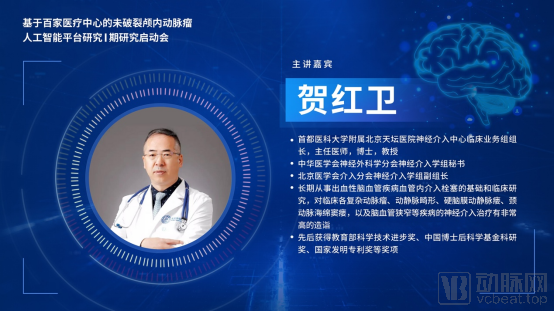
On April 26, the kick-off meeting for the project “Establishment of an AI-Powered Network Registry Platform for Unruptured Intracranial Aneurysms Based on 100 Regional Medical Centers in China and Population-Based Follow-Up Study” was officially held. The meeting was chaired by Professor He Hongwei, Chief Physician and Clinical Team Leader of the Neurointerventional Center at Beijing Tiantan Hospital. Experts from more than 20 major hospitals and research institutions across China presented a novel and insightful integration of human intelligence and artificial intelligence.
It is understood that intracranial aneurysms (hereinafter referred to as “aneurysms”) are a severe cerebrovascular disease. A cross-sectional study in China revealed that 7% of Chinese adults aged 35 to 75 years have aneurysms. Subarachnoid hemorrhage caused by rupture has a poor prognosis, with a mortality rate of approximately 35%–40%. Moreover, 90% of patients exhibit no obvious symptoms or signs before rupture and hemorrhage. Consequently, aneurysms are vividly described as “ticking time bombs” buried within the brain.
However, there is controversy regarding the intervention for unruptured intracranial aneurysms: should active intervention be pursued, or conservative observation? Because the surgical risk is relatively high, the benefits of surgical intervention may be lower than those of non-intervention.Accurately assessing the instability risk of unruptured intracranial aneurysms is key to resolving this controversy.
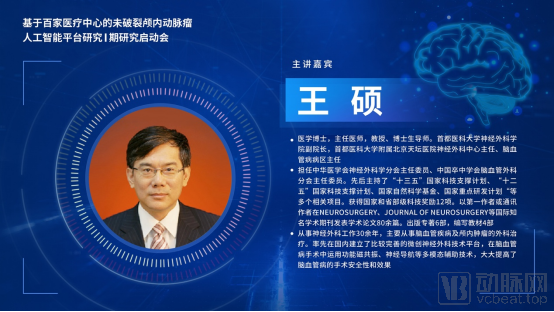
Professor Wang Shuo, Principal Investigator of this study, Chairman of the Neurosurgery Branch of the Chinese Medical Association, and Director of the Department of Neurosurgery at Beijing Tiantan Hospital, pointed out, “Previous studies on risk assessment models for intracranial aneurysms have developed numerous models; however, subsequent validations have revealed that these models exhibit low accuracy. Given that the growth and rupture of intracranial aneurysms involve multiple factors, including clinical characteristics, morphology, hemodynamics, and aneurysm wall inflammation, determining the stability of intracranial aneurysms has become a multifactorial, high-dimensional problem.”
In this regard, Professor Liu Jia, Deputy Director of the Computational Laboratory at the Shenzhen Institute of Advanced Technology, Chinese Academy of Sciences, pointed out that computational functional analysis of cerebrovascular diseases is an inevitable trend in the development of clinical diagnosis.
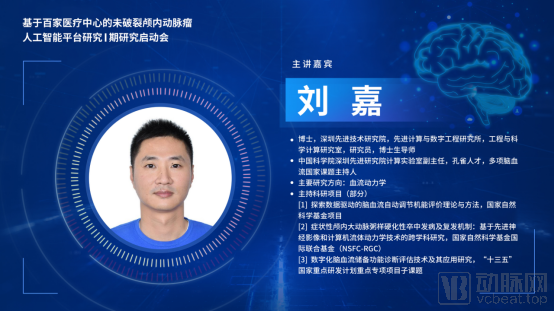
Based on this, Beijing Tiantan Hospital and Sophmind jointly launched this study to establish an artificial intelligence platform for assessing the risk of aneurysm rupture. It is understood that this study represents the world’s largest aneurysm data platform in terms of scale and the number of participating hospitals.
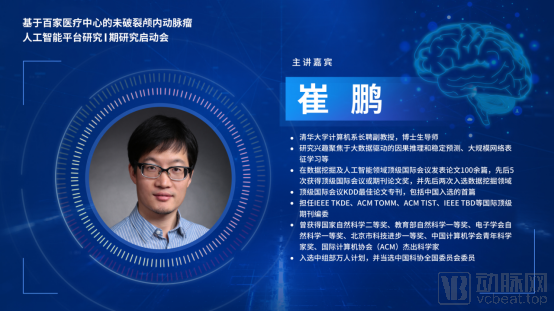
Professor Cui Peng, a tenured associate professor at Tsinghua University and a scholar under the “Ten Thousand Talents Program,” pointed out that artificial intelligence currently remains in a state where it knows what happens but not why. However, by establishing causality-inspired machine learning methods, it is possible to identify causal relationships between variables, thereby improving the interpretability and generalizability of current deep learning models. This technology has already been applied in industries such as new energy and telecommunications, achieving remarkable results. In the future, it holds broad prospects for application in the medical field, particularly in risk prediction for complex conditions such as aneurysms.
Notably, this study will employ Sophmind’s artificial intelligence platform, “Gewu Neosoph,” to analyze all medical record data, calculate indicators of aneurysm rupture risk, and predict the stability outcomes of aneurysms over the next two years, with results compared against follow-up data.
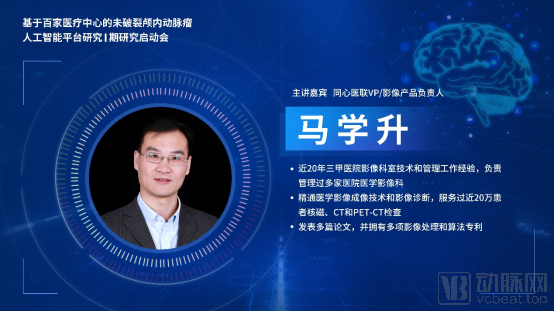
In fact, Sophmind has been running its aneurysm project since 2019 and has accumulated extensive experience. Ma Xuesheng, Deputy General Manager of Products at Sophmind, pointed out that previously, under the leadership of Director Wang Shuo at Beijing Tiantan Hospital, the Department of Neurosurgery at Tiantan Hospital and Sophmind had used artificial intelligence methods to segment intracranial aneurysms and parent vessels from CTA and MRA images, quantified the morphological parameters of aneurysms and geometric parameters of parent vessels, combined with clinical information, to establish a prediction model for aneurysm rupture risk, achieving excellent predictive results.
It is reported that Sophmind primarily focuses on developing artificial intelligence (AI) products for diagnosis and assisted diagnosis of major neurological conditions, including cerebrovascular diseases, neurodegenerative disorders, and brain tumors. Its current product portfolio includes tools for aneurysm risk assessment, carotid plaque stability evaluation, Alzheimer’s disease risk assessment, intelligent diagnosis of vestibular schwannoma (acoustic neuroma), and preoperative neurological assessment. In the future, Sophmind plans to provide AI products and technical services to more primary healthcare institutions, while integrating its existing internet hospital and offline medical facilities to create an integrated technology-driven healthcare service platform.
At the conclusion of the conference, Director He Hongwei from Beijing Tiantan Hospital moderated a roundtable discussion. Eight distinguished guests, including President Kang Dezhi from the Affiliated Hospital of Fujian Medical University, Director Wang Daming from Beijing Hospital, Director Zhao Bing from Shanghai Renji Hospital, Director Jiang Yugang from the Second Xiangya Hospital, Director Li Gang from Qilu Hospital of Shandong University, Director Ren Jinrui from Shanxi Provincial People’s Hospital, Director Shi Huaizhang from the Affiliated Hospital of Harbin Medical University, and Director Zhang Jianmin from the Second Affiliated Hospital of Zhejiang University School of Medicine, respectively highlighted the importance and significance of this initiated study for clinical treatment decision-making. They expressed their commitment to actively participating in subsequent clinical case collection and follow-up, thereby jointly facilitating the smooth implementation of this study.
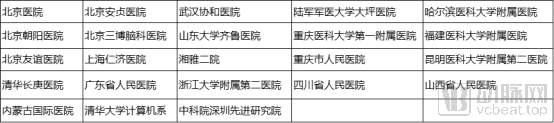
Participating institutions in this study include (in no particular order):