

From Grassroots Clinics to Tier-3 Hospitals: How Baidu Lingyi Zhihui Strategically Penetrated China's Healthcare System
Healthcare is a “slow” sector, where it typically takes years of practical application for an innovative service model to move from emergence to adoption. However, with capital currently flooding into the healthcare space, the entire process—from R&D to commercialization—for many healthcare-related products is often compressed into less than one to two years. In contrast, Baidu Lingyi Zhihui, established in 2018, appears somewhat distinctive.
At the recently concluded 2021 CHINC conference, Lingyi Zhihui showcased six major products: Fundus Image Analysis System, Clinical Decision Support System (CDSS), AiZhuyi Solution for Primary Care, Smart Medical Record Solution, Healthcare Big Data Solution, and Chronic Disease Management System.
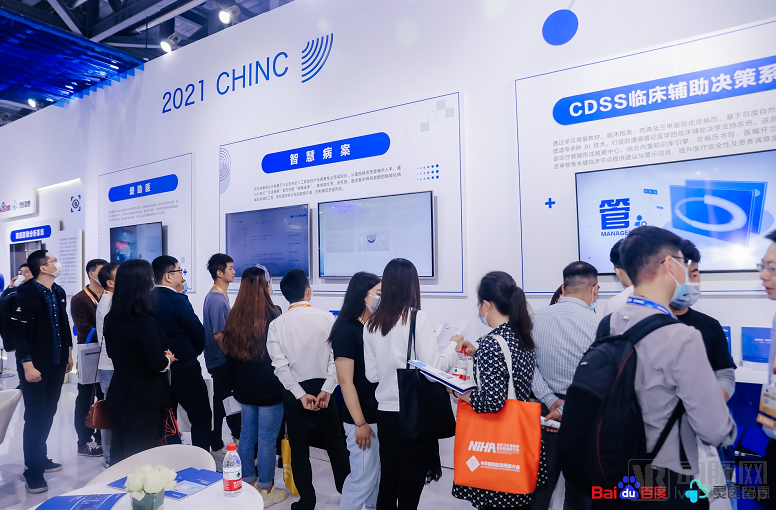
Baidu Lingyi Zhihui CHINC Booth
Clearly, Lingyi Zhihui’s strategy differs significantly from that of the internet companies present at the conference. Its products are highly refined, clearly addressing specific hospital needs, and its deliberately “slow” approach makes it somewhat enigmatic.
As Baidu’s AI healthcare brand, Lingyi Zhihui was founded in early 2018 with a simple vision. In essence, Baidu aimed to leverage its robust AI capabilities and integrate them with an in-depth understanding of medical scenarios to deliver tangible, intelligent healthcare services. After extensive exploration, Lingyi Zhihui focused on fundus examination and launched a fundus image analysis system for primary care screening at the end of that year.
Having tasted success, Lingyi Zhihui continued to delve deeper into “diagnosis and treatment” research, seeking AI applications that could benefit a broader population. In 2019, Baidu acquired Kangfuzi and took an equity stake in Neusoft to bolster its business support, launching an AI-powered general practice Clinical Decision Support System (CDSS). The aim was to connect with extensive primary healthcare networks, enhance diagnostic capabilities at the grassroots level on a larger scale, enable patients to access primary care services more conveniently, and ultimately retain patients within the primary care system.
By 2020, Lingyi Zhihui had accumulated substantial experience in primary care settings and began to explore platform-based strategies. Leveraging its natural language processing (NLP) technology and internet connectivity capabilities, the company developed a chronic disease management platform and systematized primary healthcare services, creating the “Ai Zhuyi” primary healthcare solution. Throughout that year, Lingyi Zhihui’s key product for promotion remained its Clinical Decision Support System (CDSS). According to data from the end of the previous year, Lingyi Zhihui had expanded its reach to 300 hospitals and more than 1,500 primary healthcare institutions. The CDSS offerings also began to diversify, with Lingyi Zhihui providing customized versions tailored to the specific needs of different hospitals.
Overall, for the past three years, Lingyi Zhihui has devoted most of its efforts to primary healthcare, aiming to leverage AI-assisted diagnostic capabilities to enable primary care to play a more significant role within the overall healthcare system. It was not until 2021 that Lingyi Zhihui’s strategy began to undergo a noticeable shift.
According to Liu Junwei, Deputy General Manager of Baidu Smart Healthcare, in 2021, building on its previous efforts to empower primary healthcare with localized AI products, Baidu began exploring the comprehensive application of AI to address challenges in primary care. Specifically, this involved two key initiatives: first, developing integrated solutions for screening, diagnosis, and management organized by disease type, to tackle specific clinical issues; and second, leveraging its full-stack AI capabilities to facilitate the intelligent upgrade of medical institutions’ information systems, while extensively collaborating with ecosystem partners to lead the era of intelligent healthcare information systems.
The situation at Baidu’s exhibition area during CHINC also corroborates its product strategy. Specifically, the specialty Clinical Decision Support System (CDSS) represents a strategic extension of its integrated, disease-specific solutions. Liu Junwei revealed that diabetes and obstetrics/gynecology diseases will be included in the initial launch lineup of Lingyi Zhihui’s specialty CDSS. Leveraging the technical accumulation over the past two years in automated knowledge mining and platform-based knowledge management, developing a specialty CDSS now takes only a few months, significantly reducing the labor costs associated with traditional development.
“The Smart Medical Record Full Lifecycle Solution” is a microcosm of Baidu Lingyi Zhihui’s full-stack AI capabilities and the flagship product launched by Lingyi Zhihui at this year’s CHINC.
Medical records are the original documentation of a patient’s entire diagnosis and treatment process at a hospital. To some extent, they reflect the medical quality and technical proficiency of a hospital and are closely linked to the safety of medical services. Specifically, medical records provide essential data for hospital medical quality control, teaching, scientific research, resolution of medical disputes, clinical decision-making, and the implementation of the Diagnosis-Related Group (DRG) payment system, underscoring their undeniable importance.
However, since medical record documentation occurs at the end of the clinical pathway and does not immediately impact the quality of patient care, physicians often become lax in this area when overwhelmed by a high patient volume.
Contradicting the rising importance of medical records, there is a significant talent shortage in tasks such as medical record quality review and front-page coding. Generally, reviewing one medical record takes a physician in the medical records department approximately 30–40 minutes. Compared with international data, coders in the United States and Australia code 4–5 medical records per day, whereas in China, taking Jilin Province as an example, the reported figure is 15 records per day; in practice, however, coders sometimes need to process 50 or more records daily.
In this context, smart medical record-related products have undergone years of market incubation. However, rule-based quality control can only detect simple entry errors and logical inconsistencies, such as missing fields in medical records or male patients being recorded with gynecological diseases. In contrast, directing quality control toward the documentation requirements and clinical practice guidelines associated with specific clinical events demands higher capabilities from machines in understanding medical records and mastering medical knowledge.
To address the contradiction between the growing demand for medical record data utilization and the widespread issue of poor medical record quality, the National Health Commission released the “Quality Control Indicators for Medical Record Management (2021 Edition)” and its accompanying interpretation in February 2021. Building upon the 2016 specifications for completing the front page of medical records, this initiative incorporated comprehensive medical record quality control into performance assessments for the first time. Coupled with the impetus from the national performance evaluation of public hospitals, this has significantly stimulated the demand for in-depth and efficient quality control of medical records across healthcare institutions at all levels. The aim is to enhance medical record management, improve the quality of reported data, and accurately reflect hospitals’ true clinical care capabilities. Furthermore, within the broader context of health insurance payment method reforms, medical consortia and private hospitals are also seeking to leverage medical record data management and mining to achieve refined management and improve operational efficiency.
To assist healthcare institutions in transitioning from traditional to intelligent medical record management, Lingyi Zhihui leverages artificial intelligence technologies and specialized expertise in medical records. By addressing critical pain points in hospital medical record quality, the company employs AI-driven “reading comprehension” of medical records to generate comprehensive “medical record profiles.” It provides an intelligent auxiliary tool for medical record services that operates across documents and multiple systems, catering to complex, heterogeneous data. This solution helps hospitals fully unlock the value of their data while mitigating risks associated with medical record quality.
Specifically, the value of the “Smart Medical Record Full Lifecycle Solution” is manifested across five major clinical scenarios.
1. In patient consultation scenarios, provide physicians with intelligent triage and voice-enabled electronic medical record documentation capabilities;
2. In the scenario of electronic medical record (EMR) documentation, conduct connotation-based quality control during diagnosis and treatment to improve the completeness, standardization, and timeliness of medical record writing, thereby reducing potential risks arising from inconsistencies in information descriptions, conflicts in causal relationships, and contradictions in medical logic within EMRs; after patient discharge, provide capabilities such as comprehensive connotation-based quality control for the entire medical record, automatic generation of the medical record face sheet, standardization of medical terminology, and intelligent ICD coding.
3. In response to the ongoing reforms in medical insurance payment methods, provide intelligent auxiliary tools for the medical record documentation process, including cost monitoring alerts, DRG pre-grouping and intelligent correction tools, reminders for omitted diagnoses and surgical procedures, and suggestions for diagnosis sequencing;
4. In the later stages of data utilization, we innovatively launched an indicator monitoring platform based on clinical event mining from medical records. This platform provides in-depth extraction of key indicators for high-priority scenarios such as performance evaluation of public hospitals and reforms in health insurance payment methods, thereby avoiding data deviations caused by manual reporting and facilitating the in-depth development of refined operations in healthcare institutions;
5. For regional big data centers and hospital data centers, we provide a full-stack service system encompassing big data aggregation, storage, processing, data asset management, and data application development. This system supports in-depth data retrieval and visual analysis, and offers customized data training services tailored to specific scenarios, thereby meeting the needs for customized information extraction in various contexts such as clinical applications and medical research on specialized diseases.
Compared with traditional quality control systems, Lingyi Zhihui’s Smart Medical Record system inherits the robust knowledge database of Clinical Decision Support Systems (CDSS) on one hand; on the other hand, by integrating Baidu’s natural language understanding technology, it achieves connotation-based quality control of medical records through human-brain-like logical reasoning, thereby replacing the point-to-point linear logical relationships characteristic of traditional medical record quality control systems.
To date, Lingyi Zhihui’s AI healthcare product solutions have reached 29 provinces, municipalities, and autonomous regions, covering more than 300 hospitals and over 1,500 primary healthcare institutions, serving tens of thousands of physicians and benefiting tens of millions of patients. Nevertheless, Baidu still has a long way to go in the long run.
Moving forward, Lingyi Zhihui will continue to uphold its vision of “Empowering Primary Healthcare with Evidence-Based AI.” Leveraging the core technologies and AI capabilities of Baidu Brain, it will build a medical AI middle platform, a medical knowledge middle platform, and a medical data middle platform. It will provide AI-driven healthcare solutions tailored to clinical scenarios, including clinical decision support, fundus screening, smart medical records management, intelligent prescription review, chronic disease management, and medical big data services, thereby enhancing healthcare service capabilities across all in-hospital and out-of-hospital scenarios and throughout the entire care process.
Achieving such goals is difficult to accomplish alone. As demonstrated at this year’s CHINC, Lingyi Zhihui is actively collaborating with a broad range of partners—including hospitals, physicians, HIS vendors, electronic medical record (EMR) vendors, government agencies, and regulatory bodies—to jointly promote the standardization and normalization of primary care diagnosis and treatment processes, enhance primary healthcare capabilities, reduce medical risks, control healthcare costs, and support the national “Healthy China 2030” strategy. At the Baidu Ecology Conference in the second half of this year, Baidu will place significant emphasis on its healthcare strategy, and we hope to welcome more partners into Baidu’s ecosystem.
In the future, Lingyi Zhihui will leverage its strengths in AI technology to continuously break through technical bottlenecks, consistently delivering AI capabilities tailored for medical scenarios and comprehensive AI-based solutions, thereby enabling more partners to benefit from industrial upgrading. Meanwhile, Lingyi Zhihui will collaborate with partners across various sectors to drive innovation in healthcare and foster a thriving ecosystem within the medical industry.