

Tongshu Genomics Leverages AI and Tumor Origin Tracing to Develop Pan-Cancer Early Screening Test for 13 Cancers
From April 16 to 18, 2021, the “5th Future Healthcare Top 100” conference, organized by VCBeat, co-hosted by the People’s Government of Wujiang District, Suzhou City, and the Guangdong Zhong Nanshan Medical Foundation, and co-organized by Suzhou Wujiang Dongfang State-owned Capital Investment and Operation Co., Ltd., with Ali Health as the exclusive strategic partner, was held in Wujiang, Suzhou. TONGSHU GENE was successfully awarded a place among the “Top 100 Innovative Medical Services in China (2020–2021).”
TONGSHU GENE is a precision oncology company that provides clinical services including precise medication guidance, treatment efficacy monitoring, postoperative recurrence surveillance, risk prediction, and early detection. Targeting the blue-ocean market of cancer early screening, TONGSHU GENE has developed a pan-cancer early screening product capable of detecting 13 high-incidence cancer types. On April 18, at the sub-forum on early cancer screening, Yan Linghua, Founder and CEO of TONGSHU GENE, shared his insights and perspectives on the cancer early screening industry.
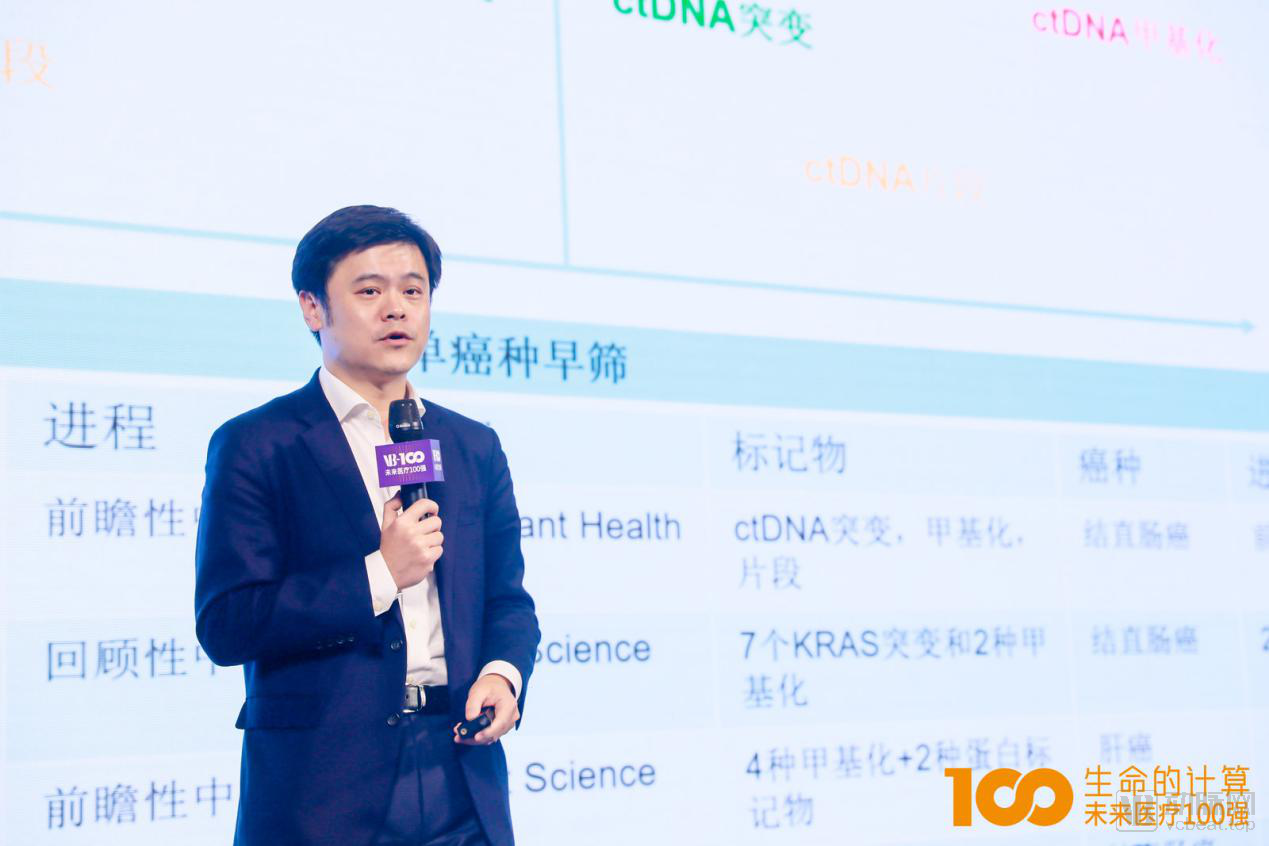
The cancer early screening industry is driven by four core factors: first, stable economic development and rising income levels; second, growing public awareness of early screening, leading to strong demand for cancer early detection; third, the increasing maturity of early screening technologies and continuous cost reduction; and fourth, favorable policies supporting the development of the early screening industry.
Among these factors, policy is the primary driver behind the rapid development of early cancer screening.Early Cancer Screening Has Been Elevated to a National Strategic Level.The 2019 Government Work Report mentioned the implementation of cancer prevention and control initiatives to promote preventive screening. The Outline of the Healthy China 2030 Plan pointed out that early cancer screening should be a key focus, aiming to achieve chronic disease health management for the entire population across the full life cycle by 2030, with the goal of increasing the overall five-year cancer survival rate by 15%. The release of multiple favorable policy documents has greatly stimulated the vitality of the early cancer screening market.
In March 2021, the Center for Medical Device Evaluation (CMDE) of the National Medical Products Administration released the article “Current Status of Colorectal Cancer Screening Products at Home and Abroad and Clinical Evaluation Requirements,” which elucidates the clinical evaluation standards for early colorectal cancer screening products. This publication holds significant importance for future clinical trials and regulatory submissions of early cancer screening products.
"The Current Status of Colorectal Cancer Screening Products in China and Abroad and Clinical Evaluation Requirements" proposes that,Clinical trials for disease screening products should involve prospective enrollment of the intended screening population.In the future, early cancer screening products will be required to undergo prospective clinical studies. Generally, a prospective study enrolling 5,000–10,000 patients costs over RMB 100 million, placing substantial demands on companies’ financing capabilities and cash flow.
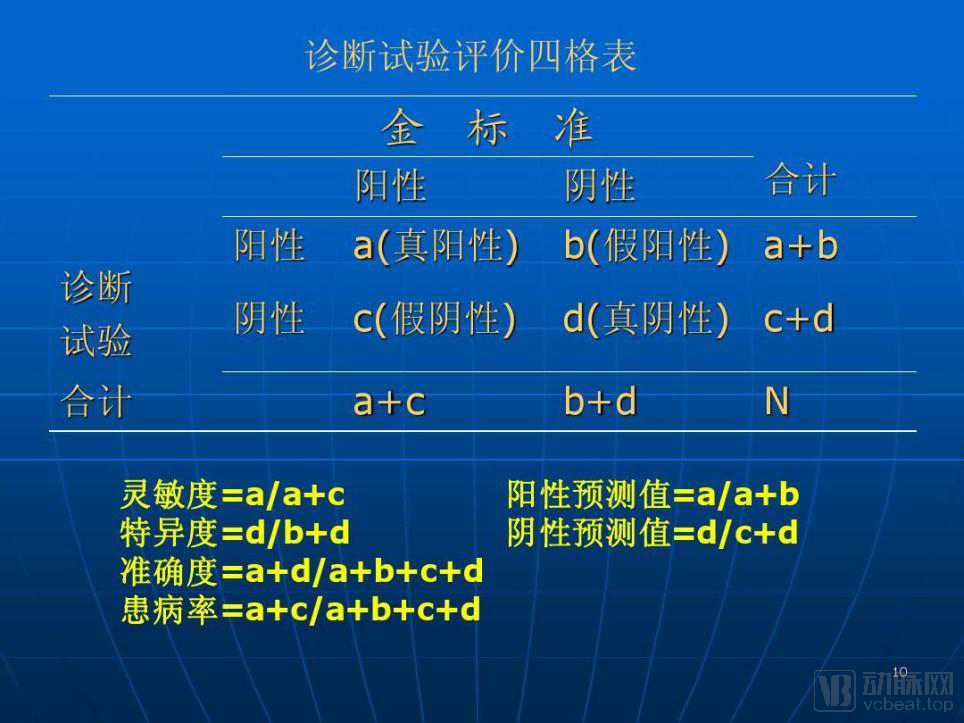
Meanwhile, the document “Current Status of Colorectal Cancer Screening Products in China and Abroad and Clinical Evaluation Requirements” points out thatClinical sensitivity and negative predictive value are critical performance metrics for early disease screening products, which must achieve high levels to be approved for market launch as screening tools.“Sensitivity and specificity are metrics for evaluating auxiliary diagnostic products for advanced-stage cancer, whereas sensitivity and negative predictive value are the core data points that measure the value of cancer early screening products,” said Yan Linghua.
Furthermore, the clinical evaluation requirements also specify that the trial design for early cancer screening products should adopt the clinical reference standards for diagnosing the relevant diseases as the comparator method, which provides significant guidance on the regulatory approval pathways for both pan-cancer and single-cancer early screening products.
“Another very interesting point is that the approval guidelines for cancer companion diagnostic products have traditionally been ‘technical review guidelines,’ whereas the newly issued requirements for cancer early screening products are ‘clinical evaluation requirements.’ This means that,”Regulatory authorities place greater emphasis on the clinical study results of cancer early screening products to ensure that these products truly benefit patients.”
“In summary,“Current Status and Clinical Evaluation Requirements for Colorectal Cancer Screening Products in China and Abroad” is a guiding document for all professionals in the field of early cancer screening, and it is worthy of careful study.“Yan Linghua stated.
Currently, the cancer early screening industry is engaged in vigorous discussions on technological pathways, evaluation metrics, and product strategies. Yan Linghua also shared his insights from these three perspectives.
Technical PathwayCurrently, early cancer screening products primarily employ technical approaches such as protein biomarkers, ctDNA methylation, and gene mutation detection, with ctDNA methylation being the mainstream method. Yan Linghua considers ctDNA methylation a more ideal technical approach, “because methylation patterns carry histological characteristics, can be stably detected, and enable tissue-of-origin tracing.”
Evaluation MetricsPrevious auxiliary diagnostic products mainly focused on sensitivity and specificity, while cancer early screening products emphasize sensitivity and negative predictive value. "Companies developing cancer early screening tests must take negative predictive value into account during the clinical study design phase. When conducting prospective clinical trials, at least 3,000 to 4,000 samples are required to achieve a robust negative predictive value."
Product StrategySingle-Cancer vs. Multi-Cancer Early Screening? Yan Linghua stated that both single-cancer and multi-cancer early screening approaches hold market potential. The key is that single-cancer early screening must outperform current gold-standard methods in terms of performance metrics, safety, comfort, and cost to be valuable. For multi-cancer early screening products, it is essential to address the issue of cancer origin identification; “otherwise, if a patient screens positive for 100 types of cancer but the specific cancer type cannot be determined, such screening is meaningless and will only increase patient anxiety.”
Regarding pan-cancer early screening, Yan Linghua further elaborated on the three major technical challenges currently facing ctDNA-based pan-cancer early screening.
I. The accuracy of ctDNA testing is not high.The concentration of ctDNA in blood is extremely low, potentially as low as one in ten thousand in early stages, whereas even the accuracy of NGS sequencing only reaches one in a thousand. “Anyone who has conducted such experiments knows that even slight movements of the pipette can affect the test results. Therefore, experimental technique is crucial; strict control over blood collection tubes and pipette tips is essential to ensure detection accuracy.”
II. It is difficult to establish the relationship between ctDNA mutations and tumors.“Enterprises need to conduct large-scale studies and data analysis to further clarify which type of cancer a gene mutation originates from.”
3. It is difficult to establish the tracing of ctDNA detection back to the cancerous organ.“Pan-cancer early screening must prioritize source tracing to determine the organ of origin for variant genes, thereby enabling precise prevention and intervention.”
Furthermore, Yan Linghua highlighted three key barriers to cancer early screening products. “First is technology; cancer early screening requires not only robust detection techniques but also a comprehensive, platform-wide technological capability spanning from detection to bioinformatics analysis and algorithmic model development. Second is sample acquisition capability; the ability of tumor genetic testing companies to secure large volumes of samples is a critical condition for them to become pioneers in cancer early screening. Finally, companies need to focus on whether there are targets specific to the Chinese population.”
TONGSHU GENE is a precision oncology company that has established a ctDNA precision testing system based on high-throughput sequencing and bioinformatics analysis. It offers more than 500 molecular pathology testing items, with its testing service network covering over 200 core hospitals across five major regions in China.
Regarding why TONGSHU GENE entered the cancer early screening sector, Yan Linghua stated: “From companion diagnostics to MRD testing, and then to early cancer screening—this is the inevitable path for companies in precision oncology.“Companies that have followed such a development path possess a more solid foundation and stronger sample acquisition capabilities, making them more likely to stand out in the cancer early screening sector.”
Tumor origin identification is the first step in pan-cancer early screening. To address this challenge, TONGSHU GENE has developed a Microsatellite Instability (MSI) detection kit (using multiplex fluorescent PCR-capillary electrophoresis), which has received approval from the National Medical Products Administration (NMPA) as the first MSI detection kit of its kind in China. Currently, this product has been adopted by more than 80 hospitals across China, with an accumulated cohort of colorectal cancer samples expected to reach 100,000 cases. Meanwhile, TONGSHU GENE employs an AI- and big data-driven development strategy,With the aid of AI, TONGSHU GENE has achieved tissue-of-origin identification for 13 types of cancer, with an accuracy rate as high as 95%. The company’s pan-cancer early screening product can screen for these 13 cancers.
“TONGSHU GENE is expected to launch a pan-cancer origin-tracing product by the end of this year, and the company is about to initiate prospective studies on its pan-cancer origin-tracing and early screening products,” said Yan Linghua.