

Taihu Bay Future Health Summit Highlights Innovation and Investment Trends in Medical Technology and Biopharma
In a rapidly changing market environment, the ability of enterprises to identify and leverage forward-looking variables is key to their growth into towering giants amidst the tide. In the post-pandemic era, capital’s favor toward biopharmaceuticals and medical devices is self-evident, with major investment events in the healthcare industry occurring one after another. The introduction of a series of new market regulations has also accelerated the development of China’s healthcare industry.
To gain insight into the future development trajectory of the healthcare industry and the shifting trends in capital investment, and to comprehensively promote the integrated development of industry and capital, the Taihu Bay Life and Health Future Conference (hereinafter referred to as the “Conference”) was held in Wuxi from April 21 to 24. Hosted by the Wuxi Municipal People’s Government, the Conference featured deep engagement from six strategic partner organizations: CICC, AstraZeneca, Hillhouse Investment, Tigermed, Yunfeng Capital, and Honghui Capital. In addition to the opening ceremony and keynote forum on the 22nd, the Conference hosted multiple parallel sub-forums and enterprise ecosystem meetings.
Compared to the main forum, the Corporate Ecosystem Conference featured more focused topics. The Honghui Capital CEO Summit, themed “Insights into the Future,” was divided into a dedicated roadshow session and a main plenary summit. It brought together senior officials from the National Medical Products Administration (NMPA) and the National New Drug Advisory Committee, as well as executives from leading industry players such as Mindray Group, Pharmaron, Tigermed, and Borui Medicine. Participants engaged in in-depth discussions on hot topics including the development of the innovative drug market, the growth of pharmaceutical and medical device enterprises, and investment trends in the capital markets.
In the opening session of the summit, Bian Zhenjia, former Deputy Director of the State Food and Drug Administration, delivered the opening remarks and offered recommendations for the development of biopharmaceutical enterprises. In summary, his points can be distilled into four key areas.
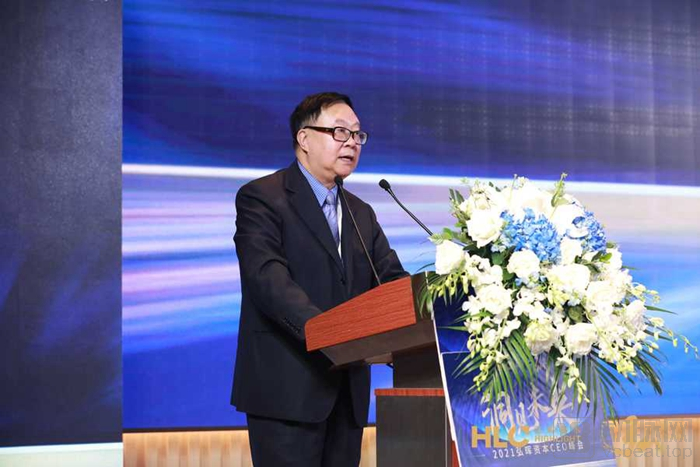 Bian Zhenjia, Former Deputy Director of the State Food and Drug Administration
1. Biopharmaceutical companies should develop drugs for major diseases in alignment with clinical needs, while also targeting truly innovative new targets and novel mechanisms of action to create first-in-class products;
2. Attract top talent and continuously strengthen the R&D team;
3. Be willing to invest substantial capital in research and development, avoid short-termism, and possess the endurance to navigate the protracted journey of new drug development;
4. Companies must maintain reserves and sustainable growth potential to continuously launch new products in the future.
At present, there remains a certain gap between China and foreign countries in new drug research and development (R&D), indicating substantial market and R&D opportunities. In light of the 14th Five-Year Plan’s vision to achieve major breakthroughs in key core technologies and position China among the leading innovative nations, the path to success through innovation for Chinese enterprises is clearly defined. Domestic companies will usher in an era of innovation-led strategy at this new starting point of the 14th Five-Year Plan period.
Breakthrough Development of Innovative Drugs
The COVID-19 outbreak in early 2020 spurred rapid growth in many related industries, such as third-party clinical laboratories and pharmaceutical e-commerce. However, innovative drug R&D cannot rely solely on riding this wave of opportunity. So, how can China’s innovative drug sector achieve breakthrough development? What are the key research directions?
Addressing the aforementioned issues, Zhu Xun, former Vice President of Bethune Medical University and former member of the National New Drug Advisory Committee, delivered an analysis on the future development trajectory and prospects of innovative drugs in China. Centered on the theme “Analysis of Future Development Trends and Prospects for Innovative Drugs,” he examined key aspects including trends in new drug research and development, as well as strategic directions and priorities in biopharmaceuticals.
“In the foreseeable future, the global landscape of innovative drug development will remain largely unchanged; however, China’s influence will gradually increase, disrupting the international status quo to a certain extent.“, however, the number of newly approved drugs will not increase significantly,” said Zhu Xun.
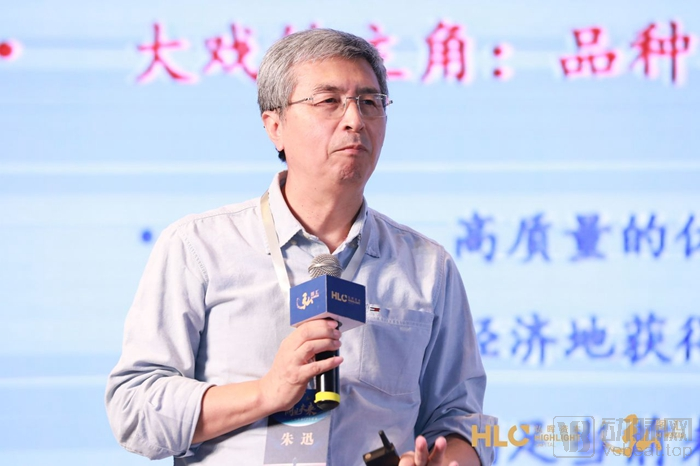
Zhu Xun, former Vice President of Bethune Medical University and former member of the National New Drug Advisory Committee
Zhu Xun believes that,The R&D of innovative drugs should place greater emphasis on two key aspects of the external environment: medical models and emerging health challenges.Preventive, interventional, precision-based, and individualized medical models will garner increasing attention in the future, through which potential future development trends and patterns of innovative drugs can be inferred. In recent years, both socioeconomic conditions and medical technologies have advanced rapidly; however, the disease spectrum has correspondingly shifted, with the burden of cancer and cardiovascular diseases continuing to rise.
Moreover, the emergence of many new products has also given rise to new issues, thereby bringing about a series of new health challenges, and the therapeutic landscape will undergo significant changes.New Pathways, New Targets, Multi-Target Approaches, and Breakthrough Novel Drugs Will Become the Mainstream, biologics are poised for even greater development. This encompasses not only protein-based therapeutics currently in development and mRNA nucleic acid vaccines, which have gained market recognition during the COVID-19 pandemic, but also a host of emerging opportunities on the horizon, such as organelle-based therapies, cell therapies, combination products involving cellular subunits, combination regimens, and the rapid advancement of integrated drug-device combinations.
Meanwhile,The models, methodologies, value propositions, and investment patterns of new drug development will also undergo significant changes., structural cytology, single-cell biology, and various omics will become key guiding directions and evaluation metrics in the new drug development process.
AndFor enterprises, achieving stable and sustainable development requires both “transformation” and “elevation.”namely, achieving the transformation from a cost center to a profit center, and the evolution from “me-too” and “me-better” drugs to innovative pharmaceuticals.
Driven by the combined forces of policy, talent, and capital, the curtain has undoubtedly risen on China’s innovative biopharmaceutical sector. Behind this innovative transformation, the development logic and rules of the game in the pharmaceutical industry have quietly changed. In his concluding remarks, Zhu Xun summarized, “In an era full of opportunities, the greatest opportunity lies not in the opportunities themselves, but in breaking away from yesterday’s logic.”
The Role of CROs/CMOs in the Innovative Drug R&D System
Outsourcing, a commonplace model of labor division, has been widely adopted across various industries due to its rational optimization of resources, and the biopharmaceutical industry is no exception.From CROs to CMOs and CDMOs, outsourcing in the biopharmaceutical industry is exhibiting diversified development, while the collaboration models between pharmaceutical outsourcing firms and innovative drug companies continue to evolve and innovate.。
To gain deeper insights into potential future changes in the industry, the summit also hosted a roundtable discussion themed “Exploring Collaboration Models Between CROs/CMOs and Innovative Pharmaceutical Companies.” From the perspective of CROs/CMOs, we may be able to more clearly observe the development status of domestic innovative drug projects and their differences from those abroad.
Lou Xiaoqiang, Co-founder, General Manager, and COO of Pharmaron, stated that domestic innovative pharmaceutical companies have higher efficiency requirements for project execution, which indirectly reflects the intensifying competition in China’s innovative drug market, thereby raising expectations for contract research and manufacturing organizations. Luo Shun, Founder of Osmose, expressed agreement with this view.
At the current stage, whether from the perspective of CROs/CMOs or innovative pharmaceutical companies, market expectations for CROs/CMOs are primarily reflected in quality compliance, efficiency, and pricing, which will also serve as key benchmarks for their future development.
In recent years, the emergence of various innovative therapies has created more development avenues for innovative pharmaceutical companies, while also presenting both challenges and opportunities for CROs/CMOs.On the one hand, outsourcing companies build their capabilities and services around customer needs and feedback; therefore, by aligning with the demands of innovative pharmaceutical enterprises, CROs/CMOs can also rapidly expand their service offerings.
On the other hand, some internationalized CROs/CMOs can access innovative technologies abroad before domestic demand fully emerges, while simultaneously localizing their services in China. This enables them to promptly deliver high-quality services to innovative pharmaceutical companies once domestic demand surges, thereby achieving a win-win outcome.
However, overall, for CROs/CMOs to collaborate with innovative pharmaceutical companies on novel therapies, they must first master core technologies to establish a foundation for partnership, and then work in synergy with these companies to achieve breakthroughs.
How Can China's Medical Device Industry Accelerate Its Development?
At present, the development of China’s healthcare industry is evidently not limited to the biopharmaceutical sector; the medical device industry is no exception. In recent years, domestic medical device companies have continuously launched new products in their respective areas of expertise, accelerating and strengthening the trend of import substitution with domestically produced alternatives. Furthermore, from a user perspective, an increasing number of people are willing to choose cost-effective domestically produced products, leading to a significant improvement in the overall market environment compared to the past.
However, in light of the current domestic market, the path to import substitution for high-end medical devices remains long and must be pursued step by step. As the saying goes, “To forge iron, one must be strong oneself.”While shifts in the overall market climate can undoubtedly bolster corporate growth, a company’s own concrete actions and strategic planning remain key to ensuring its long-term, stable development.。
“First, the product must be good, but the definition of ‘good’ varies across different dimensions. What constitutes a good low-end product differs from what makes a high-end product good; likewise, for the same device, the criteria for being ‘good’ in China are not the same as those in the United States,” said Cheng Minghe, Vice Chairman of Mindray Group.To excel in product development, companies must offer a comprehensive portfolio of low-, mid-, and high-end products within their vertical sector, expand their target market, and go global by adopting a worldwide perspective to understand diverse customer needs and the current landscape of comparable international products.。
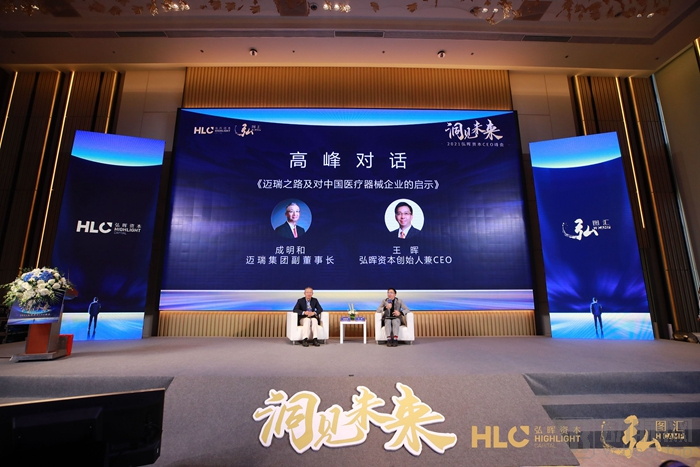
Honghui Capital CEO Summit: High-Level Dialogue Session
In addition, Cheng Minghe also expressed his expectations for the industry and enterprises by citing Mindray’s business as an example. He believes thatEnterprises should pursue innovative diagnostic and therapeutic technologies that are earlier, faster, and more accurate, continuously iterate their products, and aim to develop more intelligent medical devices.etc. From the perspective of the market environment, policy support, capital interest, and the concentration of high-end technical talent have provided opportunities for the rapid development of China’s domestically produced medical industry. Enterprises should seize these opportunities while drawing on existing experience to reduce trial-and-error costs.
Investors’ Choices—Synthetic Biology, Surgical Robots, In Vitro Diagnostics...
During the roadshow sessions, all 24 projects featured in the “Biopharmaceuticals” and “Health Tech” tracks originated from the Hui Capital ecosystem. Their applications span diverse niche sectors, including early cancer screening, in vitro diagnostics, surgical robotics, and consumer health technology. These projects innovatively integrate cutting-edge technologies—such as synthetic biology, fluorescence localization, and laser technology—into clinical diagnosis and treatment as well as daily healthcare. Among them, the projects presented by Yikolai, Xinjunte, and Zhizhen Biology were particularly impressive.
YiKelai
Founded in 2015, Yikelai is primarily engaged in the research and development of biocatalysis and synthetic biology methodologies. Possessing an advanced domestic enzyme library, the company has accumulated extensive experience in enzyme screening, engineering, directed evolution, fermentation, immobilization, and the scaled-up production of enzymatic catalytic reactions.
Currently, Yiklai’s biosynthesis technologies are primarily applied in the fields of pharmaceuticals, health supplements, and agrochemicals. Given that drug compounds can interact with enzymes, proteins, and other biological macromolecules within the body, the use of enzymes as catalysts for chemical transformations represents a major application scenario in drug molecule manufacturing. At present, significant progress has been made in the enzymatic catalytic synthesis of drugs using function-specific enzymes. As a tool for drug discovery and a method for synthesizing drug metabolites, biocatalysis is garnering increasing attention from the pharmaceutical industry.
Xinjunte
Xinjunte was established in 2015, committed to building China’s most intelligent R&D and innovation platform for orthopedic surgical robots, achieving an organic integration of “robotics + AI.” According to recent information on the NMPA website, Xinjunte’s spinal surgery navigation and positioning system has successfully obtained NMPA registration certification. In addition to its approved spinal robot, Xinjunte is simultaneously accelerating the R&D of its self-developed osteotomy robot and joint replacement surgical robot.
Zhenzhi Biotech
As an in vitro diagnostics company specializing in flow fluorescence technology, Zhizhen Bio has, over the four years since its establishment, gradually built proprietary platforms with independent intellectual property rights, including a magnetic fluorescent coded microsphere platform, a protein fluorescent labeling technology platform, a multispectral flow fluorescence detection platform, and an automated magnetic separation technology platform. The company has developed a product portfolio of flow fluorescence immunoassays and combined hematology-infection testing solutions tailored for multi-analyte detection in clinical diagnostics. It has successively launched a series of products, such as multiplex cytokine assay kits, multi-parameter flow cytometers, and integrated analyzers for complete blood count (CBC) and C-reactive protein (CRP) testing, establishing a solid foundation for industrialization.
Flow cytometry-based fluorescence technology integrates multiple techniques, including fluorescently encoded microspheres (liquid suspension arrays, liquid chips), laser analysis, flow fluidics systems, and high-speed data processing. It features high throughput, high sensitivity, and parallel detection, with the theoretical capacity to simultaneously detect over 500 analytes. Its multiplexed testing capability aligns with the development trends of in vitro diagnostics both domestically and internationally, reducing patient waiting times, technician workload, and the consumption of reagents and serum required for multi-analyte testing, thereby lowering overall testing costs.
# Final Thoughts
Looking ahead at investment opportunities, innovation is undoubtedly the greatest opportunity.. By continuously gaining insights into tomorrow’s development logic through innovation, this is not only the path to profitability for investors but also the path to survival for enterprises.
Overall, although there are abundant opportunities in China’s healthcare sector at the current stage, investors and entrepreneurs who enter the industry merely on a whim may not necessarily reap substantial rewards. Moreover, the investment logic for the healthcare sector differs from that of other industries; as healthcare is a growth-oriented industry, investments should prioritize future potential.
Amid the relentless efforts of policymakers, investors, enterprises, and entrepreneurs, the window of opportunity is now open. At VCBeat, we “Gain Insights into the Future” and strive to embrace the rising sun.