

Icosavax Secures $100M Series B Financing to Advance VLP-Based Vaccine Pipeline Targeting RSV, HMPV, and COVID-19

Icosavax
Infectious Disease Vaccine Developer
Have you heard of smallpox?
Have you ever had mumps?
Did you experience the 2002 SARS outbreak?
......
In 2011, Warner Bros. Pictures released a film titled *Contagion*, inspired by the SARS outbreak. One internet user commented on it as follows: “Humans knocked down a tree, causing bats from the tree to fly into a pigsty; the pigs were then slaughtered and prepared as delicacies, and the chef posed for a photo with guests, thereby spreading SARS across the globe.”
To this day, the trauma and suffering inflicted upon humanity by SARS remain unforgettable. The emergence of the novel coronavirus in 2020 served as a stark reminder that the threat of viruses is ever-present.
In the struggle between humans and viruses, what is the most effective and successful measure? Vaccines.
Whether in movies or in the real world, vaccines have always been the ultimate solution to every infectious disease outbreak. With advancements in science and technology, an increasing number of companies developing vaccines for infectious diseases have come into the public eye. Icosavax is one of them.
In April 2020, Icosavax was named “Best Science for Commercialization from Academia in 2019” by Nature Biotechnology. The company leverages virus-like particle (VLP) technology to develop targetedRespiratory Syncytial Virus (RSV), human metapneumovirus (HMPV), and COVID-19 vaccines.
Icosavax Announces Completion of $100 Million Series B FinancingThis round of financing was led byRA Capital Management led the investment, with Janus Henderson Investors, Perceptive Advisors, Viking Global Investors, Cormorant Asset Management, Omega Funds, and Surveyor Capital participating as co-investors.
Icosavax stated that the proceeds from this financing will be used to advance the company’sBivalentDevelopment of RSV and HMPV Vaccine Projects. The Company Has Completed Preliminary Clinical Studies, and WillContinue AssessmentSARS-CoV-2 candidate vaccines, and thenFurther Expand the Company'sVLP Candidate Vaccine Pipeline.
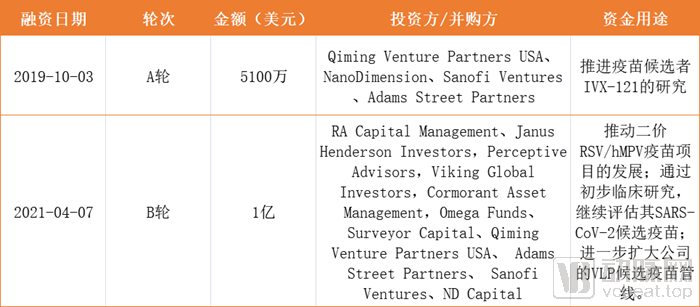

IcosavaxEstablished inIn 2017, it was headquartered in Seattle, USA. In October 2019, IcosavaxCompleted$51 million Series A financing. Participants in the Series A round include Qiming Venture Partners USA, Adams Street Partners, Sanofi Ventures, and Nano Dimension.
The funds raised in the Series A financing were primarily used to advance the clinical development of IVX-121, Icosavax’s first RSV vaccine candidate.
IcosavaxThe company's technological core originates from the University of Washington Institute for Protein Design (IPD)。This technology effectively addresses the challenges associated with the construction and manufacturing of virus-like particles (VLPs). VLPs are hollow particles composed of one or more structural proteins of a specific virus. They lack viral nucleic acids and are incapable of autonomous replication; however, due to their morphological similarity to authentic virions, VLPs are also referred to as "pseudoviruses."
Compared with traditional soluble antigens,VLPs can induce stronger and more durable immune responses. Because they do not contain viral genetic material, they are safer than live-attenuated vaccines andInactivated vaccines are safer.Icosavax, Inc. recognized the unique characteristics and advantages that VLPs demonstrate in vaccine development.
Adam Simpson, CEO of IcosavaxOpinion:“If the human body contains inert, safe particles with a repetitive structure that resemble viruses, then our body would have an ‘alarm system.’ It can detect the presence of viruses in advance.”
Adam has extensive operational experience in life sciences companies. Prior to joining Icosavax, Adam served as Chief Executive Officer at PVP Biologics, a spin-off from IPD focused on its research pipeline. AdamAccompanied byThe Complete Journey of PVP Corporation from Founding to Sale. Earlier, AdamAlso served asPresident and Chief Operating Officer of Cypher Genomics, Inc.
Based on virus-like particles (VLPs), numerous vaccines have been developed, such as Merck’s Gardasil (for HPV prevention), MSD’s Recombivax HB (for hepatitis B prevention), GSK’s Cervarix (for HPV prevention), and Engerix-B (for hepatitis B prevention).
However, current market applications of VLPs have not yet extended to complex heterologous antigens, such as those found in RSV. Adam stated, “The greatest challenge lies in designing particles that present antigens in a manner that is both manufacturable and scalable.”
To address this issue,IPD has developed a technology.They willVLPThe vaccine is designed to consist of antigens andVLPs two-part “self-assembly” model.Dr. Neil King, an Assistant Professor of IPD, said, “We can envision this technology as a black-and-white soccer ball, where the ball represents VLPs and antigens attach to its surface, appearing as if they are protruding from the black panels of the ball.”
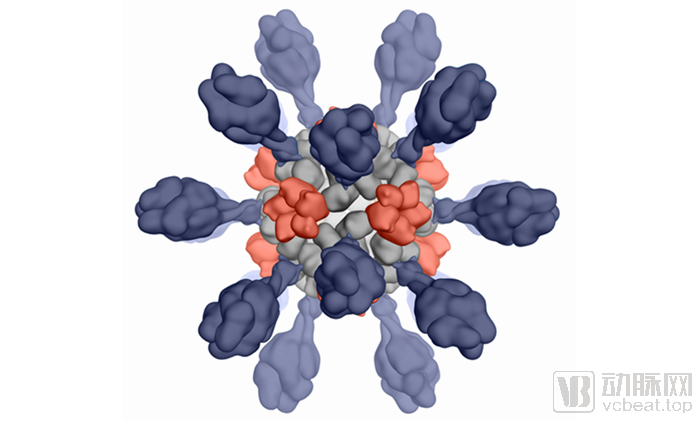
Image source: Icosavax official website
Among many challenging viruses, Icosavax ultimately chose respiratory syncytial virus (RSV). Why was RSV selected? Adam stated, “Each year, due to RSVThe number of deaths due to infection reached as high as“160,000; RSV vaccination brooks no delay.”


Image source: Icosavax official website
What is RSV?
RSVis aRNA virus, genusSubfamily Paramyxovirinae. It is a trigger for pneumonia, and like seasonal influenza, it poses the greatest risk of infection to individuals with weakened immune systems.
RSV is the leading cause of bronchiolitis and pneumonia in infants and young children, with nearly all children infected by the age of three. The virus spreads through respiratory droplets and close contact. While infection in healthy individuals typically results in mild symptoms, it can cause severe disease in neonates, immunocompromised individuals, and the elderly.
Among the leading causes of infant mortality worldwide,RSV ranks second, trailing only malaria.According to statistics from the U.S. National Institute of Allergy and Infectious Diseases, approximately each year6. 4 million infections are associated with RSV.
Adam said, "In the United States, issues concerning older adults aged 65 and above oftenmore pronounced. In developing countries,“The mortality rate among children under the age of 5 is extremely high, at approximately 100,000 per 100,000 population.”For the elderly,RSV may be a life-threatening respiratory infection, with severity comparable to that of influenza.
Currently, there is no RSV vaccine available for disease prevention. The only FDA-approved RSV product on the market is palivizumab (Synagis), an antibody drug developed by AstraZeneca. This medication (not a vaccine) received FDA approval in 1998 for the prevention of respiratory syncytial virus infection in premature infants born before 35 weeks of gestation with congenital heart disease or chronic lung disease. Synagis is not currently marketed in China.
IcosavaxPossessNational Institutes of Health(NIH)GrantedRSV Antigen Licensing Rights.IcosavaxThe Company's FirstThe RSV vaccine, named IVX-121, incorporates the pre-fusion F antigen (DS-Cav1) developed by the NIH. Preclinical studies have shown thatIVX-121 neutralizes RSV more effectively than the DS-Cav1 antigen used aloneEffectiveness shouldHighOut10x.
Adam stated, "The efficacy of IVX-121 is linked to how the immune system perceives foreign threats. When the immune system detects a pathogen, IVX-121 is activated and signals that the pathogen is harmful and should be eliminated promptly."
Icosavax stated that the IVX-121 vaccine is expected toInEntered clinical trials in 2021. In addition to Icosavax, other companies are also developing RSV vaccines, such as Meissa Vaccines, located in South San Francisco, which utilizes its proprietary AttenuBlock technology.Platform, generated through synthetic biologyRSV vaccine candidate.

In addition to IVX-121, Icosavax has also launched a product named IVX-411candidate vaccines. This isIcosavax: A Vaccine Developed Against the Novel Coronavirus
Icosavax has obtained an exclusive global license for IVX-411 in North America and Europe from the University of Washington.Researchers at the University of Washington have found thatwith soluble-basedCompared with COVID-19 candidate vaccines based on the S protein, the IVX-411 candidate vaccine elicited neutralizing antibody titers in mice that were 10-fold higher, even when the vaccine dose was reduced sixfold.
Data also show that, following immunization with this vaccine,Strong B-cell response,This meansIVX-411 may elicit durable immune responses.Some of the most effective and long-lasting vaccines currently available are mostly based onVLP-based R&D, such as vaccines for the prevention of HPV and hepatitis B.
Additionally, when non-human primates are injected withIVX-411, this vaccine willGenerate neutralizing antibodies against different regions of the spike protein. This indicates that when the virus undergoes mutation,IVX-411 continues to protect these animals against viral variants.
Icosavax hasFrom Bill and Melinda• The Gates Foundation has received a $10 million grant, with the funds to beUsed to support the company'sCOVID-19 Vaccine Program. Icosavax plans to conduct studies in both young and elderly populations.Human BodyPhase I clinical trial. Additionally, Open Philanthropy alsoprovided$6.5 million to support IcosavaxThe company's vaccine platform technology andDevelopment of COVID-19 Vaccine Candidates.
Icosavax's IVX-411Vaccines are primarily targeted at the elderly and susceptible individuals with severe underlying conditions. In the United States,Adults aged 65 and older account for 75% of all COVID-19 deaths. Compared with younger individuals, the vaccines currently on the market elicit relatively lower immune responses and demonstrate reduced effectiveness in the elderly population.
Icosavax believes that older adults require novel vaccines with higher immunogenicity and greater efficacy.

While developing its vaccine candidate pipeline, Icosavaxalso established a Scientific Advisory Board (SAB), inviting many experienced scientists. The main members of the SAB include the following six individuals: Neil King, David Baker, Ralf Clemens, Christian Mandl, Jean-Paul Prieels, and Barney S. Graham.
Neil KingDr.is one of the founders of Icosavax. HeYesChairman of the SAB, also the Department of Biochemistry at the University of Washington andAssistant Professor, IPD. Dr. King was the recipient of the 2018 Amgen Young Investigator Award. During his postdoctoral fellowship, he developed a general computational method for designing self-assembling proteins with atomic-level precision.
David BakerPh.D.He is one of the founders of Icosavax. He serves as the Director of IPD and is a Professor of Biochemistry at the University of Washington School of Medicine, andHoward·Howard Hughes Medical Institute (HHMI)'sResearcher.Dr. David is a scientist specializing in protein design who led his research team in developing a computational software suite named Rosetta. This software leverages the structures of biological macromolecules and their interactions for predictive simulations and molecular design, and it is widely used with high acclaim in universities, research institutes, and companies around the world.
Ralf ClemensPh.D.is an advisor to Icosavax. He is a leading vaccinology expert who has served as Senior Vice President and Head of Global Vaccine Development at Takeda, Novartis, and GlaxoSmithKline. Dr. Ralf’s work in vaccinesWith over30 years of experience, involved in 25 different vaccinesdevelopment. He has published in the fields of vaccines, immunology, and tropical medicine.More than 170 publications and over 250 presentations.
Christian MandlPh.D.He is an expert in molecular and clinical virology. He previously worked at Novartis, serving asGlobal Head of Vaccine Clinical Development, leadingMore than 300 clinical researchers are developing viral and bacterial vaccines.
Dr. Jean-Paul PrieelsHe previously served as Senior Vice President of Research and Development at GlaxoSmithKline Biologicals. He contributed to the development of several commercially available vaccines targetingRotavirus,HPV and pneumococcal conjugate vaccines, among others. He alsois the Singapore Institute of Bioprocessing Technology,Member of the Scientific Advisory Boards of CureVac, Imcyse, and Vaximm.
Barney S. GrahamDr.is the inventor of DS-Cav1.He is an immunologist, virologist, and clinical trial physician.Dr. Graham is from the United StatesVaccine Research Center (VRC) as one of its founding researchers, primarilyResponsible for SupervisionDevelopment of VRC Candidate Vaccine Products.