

SinoVision and SinoUnion Launch Yangzhou Manufacturing Facilities to Accelerate Domestic Substitution of High-End Medical Imaging Equipment
Although China has brought the COVID-19 pandemic under control, the outbreak has not yet been fully and effectively contained worldwide. The surge in COVID-19 cases in India serves as a constant reminder to examine the gaps and blind spots exposed in the public health sector. In building the public health service system, we must adhere to the organic integration of routine, precision-based prevention and control with localized emergency response measures, thereby addressing deficiencies in public health infrastructure.
In 2020, as a critical diagnostic tool for COVID-19 screening, CT scanners faced a significant supply shortfall in the fever clinics of both tertiary hospitals and primary care facilities, underscoring an urgent need to address this gap.
On the other hand, the domestic substitution of medical equipment has further become a consensus and goal within the industry. The Ministry of Industry and Information Technology has also proposed that, by 2025, China should achieve significant breakthroughs in key components and materials for high-end medical equipment, with product performance and quality reaching international standards. The medical equipment industrial system will be basically perfected, realizing self-sufficiency and controllability in high-end medical equipment.
In light of the aforementioned background, Sinovision and United Imaging held a production launch ceremony on April 29 at the Longtou Houde Manufacturing Center in Dinghuo Town, Jiangdu District, Yangzhou City, Jiangsu Province. Following the commencement of production, Sinovision (Yangzhou) is expected to achieve an annual output of 800 CT scanners, while United Imaging (Yangzhou) will be capable of producing 100 PET-CT systems annually. The initiation of production for both facilities will not only meet market demand but also further accelerate the domestic substitution of high-end medical imaging equipment in China.
Establishing Dual Production Centers in Beijing and Yangzhou to Boost Industrial Development in Jiangsu Province
Sinovision, a high-end medical imaging equipment manufacturer and service provider integrating R&D, production, and sales, currently serves over 700 clients in more than 40 countries worldwide, with hundreds of thousands of users utilizing its equipment and services on a daily basis. Sinounion, a high-tech industrial company with its R&D and manufacturing center located in Yangzhou, has launched multiple high-end medical devices with fully independent intellectual property rights. In particular, it has achieved breakthroughs in the core technologies of silicon photomultipliers (SiPMs) and their signal readout chips—the most critical components of high-end PET-CT systems—attaining a timing resolution of 287 ps.
Why Did Beijing-Based Sinovision Choose to Build a Factory and Start Production in Yangzhou? What Were the Deciding Factors Behind This Decision?
In addition to the shortage of CT scanning equipment during the COVID-19 pandemic, this is also linked to the continuous expansion of the overall medical equipment industry market. During the 13th Five-Year Plan period, the compound annual growth rate (CAGR) of China’s medical equipment industry market size was 13.6%, reaching RMB 800 billion in 2019. The output value of domestic enterprises accounted for more than 10% of the global total, making China an important global production base and the largest market for medical equipment.
Sinovision Founder and CEO Fu Shinong stated that the completion and commencement of operations at the Yangzhou factory will establish a dual-production-base structure alongside its Beijing facility. The inauguration of the Yangzhou plant will help overcome capacity bottlenecks, forming two centralized production hubs in northern and southern China. The Beijing factory will maintain an annual output of 300–400 CT units, while the Yangzhou facility will sustain an annual production capacity of 700–800 CT systems.
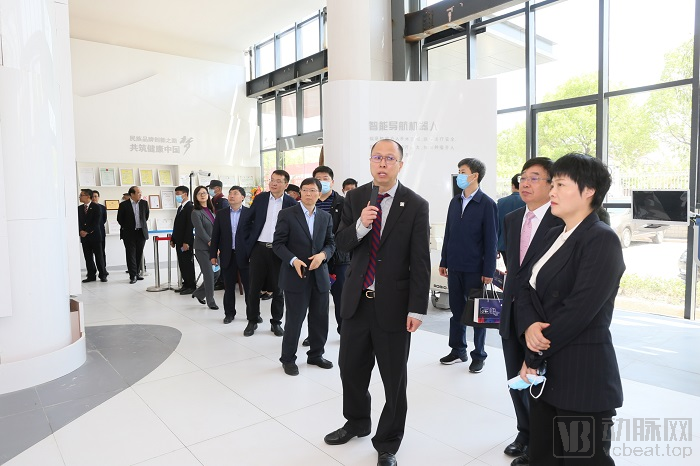
Sinovision Founder and CEO Fu Shinong (center) explains to the attending guests
Furthermore, Sinovision plans to align with local conditions in Yangzhou and collaborate with institutions such as the First Affiliated Hospital of Yangzhou University to rapidly achieve efficient integration with local healthcare providers. From a supply chain perspective, the choice of Yangzhou is also driven by the fact that Sinovision’s suppliers are primarily located in the Yangtze River Delta and Pearl River Delta regions. Establishing production facilities in Yangzhou will enable Sinovision to further optimize transportation and logistics, thereby reducing its operational costs.
On the other hand, policy planning in Jiangsu Province also plays a significant role. The year 2021 marked the commencement of Jiangsu Province’s three-year action plan for “strengthening industrial chains.” Over the course of three years, the province aims to prioritize the cultivation of 50 key industrial chains characterized by high levels of clustering, rootedness, advancement, and strong capabilities in collaborative innovation, intelligent manufacturing, and brand influence. These key chains include sectors such as novel medical devices, big data, 5G, and artificial intelligence.
As representative brands of high-end domestically produced medical imaging equipment, Synovatech and SynoUnited play a significant role in this sector. Zhu Lili, Deputy Secretary of the Jiangdu District Committee of the Communist Party of China and District Mayor of Yangzhou City, also pointed out that Jiangdu District will fully support Synovatech and SynoUnited’s healthcare initiatives in Yangzhou, working together to build a green, intelligent, and healthy medical ecosystem in Yangzhou.
Multiple Major Strategic Cooperation Agreements Signed to Advance the Development of Primary Healthcare Services
At the conference, Sinovision and Sino-United each established strategic partnerships with multiple institutions and enterprises.
Sinovision signed the “Strategic Cooperation Framework Agreement” with the China Charity Federation, the “Strategic Cooperation Agreement on Surgical Navigation Robots” with China Resources (Shanghai) Medical Device Technology Co., Ltd., the “Strategic Cooperation Agreement on Tumor Center Solutions” with Ping An Good Doctor Co., Ltd., the “Strategic Cooperation Agreement on Tumor Center Solutions” with Concord Medical Group, and the “Strategic Cooperation Agreement on New Product Clinical Trials” with Baoshihua Pharmaceutical Technology Co., Ltd.
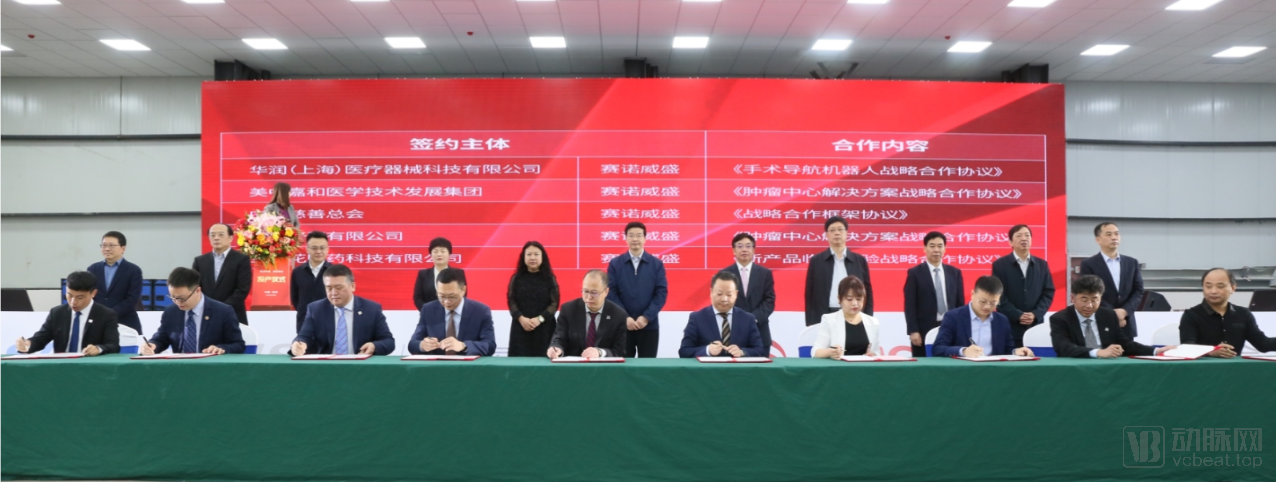
In addition, Yangzhou University signed a cooperation agreement with Sinovision. Jiangdu People’s Hospital of Yangzhou City signed the “Cooperation Agreement for the Clinical Medical Imaging Demonstration Center” with Sinovision and Sino United. Sino United signed the “Cooperation Agreement on the Domestic Development and Industrial Application of Core Components” with the New Device Laboratory of Beijing Normal University, and also signed a cooperation agreement with Northern Jiangsu People’s Hospital.
Zhang Zijian, Executive Director of the Medical Assistance and Public Benefit Program at the China Charity Federation, stated that the strategic cooperation with Sinovision Technologies focuses on empowering grassroots healthcare. This initiative aims to facilitate the introduction of high-quality oncology solutions to primary care settings, thereby promoting the widespread adoption of precision technologies and advanced oncology treatments. Liu Yang, Vice Chairman of China Resources (Shanghai) Medical Device Technology Co., Ltd., pointed out that as a leading enterprise in the pharmaceutical industry, China Resources operates 32 provincial platforms and more than 200 subsidiaries across China, reaching over 5,000 hospitals at Level II and above. Leveraging this extensive network, China Resources provides Sinovision with comprehensive national product deployment, integrated sales channels, expanded market reach, and extended terminal services, offering professional end-to-end supply chain support to facilitate the promotion of Sinovision’s high-end medical imaging equipment in markets across China and overseas.
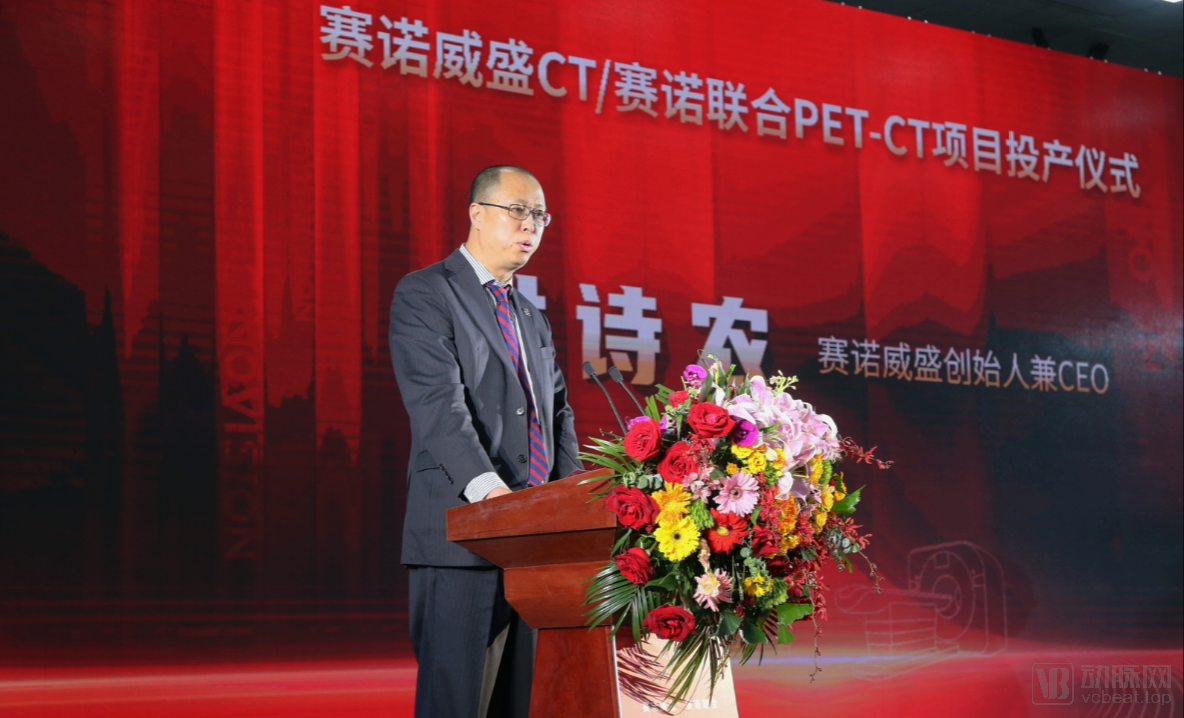 Fu Shinong, Founder and CEO of SynoVision
Fu Shinong stated that the signing of the "Strategic Cooperation Agreement on Surgical Navigation Robots" with China Resources Medical Device Technology was based on a mutual consensus and recognition of the high incidence of cancer in China. Both parties aim to establish an end-to-end ecosystem covering screening, diagnosis, adjuvant therapy, device-based treatment, and post-treatment care across the entire industry chain. Sinovision, which focuses on imaging technology and image-guided therapeutic technologies, hopes to collaboratively build a closed-loop ecosystem for oncology diagnosis and treatment with its partners. The collaboration on surgical navigation robots will help promote the decentralization of advanced medical equipment technologies and high-quality medical resources to primary healthcare institutions, further strengthening grassroots medical services and supporting the implementation of tiered diagnosis and treatment, thereby achieving the goal of "managing serious illnesses within the county and minor illnesses within the township."
Establishment and Commissioning of the Plant to Achieve Domestic Substitution for High-End Medical Imaging Equipment
Sinovision is committed to becoming a leading R&D and intelligent manufacturing center in China for complete medical imaging equipment systems and core components, navigation robotic devices, medical big data, and artificial intelligence. It is also establishing a distinctive base in Yangzhou City dedicated to the R&D, intelligent manufacturing, training, and operation of medical imaging equipment. Currently, its solutions include large-bore CT solutions, the Ruixin 128 cardiac freezing platform solution, independent original-equipment-manufacturer (OEM) image post-processing workstations, and robot-navigated CT systems.
Taking the surgical navigation robot developed through a strategic partnership with China Resources Medical Devices Technology as an example, the system enables preoperative simulation and precise calculation of puncture paths under robotic assistance. Equipped with automatic recognition and warning functions for critical organs, it effectively avoids hazardous areas. By locking the needle insertion depth and angle via a five-axis robotic arm, the system guides physicians in performing precise needle placement, ensuring puncture accuracy and minimizing the risk of complications. Previously, such advanced techniques were typically mastered only by a select few top-tier medical experts. The adoption of surgical navigation robots facilitates the widespread dissemination of these technologies, standardizes operational procedures, and enhances clinical safety and applicability, ultimately helping healthcare institutions strengthen their surgical capabilities.
In fact, the significance of Sinovision’s Yangzhou factory becoming operational extends far beyond this. It is estimated that in the field of CT imaging equipment, domestically produced 32-slice/64-detector CT scanners now account for 60–70% of the market share, with Sinovision and its industry partners having broken the monopoly previously held by imported equipment. In the segment of 64-slice/128-detector CT scanners, domestic and imported devices are nearly evenly matched. However, foreign-made imaging equipment still dominates the high-end medical imaging sector. The commencement of production at the Yangzhou factory serves as a testament to the accelerated localization and substitution of high-end medical imaging equipment with domestically manufactured alternatives.
Meanwhile, Fu Shinong also believes that domestically produced high-end medical imaging equipment will achieve further breakthroughs in the next five years or so. These breakthroughs will not be limited to CT imaging but will also extend to fields such as magnetic resonance imaging (MRI) and ultrasound. “The medical device industry is undergoing a critical transition from imported to domestically produced products. The proportion of domestically made medical equipment will undoubtedly continue to rise. As the quality and cost-effectiveness of domestic devices improve, China’s high-end medical imaging industry will gain increasing opportunities,” said Fu Shinong.