

Post-Internet Hospital Penetration: What’s Next for Healthcare IT? Insights from CHINC 2021

Weimai
Digital Health Service Platform Provider
From April 23 to 26, the word “crowded” offered the most immediate impression at the healthcare informatics summit held at the Hangzhou International Expo Center. This time, the exhibition area spanned three halls, with each section teeming with people in constant motion.
Of course, the large number of attendees is not the only characteristic of CHINC. Although only eight months have passed since the previous conference, the overall trends in the CHINC exhibition area have changed significantly.
At CHINC 2021, VCBeat engaged with more than 20 companies at the venue and attended presentations in several breakout sessions, ultimately summarizing the conference’s key changes into the following four points.
Under the National Examination, “Smart Hospitals” Have Replaced “Internet Healthcare” as the New Hot Topic at the Conference;
The Construction of Next-Generation Hospital Information Systems Unlocks New Growth Drivers for Healthcare IT
Numerous companies have entered the county-level medical consortiums, ushering in a wave of development;
Whole-Course Management Seeks Added Value in Medical Services
By analyzing the above four perspectives, we may be able to explore the trends in healthcare informatization in 2021 amidst the fog.
Recalling the CHINC conference held in Nanjing in 2020, the five Chinese characters for “Internet Healthcare” were prominently displayed on nearly every booth, large or small, across the exhibition area. However, by 2021, participating companies had undergone a transformation, shelving the “Internet Healthcare” label and replacing it with “Smart Hospital.”
To be sure, both internet healthcare and smart hospitals have long been established concepts in healthcare informatization, having undergone years of evolution. The recent changes are, in fact, driven by policy advancements and the maturation of these concepts.
Zhuojian Technology told VCBeat, “Each year, healthcare informatization follows its own trends. The fact that internet healthcare is mentioned less frequently this year does not mean the industry is cooling down, let alone disappearing. Currently, Zhuojian’s Smart Internet Hospital has advanced to Stage 4.0, driven by the demand from major hospitals to build their own internet hospital platforms. Furthermore, the concept of internet hospitals is being disaggregated into multiple components, embedded deeply into services such as appointment registration, online consultations, and follow-up care, thereby becoming an integral part of daily hospital operations.” What Zhuojian describes is the deepening integration of internet healthcare services.
On the other hand, the graded evaluation of smart hospital services and the National Performance Examination for tertiary hospitals are undoubtedly significant drivers in advancing the construction of smart hospitals. In particular, the National Performance Examination imposes stringent scoring requirements on specific elements such as the quality of front-page medical record data, the level of electronic medical record (EMR) application, the comparability of clinical laboratory tests, the degree of intelligence in medical services, and the rationality of medication use. To achieve high scores, hospitals must implement smart applications. For instance, ensuring the quality of front-page medical record data requires the introduction of artificial intelligence technologies to assist physicians in quality control; enhancing EMR application levels necessitates achieving high-level closed-loop data management and implementing advanced clinical decision support systems.
Driven by this demand, various companies at the conference have launched their customized smart hospital construction services, including basic information systems, backend smart applications, intelligent operations and maintenance management, and smart IoT for logistical support. However, the most fiercely competitive segment remains the next-generation intelligent hospital information systems.
Numerous companies mentioned the development of next-generation hospital information systems or next-generation smart hospital solutions, including Neusoft Group, Winning Health, Anxiang Smart Healthcare, Huazhuo Technology, Senyi Intelligence, Xinxing Technology, Donghua Medical Information, Heren Technology, and Kingyee Group. Among them, Senyi Intelligence newly launched its smart hospital solution, SYNERGY, at the venue. Centered on big data and AI as core technologies, this system helps hospitals improve management efficiency, ensure quality and safety, and enhance the translation of scientific research.
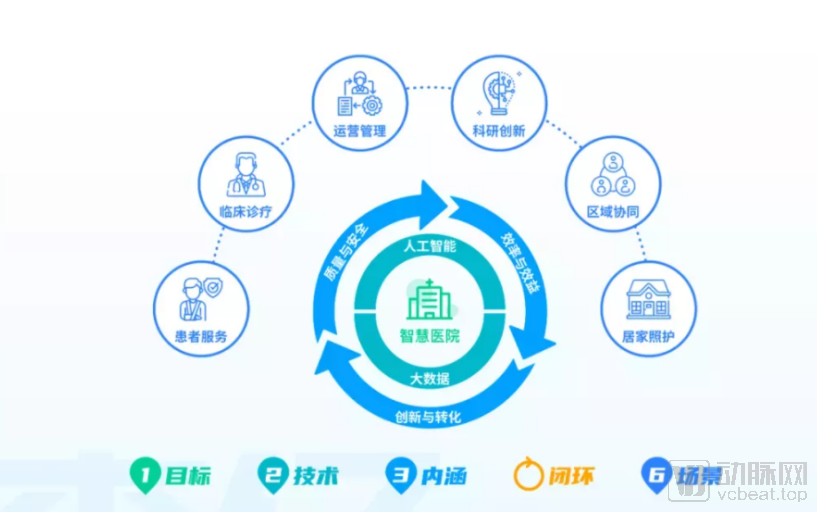
Senyi Intelligence SYNERGY Smart Hospital Solution
Anxiang Smart Healthcare has proposed the slogan “Promoting Construction through Evaluation” and introduced a comprehensive business system for smart hospitals. By leveraging informatization to achieve unified management of personnel, finances, and materials, it positions digital transformation as a key driver for the high-quality development of medical services, ensuring more convenient processes, more efficient services, and more refined management.
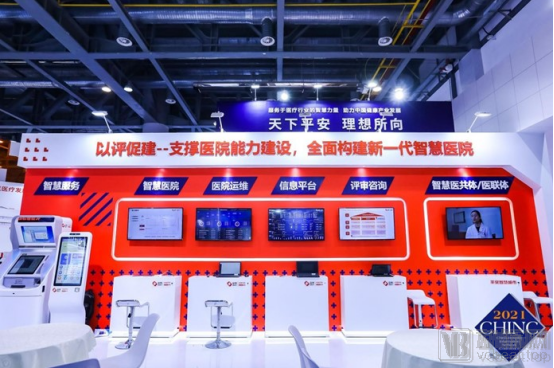
Anxiang Smart Healthcare Booth
However, within the conference venue, each enterprise’s understanding of “next-generation” extends beyond this. Nevertheless, next-generation hospital information systems should meet three criteria: new technology, new models, and new perspectives.
There are three keys to new technology, but firstNew Architecture。
Driven by policy review requirements, evolving service scenarios, and the widespread adoption of emerging technologies, hospital informatization is under constant pressure to upgrade. Traditional IT architectures have reached their productivity limits, making the migration of hospital systems to the cloud an imperative. Currently, policy review requirements, changes in service scenarios, and the proliferation of new technologies are all compelling continuous upgrades in hospital informatization.
Next is microservice architecture.. Containerization technology has been successfully applied in other fields, offering significant performance advantages over virtual machines. However, applying it to the traditional healthcare informatics industry is not as straightforward as following a formula. After all, even though old dirt roads have been paved into smooth concrete ones, if horse-drawn carriages are still used on them, their speed will not see a qualitative improvement, and the substantial effort invested in paving the concrete roads will often be called into question.
Microservice architecture is designed to address this issue by decomposing the functionalities of a large monolithic application into multiple lightweight microservices. These microservice modules can be flexibly combined and reconfigured, much like a Rubik's Cube, to form the required process-oriented applications. Compared with the original large monolithic application, the decoupled microservices offer greater flexibility, enabling instant online scaling up or down in response to actual traffic demands, thus achieving elastic scalability.
“Microservices decomposition cannot simply fragment legacy systems,” Li Tanwei of Huazhuo Technology told VCBeat. “There are nuances involved; healthcare business systems must undergo thorough modernization across the IaaS, PaaS, and SaaS layers to adapt to and fully leverage the powerful capabilities of containerization. Ultimately, this enables new cloud technologies to truly empower the healthcare industry, while meeting long-term developmental needs such as cross-hospital collaboration, rolling upgrades, elastic scaling, and unlimited expansion for hospital systems and resources.”
Finally, there is the standardized open platform. After all, the smooth concrete road has been paved, and cars designed to speed along it have been built; yet having only one car on the road would be overly monotonous. However, unlike vehicles in the real world, those in healthcare informatization do not possess standardized characteristics such as external dimensions or emission limits.
Therefore, the healthcare informatics industry urgently needs an “Android system” for the medical field. This entails an open platform that integrates development, management, and marketing capabilities for healthcare software and functionalities, allowing developers to build and list medical applications or software capabilities (microservices) on the Huazhuo Cloud Platform. By providing software development kits (SDKs) and platform services, and opening the app marketplace to customers, this approach will foster the emergence of more diverse business systems, integrate them into the healthcare industry ecosystem, and better meet the needs of hospital clients.In other words, a standardized open platform will be a key determinant of the long-term viability of next-generation hospital information systems.
RevisitingNew Model。
The new model is relatively simple, primarily featuring a novel service model and a novel development model.
Huazhuo Technology’s “Three Ones” model (one local cloud computing data center, one standardized hospital-wide business system, and one standardized and unified medical business data platform) enables the realization of the “Three Ones” objectives: integrated management of medical talent, a unified network of medical resources, and consolidated hospital financial accounts. This approach avoids duplicate investments in software and hardware across medical institutions, reduces construction costs to a certain extent, and facilitates standardization, interconnectivity, information sharing, business integration, and resource consolidation among multiple medical institutions, thereby achieving the goal of coordinated management.
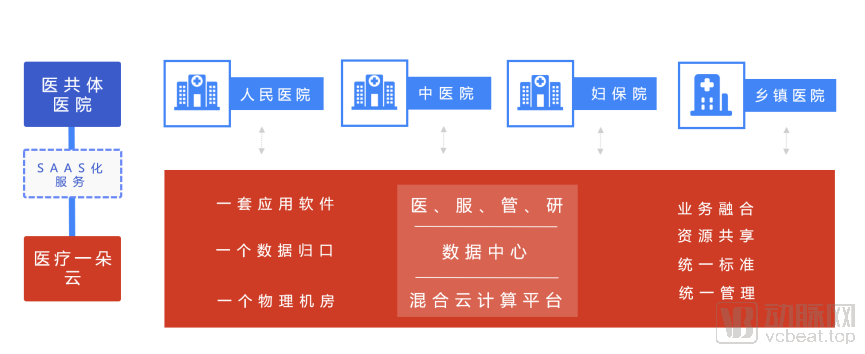
Furthermore, cloud-based hospital software services are no longer one-off software engineering projects; instead, they will evolve into continuous SaaS-based software and cloud resource services, with all cloud-hosted software applications undergoing rolling upgrades and continuous evolution.
"New Perspective" is another hallmark of the new generation of hospital information systems.
Next-generation hospital information systems must be designed from the perspective of end-users, including healthcare professionals, medical administrators, and patients. Therefore, health IT enterprises need to realign their focus and construct new business models in accordance with the “trinity” policy for smart hospitals. This entails designing solutions primarily from the patient’s perspective, paying close attention to the operational management of hospital personnel, finances, and materials, and delving into clinical practice to design system workflows based on physicians’ practical needs.
Certainly, the controversies surrounding the new generation of hospital information systems at CHINC lie not only in differing viewpoints but also in corporate sales philosophies. Conceptual inconsistencies determine product differentiation, while philosophical divergences lead to the divergence of business models.
Generally speaking, the business models of hospital information systems can be broadly categorized into the customization model, represented by Neusoft Corporation, and the standardized model, represented by Winning Health Technology Group.
The customized model can meet the differentiated needs of hospitals, but it lacks standardization. Due to varying capabilities across regional companies, the degree of customization differs, and costs are relatively high. In contrast, the standardized model offers lower costs and higher profit margins, but it cannot fully meet hospital requirements, which may adversely affect sales volume.
At the conference, under the new generation of hospital information systems, both established companies such as Neusoft Group and Winning Health, and emerging players like Anxiang Smart Healthcare and Xinxing Technology, are attempting to address this issue through AI-driven solutions.
A medical IT company stated, “Currently, artificial intelligence in healthcare informatics is developing along two main trajectories: one involves organizing and filtering collected data to transform it into actionable knowledge; the other focuses on the automatic generation of program code. Building on these two directions, we are striving to create a system that leverages data support and incorporates automated pattern generation, thereby enabling rapid customization of hospital systems. In short, this system will feature reusable foundational patterns while swiftly addressing the specific needs of hospitals. This is our approach to resolving the dilemma between customization and standardization.”
Regarding primary healthcare, policies such as the Notice on Promoting the Construction of Close-knit County-level Medical Communities and the Guidelines for Informatization Construction of County-level Medical Communities highlight the National Health Commission’s determination to strengthen primary care through the development of county-level medical communities. In September 2019, the central government officially designated Shanxi and Zhejiang provinces as pilot provinces for medical community initiatives, with 567 counties nationwide selected as pilot counties, thereby accelerating the development of close-knit county-level medical communities. At this conference, solutions for county-level medical communities have become a new selling point for major healthcare IT companies.
YLZThe release of the Compact Medical Community 3.0 aims to improve the county-level medical consortium system. Specifically, in alignment with the Healthy China Strategy, YLZ Information Technology Co., Ltd. seeks to establish a compact medical community health management organization centered on health, facilitating a shift from “treating existing diseases” to “preventing diseases,” and building an integrated “trinity” health service system encompassing disease prevention, medical treatment, and health management.
Taking the Shaxian General Hospital project as an example, YLZ Information Technology Co., Ltd. first built a regional information platform and data center for Shaxian General Hospital in accordance with national standards for regional interconnectivity. By unifying data standards and service specifications, the company achieved information interconnectivity and data sharing and aggregation within the region. Leveraging big data mining and analytics technologies, it conducted intelligent analysis and assessment of the general hospital’s operational management, providing intelligent decision-support services to facilitate scientific decision-making by administrators.
Secondly, YLZ Information Technology Co., Ltd. introduced the “fully closed-loop” design concept, leveraging “Internet Plus” technologies to integrate pre-consultation, intra-consultation, and post-consultation services, thereby achieving a seamless online-to-offline closed loop. Meanwhile, physicians can maintain necessary communication with patients and conduct post-consultation follow-ups through patient management tools on the hospital’s internet portal, closely monitoring patients’ recovery progress. This ensures that patients enjoy a consistent healthcare experience both at home and in the hospital, realizing a full-process closed loop.
Upon completion of the project, residents’ healthcare experience will undergo a significant transformation. In short, when residents visit hospitals, physicians will be able to access their medical records, treatment information, and health management data from various healthcare institutions, thereby providing robust evidence-based support for accurate diagnosis. Additionally, an intelligent assistant will provide reminders, interventions, and guidance on residents’ daily diet, sleep patterns, physical activity, and medication adherence at home. Overall, future healthcare will extend beyond mere disease treatment to encompass comprehensive health management.
Ping An Smart CityA comprehensive solution has also been launched for Medical Consortia. Its county-township-village integrated cloud HIS enables homogeneous medical services and unified management across the county. The AskBob clinical decision support system for auxiliary diagnosis and imaging-assisted diagnosis comprehensively enhances the capabilities of primary healthcare professionals, while the ZhiNiao training platform supports the lifelong professional development needs of medical staff.
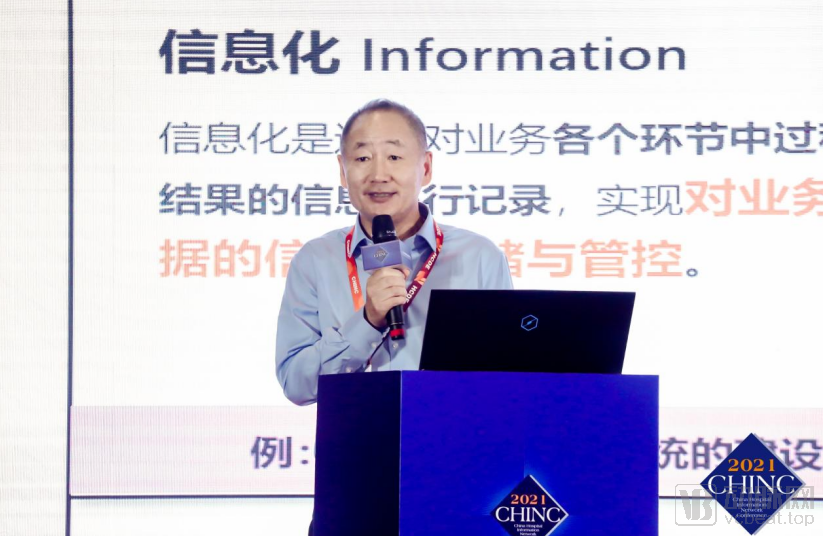
At the specialized satellite symposium, Sun Xizhuo, President of Shenzhen Luohu Hospital Group, introduced that the concept of a smart hospital should encompass informatization, intelligentization, and wisdom-based care. He also unveiled for the first time the joint initiative between Luohu Hospital Group and Ping An Smart Healthcare to co-develop a new generation of cloud management platforms and applications centered on resident health. This initiative shifts the focus of hospital informatization entirely toward “resident health,” fostering an open and mutually beneficial ecosystem of integrated hospital systems and applications to achieve comprehensive, full-lifecycle health management.
Currently, Ping An Smart Healthcare’s intelligent screening solutions for pulmonary nodules and chest X-rays, along with its intelligent bone age assessment and AI-assisted diagnostic system for head CT scans, are being piloted and explored within the Luohu Hospital Group, serving as assistants to physicians. Dr. Sun Xizhuo, President of the Luohu Hospital Group, stated that the group will collaborate with Ping An to jointly drive the development of smart hospital systems and application ecosystems, implementing the concept of integrating smart hospital construction centered on “resident health” with resident health management.
In-hospital informatization initiatives ultimately serve B-end clients, with a clearly visible ceiling; by contrast, the out-of-hospital market holds the potential to extend the payer base to include patients.
There are many strategic approaches in this sector. Beyond the CHINC framework, numerous companies provide full-course disease management and follow-up care services, including Weimai, Zhuojian Technology, and Jianhai Technology. Such projects not only help hospitals increase revenue but also enable patients to better manage their diseases.
Follow-up management is an integral component of whole-course disease management. Typically, patients such as those post-oncology surgery, pregnant women, and individuals with psychiatric disorders lose contact with hospitals after completing treatment. Given limited resources, hospitals need to allocate physicians to treat a larger patient population.
However, in practice, patients often encounter various issues after returning home, such as when to schedule follow-up visits and pain at the surgical site. At this stage, patients urgently need timely and authoritative answers to inform their next steps. Given this significant unmet need, follow-up management has emerged as a solution.
Whole-course disease management expands upon follow-up care by extending service models to cover the entire continuum, including pre-hospital management, in-hospital diagnosis, continuous treatment, and post-discharge rehabilitation tracking. Leveraging CHINC, numerous enterprises are employing AI technologies to streamline these processes, thereby democratizing access to management services previously available only at top-tier hospitals.
Taking Weimai’s AI-powered integrated digital follow-up system, “Weimai e-Visit,” released at the CHINC conference, as an example, this system focuses on addressing follow-up challenges for specialized clinical departments and specific diseases in China.
“The most distinctive feature of Weimai e-Visit is its intelligence. It can intelligently interpret each patient’s medical records, analyze their specific needs across the entire disease management cycle—including diagnosis, medication, postoperative rehabilitation, and home nutrition—and proactively contact patients for follow-up after discharge. By simulating a physician’s authentic voice, it conducts voice interactions with patients via telephone. Furthermore, during these voice interactions, Weimai e-Visit provides targeted health education based on patients’ descriptions of their current symptoms and facilitates intelligent scheduling of follow-up appointments, thereby achieving a closed-loop continuum of care from hospital discharge to readmission. This approach allows patients to experience genuine care and significantly enhances patient satisfaction,” stated Dr. Wan Ma, General Manager of the Weimai AI Digital Therapeutics Center, at the conference.
Upon completion of the follow-up, Weimai e-Visit AI records the entire call on the follow-up management platform, categorizes and tags the follow-up results as required, and synchronizes this information in real time to both patients and medical staff at hospital workstations. When abnormal results identified by artificial intelligence are received, the system can initiate real-time audio-video interactions with patients based on critical value thresholds for crisis management, allowing for immediate assessment of patient safety and rapid arrangement of hospital admission. Through continuous human-computer interaction, Weimai e-Visit further engages in autonomous learning and improvement, constantly optimizing communication models, enhancing the level of human-computer interaction, and independently refining patient follow-up protocols for partner hospitals.
Looking at the conference as a whole, the overall trend in informatization development has remained unchanged, with only a shift in focus. In addition to the four areas mentioned above, hardware-oriented initiatives such as hospital-based Internet of Things (IoT), logistics robots, and smart wards also attracted significant attention from experts, although the number of exhibitors showcasing these solutions was relatively small.
Data remains a focal point for every enterprise. After all, all forms of evolution are data-driven. Clinical Decision Support Systems (CDSS) require data; AI-based medical imaging relies on data; the Internet of Things (IoT) generates data and also depends on it. No data, no intelligence.
It is a rare occasion for the BAT giants to gather at this CHINC conference, with each showcasing distinct product strategies: Baidu focuses on solutions addressing specific medical issues; Alibaba’s “Future Hospital” initiative leans toward building an informational ecosystem via platform infrastructure; while Tencent occupies a middle ground, both recruiting partners through its “Xinglin Plan” and exhibiting various AI applications to solve practical problems.
Overseas exhibitors were virtually absent from this conference, yet it attracted non-industry companies such as Zhongnan Construction Design Institute to set up booths. This suggests that, driven by advancements in technology, evolving demand, and supportive policies, the medical IT market is expanding into broader horizons.