How Chinese Healthcare Companies Go Global: Insights from a Special Industry Survey
2020 was a year full of challenges. The COVID-19 virus raged across the globe with extreme contagiousness, forcing people to limit their social interactions to maintain “social distancing.” Personal contact was restricted, traditional offline service industries came to a near standstill, and the global economy suffered a massive shock.
While the pandemic severely impacted a wide range of industries, the healthcare sector seized significant opportunities. From epidemic prevention supplies to nucleic acid testing products for SARS-CoV-2, international demand for these items continued to rise steadily as the pandemic evolved. During this period, Chinese companies engaged in the research, development, and production of related products secured substantial overseas orders, exporting to hundreds of countries and regions—including the United Kingdom, France, Switzerland, Austria, Georgia, India, Japan, the United States, the United Arab Emirates, the Philippines, and Thailand—and achieved multi-fold growth in performance.
Furthermore, it is worth noting China’s outstanding performance in the development of COVID-19 vaccines. Among the 11 manufacturers worldwide whose COVID-19 vaccines have received emergency use authorization or marketing approval, five are Chinese (Sinopharm’s Beijing Institute of Biological Products, Sinopharm’s Wuhan Institute of Biological Products, Sinovac Biotech, CanSino Biologics, and Zhifei Longcom). In addition to meeting domestic demand, China has actively exported its COVID-19 vaccines to dozens of countries and regions, including Serbia, Hungary, Peru, Chile, Mexico, and Turkey.
Through this opportunity, overseas markets have gradually come to recognize Chinese healthcare products. However, will the wave of “going global” sustain itself in the post-pandemic era? From a rational perspective, traditional medical and health products that experienced supply-demand imbalances during the pandemic—such as masks, protective suits, and ventilators—are unlikely to generate long-term demand. In contrast, the trend of exporting innovative medical solutions resembles a powerful tide, continuing to sweep across the globe.
Take the innovative drug sector as an example. In recent years, bolstered by a series of domestic policies, China’s innovative drug industry has gained significant momentum. The successive introduction of measures—such as accelerating the review and approval of innovative drugs, facilitating the entry of overseas new drugs into the Chinese market, implementing the Marketing Authorization Holder (MAH) system, and encouraging high-quality innovative drugs to align with international standards—has accelerated the development of the entire pharmaceutical industry chain. Consequently, domestic innovative pharmaceutical companies have emerged in large numbers.
This trend is evident in the data. Since 2016, when the national government began accelerating the approval process for new drugs, more than 40 new drugs have been approved annually on average. In 2019, 60 new drugs were approved in China for the first time, including 4 traditional Chinese medicines and 56 Western medicines. Among these, over 10 were domestically produced new drugs, accounting for more than 20% and setting a new record. This milestone signifies that local innovative enterprises are emerging as a new force in China’s biopharmaceutical sector.
Of course, when discussing the most definitive direction for the future healthcare market, digitalization must not be overlooked. China’s digital health industry has consistently kept pace with global developments, and in certain niche sectors—such as internet-based healthcare, AI-powered medical imaging, and specific types of digital therapeutics—it has even taken a global lead. Digital tools are accelerating the growth of the healthcare sector at a multiplicative rate. Driven by national policies, the healthcare industry has transitioned from paper-based operations to an era of digital management. The outbreak of the pandemic further accelerated the adoption of digitalization in healthcare: while offline operations of enterprises and hospitals were hindered or stalled by the pandemic, online activities surged in popularity.
Internet healthcare is experiencing its strongest growth ever. Technologies and platforms such as artificial intelligence, machine learning, big data, and electronic data capture are actively being integrated into the drug development process, accelerating R&D efficiency and clinical trial progress, strengthening connections among physicians, patients, and enterprises, and comprehensively revolutionizing pharmaceutical business workflows.
Furthermore, as China increasingly aligns with international standards, a growing number of global players are entering the domestic market to capture a share. This competitive pressure is driving Chinese pharmaceutical companies to accelerate their growth: to build sustained influence in the industry and achieve long-term development, expanding onto the global stage is an inevitable path for local enterprises. Only by proactively engaging in international competition can they secure an invincible position.
In the process of expanding digital innovation solutions overseas, given the differences in healthcare systems across countries, digital solutions cannot always be seamlessly transferred from domestic experience to foreign markets. This is particularly evident in applications targeting hospitals and physicians. For individual enterprises, establishing a dedicated team to drive international expansion when the market entry landscape remains uncertain entails considerable risk. However, by aggregating the needs of numerous digital health companies and providing guidance and recommendations through enterprises with expertise in enabling global healthcare expansion, the internationalization journey of China’s digital healthcare solutions could become significantly smoother.
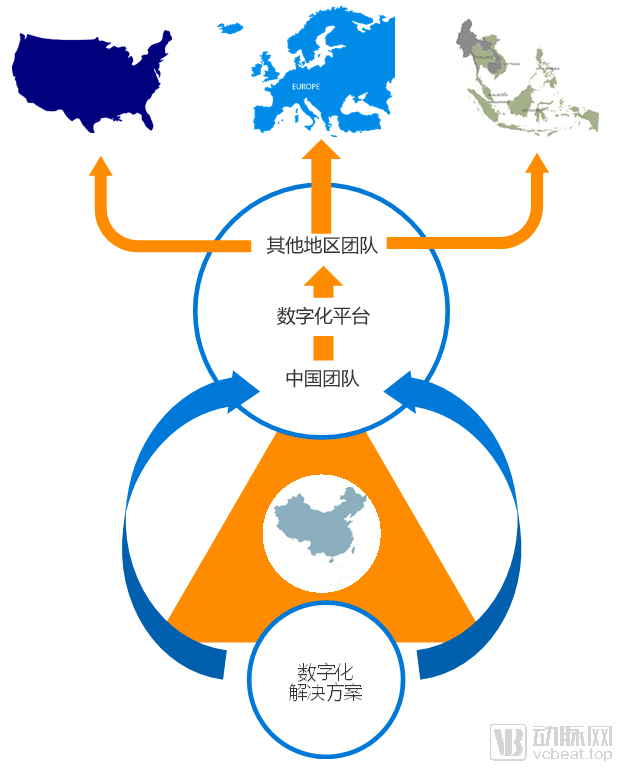
Driven by robust demand for global expansion, VCBeat conducted targeted research on companies seeking to enter overseas markets, outlining key pain points and corresponding solutions encountered during their internationalization journeys.
Our research reveals that the majority of digital health companies (over 50%) have a demand to expand into the European market, while approximately 30% aim to enter the U.S. market. The fewest companies seek to expand into Southeast Asia and other regions, accounting for less than 10%. This also indicates, to some extent, that the operational difficulties faced by companies in the Southeast Asian market due to rigid environmental constraints outweigh the uncertainties and risks associated with intense competition and other factors in the European and American markets.
From the perspective of specific needs for enterprises going global, most digital companies typically face the following pain points and requirements:
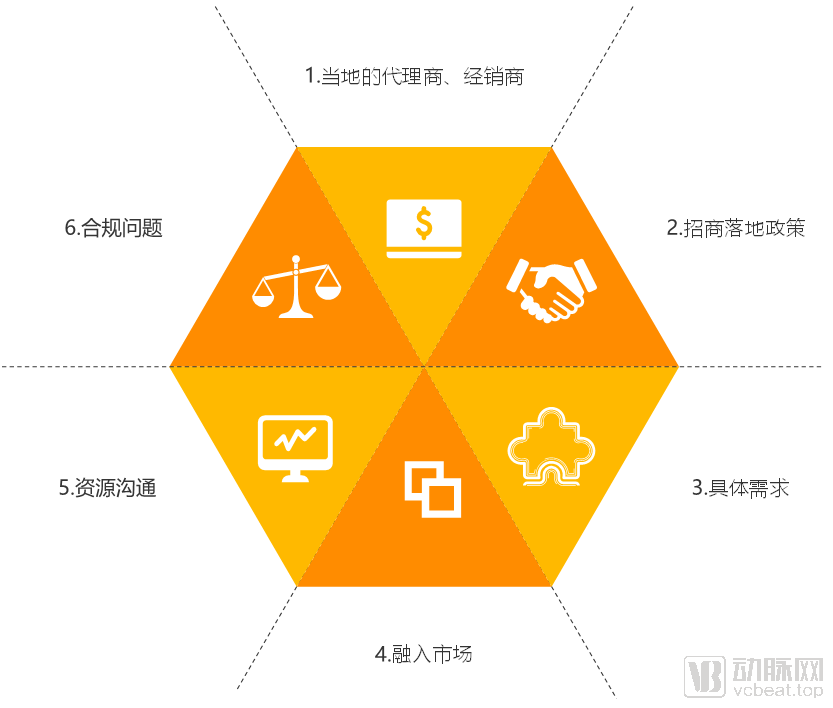
(1) Unable to locate local agents or distributors
(2) Unclear about local investment attraction and implementation policies; seeking to understand the conditions and requirements for establishing a local office.
(3) Unclear about the specific demands of the local market, with some uncertainties regarding the local target service population
(4) How to rapidly establish local technical and sales teams, penetrate the market, and forge strategic partnerships with local enterprises
(5) Seeking guidance on how to communicate with local healthcare institutions regarding data analysis and other resource-sharing matters
(6) How to ensure the legality, security, and convenience of data storage during local service delivery
Overall, healthcare companies remain uncertain about their global expansion strategies, with varying needs in areas such as pathway planning, team building, and compliance with local laws and regulations. Nevertheless, the demand for international expansion is real, as companies seek to tap into broader global markets and establish them as a second growth engine.
Some of these needs can be met by procuring corresponding professional services; for instance, insights into local investment promotion policies and compliance issues can be obtained through specialized legal teams. Other challenges, such as understanding specific local market demands and facilitating connections with local resources, require more robust on-the-ground operational support. These are not the types of services that can be simply purchased with money.
For digital solutions, partnering with international cloud platforms such as Microsoft Azure, AWS, or Google Cloud can help address many of the challenges encountered when expanding overseas. The technology companies behind these cloud platforms have established mature ecosystems abroad, offering comprehensive support ranging from market access to resource alignment.
For instance, regarding channel partners, if a product is deployed on a technology company’s cloud platform, the solution can be promoted through co-selling by the technology company’s local sales team, which directly assumes the role of a channel partner. In terms of capturing local demand, the technology company’s local team can continuously gather requirements from the local healthcare industry during daily operations and recommend high-quality solutions accordingly. As for compliance, since data processing and service delivery occur on the cloud platform, the underlying cloud infrastructure’s data management and compliance capabilities can address the majority of data compliance issues.
In our communications with enterprises, we have narrowed down to their specific digitalization/cloud requirements, which mainly include the following points:
1. Cloud Service Requirements: Imaging Cloud Storage, AI Analysis.
2. Establish an information release platform to publish rankings of sales volume and sales revenue for medical devices exported overseas.
3. Cloud Services, Data Security, and Storage
4. Digital Chronic Disease Management
5. Electronic Medical Record (EMR) Collection System, Electronic Document Management System, Analytics System, Cloud Services, Randomization System, Clinical Trial Management System (CTMS), Remote and Independent Image Reading, etc.
Furthermore, regardless of whether the ultimate target markets for overseas expansion are the United States, Europe, or Southeast Asia, companies commonly report two major challenges: first, logistics issues. Logistics infrastructure in overseas countries is less developed than in China, resulting in high costs. For instance, in the case of medical devices, companies have reported that the logistics cost for a single unit can sometimes exceed its selling price; second, customs clearance issues. Most companies indicate that customs clearance is a persistent headache due to extremely cumbersome procedures, which require significant time and effort.
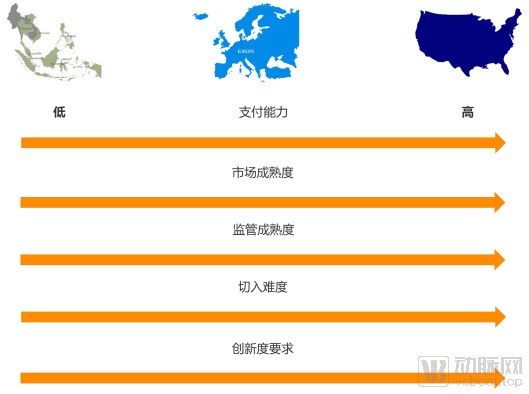
Global expansion is a major trend, and selecting the right strategic direction within this broader movement is even more critical for enterprises. For Chinese companies currently pursuing internationalization, the United States, Europe, and developing regions represented by Southeast Asia are the three key markets we aim to focus on. Due to the distinct healthcare environments in each of these regions, companies must adopt tailored strategies when entering these markets.
Of course, beyond these regions, Japan and South Korea also represent important destinations for the global expansion of the healthcare industry. However, due to similarities in ethnicity, culture, and healthcare systems, market entry strategies for Japan and South Korea differ significantly from those for the broader global market. Moreover, as many healthcare products have already been exported to these countries and local implementation consulting services are relatively accessible, this topic will not be discussed in depth here.
U.S. Market: Challenges and Opportunities Coexist
From an objective consumer market perspective, the United States is the world’s largest importer of goods, boasting immense consumer potential. It is also the preferred destination for overseas listings by many high-quality enterprises. From a subjective standpoint, a fundamental prerequisite for Chinese domestic companies to “go global” is a thorough understanding of the target overseas market. Notably, a significant proportion of founders in the healthcare industry are returnees, with a majority having studied or worked in the United States. This group possesses relatively comprehensive knowledge of the U.S. market, policies, and regulations. This is one of the primary reasons why most high-quality Chinese domestic companies prioritize the U.S. market for their international expansion.
Furthermore, as a highly developed nation, the United States has achieved internationalization, standardization, and transparency in its healthcare policies and regulations. In the absence of trade restrictions, entering the U.S. market entails relatively lower regulatory uncertainty and risk compared to developing countries. The U.S. boasts a robust research environment, a concentration of top-tier talent, and a vibrant culture of innovation and entrepreneurship, with its industrial and technological development leading the world. Establishing a foothold in the U.S. market signifies that a company has built global competitiveness.
Leveraging the U.S. FDA’s mature regulatory requirements and product registration system, companies expanding into the U.S. market have an additional strategic consideration. For certain medical product categories where China’s domestic regulatory framework is still evolving, obtaining marketing authorization in the United States—under its well-established regulatory system—serves to validate the clinical value of their products, thereby facilitating sales in other regional markets.
However, from an objective perspective, the U.S. healthcare market is highly developed and intensely competitive. In niche sectors such as innovative pharmaceuticals, medical devices, and digital health solutions, the market exhibits a strong trend toward self-sufficiency, resulting in relatively weak demand for external imports. Furthermore, amid escalating Sino-U.S. tensions in recent years, ongoing trade frictions between the two countries have significantly impacted the ability of Chinese enterprises to establish and expand their presence in the U.S. market.
Thus, entering the U.S. market is akin to a double-edged sword; securing a foothold within its mature and well-established healthcare system is by no means an easy feat. Success would be hailed as boldness, while failure would be deemed sheer folly.
European Market: Broad Opportunities and Strong Demand
For Chinese domestic companies selecting overseas target markets, Europe is the second-largest market after the United States, with considerable consumer potential in the healthcare sector worth anticipating.
Compared to the fierce competition in the U.S. healthcare industry, the European market is slightly more relaxed and appears more “friendly” to Chinese enterprises. From a political perspective, Europe is more diverse than the United States, which operates under a single national political agenda. Although the European Union functions as a unified entity with centralized product approval processes, the distribution channels for medical products vary across individual member states. This relatively diversified environment enables companies to achieve more rational supply chain allocation, reducing their vulnerability to significant constraints or shocks from any single country and thereby mitigating many serious risks associated with policy restrictions.
Furthermore, similar to the U.S. market, Europe’s international policy standards, vibrant innovation and entrepreneurship ecosystem, and world-class research environment offer Chinese enterprises valuable opportunities to broaden their global perspective and gain insights into cutting-edge technologies and industry development. Additionally, access to Europe’s pool of top-tier global talent is indispensable for Chinese companies seeking to build internationally competitive teams.
Therefore, considering factors such as market maturity, purchasing power, and regulatory friendliness, the European market appears to be a more promising option for Chinese companies than the U.S. market.
Southeast Asian Market: Rapid Growth, Yet to Be Tapped
Compared with the U.S. and European markets, companies face virtually no direct competition in Southeast Asia. Furthermore, while Southeast Asia has a larger population base, its pharmaceutical industry remains relatively underdeveloped, creating substantial demand for certain medical products. Theoretically, this translates into stronger consumer willingness to purchase such products in the Southeast Asian market. However, purchasing power in the region is relatively low.
Among all Southeast Asian countries, with the exception of the relatively developed Singapore, nations such as Indonesia, Malaysia, the Philippines, and Vietnam remain largely typical developing economies. Consequently, their purchasing power cannot be compared to that of the US or European markets. Fortunately, in recent years, some Southeast Asian countries—exemplified by Indonesia, the largest in land area and population—have maintained robust economic growth. Meanwhile, the newly implemented national health insurance schemes have continued to expand over the past two years, enhancing the population’s ability to pay for a wider range of pharmaceuticals and medical devices. Characterized by an underdeveloped healthcare industry on one hand and surging medical demand driven by economic growth on the other, the Southeast Asian market presents significant opportunities for Chinese enterprises to explore.
Of course, we must also fully acknowledge the hard environmental constraints imposed by underdevelopment in Southeast Asia. These constraints pose an even more critical bottleneck for products such as digital solutions. Digital solutions typically rely on robust computational power and stable cloud platforms to achieve optimal performance. However, in certain low-income countries, the limited level of informatization within their healthcare systems may hinder the local implementation and adoption of digital products.
Inadequate infrastructure, low operational efficiency, and imperfect policies and regulations are the most thorny challenges for companies developing in Southeast Asia, and are even the main factors leading to total financial losses for companies in the Southeast Asian market. In terms of corporate growth, the Southeast Asian market lags behind China in terms of cutting-edge technology support and global talent supply.
Overall, whether seeking development in the U.S., European, or Southeast Asian markets, there are three essential elements that companies must ensure:
1. Possessing robust technology and products, with sufficient capability to compete on an equal footing with foreign enterprises;
2. Possess an in-depth understanding of the target market;
3. Sufficient financial resources to support the initial expansion of overseas business.
In the future, VCBeat will continue to track and research the global expansion of the healthcare industry, providing real-time updates on the latest developments in medical sector internationalization. Additionally, VCBeat will collaborate with external ecosystem partners—such as technology companies, embassy resources, and industrial parks—to assist enterprises seeking to expand overseas in accessing international channels and solutions.
If you have any needs related to overseas expansion, please contact us via the contact information provided at the end of this report.
Scan the mini-program QR code below to access the full report: “Quarterly Journal of Digital Innovation in Healthcare – Digital Solutions Crossing the Pacific.”