

RayBioMed's Trace Element Analyzer Inspector SQ60 Gains Market Approval, Pioneering a New Era in Clinical Trace Element Testing

Reliable Med
Developer, Manufacturer, and Seller of Clinical Mass Spectrometry Equipment and Matching Reagent Kits
Although trace elements are present in the human body in minute quantities, they play a crucial role in physiological and biochemical functions such as growth and development, cell division, tissue repair, immune function, endocrine regulation, and enzymatic activity, thereby being intimately linked to human survival and health. Based on their effects on the human body, elemental constituents can be classified into essential elements and harmful elements. For instance, iron, zinc, copper, molybdenum, cobalt, selenium, vanadium, and iodine are considered essential elements, whereas lead, cadmium, and mercury are classified as harmful elements.
Both deficiency and excess of trace elements in the human body can significantly impact health. Current research has demonstrated that the deficiency or excess of certain elements is directly associated with various diseases. Meanwhile, trace element levels in the human body are maintained through a dynamic equilibrium process. Therefore, accurate, rapid, and convenient detection of trace elements is of great significance for both health management and clinical diagnosis and treatment.
According to the State Council, the *Notice of the State Council on Issuing the Outline for the Development of Chinese Women and the Outline for the Development of Chinese Children* (Guo Ban Fa [2011] No. 24) issued in 2011, the *Notice of the General Office of the State Council on Issuing the Outline for the Development of Food and Nutrition in China (2014–2020)* (Guo Ban Fa [2014] No. 3) issued in 2014, and the *Outline of the “Healthy China 2030” Plan* issued in 2016 jointly proposed that: the living standards of the Chinese people have continuously improved, nutritional supply capacity has significantly strengthened, and the nutritional health status of the population has markedly improved; however, challenges such as the coexistence of undernutrition and overnutrition among residents, the high prevalence of nutrition-related diseases, and the lack of widespread adoption of healthy nutritional lifestyles remain significant factors affecting national health. Furthermore, these documents emphasized the importance and necessity of implementing nutritional monitoring.
Numerous expert consensus statements and guidelines, such as the “Expert Consensus on the Clinical Application of Vitamin and Mineral Supplements in Disease Prevention and Treatment,” the “Expert Consensus on the Application of Vitamin and Mineral Supplements to Improve Children’s Healthy Growth,” the “Recommendations for the Prevention and Treatment of Micronutrient Deficiencies in Children,” the “Expert Consensus on the Clinical Application of Multi-Trace Element Preparations,” and the “Guidelines for the Diagnosis and Treatment of Thyroid Diseases in China—Iodine Deficiency,” among dozens of others, highlight and strongly recommend trace element testing as an important adjunctive tool in the clinical diagnosis and treatment of diseases.
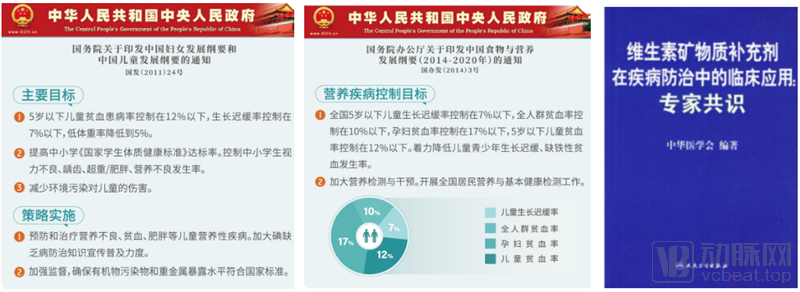
Selected Policies Issued by the State Council and Clinical Expert Consensus
Currently, trace element testing in the human body has been widely adopted by medical institutions in China, particularly gaining extensive recognition from nutritionists as well as specialists in obstetrics, gynecology, and pediatrics. Most maternal and child health hospitals, children’s hospitals, and general hospitals have incorporated the detection of human elements (such as lead, zinc, copper, calcium, magnesium, and iron) into their routine examination panels. These tests are utilized for health check-ups, screening, control of birth defects, and providing clinical auxiliary evidence for disease diagnosis and treatment.
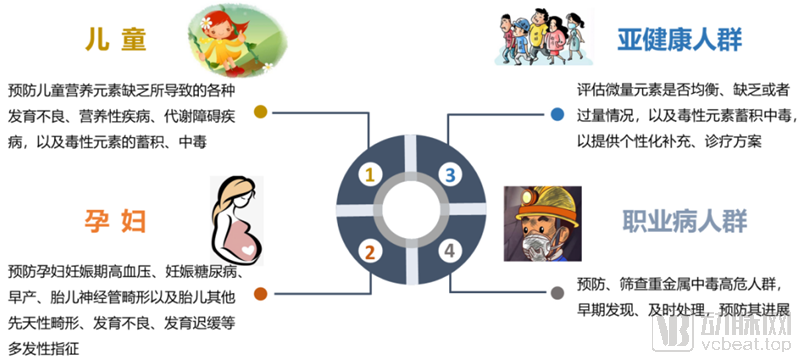
Figure: Target Audience for Trace Element Testing
The National Center for Clinical Laboratories initiated the national external quality assessment for blood lead testing in 2006 and launched an external quality survey for five whole-blood elements (copper, zinc, calcium, magnesium, and iron) in 2010. However, domestically, current trace element detection methods predominantly rely on atomic absorption spectrometry and electrochemical techniques. These methods fail to meet clinical demands for multiple elements strongly recommended for clinical monitoring, such as manganese, selenium, iodine, and aluminum. Furthermore, traditional methods are operationally complex, require separate analyses for each element, and are highly susceptible to environmental interference, resulting in inaccurate results and poor reproducibility (Citation: Chinese General Practice, 2018;21(8):888-95). In summary, existing trace element detection methods do not fully satisfy actual clinical needs.
With the advancement of clinical trace element detection technologies, inductively coupled plasma mass spectrometry (ICP-MS), a novel method characterized by excellent reproducibility, high sensitivity, simple sample preparation, high automation, and a wide linear range, enabling rapid determination, is quietly becoming the “gold standard” for clinical trace element analysis (Citation: CLIN BIOCHEM, 2019;40(3):115-30.).
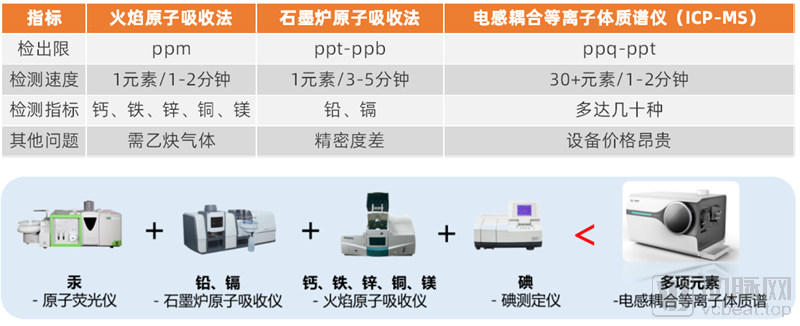
Comparison of Different Methods for Trace Element Detection
Both the U.S. Centers for Disease Control and Prevention (CDC) and the National Health Commission of the People's Republic of China have established industry standards for the determination of trace elements in blood and urine using inductively coupled plasma mass spectrometry (ICP-MS).
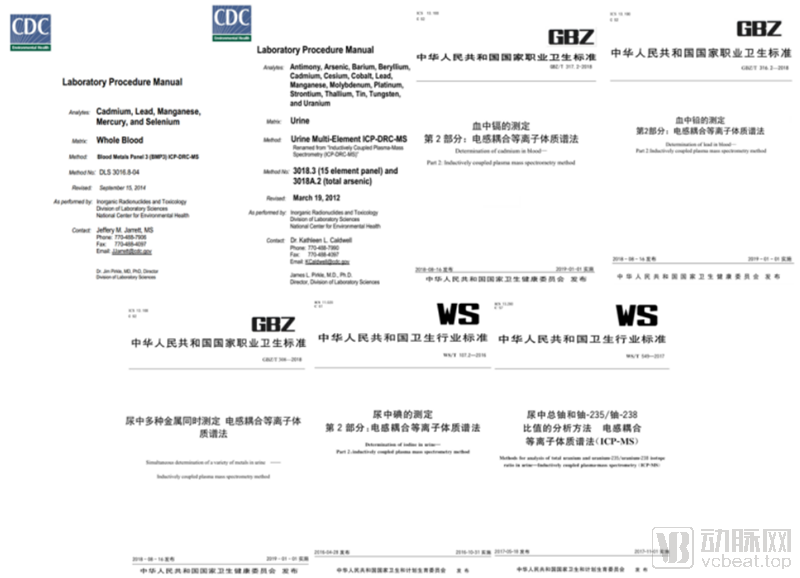
Industry Standard for Clinical Trace Element Detection Using Inductively Coupled Plasma Mass Spectrometry
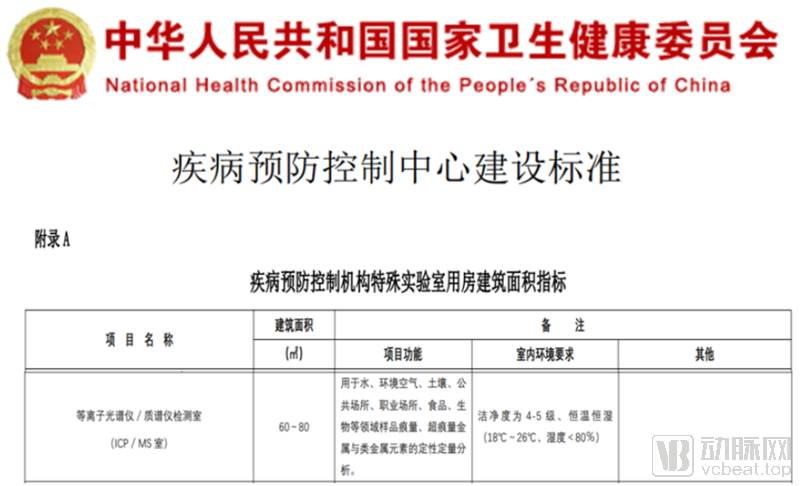
2020 NHC Requirements for ICP-MS Laboratory Construction to Strengthen the Healthcare-Associated Infection Prevention and Control System
In 2019, the Clinical Mass Spectrometry Laboratory Medicine Professional Committee of the Laboratory Physicians Branch of the Chinese Medical Doctor Association formulated the "Consensus on the Application of Mass Spectrometry Technology in Clinical Trace Element Testing," based on currently published mass spectrometry technical standards, relevant guidelines, literature, and practical operational experience, providing basic guidance for clinical laboratories to adopt mass spectrometry technology for trace element testing.
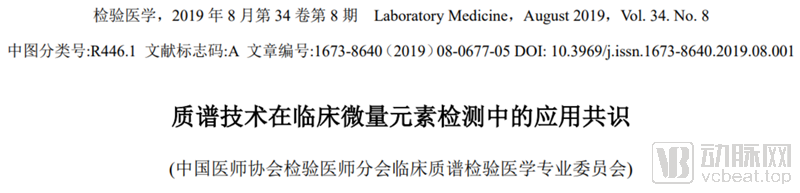
Consensus on the Application of Inductively Coupled Plasma Mass Spectrometry in Clinical Trace Element Testing
On April 23, 2021, Reliable Med’s Inspector SQ60 Trace Element Analyzer obtained the Medical Device Registration Certificate of the People's Republic of China issued by the Zhejiang Provincial Medical Products Administration, marking its official approval for market launch and ushering in a new chapter in clinical trace element testing!
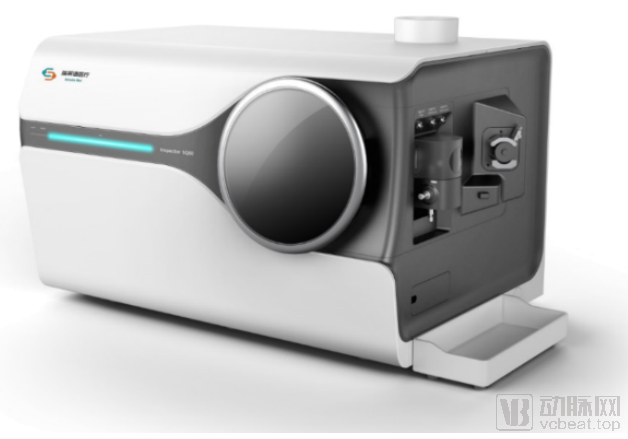
Trace Element Analyzer Inspector SQ60
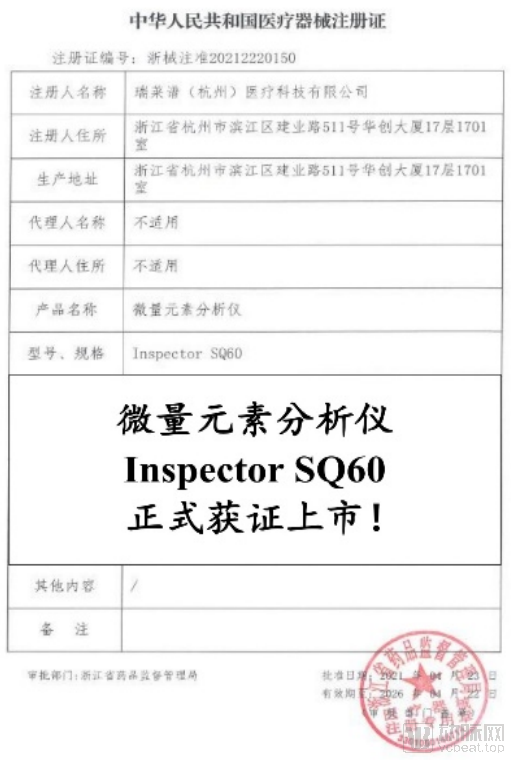
Registration Certificate for Inspector SQ60 Trace Element Analyzer (Zhe Xie Zhu Zhun 20212220150)
Three Key Features of the Inspector SQ60:
Zheng Yi, General Manager of Reliable Med, introduced that most ICP-MS instruments currently on the market are general-purpose models falling under the category of scientific instruments, primarily used in fields such as environmental protection and food safety. To meet the specific needs of clinical customers, the Inspector SQ60 has undergone customized research, development, and improvements in various aspects, including the contamination resistance of the mass spectrometer’s ion optical system (as samples are mostly blood or urine), software intelligence, and the specificity of spectral libraries. These efforts aim to create an ICP-MS truly tailored to the usage habits of laboratory professionals in China.
Inspector SQ60 simplifies the complex and cumbersome software operating systems of scientific instruments into a Chinese-language, visualized standard testing platform tailored to local user habits. It requires no prior training, allowing users to operate it immediately, significantly reducing both training and hands-on operation time, thereby making testing more convenient and efficient.
As an upstream manufacturer, Reliable Med provides 24-hour "end-to-end" service, ensuring robust after-sales service quality.
Furthermore, all technical specifications of the Inspector SQ60 have been benchmarked against mainstream international products, achieving a level of performance comparable to advanced foreign counterparts. It offers high sensitivity at the parts-per-trillion (ppt) level for medium-to-high mass ranges and demonstrates stable performance. This breakthrough has shattered the monopoly held by foreign enterprises in the market for ICP-MS-based human trace element testing, filled a gap in the domestic clinical market, and effectively leveraged technological innovation to enhance quality and efficiency.
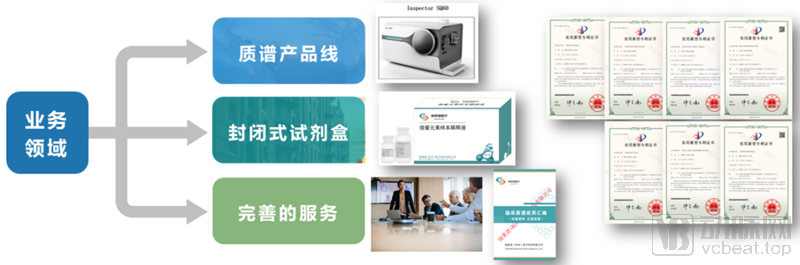
Reliable Med (Hangzhou) Medical Technology Co., Ltd. (hereinafter referred to as “Reliable Med”) is located in Binjiang District, Hangzhou City, Zhejiang Province. Established in 2019, it is an in vitro diagnostics (IVD) company dedicated to the research and development, production, and sales of original clinical mass spectrometry instruments and supporting reagent kits. The company has assembled a team of senior professionals with extensive experience in mass spectrometry instrument R&D, industrialization, clinical registration, product operations, and marketing, along with a group of seasoned clinical and application experts. Its aim is to provide clinical medical customers with a one-stop comprehensive solution encompassing mass spectrometry instruments, automated supporting equipment, in vitro diagnostic reagent kits, application methodologies, and services. Currently, the company boasts the most comprehensive clinical mass spectrometry product pipeline in China, holding over 50 patents and software copyrights.
Reliable Med is deeply committed to the biohealth industry, safeguarding national welfare and people's livelihood. Guided by customer needs and upholding a spirit of pragmatism and perseverance, we promote advanced biotechnologies and strive tirelessly to protect human health.