

Healthcare Payment Innovation and Insurance Reform: The 4th International Health Finance Forum Successfully Concludes in Beijing
The 4th International Health Finance Summit was successfully held in Beijing from April 22 to April 23. Organized by the China Medical Education Association, co-organized by the “Belt and Road” Financial Cooperation Research Institute of the China International Cultural Exchange Center, and undertaken by Ai Shekang, the summit collaborated with industry leaders such as Pfizer, Roche, Sanofi, AstraZeneca, and Novartis. It brought together more than 70 renowned domestic and international leaders and scholars to explore the most cutting-edge and high-potential topics under the themes of “Health Insurance Reform” and “Multi-tiered Medical Security,” engaging in in-depth discussions on policy trends and key industry issues.
The forum received strong support from People’s Daily Health Times, the Health Finance Research Office of Fudan University’s School of Management, Phoenix Finance Research Institute, and numerous mainstream media outlets, and offered a full live online broadcast for the first time. This year’s event was attended by nearly 300 professionals and more than 20 media reporters, creating a vibrant atmosphere.
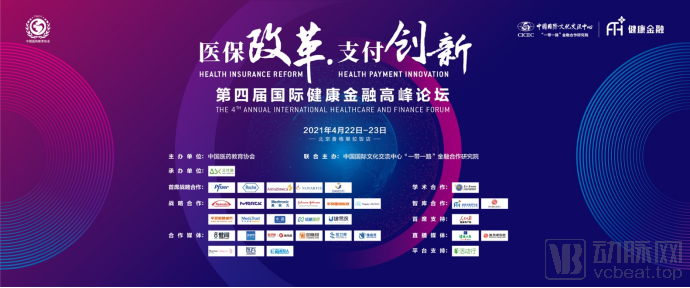
The 4th International Health Finance Summit
In November 2020, the Proposal of the Central Committee of the Communist Party of China on Formulating the Fourteenth Five-Year Plan for National Economic and Social Development and the Long-Range Objectives Through the Year 2035 explicitly stated: “Improve the multi-tiered social security system, comprehensively advance the construction of a Healthy China, and implement the national strategy for actively responding to population aging.” In close alignment with these national strategic guidelines, this year’s high-level forum features four major thematic segments: (1) Building a Multi-Tiered Medical Security System in the “14th Five-Year Plan” Era; (2) Fostering an Innovative Ecosystem for the Medical Security System through Multi-Stakeholder Participation; (3) Leveraging Technology to Establish a Multi-Tiered Medical Security System; and (4) A Closed-Door Session Focused on “City-Specific Commercial Health Insurance.”
At the two-day forum, He Jiesheng, Dean of the “Belt and Road” Financial Cooperation Research Institute under the China International Cultural Exchange Center, former Vice Minister of Health, and former Chairman of China Life Insurance (Group) Company; Huang Zhengming, President of the Chinese Medical Education Association and Academician of the United Nations International Academy for Ecology and Life Safety Sciences; Gauden Galea, World Health Organization Chief Representative in China; and Shang Jingguo, Secretary-General of the Insurance Association of China, delivered opening remarks. They extended their sincere wishes for the successful convening of the conference, fully affirmed the topics addressed, and provided guiding suggestions for the subsequent discussions and sharing sessions.
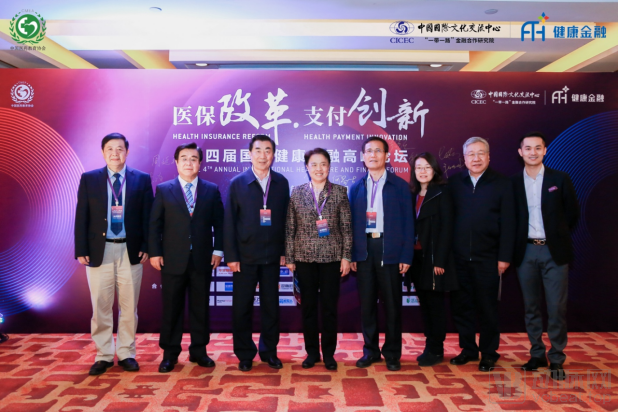
Group photo of some attending experts (from left to right):
Liu Yuanli, Counselor to the State Council; Executive Dean of the School of Health Policy and Management, Chinese Academy of Medical Sciences & Peking Union Medical College; Member of the Expert Advisory Committee on Healthcare Reform under the State Council; President of the China Health Care Association
Zhou Yanli, Member of the National Committee of the Chinese People's Political Consultative Conference (CPPCC), Former Vice Chairman of the China Insurance Regulatory Commission (CIRC)
Huang Zhengming, President of the China Medical Education Association and Academician of the United Nations International Academy for Ecology and Life Safety Sciences
He Jiesheng, Dean of the “Belt and Road” Financial Cooperation Research Institute at the China International Cultural Exchange Center, former Vice Minister of Health, and former Chairman of China Life Insurance (Group) Company
Jin Xiaotao, President of the Chinese Society for Health Information and Big Data in Healthcare, Former Vice Minister of the National Health and Family Planning Commission
Qiu Yue, Researcher at the Development Research Center of the State Council; Director, Department II of China Development Research Foundation
Zheng Bingwen, Member of the National Committee of the Chinese People's Political Consultative Conference (CPPCC), Director of the World Social Security Research Center at the Chinese Academy of Social Sciences
Liu Chang, Head of Greater China and Southeast Asia at iShakang
Among the four thematic sections, the High-Level Forum invited numerous domestic and international policy research experts from institutions such as the National Committee of the Chinese People's Political Consultative Conference, the China Health Information and Healthcare Big Data Society, the World Social Security Research Center of the Chinese Academy of Social Sciences, the State Council’s Expert Advisory Committee on Healthcare Reform, the Development Research Center of the State Council, the China Development Research Foundation, and the National Expert Committee on Diagnosis, Treatment, and Guarantee for Rare Diseases, to share their in-depth insights. Topics covered included innovative development of multi-tiered medical security, healthcare informatization, reform of the medical security system, strategic purchasing by medical insurance, innovation in guaranteeing access to rare disease medications, multi-party cost-sharing, internet-based regulation, and closed-loop medical ecosystem services. Representatives from pharmaceutical, medical device, and insurance companies participated in roundtable discussions on industry-related themes. Innovative enterprises such as Ping An Smart City, Medbank Health Technology, Shuidi Inc., and Nuohui Health Technology presented compelling case studies on innovation.
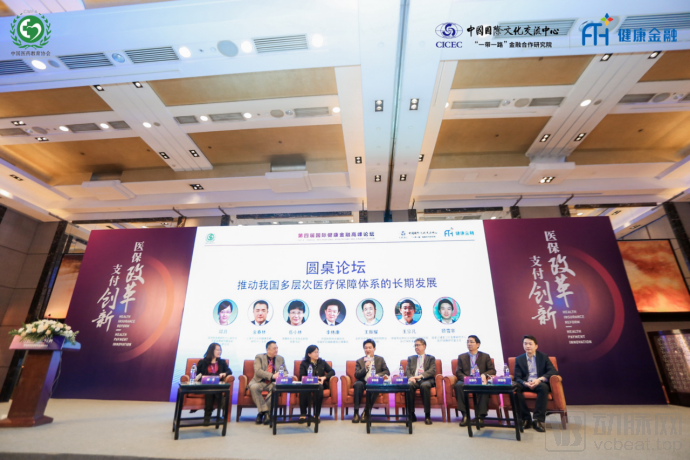
Roundtable Discussion: Promoting the Long-Term Development of China’s Multi-Layered Medical Security System
Roundtable Panelists (from left to right):
Qiu Yue, Research Fellow at the Development Research Center of the State Council; Director, Department II of the China Development Research Foundation
Jin Chunlin, Director of the Shanghai Health and Development Research Center
Yue Xiaolin, Party Secretary of Xuanwu Hospital, Capital Medical University
Li Linkang, Vice President of the Chinese Hospital Association, and Executive Chairman of the China Rare Disease Alliance
Wang Zhenyao, Dean of the China Philanthropy Research Institute at Beijing Normal University and Former Director-General of the Ministry of Civil Affairs
Wang Zongfan, Director of the Medical Insurance Division, Chinese Academy of Labor and Social Security
Gu Xuefei, Director of the Medical Security Research Office, Health Development Research Center, National Health Commission
At the same time, the high-level forum officially released two reports co-authored by Fudan University’s Health Finance Research Lab and iShengkang: Supplementary Protection Models—Charitable Donations and Medical Mutual Aid: Strengthening and Improving the Multi-tiered Medical Security System, and Technology Empowering the Construction of the Medical Security System: Practices in China’s Health Industry and Universal Health Coverage.
"Supplementary Forms of Security—Charitable Donations and Medical Mutual Aid: Improving and Perfecting the Multi-tiered Medical Security System" reviews the development history of China's medical security system, medical charitable donations, and medical mutual aid. It provides an in-depth analysis of the current status and development of medical charitable donations and medical mutual aid, and puts forward corresponding policy recommendations and industry development suggestions. As important components of the national medical security system, charitable medical assistance and medical mutual aid urgently need to accelerate their comprehensive development in model innovation, government regulation, and public-private partnerships, so as to help consolidate the achievements of poverty alleviation and promote the steady development of China's overall medical security system.
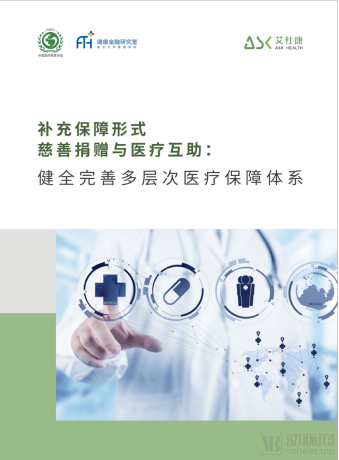
Report Released: “Supplementary Protection Models—Charitable Donations and Medical Mutual Aid: Strengthening and Improving the Multi-Tiered Medical Security System”
“Technology Empowering the Construction of the Medical Security System: Practices in China’s Health Industry and Universal Health Coverage” takes the unique opportunities and application scenarios of fintech in China as examples to analyze the key value of fintech for the medical security system, as well as the development and challenges of health fintech models, while providing an outlook on future directions. Meanwhile, the report presents case studies of other countries’ practices in leveraging fintech to address issues such as limited healthcare financing channels, high medical service costs, and inadequate national healthcare benefits. These insights offer references for policy-making and industrial development in China, helping to reduce medical costs at the source and promote a value-oriented transformation of the medical security system.
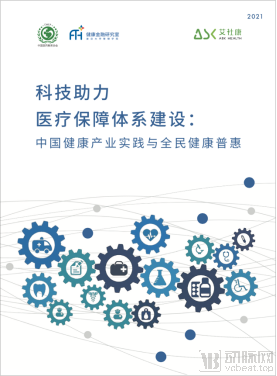
“Technology Empowering the Construction of Healthcare Security Systems: Practices in China’s Health Industry and Universal Health Coverage” Report Released
During the final half-day of the forum, more than 60 industry leaders convened to engage in in-depth discussions on city-specific commercial supplemental medical insurance, exchanging views extensively on its innovative models, policy directions, and the establishment of industry standards.
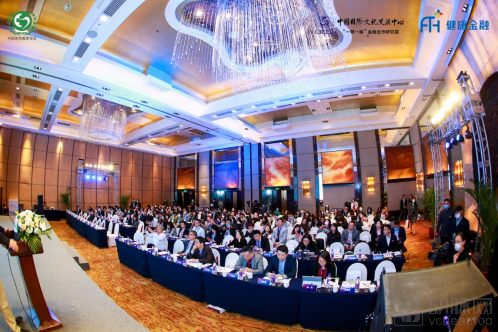
On-Site of the 4th International Health Finance Summit