

Breath-Based Cancer Early Screening: A New Frontier in Molecular Diagnostics
In the global IVD (in vitro diagnostics) market, valued at over $10 billion, where will future growth drivers emerge? Breath analysis is poised to become one of them. Over the past decade, breath testing technologies have witnessed significant advancements worldwide, gradually unveiling a new frontier in breath-based diagnostics.
Although our exhalation appears invisible, each breath contains biomarkers that reflect the physiological and pathological states of various organs in the body. These biomarkers can serve as a basis for disease diagnosis and health monitoring.
Biomarkers generated by the metabolism of organs throughout the body travel via the bloodstream to the alveoli and are exhaled. This process means that our exhaled breath contains not only well-known components such as oxygen, nitrogen, carbon dioxide, and water vapor, but also up to 100–200 types of trace biological signaling molecules that reflect the physiological status of various organs—Volatile Organic Compounds (VOCs)。
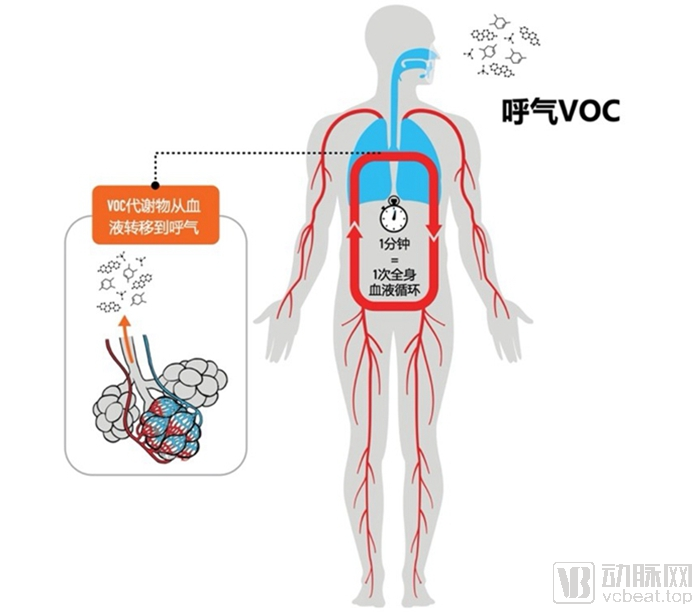
Sources and Pathways of VOC Metabolites
In 2017, scientists from five countries, including Israel, the United States, France, China, and Latvia, conducted a joint study. By analyzing volatile organic compounds (VOCs) in exhaled breath from 813 patients and 591 healthy controls across nine clinical centers, they demonstrated that this breath VOC test could rapidly and accurately diagnose and classify 17 diseases in a single assessment. These included eight types of cancer, such as lung cancer, gastric cancer, colorectal cancer, ovarian cancer, prostate cancer, bladder cancer, head and neck cancer, and renal cancer.[1]
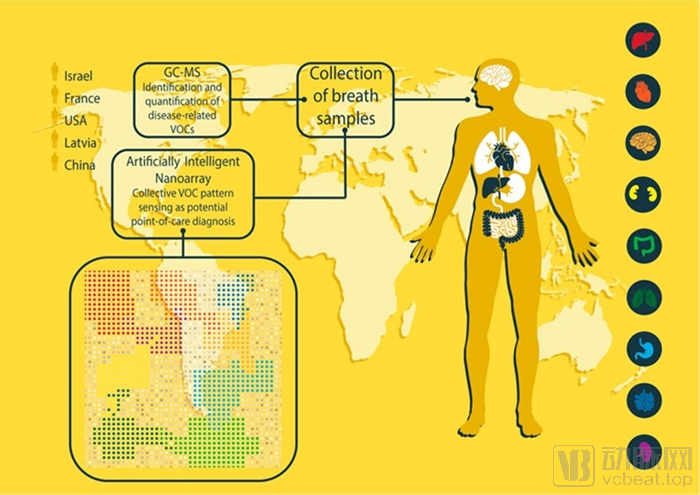
Scientists from 5 Countries Diagnose 17 Diseases by Analyzing Exhaled VOCs
Can Multiple Cancers Be Detected Simultaneously Through a Simple Breath Test? This May Sound Unbelievable, but It Is Not Impossible. With Technological Breakthroughs and the Expansion of Clinical Applications, Breath Testing Is Poised to Become a Novel IVD-Assisted Diagnostic Modality, as Commonly Used as Imaging and Blood Tests, in Fields Such as Cancer, Infectious Diseases, Critical Care, and Chronic Diseases.
Current in vitro diagnostic (IVD) methods struggle to achieve a triangular balance among precision, accessibility, and low cost. In contrast, breath testing offers high patient compliance due to its non-invasive nature and ease of use. By leveraging technological innovations to miniaturize detection instruments and effectively control costs while ensuring accuracy, it is possible to balance the precision, accessibility, and affordability required for widespread clinical application of breath testing. This will not only transform the existing diagnostics industry but also reshape the diagnostic and therapeutic ecosystem across the entire healthcare and health system.
In recent years, breath analysis, an entirely novel medium for disease diagnosis, has witnessed rapid development. VCBeat (WeChat ID: vcbeat) has conducted an industry review of this emerging blue ocean market by examining the history, evolution, and current state of global industrialization in breath-based disease diagnosis.
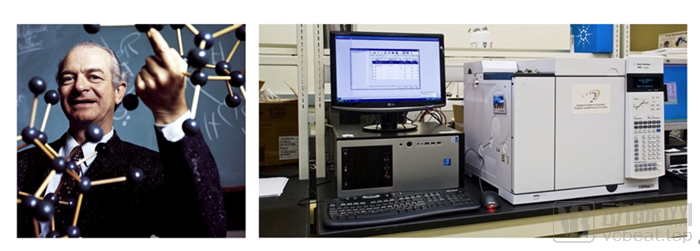
Nobel Laureate and American Chemist Linus Pauling with the Gas Chromatograph for Detecting Exhaled VOCs
As early as the 1970s, Linus Pauling, an American chemist and two-time Nobel laureate (awarded the Nobel Prize in Chemistry in 1954 and the Nobel Peace Prize in 1962), used gas chromatography (GC) to detect more than 200 volatile organic compounds (VOCs) in human breath. These VOCs originate from the metabolism of various organs throughout the body and can serve as biomarkers for assessing health and disease. After 50 years of research development, the correlation between exhaled VOCs and diseases has become increasingly clear and well-defined. The *Human Breathomics Database* published by Oxford Academic includes data from at least 2,000 research articles, identifying associations between nearly 60 diseases and specific VOC signal molecules in breath, with these correlations supported by hundreds of thousands of clinical samples.[2]
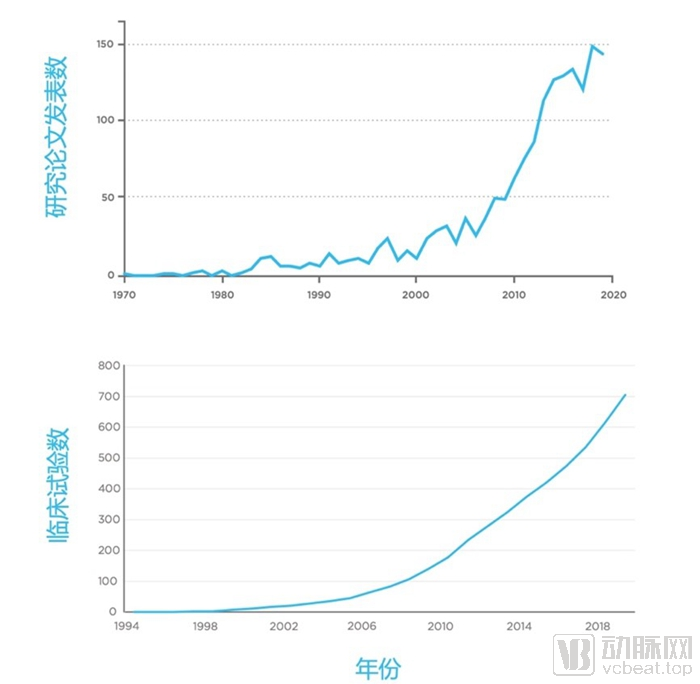
Publication of Exhaled VOC Research Papers and Statistics on Clinical Trials of Breath Testing (Source: Breath Biopsy: The Complete Guide)
During pathological processes, alterations in cellular metabolism lead to changes in volatile organic compound (VOC) profiles from biochemical reactions. Pathological mechanisms associated with cancer, including hypoxia, excessive cellular proliferation, heightened inflammation, and elevated reactive oxygen species activity, cause significant changes in the types and concentrations of VOCs both locally and systemically. Biologists have proposed several potential biochemical pathway mechanisms. For instance, in hypoxic and/or inflammatory conditions, oxidative stress within the tumor microenvironment promotes the formation of alkanes and methylated alkanes. Overactivation of cytochrome P450 enzymes in cancer patients may elevate alcohol levels. Excessive cellular proliferation induced by local hypoxia leads to anaerobic respiration, wherein the glycolytic pathway for energy production releases ketones and alcohols.
It is important to clarify that exhaled VOC testing differs from conventional breath tests.
Common breath tests have been widely used in clinical practice. According to data from Frost & Sullivan, the market size for breath testing in China was approximately RMB 1.9 billion in 2018 and is projected to grow to RMB 3 billion by 2020. Ninety percent of the entire breath testing market consists of urea breath tests for Helicobacter pylori detection. In addition to H. pylori testing, other clinically established breath tests include alcohol intoxication screening, carbon monoxide (CO) testing for neonatal jaundice, and nitric oxide (NO) testing for asthma. These breath tests are familiar to the general public, and their technologies are relatively mature.
The fundamental difference between exhaled VOC detection and these existing breath tests is that the former detects organic compounds rather than inorganic molecules.
Biomarkers in breath tests can be divided into two categories: one is inorganic molecules in exhaled breath, such as NH3、H2S, as well as NO, CO, and H2/CH4. Inorganic molecules are mainly derived from fungi, such as13C and14C is primarily used for the detection of Helicobacter pylori, H2/CH4Used for detecting gut microbiota dysbiosis.
VOC detection focuses on organic molecules.VOCs in exhaled breath are present at trace levels and constitute a significant component of metabolic byproducts from various organs and tissues throughout the body, including hydrocarbons (aromatic and aliphatic) and oxygen-containing organic compounds (aldehydes, alcohols, phenols, carboxylic acids, ethers, and furans).
Which diseases can be diagnosed using exhaled VOCs? How do trace amounts of VOC molecules correlate with specific diseases?
To confirm the relationship between exhaled volatile organic compounds (VOCs) and specific diseases, extensive and rigorous clinical trials are required. These trials involve using VOC analytical instruments to collect and compare breath profiles from patients and healthy individuals, identifying consistent and distinct VOC molecular combinations as disease biomarkers for diagnostic purposes.
Building on this approach,The Concept of Breath Metabolomics.By recognizing signal patterns in profiles composed of hundreds of exhaled volatile organic compound (VOC) molecules, it is possible to simultaneously diagnose a dozen or more diseases. The integration of medical big data and deep learning technologies can further enhance diagnostic accuracy and expand the range of indications.
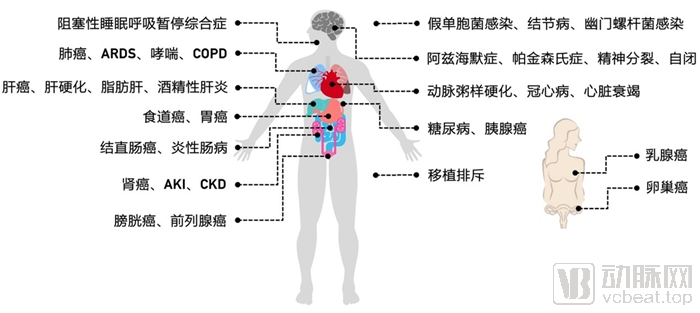
Exhaled VOC-Disease Association Map
In disease research, there is substantial and clear evidence linking certain diseases to volatile organic compound (VOC) signal molecules in exhaled breath. Currently, exhaled VOCs can be used to diagnose conditions including cancers (such as lung cancer, colorectal cancer, and gastric cancer), infectious diseases, and chronic diseases (such as Alzheimer’s disease and diabetes).
After nearly 50 years of accumulation, breath metabolomics has not only attracted increasing scientific research efforts but also seen rapid adoption in clinical applications by leading global medical institutions, such as the Mayo Clinic and Cleveland Clinic in the United States, as well as major instrument manufacturers including Thermo Fisher Scientific and Markes International, along with numerous emerging technology companies. Industrialized products based on breath metabolomics are expected to enter the market in the near future.
The detection of exhaled volatile organic compounds (VOCs) for disease diagnosis relies heavily on high-precision chromatography and mass spectrometry. These techniques impose stringent requirements on both the instrumentation itself and data analysis, making technological breakthroughs a critical factor in industrialization and commercialization.
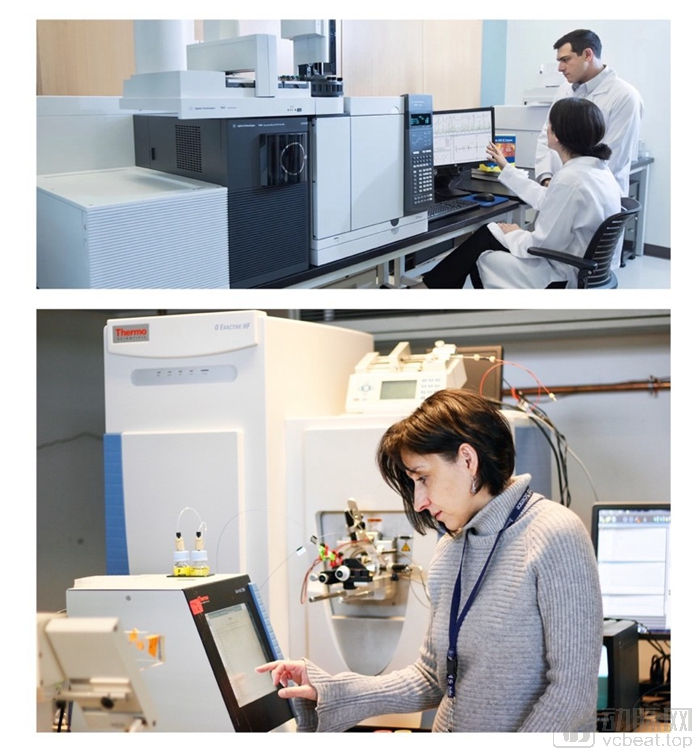
Large-Scale Gas Chromatography-Mass Spectrometry Instruments and Mass Spectrometry Equipment
The concentration of VOCs in exhaled breath is typically very low, down to parts per million (ppm~10-6) or even parts per billion (ppb ~ 10-9) levels, requiring the application of specialized sample pretreatment techniques and highly sensitive instruments for their detection.
Currently, available VOC detection equipment mainly includes gas chromatography (GC), gas chromatography/mass spectrometry (GC-MS), proton transfer reaction mass spectrometry (PTR-MS), and electronic nose sensors.
Among these detection instruments, the most commonly used in scientific research is the high-sensitivity gas chromatography–mass spectrometry (GC–MS) system. The GC–MS system can effectively collect, separate, and identify most volatile organic compounds (VOCs) in human exhaled breath offline, such as aliphatic compounds, alcohols, aldehydes, ketones, amines, and halogenated compounds, and is sufficiently sensitive to quantify VOCs at parts-per-billion (ppb) levels. However, its time-consuming nature, high cost, and operational complexity pose significant barriers to widespread clinical application.
Existing large-scale analytical instruments are unable to achieve large-scale clinical application of breath testing.
Taking gas chromatography and mass spectrometry as examples, existing large-scale gas chromatography instruments are not designed for clinical breath analysis; therefore, gas chromatography instruments in central laboratories have deficiencies in breath collection and sample injection systems. In addition, current mass spectrometry technologies for detecting volatile organic compounds (VOCs) in breath impose extremely stringent requirements on analytical conditions: mass spectrometric analysis requires molecular ionization to be achieved in an ultra-high vacuum environment. However, high-performance vacuum pumps are bulky, which limits the miniaturization of mass spectrometers. When some mass spectrometers are miniaturized, they fail to achieve the required vacuum level, causing many ions to annihilate upon collision with other gas molecules, resulting in information loss. Consequently, their resolution and sensitivity do not meet the requirements for breath analysis.
Nearly all of the world’s leading R&D teams focused on breath-based VOC detection are striving to miniaturize breath analysis devices. Only through such miniaturization can the application scenarios for breath testing be significantly expanded.
Sangeeta Bhatia, a professor of biomedical engineering at the Massachusetts Institute of Technology, stated in Nature Nanotechnology: “Breath testing has become a highly practical tool for disease diagnosis due to its simplicity and non-invasive nature. Some ultra-high-sensitivity micro-gas analysis technologies have made point-of-care testing (POCT) possible.”[3]
Therefore, the emergence of high-sensitivity, high-resolution miniature gas analyzers will significantly accelerate the development of breath metabolomics.
Miniaturized technologies with high sensitivity and high resolution have become the key to breaking through bottlenecks in breath testing. The large-scale clinical adoption of breath testing requires exhalation analysis instruments to be stable and reliable in three aspects: sample collection, sample analysis, and data analysis. Micro gas analyzers with high sensitivity and high resolution facilitate the immediate collection of exhaled breath samples in clinical settings and enable precise analysis of exhaled volatile organic compound (VOC) signal profiles, thereby providing a reliable and robust foundation for breath metabolomics. Meanwhile, the integration of artificial intelligence (AI) technology will further empower exhaled VOC analysis and even drive industry development. By leveraging state-of-the-art AI technologies to combine breath metabolomics with big data, algorithms, and computing power, dynamic and precise diagnostic results can be generated. This approach ensures reproducibility, consistency, and stability, thus supporting the clinical promotion and industrialization of breath testing. Once this integration becomes a reality, it will be a significant benefit for both healthcare professionals and patients alike.
Another key aspect of respiratory metabolomics involves the identification of volatile organic compound (VOC) biomarkers for diseases and the exploration of underlying pathological mechanisms. Encouragingly, academia and industry are collaborating to advance progress in this field. Industry is responsible for identifying the associations between exhaled disease signal molecules and specific conditions, thereby confirming biomarkers; meanwhile, academia helps elucidate the metabolic pathways and mechanisms responsible for the production of these exhaled VOC signal molecules.
Exhaled breath metabolomics analysis, which features extremely high technical barriers, is now emerging from top-tier research institutions and reaching the general public through industrialization and commercialization. VCBeat has compiled a list of the most representative exhaled breath metabolomics companies worldwide:
Foreign Companies Lead the Pack
1. Owlstone Medical, a UK-based company founded in 2016, leverages core FAIMS mass spectrometry technology originating from the University of Cambridge to focus on non-invasive breath diagnostics for cancer, inflammatory diseases, and infectious diseases. The company secured a $50 million investment led by Horizons Ventures, the private equity fund under Li Ka-shing, bringing its total financing to over $84 million.
Owlstone has two major products: one is the ReCIVA Breath Sampler (after completing breath sample collection, samples are sent to a central laboratory for analysis using GC-MS instruments); the other is a miniaturized breath VOC analysis device based on FAIMS mass spectrometry technology.
Currently, Owlstone is engaged in clinical collaborations with multiple universities and hospitals in the United States and the United Kingdom. In terms of commercialization, Owlstone has launched a variety of products and services for cancer screening and diagnosis; it has also introduced a research framework for respiratory diseases capable of differentiating among various types of chronic respiratory inflammatory conditions, including asthma, chronic obstructive pulmonary disease (COPD), and idiopathic pulmonary fibrosis.
2. NanoScent, an Israeli company founded in 2017, derives its core technology from the Technion – Israel Institute of Technology. It primarily leverages nanosensor array-based electronic nose sensors and artificial intelligence for odor recognition. NanoScent’s odor recognition technology is applied across various sectors, including environmental protection, consumer goods, and healthcare. In the medical field, NanoScent is developing point-of-care testing (POCT) products for disease diagnosis via breath analysis. The company has recently completed a $20 million Series A financing round.
Multiple Domestic Companies Race to Establish Their Presence
In the traditional market for breath tests based on inorganic molecules, Helicobacter pylori testing is primarily dominated by two companies: Beijing Huagen and Shenzhen Haidewei; Wuxing Sunwo has laid out its portfolio to include NO, H2/CH4, the breath testing market for CO detection and other applications in the incubation stage.
Domestic companies with a presence in the field of exhaled VOC detection include Burui Technology. Leveraging SPI-TOF mass spectrometry technology from the Dalian Institute of Chemical Physics, Chinese Academy of Sciences, Burui Technology detects disease-related exhaled biomarkers, focusing on disease screening and diagnosis.
In the field of exhaled breath metabolomics analysis and diagnosis, which presents higher technical barriers, ChromX Health has emerged as a representative enterprise in China. By leveraging its high-sensitivity, high-resolution compact gas analyzers integrated with artificial intelligence algorithms, the company achieves precise analysis of exhaled volatile organic compound (VOC) omics, focusing on accurate cancer screening, disease diagnosis, disease monitoring, and personalized intelligent health management.
Furthermore, during this industry survey, we also noted that the founders and core technologies of ChromX Health originate from world-leading research institutions such as the University of Michigan, Yale University, Harvard University, and the Massachusetts Institute of Technology. In the competitive race against other international pioneers in breath-based diagnostics, ChromX Health is leveraging China’s abundant clinical resources and its innovative advantages in exhaled volatile organic compound (VOC) omics analysis. The company is expected to deliver promising results in optimizing disease diagnostic biomarkers, promoting clinical applications, and shaping industry guidelines for exhaled VOC testing.
Currently, numerous companies in the global field of breath metabolomics are experiencing rapid growth, with their products having entered clinical trial phases. It is anticipated that significant breakthroughs will soon be achieved in the commercialization and widespread clinical application of breath metabolomics. Simple, precise, and non-invasive breath-based molecular diagnostics are on the verge of an industrial boom, poised to reshape the current technological landscape of early disease screening and diagnosis, thereby opening up a vast new frontier in the field of molecular diagnostics.
References
1. Nakhleh MK, et al. Diagnosis and Classification of 17 Diseases from 1404 Subjects via Pattern Analysis of Exhaled Molecules. ACS Nano. 2017;11(1):112-125.
2. Kuo TC, Tan CE, Wang SY, Lin OA, Su BH, Hsu MT, Lin J, Cheng YY, Chen CS, Yang YC, Chen KH, Lin SW, Ho CC, Kuo CH, Tseng YJ. Human Breathomics Database. Database (Oxford). 2020;2020:baz139.
3. Chan LW, Anahtar MN, Ong TH, Hern KE, Kunz RR, Bhatia SN.Engineering synthetic breath biomarkers for respiratory disease. Nature Nanotechnology. 2020;15(9):792-800.