

Postpartum Rehabilitation Device Market Surges with 49.5% CAGR, Highlighting Trends Toward Home Use and Omnichannel Integration
During the 2021 Spring Festival, the Chinese film Hi, Mom, adapted from a true story, struck a deep emotional chord with audiences and once again brought the profound role of “mother” into the public spotlight. While we are never sparing in our praise for this noble identity, translating our words into tangible actions is the best way to care for our mothers.
Ten months of pregnancy culminate in childbirth. In matters of reproduction, societal attention remains narrowly focused, primarily on issues such as the “level-12 labor pain” experienced during delivery. There is still insufficient concern for the psychological and physical health challenges women face postpartum—for instance, physiological structural changes following pregnancy and childbirth can predispose women to certain medical conditions.
Driven by factors such as the implementation of the two-child policy, the continuous improvement of the healthcare security system, and the rising awareness of self-care among residents, the postpartum rehabilitation equipment market has experienced rapid growth in recent years, emerging as a highly sought-after sector. May 9, 2021, marked the annual Mother’s Day. In light of this, VCBeat aims to review the current state of China’s postpartum rehabilitation market, using Mamakang, a benchmark enterprise in the field, as a case study.
Postpartum rehabilitation equipment is an important branch of the postpartum recovery sector, distinct from postpartum services and pharmaceuticals. It refers to devices specifically designed for the screening and treatment of postpartum conditions and for postpartum body contouring, primarily assisting mothers with issues such as pelvic floor restoration. Based on application scenarios, postpartum rehabilitation equipment can be categorized into medical-grade, non-medical-grade, and home-use devices.
Postpartum rehabilitation equipment falls under the category of medical devices and must comply with various medical device standards, resulting in high market entry and technical barriers. Consequently, only a few medtech companies compete in the market for medically dedicated rehabilitation equipment, while the non-medical postpartum rehabilitation equipment market is fragmented among numerous small and medium-sized enterprises.
From the perspective of the industrial chain for postpartum rehabilitation equipment, upstream participants are primarily engaged in the production of raw materials and components such as chips, sensors, and hardware parts; midstream participants consist of brand owners and contract manufacturers responsible for product R&D and assembly; downstream participants include medical institutions, rehabilitation centers, and household users.
According to research data from New Thinking Field, China’s postpartum rehabilitation equipment industry has entered a phase of rapid development, with the market size growing from RMB 1.53 billion in 2015 to RMB 7.65 billion in 2020, representing a compound annual growth rate (CAGR) of approximately 49.5%. Among these, the market size for pelvic floor muscle postpartum rehabilitation electrical stimulation medical devices reached RMB 760 million in 2020, a year-on-year increase of 31.5%, but accounted for only 10% of the total market size of China’s postpartum rehabilitation equipment sector.
Medical institutions remain the primary application scenario for postpartum rehabilitation equipment. However, with the continuous increase in the number of rehabilitation centers and their sustained investment in equipment, rehabilitation centers are expected to become the main application market for postpartum rehabilitation devices in China. According to data provided by Mamakang, its B-side postpartum rehabilitation device (medical version) has been deployed in more than 200 medical institutions, while its B-side postpartum recovery device (postpartum care version) has been implemented in over 5,000 rehabilitation centers.
Subsequently, home-based postpartum rehabilitation products, represented by Mamakang, have demonstrated strong growth momentum due to their product advantages such as privacy, portability, and high interactivity, becoming a major development direction in the postpartum rehabilitation equipment industry. In 2016, Mamakang launched China’s first direct-to-consumer (DTC) online home-use postpartum rehabilitation device, the “Pelvic Floor Muscle Rehabilitator,” filling a gap in the domestic home-based postpartum rehabilitation sector. In 2017, the Mamakang APP was launched, providing users with real-time dynamic muscle strength data analysis, enhancing user experience and interaction efficiency with the product, and enabling intelligent health management.
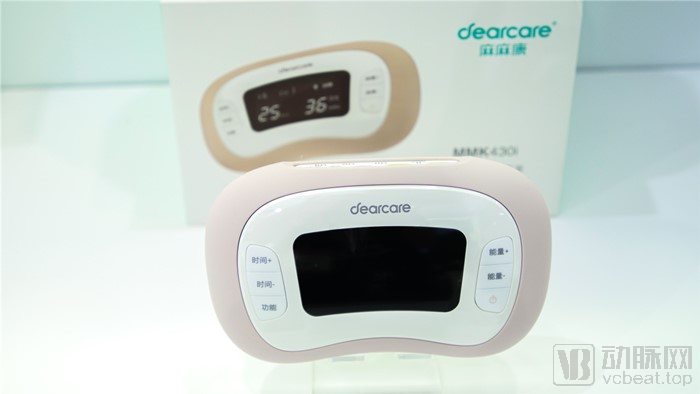
According to Fu Bowen, founder of Mamakang, home-based treatment environments offer certain advantages over medical institutions and rehabilitation centers. First, they provide greater privacy, allowing postpartum women to independently operate home postpartum recovery devices for therapy and exercise. Second, home postpartum recovery devices are typically compact in design, breaking through constraints of time and location, thereby meeting users’ needs for rapid recovery and convenient use. Third, these home devices feature strong interactivity and can be used in conjunction with mobile applications, enabling users to view exercise results on their smartphones and gain a comprehensive understanding of their physical condition and treatment efficacy. Thanks to its in-depth exploration of the specialized field of postpartum recovery equipment, Mamakang has ranked first in sales within its specific consumer product categories for five consecutive years, serving over 400,000 postpartum women in China.
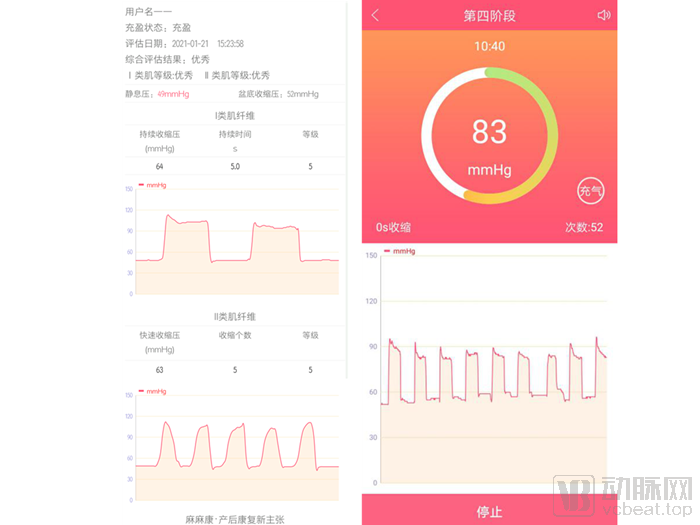
Mamakang Pelvic Floor Muscle Assessment Report and Training Curve Chart
In an exclusive interview with VCBeat, Fu Bowen expressed his optimism about China’s postpartum rehabilitation market. He noted that currently, fewer than 20% of new mothers in China complete postpartum screening and a full course of rehabilitation. This low rate is attributed to scarce medical resources, insufficient talent pools, and the inconvenience for new mothers to travel outside while caring for their infants. The contradiction between the growing rehabilitation needs of postpartum women and the unbalanced development of the social postpartum care industry is becoming increasingly acute. Therefore, building a closed-loop system that covers all application scenarios of postpartum rehabilitation and improving the rehabilitation outcomes for new mothers has become a clear market imperative.
“Institutional and home-based rehabilitation care have different focal points. For postpartum women, postnatal care should be a continuous process rather than a single follow-up visit six weeks after delivery.” Based on this principle, Mamakang has purposefully built an intelligent postpartum rehabilitation system, achieving two key extensions: first, an extension of postpartum rehabilitation care service scenarios, expanding from institutional postpartum rehabilitation to home-based settings, such as extending services provided by medical institutions and rehabilitation centers to the period after discharge or departure from the facility; second, an extension of nursing service functions, shifting from disease treatment services to preventive and rehabilitative medical services, for example, with pelvic floor health services covering the entire continuum of prevention, treatment, and rehabilitation.
“To fully meet the diverse rehabilitation needs of postpartum women, it is necessary to integrate fragmented applications, evolving from advanced treatments targeting single diseases or specific body parts to comprehensive, scenario-based solutions centered on the postpartum woman.” According to the introduction, Mamakang’s equipment covers three major functional areas: pelvic floor rehabilitation, abdominal rehabilitation, and breast rehabilitation. Based on postpartum rehabilitation application scenarios, its products and services are categorized into three types:
1. Provide comprehensive rehabilitation equipment and system solutions for medical institutions and rehabilitation centers;
2. Provide portable rehabilitation equipment for family physicians, lactation consultants, and physical rehabilitation therapists;
3. Provide home-use intelligent rehabilitation devices for mothers and patients with urinary incontinence;
“By leveraging its products and services, Mamakang connects upstream B-side institutions—including hospitals, maternal and child health hospitals, community health service centers, rehabilitation centers, and physician clinics—with downstream C-side consumer groups, such as postpartum women and patients with urinary incontinence. This approach aims to tightly integrate institutional postpartum rehabilitation with home-based care, thereby continuously expanding the scope of rehabilitation scenarios,” said Fu Bowen.
In hospitals and maternal and child health care institutions, physicians can provide targeted rehabilitation plans for patients, particularly those with severe postpartum conditions. In community health service centers, physicians can deliver routine treatment regimens while offering follow-up care, preventive services, and assessments. In rehabilitation centers and physician clinics, rehabilitation therapists can provide enhanced patient education, home-based rehabilitation, and health screening services.
“Postpartum recovery is not limited to the traditional ‘confinement’ period. We recommend that women undergo a comprehensive postpartum check-up at hospitals, maternal and child health care centers, or community health service centers 42 days after delivery. Subsequently, they can pursue rehabilitation therapy either at specialized institutions or at home, depending on their individual circumstances,” stated Fu Bowen. He emphasized that long-term training in the home setting is essential for women. “For instance, pelvic floor muscle training, like exercises for other muscle groups, requires consistent long-term practice and regular reinforcement to achieve and maintain optimal health.”
To further enhance the effectiveness of its home-use products, Mamakang has launched a Postpartum Rehabilitation Training Camp program, pioneering an integrated product-and-service model within the industry to more deeply incorporate postpartum recovery into users’ daily family life. Mamakang conducted a survey among training camp participants, evaluating dimensions such as engagement enthusiasm, perceived value, service quality, training outcomes, and willingness to recommend. The data revealed that 88.4% of users found the training camp highly beneficial for their home-based rehabilitation; 85.4% reported significant improvement in pelvic floor muscle strength after one month of consistent training; and 90.7% expressed willingness to recommend the product to others.
Postpartum rehabilitation has emerged as a popular field in recent years. From a business model perspective, it encompasses multiple attributes, including treatment, rehabilitation, and weight loss, which has led to a mixed and uneven landscape during the early stages of industry development. Between 2016 and 2018, a series of policies were successively issued to encourage the development of the maternal and infant health industry and to foster innovation among medical device manufacturers. Concurrently, regulatory laws pertaining to medical devices have become increasingly stringent, sending positive signals for the industry’s favorable growth.
From a macro perspective, the trend of population aging is intensifying, and future fertility policies will undergo further adjustments. The state will “encourage childbirth” through various measures related to public welfare, healthcare reform, and educational reform. For instance, the government is vigorously promoting the implementation of “maternal and child health services.” The comprehensive rollout of the two-child policy, coupled with continuously upgrading consumption trends, has created opportunities for the development of the postpartum rehabilitation market, increased the proportion of consumers seeking postpartum rehabilitation services, and driven up demand for postpartum rehabilitation equipment.
It is important to note that, unlike the treatment of diseases such as cancer, the maternal and infant industry prioritizes prevention over cure. By leveraging preventive medicine, we aim to minimize health issues for both newborns and mothers. Therefore, postpartum rehabilitation equipment can also be used during pregnancy to facilitate early training of reproductive-related muscles. Fu Bowen concluded by stating that in Chinese families, the physical and mental well-being of mothers—a remarkable group—has not received sufficient attention. To address this, Mamakang hopes to collaborate with industry practitioners to jointly promote the development of maternal health services, drive industrial integration and upgrading, and empower mothers to love themselves more while caring for their children.