

Why Domestic Medical Foods Struggle to Grow Despite Surging Market Demand? — ShuKang Files IPO Prospectus
The sector of foods for special medical purposes (FSMP) represents China’s third emerging blue-ocean market, following pharmaceuticals and medical devices. It is particularly a key breakthrough strategy for pharmaceutical companies facing plummeting profits due to multiple external pressures, such as the “4+7 Volume-Based Procurement” policy and the “zero markup on drugs” policy.
Globally, the annual consumption of foods for special medical purposes (FSMP) totals approximately $56 billion to $64 billion, with the market size growing at an annual rate of 6%. However, China’s FSMP market accounts for only 1% of the global share, with a total value of approximately RMB 600 million. Unlike other markets, China’s FSMP sector has long been characterized by supply falling short of demand. According to data from Zhiyan Consulting, in 2017, China’s FSMP supply capacity reached 24,700 metric tons, yet a shortfall of 11,900 metric tons remained.
“Foods for Special Medical Purposes (FSMPs),” fully known as formula foods for special medical purposes, refer to specially processed and formulated foods designed to meet the specific nutritional or dietary needs of individuals with limited food intake, impaired digestion and absorption, metabolic disorders, or specific disease states. Based on age groups, FSMPs are categorized into infant formula foods for special medical purposes suitable for infants aged 0–12 months, and formula foods for special medical purposes suitable for individuals aged one year and older.
As the Chinese government has placed greater emphasis on foods for special medical purposes (FSMP), regulatory approvals in China have increasingly shifted toward non-infant products. In 2017, all three approved FSMP products were infant formulas; by 2020, a total of 13 products had been approved, with 11 being non-infant products, accounting for 84.6% of the total approvals.
Malnutrition among hospitalized patients in China is a severe issue. Chen Wei, Associate Professor and Director of the Department of Parenteral and Enteral Nutrition at Peking Union Medical College Hospital, stated that 30%–50% of acute-care patients develop malnutrition during hospitalization, with the rate reaching as high as 88% among critically ill patients. This condition seriously compromises disease treatment and increases mortality rates in critically ill patients.
Among the 140 million hospitalized patients in China, less than 1% receive clinical nutrition diagnosis and treatment, far from achieving the desired health economic value. In the United States, 65% of malnourished patients use foods for special medical purposes (FSMPs), whereas in mainland China, the figure is only 1.6%. Each year, at least 30 million patients in China fail to achieve expected clinical outcomes due to lack of nutritional therapy, resulting in significant waste of medical expenditures.
In-hospital nutrition issues have garnered significant attention, and chronic diseases are also a critical area that professionals in the medical food industry must pay special attention to.
“Report on the Nutrition and Chronic Disease Status of Chinese Residents” points out: Foods for Special Medical Purposes (FSMP) can improve treatment and rehabilitation outcomes, shorten the course of disease, reduce medical costs, increase bed turnover rate, and readmission rate.
As the aging of China’s population accelerates, health issues among residents have become increasingly prominent. The number of individuals with chronic diseases has reached 200–300 million, including 266 million with hypertension alone, while deaths attributable to chronic diseases account for 85% of all deaths. Based on data compiled up to 2020, there are approximately 120 million patients with fatty liver disease in China; every 10 seconds, one person is diagnosed with cancer and another develops diabetes, and at least one person dies from cardiovascular or cerebrovascular disease every 30 seconds.
In the face of substantial demand in the market for foods for special medical purposes (FSMP), national policies have begun to favor this sector. However, more than 90% of China’s FSMP market share is monopolized by multinational (joint venture) companies, primarily Abbott Laboratories, Nestlé, and Fresenius Kabi Huarui Pharmaceuticals.
In accordance with the requirements of the Clinical Application Guidelines for Foods for Special Medical Purpose (FSMP), clinicians or clinical dietitians must conduct nutritional screening and assessment following the standardized nutrition care process, and may prescribe FSMP only after establishing a clear nutritional diagnosis based on the results.
Nutritional therapy for patients involves several steps, including nutritional screening, nutritional assessment, and the prescription of a nutritional regimen. However, a single comprehensive nutritional assessment alone requires 10 to 20 minutes. Given the significant shortage of clinical healthcare professionals in China, such time costs make it impractical to conduct large-scale nutritional screening for patients. Consequently, by the time severe malnutrition is recognized, the optimal window for therapeutic intervention has already been missed.
Furthermore, most currently available foods for special medical purposes (FSMPs) merely address generalized malnutrition, with insufficient refined research and exploration in their development. For instance, over 20% of patients undergoing subtotal gastrectomy develop dumping syndrome, yet there are no FSMPs specifically designed to manage this condition. Patients receiving abdominal radiochemotherapy have a high incidence of radiation enteritis, raising the question of how FSMPs can be adapted to suit this condition. Additionally, patients with pancreatitis require early resumption of oral intake, but clear dietary guidance remains lacking.
Not to mention that most clinicians currently have only a superficial understanding of Foods for Special Medical Purposes (FSMPs). Before the Diagnosis-Related Groups (DRGs) system establishes clear clinical pathways for nutritional therapy, physician education will remain a formidable task. Therefore, how to effectively assist physicians in ensuring comprehensive screening for malnutrition (“screening all who should be screened”) and how to develop FSMPs that meet patients’ individualized needs are critical issues that companies operating in the FSMP sector must carefully consider.
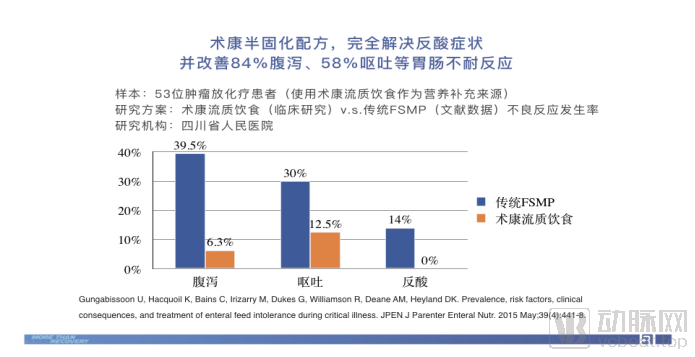
Currently, most foods for special medical purposes (FSMPs) on the market are associated with a nearly 70% incidence of adverse reactions such as diarrhea and reflux. For orally administered FSMPs, there is an additional 30% rate of palatability issues. According to a survey report from the Department of Clinical Nutrition at West China Hospital of Sichuan University, among intolerance reactions to FSMPs, 39.5% were enteral nutrition-associated diarrhea, 14% were gastroesophageal reflux, and 30% were nausea and vomiting. Physicians prescribe FSMPs to improve patients’ nutritional status; however, the occurrence of diarrhea can instead lead to further deterioration of their nutritional condition.
Adverse reactions to FSMPs are also one of the main reasons why doctors and patients are hesitant to try them.
Shukang has developed the Shukang Youjia Liquid Series, a line of foods for special medical purposes (FSMP), through advanced formula and preparation technology. This series effectively reduces the incidence of enteral nutrition-associated diarrhea by 80%, esophageal reflux by 96%, and dumping syndrome after bariatric surgery by 80%.
In November 2020, Shukang collaborated with Sichuan Provincial People's Hospital to conduct a study on "Intolerance Reactions to Shukang's Semi-Solid Formula in Cancer Patients Undergoing Radiotherapy and Chemotherapy." The study implemented nutritional therapy using Shukang's liquid diet for cancer patients receiving radiotherapy and chemotherapy. After 3.5 months, comparisons with traditional foods for special medical purposes (FSMP) showed that while 39.5% of patients in the control group experienced diarrhea, 30% vomiting, and 14% acid reflux, the Shukang group reported only 6.3% diarrhea, 12.5% vomiting, and no cases of acid reflux. This approach effectively alleviated diarrhea in 84% of cases and vomiting in 58%, and completely resolved acid reflux.
Among them was 65-year-old Ms. Lei, who had been diagnosed with cervical cancer for one year. During her treatment, she lost over 20 kilograms due to malnutrition, accompanied by decreased platelet and hemoglobin levels. After consuming a certain imported nutritional supplement, she developed severe acute diarrhea, causing her clinical indicators to reach critical levels. Shukang conducted comprehensive nutritional screening and assessment for her and prescribed a medical food specifically formulated for radiation enteritis, which effectively resolved her diarrhea and malnutrition issues.
To meet the rehabilitation needs of patients with various diseases, Shukang Liquid has developed and produced three liquid diet series that basically cover all disease types: the "Zero-Fat Version," which effectively reduces labor duration and postpartum hemorrhage volume in pregnant women; the "Intact Protein Version," which can improve enteral nutrition-related diarrhea in 80% of patients; and the "Short-Peptide Version," which provides nutrition for post-bariatric surgery patients and helps maintain lean body mass. These products more precisely address the nutritional needs of different patient populations.

Shukang has been dedicated to the research and development of intelligent lifestyle intervention therapies. In addition to its specialized medical foods, Shukang obtained China’s first digital therapeutic approved by the National Medical Products Administration (NMPA) in November 2020. The company is currently pursuing medical device registration with both the NMPA and the U.S. Food and Drug Administration (FDA) for its intelligent nutritional assessment tools. To address the inefficiencies of existing nutritional evaluation methods, Shukang has developed a rapid diagnostic tool for malnutrition based on Visual Analog Scales (VAS) and 3D facial recognition. This tool enables patients to self-assess their risk of malnutrition, with data showing that the average assessment time is only 3–5 minutes. Studies on reliability and validity have confirmed that patient self-assessment ensures high accuracy in screening and evaluation (correlation coefficient of 0.86, indicating a strong correlation), significantly reducing the workload of healthcare professionals and facilitating early detection and treatment for patients.
The FSMP industry in China is an emerging blue-ocean market with enormous potential. As more companies enter this space, Shukang aims to collaborate with partners to provide patients with convenient, affordable, and effective medical nutrition therapy, thereby addressing the current market gap at the earliest opportunity.
On May 12, 2021, Shukang will participate in the National Pharmaceutical Trade Fair. We will showcase Shukang Youjia medical foods for special medical purposes (FSMP). Welcome to visit and discuss cooperation.
Time:
Date | Time |
5Month12Day- 5Month13Day | 9:00 - 17:00 |
5Month14Day | 9:00- 14:00 |
Address: Booth No. 52x23, National Exhibition and Convention Center, Yinggang East Road, Shanghai, China