

WeDoctor's Digital Chronic Disease Management Model Delivers Significant Clinical and Economic Benefits
“Thanks to effective management, my blood glucose levels are now excellent and stable. I am truly delighted and would like to express my heartfelt gratitude to Dr. Yang Song...” Ms. Ning sent this message of appreciation in a diabetes patient management group chat at Taian Central Hospital. For Dr. Yang Song, receiving such “good news” from time to time has strengthened his sense of professional fulfillment and further enhanced the joy he derives from helping patients resolve their health issues.
Ms. Ning, 57 years old, suffers from diabetes, hypertension, and hyperlipidemia. Due to her elevated postprandial blood glucose levels, she was placed in the key management group. After three months of comprehensive management, her blood glucose control gradually met the target standards, allowing her to be successfully discharged from the program. Following discharge, the physician continued to provide ongoing follow-up care.
At Taian Central Hospital, more than 550 patients with diabetes have achieved health benefits through chronic disease management, similar to Ms. Ning. Last October, Taian Central Hospital partnered with WeDoctor, China’s largest digital healthcare service platform, to launch a digital diabetes management project. Leveraging digital information technologies and fostering efficient collaboration among the hospital’s Chronic Disease Management Center, its endocrinology specialty department, and online service platforms, the initiative has established a “three-provider co-management” mechanism involving specialist physicians, general practitioners, and health managers. This approach delivers integrated, end-to-end care that combines in-hospital and out-of-hospital settings as well as online and offline services, effectively improving awareness, management, and control rates for chronic diseases.
Currently, China has over 120 million people with diabetes, ranking first in the world. Of the total cost of treating diabetes in China, 84.6% is spent on managing related complications (including hospitalization and surgical costs). Due to its high incidence rate, numerous and severe complications, and substantial treatment expenses, diabetes management is a key focus area for chronic disease management. In the past, diabetes management outcomes were suboptimal due to patients’ weak awareness of self-health management, limited professional knowledge, and insufficient accessibility to medical resources.
Tai’an City Central Hospital has partnered with WeDoctor to leverage its expertise and advantages in chronic disease management. By employing digital tools for monitoring and management, the hospital has gradually addressed key challenges across various stages of care, including poor patient adherence, insufficient non-pharmacological interventions, lack of regular check-ups, and delayed detection of complications.
At the Chronic Disease Service Center of Tai’an Central Hospital, functional areas such as chronic disease consultation rooms, payment counters, chronic disease management zones, and health education areas are integrated. Staffed with general practitioners and health managers, the center enables patients to complete registration, prescription renewals, payments, medical insurance settlements, and medication pickup in a one-stop manner. With the assistance of health managers, patients can also establish health records, undergo examinations and tests, and receive health guidance and personalized health management plans. Meanwhile, the hospital’s endocrinology department has established fast-track channels for consultation, referral, and hospitalization with the Chronic Disease Service Center. Specialists are available at any time to respond to emergencies and critical conditions, determine and adjust treatment regimens, and manage complications.
After returning home, patients can upload their blood glucose monitoring data via the “Health Taishan” WeChat official account in accordance with the health prescription issued by their physician. Both health managers and physicians can access this information synchronously through the backend system. Health managers provide daily assessments of blood glucose control, offer health recommendations, and address modifiable risk factors, while physicians can promptly identify risks and intervene in a timely manner.
After one month of continuous management, Dr. Yang Song conducted a phased comprehensive assessment of Ms. Ning and found that her postprandial blood glucose levels remained significantly fluctuating. He recommended timely hospitalization for treatment. Through comprehensive interventions, including medication, Ms. Ning’s postprandial blood glucose was basically controlled within the target range upon discharge.10.0 mmol/Lwithin the target range. After discharge, Ms. Ning consistently monitored her blood glucose levels as scheduled, strictly adhered to the health recommendations provided by her health manager, and attended regular follow-up visits. ManagementThree months later, Ms. Ning’s postprandial blood glucose levels had stabilized within the target range, and she had established healthy lifestyle habits, including dietary management and regular exercise.
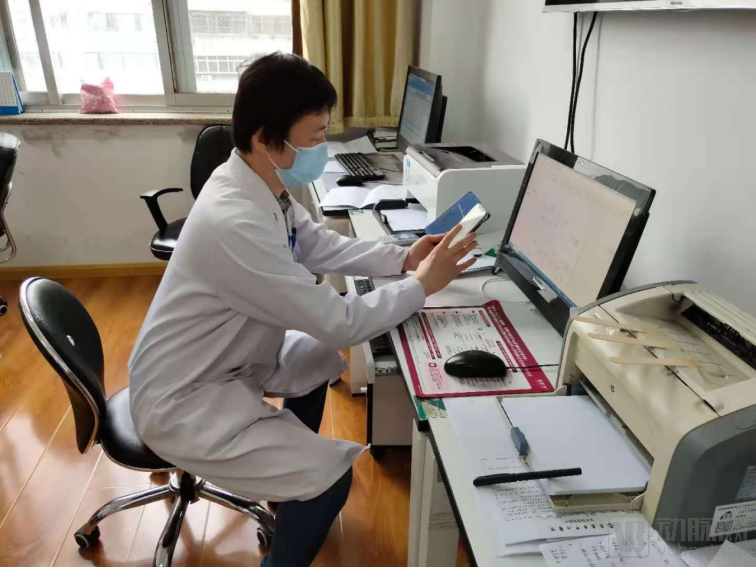
(Yang Song, a physician in the Department of Endocrinology at Tai’an Central Hospital, reviews patients’ blood glucose data on his mobile phone)
“The most dangerous aspect of diabetes is its complications. If the condition is poorly controlled, patients can be affected from head to toe and from the inside out, severely impacting their quality of life and even posing a threat to life. Through digitalized, integrated management, patients are helped to establish habits such as daily monitoring and healthy eating, enabling physicians to promptly observe changes in patients’ conditions and intervene in a timely manner, thereby minimizing the occurrence of complications to the greatest extent,” introduced Dr. Yang Song. He noted that many patients who joined the diabetes management program demonstrated significantly improved health awareness. Under his guidance, numerous patients promptly received appropriate symptomatic treatment, achieving effective disease control and preventing the onset and progression of complications.
A UK prospective study confirmed that for every 1% reduction in glycated hemoglobin (HbA1c), the incidence of microvascular endpoint events decreases by 37%, and the incidence of peripheral vascular disease decreases by 43%. Clearly, effective management can significantly reduce the risk of patients progressing to severe disease and developing complications, while also generating substantial savings in healthcare expenditures. It is reported that WeDoctor’s diabetes management program, delivered through its affiliated internet hospital, provided one year of professional blood glucose management to 70,000 diabetic patients. The control rate for the key indicator, HbA1c, reached 64.1%, far exceeding the national average of 49.4% in China.
As China’s largest digital healthcare service platform, WeDoctor has accumulated extensive expert resources and a vast volume of structured medical cases over the past decade. It has long been committed to building disease-specific, digital, and intelligent management systems, providing physicians with diverse tools to enhance the effectiveness of disease management. Notably, WeDoctor’s self-developed Clinical Decision Support System (CDSS) covers more than 300 common diseases and includes detailed diagnostic and treatment recommendations for 26 chronic conditions, effectively helping healthcare institutions improve their medical service capabilities.
Shen Yu, Head of Specialty Disease Operations at WeDoctor, introduced that through an integrated “online + offline” service platform, WeDoctor is able to provide users with accessible, effective, and affordable end-to-end chronic disease management services. These services range from personalized treatment and rehabilitation plans, follow-up consultations, prescription issuance, medication dispensing, and monitoring of key member health indicators, to customized guidance on diet and exercise. Currently, this service has launched with diabetes and is gradually expanding to cover other clinically common chronic conditions.
It is reported that in September 2019, WeDoctor signed a strategic cooperation agreement with the Tai’an Municipal Government to jointly establish the Tai’an “Health Service Consortium” (hereinafter referred to as the “Health Consortium”) and China’s first internet hospital dedicated to chronic disease management. Leveraging the Health Consortium project, WeDoctor launched in Tai’an China’s first city-level chronic disease management service model enabling direct settlement through medical insurance, providing local patients with continuous and comprehensive digital chronic disease management services. By 2020, the average consultation time for local chronic disease patients was reduced from 2–3 hours to 30 minutes, the average cost per prescription decreased by 12.7% compared to 2019, and expenditure from the local medical insurance fund for chronic disease care was also reduced.
According to the latest statistical data, there are currently 300 million diagnosed patients with chronic diseases in China. Deaths attributable to chronic diseases account for 88% of all deaths nationwide, and the resulting disease burden constitutes over 70% of the total disease burden. Effective chronic disease management yields substantial benefits for both patients and society. The “Healthy China 2030” Planning Outline explicitly sets forth the goal of achieving comprehensive chronic disease health management across the entire population and throughout the full life cycle by 2030. With the deepening development of digital healthcare and the gradual refinement of residents’ digital health profiles, patients with chronic diseases will receive more effective management, thereby accelerating the realization of the grand vision of Healthy China.