

Dewertokin Expands in Global Healthtech: Leveraging 60%+ Market Share in Germany to Drive Smart Medical Solutions in Aging Societies
Following the release of the “Outline of the ‘Healthy China 2030’ Plan” in 2016, “Healthy China” became a national strategy. Meanwhile, population aging in China is intensifying. According to the latest forecast data released by the Ministry of Civil Affairs, by the end of the 14th Five-Year Plan period, China will enter a stage of “moderate aging,” with the population aged 60 and above reaching 300 million.
Against this social backdrop, the broader health industry is flourishing. Leveraging its base of approximately 1,000 European hospital clients,BEWATEC, a wholly-owned subsidiary of the Medical and Nursing PlatformFrom a manufacturer of core components for medical beds, such as intelligent drive control and sensor technologies, to a developer of high-end ICU beds featuring digitalization, intelligence, and cloud connectivity, how does Devotion Care multiply its business expansion?
“Chairman Dr. Gross and General Manager Mr. Li Long firmly adhered to the ‘Number One or Two’ strategy, committed to becoming the best in the industry.””
Multiplication is built on a foundation of 1,500 patented technologies and nearly 40 years of experience in the healthcare industry.
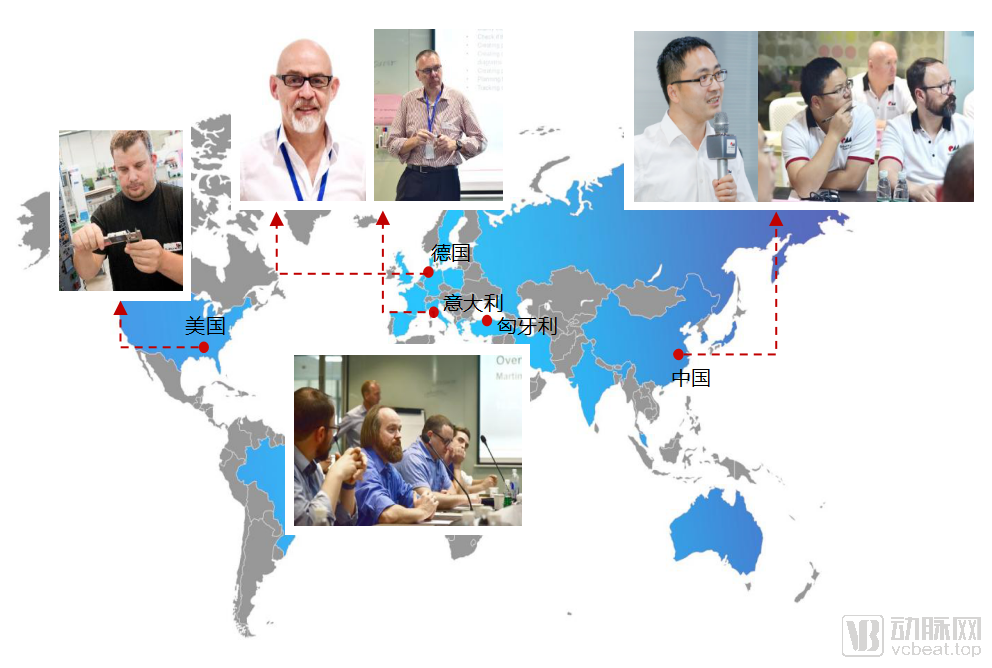
Phoenix Mecano Group, the parent company of Devokon, is an industrial components manufacturing enterprise. As a key strategic initiative within its electromechanical division,Devokon operates five R&D centers and seven production bases worldwide.In 2010, the Group established Devokon Technology Group Co., Ltd. in Xiuzhou, Jiaxing, officially entering the Chinese market.
Currently, high-end ICU beds in China are predominantly from foreign brands, with domestic products lacking sufficient technological innovation. Devorken aims to achieve import substitution for high-end ICU beds with Chinese-made alternatives.
Recognizing the growing market resources and consumption potential in China, and aiming to bring R&D and production closer to end customers, DeVorken officially relocated its headquarters functions, including R&D and manufacturing, from Germany to China in 2020. In the same year, construction began on the DeVorken-Xiuzhou Health and Medical Industrial Base, a project with a total investment of $1.5 billion, marking the most significant strategic move by Xiuzhou District in the high-tech sector in recent years.
Over the past 40 years, Devokon has been active in the healthcare sector, providing core system components for premium medical hospital beds. As a leading supplier of medical drive systems and control solutions, it has established partnerships with more than 1,200 hospitals.
Transitioning from a supplier of core components for medical hospital beds to a designer and manufacturer of ICU beds, and evolving from providing accessories to offering system solutions and even finished products, represents a “multiplication” strategy undertaken by Devotion. In 2018, it acquired Haining Meihui Machinery Co., Ltd., thereby achieving mechatronic integration within the company. Leveraging comprehensive and mature technologies and production capacity, along with a customer-centric value proposition, Devotion continuously optimizes the intelligence and digitalization of its ICU beds.
With nearly 40 years of experience in manufacturing core medical components, Devicewell has developed high-end ICU beds that are digitalized and software-defined.In addition to manufacturing medical beds, Devoko is continuously expanding its business footprint by providing comprehensive smart system solutions for medical beds used in medical care, home care, and elderly care.
With the advancement of the internet and artificial intelligence (AI), hospital beds have been continuously updated and iterated. Early hospital beds were simple hand-cranked models, and this type of “primitive” bed is still in use in most hospitals today. Subsequently, basic electric beds emerged, allowing bed positions to be adjusted via remote control. Later, hospital beds evolved to become digital, software-defined, and intelligent, connecting the entire medical and nursing care process through the Internet of Things (IoT). Each generation of hospital bed development has aimed to enhance the patient’s medical and nursing experience, with connectivity and data serving as key elements in this progression.
Dewert’s ICU beds integrate the DCC (Dewert Care Connect) system, an intelligent control system launched by Dewert in 2020.Through IoT (Internet of Things) devices, patients' vital signs and bed status are monitored in real time, with data uploaded to healthcare professionals. As the term "connect" implies, medical care is an interconnected process, and smart hospitals should integrate the entire care workflow.
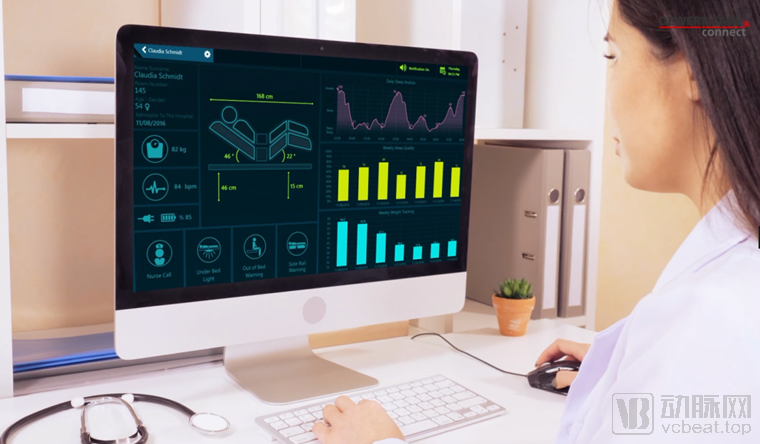
Through non-intrusive vital signs monitoring, medical staff can view patients' vital signs data in real time, reducing their workload.The backend system can transmit patients' abnormal data to the Hospital Information System (HIS) and the nurse workstation, or directly push it to nurses' smartwatches. The hospital's operations management department can monitor the bed's posture and usage status in real time through the backend, enabling timely maintenance and improving bed utilization efficiency.
Precision-engineered components form the foundation of Devokon’s safe ICU beds. The company’s first dual-drive system developed for medical beds remains in use today and continues to undergo optimization. The GOR motors utilized in these ICU beds feature an adjustable-speed quick-release function, while the MEGAMAT series of medical actuators enable healthcare professionals to adjust patient positioning smoothly and efficiently.
In addition to enabling smart capabilities for the hospital beds themselves, Devocare is also building a medical Internet of Things (IoT) platform.Implement data management across the entire patient care system, integrating control over hospital beds and even environmental factors such as air conditioning and curtains, to create a therapeutic environment tailored to patients’ needs.
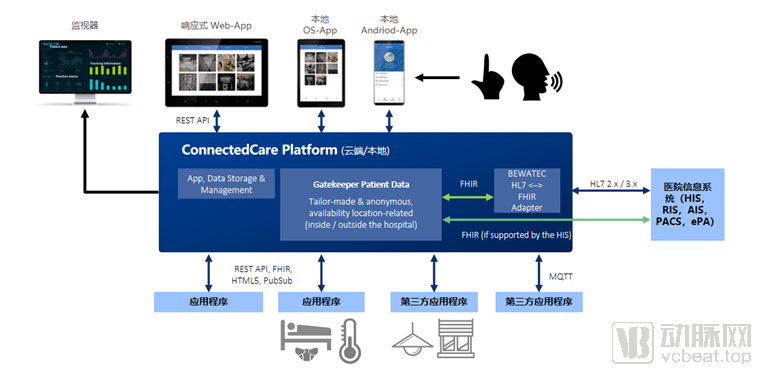
The broader health sector is closely intertwined with people’s daily necessities—clothing, food, housing, and transportation. A key prerequisite for developing the broader health industry is to transform the traditional medical industry development model, shifting from a singular treatment-focused approach to an integrated “prevention–treatment–rehabilitation” model. Dr. Cui believes that broader health extends outward from hospitals in both directions. Devotion Medical is committed to integrating the entire care process into a complete “IoT + Smart” closed-loop care system.
Dr. Cui Xiutao, Dean of the Devocan Research Institute, believes thatThe nursing closed-loop begins in healthcare settings and ends at home.
This represents a horizontal expansion, extending from the hospital bed to the ward, and further to the hospital, community, and home, demonstrating that medical care extends far beyond healthcare institutions. Disease prevention before admission, real-time monitoring during hospitalization, and home-based care after discharge constitute the various nodes of medical nursing. Devocare is committed to creating a closed-loop nursing system covering pre-hospital, in-hospital, and post-hospital stages, encompassing every aspect of patients' lives.
After establishing such a closed-loop system in China, Devocare aims to expand overseas and create channels for communication between Chinese and German healthcare professionals. Domestic and international nursingImplementation of a Closed-Loop Management SystemSynchronize by facilitating collaboration, communication, and integration of resources in technology and services.
“The concept of ‘Big Health’ is vast, so it is crucial to identify the right entry point. Companies must leverage their technological and market advantages to develop distinctive products and services.” To stand out in the highly competitive Big Health industry, Devotion Medical entered the market by focusing on specific disease categories and key clinical departments, initially launching high-end ICU beds to establish a strong brand image before expanding into other disease areas and departments.
Certain features of traditional multi-functional hospital beds are only applicable to specific departments, and modifying these features through hardware changes is both time-consuming and costly. In contrast, Devokan achieves software-defined hospital beds through its DCC intelligent control system, namelyBased on the needs of departments and patients, the backend activates or disables bed-related functions through configuration, creating customized beds tailored to specific departments and patients, thereby effectively reducing medical risks caused by improper operations.
Furthermore, in terms of market strategy, Devokang has chosen to focus on breakthroughs in specific disease areas. It began by partnering with key hospitals in the Yangtze River Delta, Pearl River Delta, and Beijing-Tianjin-Hebei regions to establish a benchmark for medical care, before gradually expanding into community and home-based settings.
Devokan signed a strategic cooperation agreement with Jiaxing No. 2 Hospital, launching comprehensive collaboration in the field of smart healthcare.National-level palliative care beds equipped with the Bewatec Intelligent Medical-Nursing System solution are now in operation.The two parties are also jointly exploring OCR-based automatic recognition solutions tailored to medical scenarios, enabling intelligent recognition of patients’ medical documents from external hospitals, enhancing patient records, and supporting information sharing and collaboration within the Jiaxing Second Hospital’s tightly integrated urban medical consortium.
“Partners value not only Devoucon’s capability to manufacture high-end ICU beds, but also the potential of its comprehensive healthcare solutions.” From a single department and specific disease types to the entire medical field, Devoucon’s multiplicative growth strategy is still accelerating on the fast track.