

Huami Technology Releases 2020 China Sleep White Paper: Sleep-Deprived Individuals Show Higher BMI Levels
Recently, Huami Technology, based on itsZepp’s Digital Health Management Platform Big Data released the “2020 White Paper on Sleep in China” (hereinafter referred to as the “White Paper”). From a more perceptible perspective, and using tens of millions of data points as the analysis sample, it interprets the sleep patterns of Chinese people across dimensions such as sleep duration, sleep deprivation and stress, BMI, and resting heart rate. By examining sleep trends over the past five years, the report identifies contemporary sleep issues, aiming to enhance public awareness of sleep health and help individuals achieve healthier sleep.
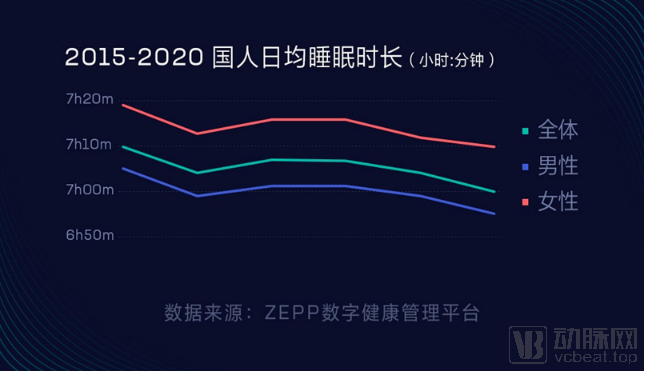
Sleep duration is crucial to health; both insufficient and excessive sleep can adversely affect health. The white paper shows that from 2015 to 2020, the average sleep duration among Chinese residents exhibited a year-on-year decline, with sleep deprivation (defined as averaging less than 6.5 hours of sleep per day) becoming more severe. In 2020, the average daily sleep duration for Chinese residents decreased by 10 minutes compared with 2015, while the number of days with insufficient sleep increased by 7 days.
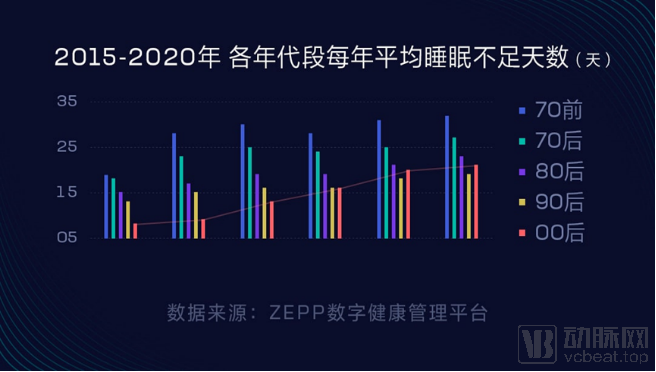
withTaking the post-2000 generation as an example, their sleep duration decreased significantly over these five years, dropping by 28% in 2020 compared to 2015.,Consequently, the number of days with insufficient sleep has been increasing year by year.2020Age Comparison2015Annual growth rate reached162.5%. Additionally, when analyzed by gender, women’s overall sleep quality is slightly better than that of men. They have a longer average sleep duration and fewer days with insufficient sleep.
Emotions and stress are closely linked to sleep quality. The Zepp digital health management platform can assess users’ physical condition through stress metrics, providing ratings of “relaxed,” “normal,” “moderate,” or “elevated,” and promptly offering rest recommendations when stress levels are high.
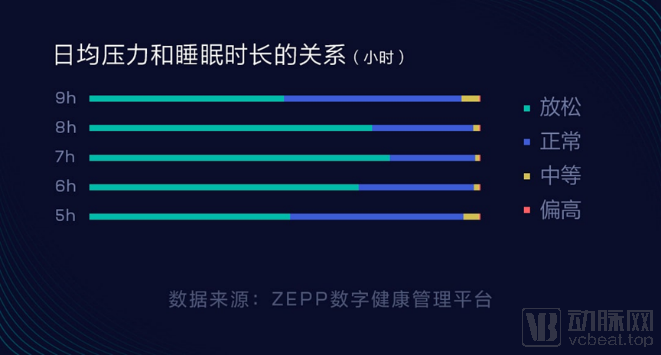
Studies show that most people enjoy better physical health when they get an average of 7–8 hours of sleep per day, with approximately 76% exhibiting stress levels indicative of a “relaxed” state. In contrast, individuals who sleep either too much or too little are more likely to present with “elevated” stress indicators.
Adequate sleep is also crucial for maintaining a healthy physique. Data shows that more than58% of individuals had a BMI within the normal range. The proportion of individuals with a normal BMI was highest among those who slept 7–8 hours, the proportion of underweight individuals was highest among those who overslept, and BMI excess was more severe among those with insufficient sleep.
The study also found that in 2020, less than 30% of respondents were satisfied with their sleep quality, while 42% reported average sleep conditions. Nearly 90% of individuals expressed a need for catch-up sleep, yet only 25% had the time to do so.
Poor sleep can also directly lead to issues such as low mood. The white paper analyzes the three major factors contributing to poor sleep among the Chinese population: personal lifestyle habits, such as staying up late for entertainment on mobile phones; heavy work and study burdens; and anxiety and high psychological stress. By age group, heavy work and study burdens are the primary cause of sleep problems among those born after 2000, while sleep issues in other age groups are mainly attributed to high psychological stress and anxiety.
Huami Technology is a cloud-based health service provider with globally leading smart wearable technology. Guided by its mission of “Technology Connecting Health,” the company leverages powerful artificial intelligence algorithms and big data analytics to provide users with 24/7 health monitoring services. By the end of 2020, Huami’s smart wearable devices had recorded a cumulative total of over 151 trillion steps, 12.8 billion nights of sleep, and more than 120.8 billion hours of heart rate data. In recent years, Huami has continuously released research reports focused on sports and health topics such as physical activity, cardiac health, and sleep, utilizing big data to monitor and promote public physical and mental well-being.