

Robin Li: Pioneering the Uncharted Territory of Life Sciences through Bio-Computing
The advent of the AI era has ushered in boundless possibilities for the emerging interdisciplinary field of “biological computing.” On May 10, the inaugural China Biological Computing Conference, co-hosted by BioMap and Bohe Innovation, was held in Suzhou. Centered on the theme of “BT & IT,” the event brought together top scientists, academicians, business leaders, and pioneers in scientific and technological innovation to explore the prospects of biological computing and its profound impact on human society.
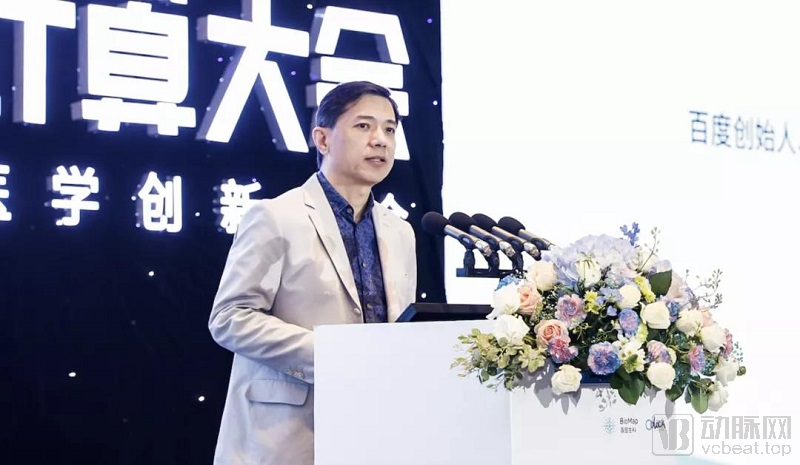
“We aim to leverage AI technology to shorten drug development timelines, reduce side effects, alleviate the substantial medical burden on patients, and create more possibilities for every life,” said Robin Li. “In the critical field of life and health, we are committed to pressing forward resolutely, regardless of the magnitude of investment, level of risk, or length of the development cycle. There is no end to life sciences—only our utmost effort.”
Robin Li, Founder and Chairman of Biotope, stated that the current rapid development in the field of biological computing bears many similarities to the early high-growth phase of the internet information sector. Three key indicators—human data derived from genomics research, knowledge accumulated during new drug development, and emerging machine learning algorithms—are experiencing rapid growth, jointly driving biological computing to create value for humanity. The advancement of the biological computing industry requires synergy across the ecosystem and industrial chain, necessitating the construction of an open innovation ecosystem to explore the vast “uncharted territories” of life sciences.
Below is the transcript of Robin Li’s on-site remarks:
Good morning, distinguished guests.
It is a great pleasure to welcome you all to the inaugural China Bio-Computing Conference. Bio-computing is undoubtedly a field that represents the future direction of both industrial and technological development. With its robust foundation in the biopharmaceutical industry and strong capabilities in artificial intelligence, Suzhou is the perfect host for the inaugural China Bio-Computing Conference.
In fact, I come with a dual identity: on one hand, as the Chairman of Baidu; on the other, as the Chairman of Biotope, which was established just last year. Since we announced this news last year, many friends have been asking me why we decided to launch a biocomputing company.
In fact, my passion for biological computing has a long history. About 25 years ago, I was deeply interested in using bioinformatics to uncover the secrets of the human body. At that time, I was working as a programmer on Wall Street and applied for a position in Merck’s Bioinformatics research group. They extended an offer to me, but I ultimately declined due to my wife’s discouragement. She holds a Ph.D. in biomolecular science and argued that I would not be able to achieve anything meaningful there, as gene sequencing technology was still in its infancy. According to her, neither the data volume, cost, nor speed warranted the application of sophisticated computational techniques. After careful consideration, I agreed with her assessment; the volume and quality of biological data at the time were insufficient to leverage the advantages of advanced computing. As many are aware, I later returned to China to work in the internet information sector, where I developed search engines to help people access information more equally and conveniently.
More than two decades have passed, and I am delighted to find that the rapid development of the internet information sector back then bears a striking resemblance to the current advancement of biological computing. At that time, I could accurately project whether Baidu’s annual search volume growth was 200% or 300%, because I understood that this growth was driven by three factors: first, the number of internet users; second, the average time spent online per user; and third, the total number of web pages available online. As all three factors were experiencing rapid growth, multiplying them together yielded the calculated growth rate of search volume.
Today, three key indicators in the field of biological computing are also growing rapidly, jointly promoting the creation of greater value for humanity by biological computing. These three indicators are the rapid growth of human data brought about by genomics research, the rapid growth or even explosion of knowledge accumulated during the process of new drug development, and the rapid changes, improvements, and iterations of various emerging machine learning algorithms that are familiar to everyone.
Over the years, my passion for mining human data, exploring disease patterns, and discovering new drug designs has remained unwavering. As a donor to the Future Science Prize in Life Sciences and a sponsor of several genomics research projects, I have been closely monitoring the changes in this industry. I have witnessed the rapid decline in genome sequencing costs, the practical application of single-cell omics technologies, and the maturation of experimental techniques capable of generating massive datasets, such as CRISPR gene-editing technology. Furthermore, I have recognized the greater potential of companies along the biological data axis—such as those developing cutting-edge biosensors and high-throughput experimentation platforms—that were previously invested in by Baidu Venture Capital.
Such vast amounts of data have opened new doors to our understanding of complex life systems and created new opportunities for computational technologies. As we have experienced in many fields such as information distribution, financial risk control, and intelligent transportation, massive data require more innovative algorithms and more powerful underlying computing architectures to effectively extract their complex patterns; and these new AI technologies need to be deeply integrated with cutting-edge biotechnology and the actual process of innovative drug development to be fully refined.
In my view, biological computing is a highly interdisciplinary field, and the integration of biology with computational science will drive significant breakthroughs and advancements. We aim to cultivate a cohort of innovative pharmaceutical companies that fuse biology with computational technologies. By leveraging a biological computing engine, these enterprises can effectively harness vast amounts of biological data and consolidate all experimental insights into a unified knowledge graph. This approach transforms drug discovery from a “needle-in-a-haystack” challenge into a systematic, guided process, thereby accelerating the identification of first-in-class innovative drugs and contributing to the health and well-being of humanity.
We aim to leverage AI technology to accelerate drug development, reduce adverse effects, and alleviate the substantial medical burden on patients, thereby creating more possibilities for every life. In the critical field of life and health, we are committed to pursuing this mission resolutely, regardless of the magnitude of investment, the level of risk, or the length of the development cycle. There is no endpoint in life sciences—only our utmost effort.
The development of the biocomputing industry requires synergy across its ecosystem and supply chain; the efforts of one, or even a hundred, companies may fall far short. We aim to collaborate with scientists and entrepreneurs alike to build an open innovation ecosystem for biocomputing, exploring the vast “no-man’s-land” of life sciences. Currently, eight of the world’s top ten companies by market capitalization are so-called technology firms, but this category excludes biotechnology; not a single life sciences company ranks among the top ten. I am confident that this landscape will inevitably change as biocomputing advances.
Today’s attendees are all fellow travelers on this journey of exploration. Thank you for being here! We hope that today’s conference will, much like the historic Dartmouth Conference that witnessed the birth of artificial intelligence, mark the dawn of a new era in Chinese biological computing and deliver tangible acceleration to the cause of human health. This is the true value of our gathering here today.
Wishing everyone the swift realization of their dreams in biological computing, and wishing this conference a complete success.
Thank you!