

Anxiang Smart Healthcare Files IPO Prospectus: Pioneering Flexible Manufacturing in China's Medical Informatics Sector
At the 2021 CHINC (China Hospital Information Network Congress) held in Hangzhou from April 23 to 25, Anxiang (Ping An Lenovo) Smart Healthcare (hereinafter referred to as “Anxiang”) released three smart healthcare solutions: the Senrui Smart Dialysis Solution, the Medical Waste Management Solution, and the Smart Hospital Information Platform. With this launch, Anxiang has expanded its smart hospital solutions into seven specialized sectors: Smart Services, Smart Hospitals, Hospital Operations and Maintenance, Information Platforms, Accreditation Consulting, Smart Medical Consortia/Alliances, and Specialized Innovative Fields.
How does Anxiang envision its future development? What are its strategic plans? VCBeat (WeChat ID: Vcbeat) conducted an on-site interview with Lin Lin, Founder and CEO of Anxiang Smart Healthcare, and has compiled the following insights:
Since its inception in 2013, Lenovo Smart Healthcare, spun off from Lenovo, began its strategic layout in healthcare informatization and quickly achieved notable success. By collaborating with the First Affiliated Hospital of Wenzhou Medical University to implement a “patient-centered” informatization philosophy, it co-created the “Wenzhou Medical University First Affiliated Hospital Model” for China’s healthcare informatization. This model gained immediate prominence and has become the prototype for today’s rapidly growing smart hospitals.

Lin Lin, Founder and CEO of Anxiang Smart Healthcare
“Back then, more than 20,000 industry professionals from across China visited The First Affiliated Hospital of Wenzhou Medical University (WYFH) to observe its ‘patient-centered’ system, which spurred the development of numerous smart healthcare solutions. For instance, to streamline processes, WYFH was the first in China to introduce self-service kiosks for appointment registration and report printing. Advanced concepts proposed by Dr. Chen Xiaoming, President of WYFH—such as ‘let data do the walking so patients don’t have to’ and ‘let medications wait for patients, not patients for medications’—were rapidly implemented.” Lin Lin still vividly recalls the WYFH model from that time.
The booming healthcare IT industry and its vast growth potential directly spurred the spin-off of Lenovo Smart Healthcare from Lenovo Group. Subsequently, its series of achievements in healthcare IT attracted the attention of Ping An Group, which was then seeking to build a healthcare ecosystem. In 2018, Ping An Group became the company’s largest shareholder through capital injection. Lenovo Smart Healthcare was renamed Ping An Lenovo Smart Healthcare, becoming a closely held subsidiary under Ping An.
At this stage, the healthcare ecosystem built by Ping An Group has gradually taken shape through internal incubation and capital injection. These enterprises each possess distinct strengths and have clear divisions of labor. For instance, Ping An Good Doctor is responsible for internet-based healthcare services, Ping An Healthcare Technology specializes in health insurance, and Ping An Smart City’s healthcare division engages with the National Health Commission and medical consortia. Leveraging Anxiang’s IT background, its position within the ecosystem is focused on in-hospital information systems.
Certainly. As its business scope has expanded, Anxiang has transcended the traditional boundaries of in-hospital informatization and extended into the realm of smart hospitals. Perhaps “provider of comprehensive smart healthcare solutions” more accurately captures Anxiang’s current business positioning.
Looking ahead, Anxiang harbors greater ambitions—it aspires to become a representative force in healthcare informatization, helping to propel China’s healthcare IT sector into the era of smart healthcare. Of course, this will not be achieved overnight but requires sustained and continuous effort. Its future winning strategies may well lie in “flexible manufacturing” and the development model of “a robust platform plus specialized expertise.”
Anxiang plans to first establish a comprehensive health information platform, and then build specialized specialty-specific systems on this foundation. “Currently, gynecologists and hepatobiliary surgeons in hospitals are essentially using the same system, albeit with different templates. However, different departments have distinct needs for scientific research and standardization, which vary from one another. I believe the future trend will be a combination of a large-scale information platform and specialized specialty-specific systems.”
“We aspired to develop an architecture that could simultaneously meet the demands for high efficiency and customization as early as five years ago. From today’s perspective, we now have the technical capability to fulfill these requirements. A helpful analogy is flexible manufacturing in the automotive industry: while most components are standardized, they are assembled in a flexible manner to accommodate customers’ personalized needs. This approach allows us to balance operational efficiency with customized client requirements,” Lin Lin added.
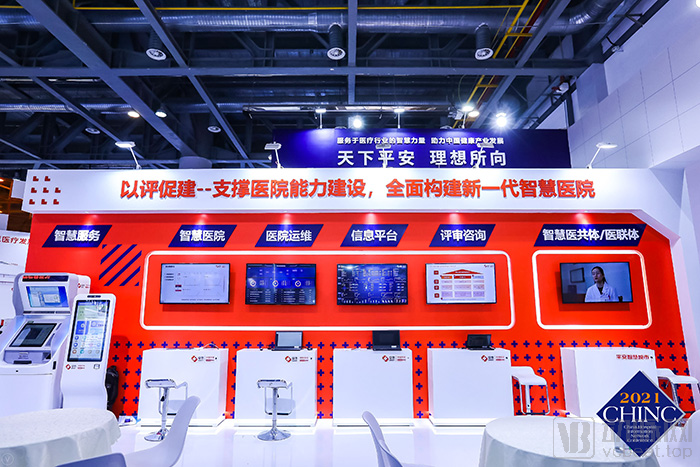
Anxiang to Showcase Multiple Solutions at CHINC
Prior to this, healthcare informatization was primarily divided into two categories. One category adopted a purely customized approach, tailoring solutions individually for each hospital to better meet clients’ personalized needs. This customized model was particularly prevalent among large tertiary Grade A hospitals. However, due to the involvement of numerous development teams, there was a risk of inconsistent development and service quality. Furthermore, the costs associated with this model were relatively high.
Another category adopts a purely standardized approach, implementing iterative updates in a step-by-step manner. This model features highly standardized quality and services, along with relatively lower costs; however, it responds slowly to hospitals’ personalized needs and may even fail to address overly niche requirements.
Overall, hospitals are not entirely satisfied with either model. In response, Lin Lin stated that Anxiang aims to balance hospitals’ needs for efficiency and customization through a “flexible” approach: “We hope to leverage advanced system integration architecture technologies in our software to rapidly customize hospital systems. By accumulating standardized system modules, we aim to aggregate dynamic business requirements into combinations of these standard patterns on a software development and integration architecture platform. Furthermore, based on this pattern aggregation, program code can be automatically generated with the aid of artificial intelligence, thereby achieving flexible, high-efficiency software production and rapid customization of hospital systems.”
Anxiang’s “Large Platform + Strong Specialties” strategy was reflected in several solutions released at CHINC 2021. In particular, the Butian Integration Engine, a core component of the hospital information platform, draws on the metaphor of “Nüwa Mending the Heavens” to address the chaotic status quo in which systems from different vendors operate in silos within hospitals. It aims to serve as an information hub for healthcare IT systems, connecting disparate systems, breaking down information silos, and enabling interoperability of data and applications, thereby “bridging” the information gap.
This information platform delivers value in four key areas: First, it breaks down information silos and plays a significant role in fostering interaction among various systems both within and outside the hospital. Second, it supports continuous operational improvement and optimization of hospital management, accelerating data integration and enhancing decision-making efficiency. Third, it elevates the level of scientific research, education, and clinical application as well as discipline development, improves the work efficiency of clinical medical staff, and provides robust support for research data. Fourth, it assists hospitals in achieving compliance with interoperability standards and electronic medical record (EMR) grading requirements.
Lin Lin emphasized that this platform possesses fully independent intellectual property rights, which is particularly significant given the current harsh international environment facing China: “Nearly 99% of the data buses embedded in most hospital information platforms are purchased from foreign countries, such as the United States or New Zealand. Our smart hospital information platform is among the first to have fully independent intellectual property rights.”
The Senrui Smart Dialysis Solution TDMS+ is a prime example of strong specialization. This solution was developed by Senrui Software, a joint venture established by Anxiang and Fresenius Medical Care, a global provider of renal care services. It not only inherits Fresenius Medical Care’s extensive expertise in the field of nephrology but also integrates Anxiang Smart Healthcare’s rich experience in healthcare informatization.
This intelligent dialysis management system is developed based on the “Big-People-Things” framework, enabling seamless integration between dialysis equipment and hospital information systems. “Big” refers to big data, allowing quality process data to be reported to the quality control center with a single click; “People” represents artificial intelligence (AI), which pushes information to medical staff by combining standard operating procedure (SOP)-based workflows with AI technologies; “Things” denotes the Internet of Things (IoT), facilitating seamless transmission of clinical data through connected devices.
“The specialty physician information system at the hospital was not interoperable with the dialysis machines. After the physician entered the prescription and the nurse completed the review, the nurse had to manually input the parameters into the dialysis machine. Given the complexity of dialysis prescription parameters, this manual process was prone to errors. A robust information system could streamline the entire workflow and achieve a closed-loop medication administration process: once the physician enters the prescription, it would be transmitted directly to the dialysis machine, requiring only the nurse’s review and confirmation, thereby enabling real-time, precise monitoring of the entire dialysis procedure,” Lin Lin explained.
“Specialties will become increasingly specialized in the future. We have set a goal that if we develop a specialty, we must strive to achieve a top-tier level in China. Currently, our nephrology department is already at a high level and is undoubtedly among the best in terms of professionalism,” Lin Lin added further.
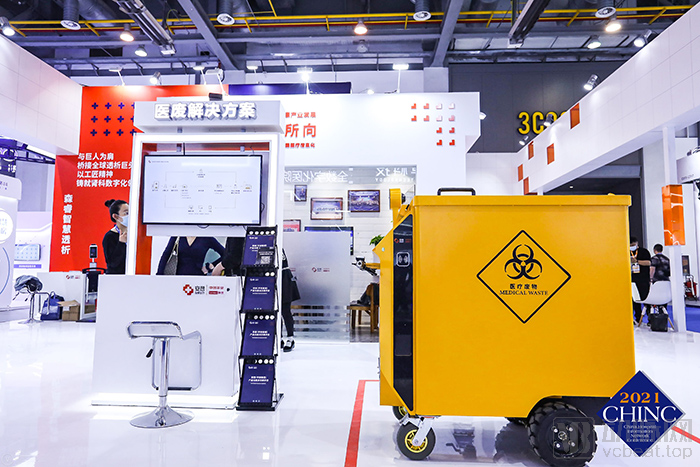
Anxiang’s Medical Waste Management Solution to Be Released at CHINC
The medical waste management solution for healthcare institutions encompasses a full-process monitoring and regulatory platform, a full-process business informatization system, an industry-first full-process behavioral traceability software system, and an internet suite. Furthermore, this solution innovatively incorporates Ping An product liability insurance and public liability insurance to address logistical challenges in hospital waste disposal.
“We have developed a specialized medical waste management system. As you can see, it features electric medical waste carts, facial recognition scanning, and labeled professional-grade disposal bags. We have also insured the electric medical waste carts with Ping An Insurance to ensure their safe operation. Furthermore, although we are only launching the in-hospital component of the system at this time, the complete solution actually includes both in-hospital and out-of-hospital modules, thereby forming a closed-loop system.” When discussing medical waste management, Lin Lin once again emphasized the strategy of “strong specialization.”
Standardized oncology care is the solution that Anxiang is poised to rapidly advance. Malignant tumors have become the leading cause of death and a major public health concern threatening the nation’s health. However, treatment for serious conditions such as cancer has long been concentrated in large hospitals in first-tier cities, limiting diagnostic and therapeutic capabilities at the local level. This has resulted in overcrowding at major medical centers while local hospitals remain underutilized. Therefore, disseminating advanced diagnostic and treatment expertise from major hospitals to county-level institutions, thereby enhancing the standardization of oncology care at the county level, has emerged as a key breakthrough for improving overall cancer diagnosis and treatment outcomes.
Meanwhile, the standardization of cancer treatment has also become a hot topic. Reports of cancer patients receiving non-standard or excessive treatment occur from time to time due to various reasons.
“We are currently implementing standardized treatment protocols using colorectal cancer as the benchmark. Key clinical decisions—such as whether chemotherapy or surgery is indicated, the specific regimens for chemotherapy and radiotherapy, and the surgical and radiotherapeutic techniques—are all guided by established clinical practice guidelines. We are piloting this model at Gansu Provincial Hospital, with downstream implementation in county-level hospitals. Treatment plans formulated at the county level are reviewed and approved by provincial-level experts, enabling patients to receive appropriate care locally. This approach significantly improves patient survival rates and healthcare experience, while also generating substantial cost savings for the national healthcare system.”
“Meanwhile, standardized treatment enables quality control and can also reduce the incidence of overtreatment. Most cancer patients can achieve definitive outcomes through standardized therapy; therefore, non-standard therapies should not be employed as the initial approach for patients with tumors that have standard staging and classification,” Lin Lin added.
Currently, Anxiang has completed standardized guidelines for colorectal cancer. By integrating electronic medical records with artificial intelligence, this solution provides primary care physicians with decision support for determining standard tumor staging and classification, as well as for formulating subsequent treatment plans. Meanwhile, Anxiang plans to further expand its coverage to include the most prevalent cancer types in China and establish seamless referral pathways between different levels of care. This aims to realize an ideal model featuring upper-level review of primary care protocols and bidirectional referrals between primary and tertiary hospitals.
“The top ten most common cancers in China account for 80% of all cancer patients, with the top five comprising a significant proportion of this group. We are initially focusing on these major cancer types, such as colorectal cancer, lung cancer, and liver cancer, as this represents the most fundamental step. Why prioritize colorectal cancer? Because it has a high incidence rate both in China and globally. Furthermore, due to its nonspecific symptoms, colorectal cancer is easily confused with other conditions in the early stages, leading to a high risk of missed or misdiagnosis at primary care hospitals. However, by enhancing the oncology diagnosis and treatment capabilities of primary care institutions and implementing standardized clinical practices, we can detect early-stage colorectal cancer sooner, thereby effectively improving the five-year survival rate. If detected at Stage I, the five-year survival rate can exceed 90%, whereas if diagnosed at Stage IV, it may drop to around 10%,” said Lin Lin, adding that Anxiang plans to further expand its coverage to include other common cancer types in the future.
In Lin Lin’s view, Anxiang Future has two core objectives. The first is to resolve the contradiction between standardization and efficiency. The second is to advance the “Large Platform + Strong Specialties” strategy. Under this framework, specialized disciplines generate information to facilitate interactions between doctors and patients, while data are fully integrated through a domestically produced platform to support medical research and education. By combining flexible manufacturing to rebalance standardization and customization, the company aims to better meet the needs of hospitals.
Meanwhile, Anxiang is not operating in isolation; it can leverage the resources of the Ping An Healthcare Ecosystem and potentially integrate intelligent modules into its business operations in the future. The core technologies accumulated since engaging with physicians are expected to coalesce into a comprehensive ecosystem.
“China’s investment in healthcare informatization lags significantly behind international standards, leaving substantial room for growth and inevitably giving rise to an industry giant. Given national conditions and global trends, this giant can only be a Chinese enterprise. Therefore, we aim to become the ‘Anxiang’ of the new generation of healthcare informatization,” Lin Lin concluded.