

PulseFlow Tech Secures Triple NMPA Approvals for Cardio-Cerebrovascular Functional Assessment Products

ArteryFlow Technology
Personalized Diagnosis and Treatment Service Provider for Cardiovascular and Cerebrovascular Diseases
Since 2015, emerging artificial intelligence technologies have sparked a surge in AI-assisted diagnosis within the healthcare sector. Within just a few years, a large number of companies have emerged in fields such as cardiovascular and cerebrovascular diseases, oncology, and orthopedics, attempting to reshape diagnostic and treatment processes through intelligent solutions.
Hangzhou ArteryFlow Technology Co., Ltd. (hereinafter referred to as “ArteryFlow Technology”) is a leading enterprise in the field of AI-assisted diagnosis for cardiovascular and cerebrovascular imaging. Recently, its self-developed AneuFlow system for assisted diagnosis of intracranial aneurysms®AccuCT: Non-invasive Coronary Functional Analysis System Based on Coronary CTA®, AccuAngio: A Non-Invasive Functional Assessment and Analysis System Based on Coronary Angiography®Qiqi has obtained NMPA certification, and its commercialization process is advancing rapidly.
Achieving this recognition is no easy feat; it demands products that feature innovative design concepts, robust quality, and significant social benefits. ArteryFlow Technology’s three products undoubtedly embody all these attributes.
So, as one of the first developers to obtain approval for an auxiliary diagnostic system for cardiovascular and cerebrovascular diseases, what insights can ArteryFlow Technology’s current breakthroughs offer to the industry?
From the perspective of its overall product portfolio, ArteryFlow Technology has established three major product lines centered on cardiovascular and cerebrovascular diseases: a Cardiovascular Disease Solution, a Cerebrovascular Disease Solution, and the ArteryFlow Cloud Platform. Underpinning these product lines is a market serving 330 million cardiovascular patients in China, including 11 million patients with coronary heart disease, representing a market size worth hundreds of billions of yuan.
ArteryFlow Technology’s AI-empowered cardiovascular disease solutions span from screening and diagnosis to surgical planning, creating a comprehensive suite of cardiovascular diagnostic and therapeutic products that help physicians improve diagnostic and treatment efficiency. Currently, the solution offers services including ECG analysis, CT-FFR, and left ventricular remodeling analysis.
The AccuCT approved this time®with AccuAngio®It is precisely based on this system. Among them, AccuCT®AccuAngio is a coronary functional assessment and analysis system based on imaging and hemodynamics, which adopts a self-developed rapid blood flow calculation model to quickly screen for potential myocardial infarction patients.®is a coronary functional assessment and analysis system based on coronary angiography, capable of quantitatively analyzing the severity of myocardial ischemia and guiding percutaneous coronary intervention.
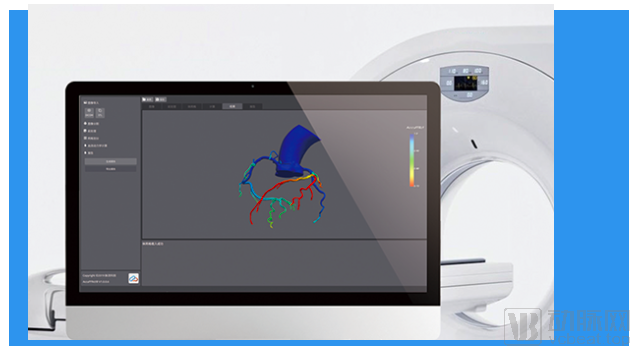
AccuCT: A Coronary Functional Analysis System Based on Coronary CTA®
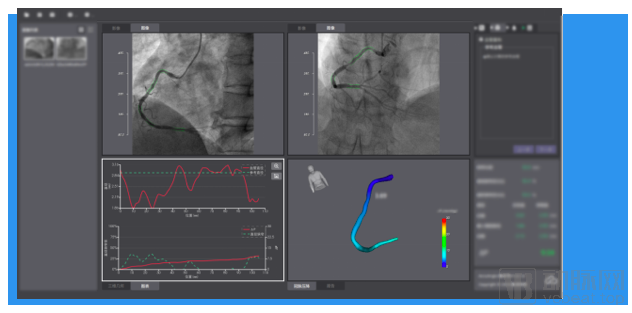
AccuAngio: Coronary Functional Assessment and Analysis System Based on Coronary Angiography®
The superiority of the two products lies in their ability to overcome the limitations of relying solely on a single imaging modality. After all, stenosis observed on imaging does not necessarily correspond to functionally significant ischemia; this applies not only to borderline lesions but even to cases with angiographically severe stenosis, which may not result in functional ischemia. In such patients, optimal outcomes can be achieved through deferred revascularization and standard medical therapy.
Functional assessments optimize the traditional diagnostic and treatment workflow for coronary heart disease to a certain extent. For patients, this product reduces unnecessary coronary angiography through non-invasive methods, thereby avoiding some interventional procedures. For hospitals, the overuse of percutaneous coronary intervention (PCI) places a significant burden on medical insurance; however, an improved diagnostic and treatment workflow can mitigate these costs and refine hospital operations.
Furthermore, the integration of deep learning has significantly reduced the reconstruction time for functional examinations. Non-AI solutions typically require 4–5 hours to reconstruct CT images, whereas ArteryFlow Technology can shorten the entire examination and analysis process to just a few minutes, thereby substantially improving hospital operational efficiency.
AccuStroke: Analysis System for Ischemic Stroke®, the AneuFlow aneurysm assessment system approved this time®All are cerebrovascular products. The ArteryFlow cerebrovascular product series is primarily used for cerebral aneurysm detection, assisted diagnosis of cerebral ischemia, and surgical planning.
AneuFlow®It is an auxiliary diagnostic system based on imaging and hemodynamics. The system performs 3D reconstruction of cranial medical images generated by diagnostic imaging (including 3D DSA, CTA, and MRA) to obtain a 3D model of intracranial aneurysms, or imports 3D models of intracranial aneurysms externally. It then calculates morphological data of the aneurysms through morphological analysis, followed by hemodynamic computational analysis.
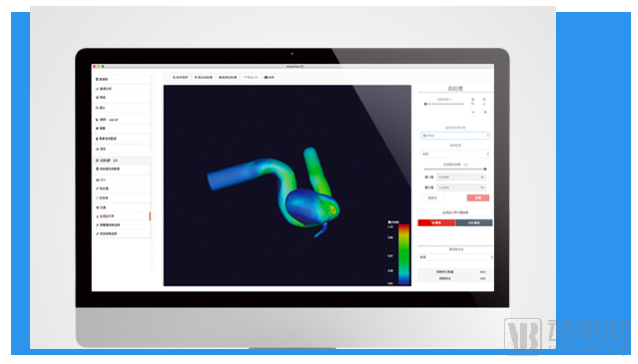
AneuFlow: An Auxiliary Diagnostic System for Intracranial Aneurysms®
Based on the calculated results, the system compares aneurysm characteristics to personalize the selection of coil and stent specifications, assisting physicians in making optimal clinical treatment decisions.
From a product portfolio perspective, ArteryFlow Technology has precisely identified the gaps in the current diagnosis and treatment workflow for coronary heart disease (CHD) and filled them with efficient and comprehensive CHD examination methods. This implies that hospitals will purchase the system to improve both examination and operational efficiency, while patients will prefer imaging-functional combined examinations due to the more refined diagnostic and therapeutic approach.
Beyond China, ArteryFlow Technology is also attempting to synchronize its expansion into Europe, Africa, Southeast Asia, and other regions.
March 19, 2020: AccuFFRct, a non-invasive FFR analysis software based on coronary CT®AccuFFRangio: Wire-Free FFR Analysis Software Based on Coronary Angiography®, and the wire-free FFR analysis device based on coronary angiography, AccuFFRangio Plus®Obtained EU CE certification.
At that time, ArteryFlow Technology will become the world’s first company to offer both CT-FFR and angio-FFR products, with independent software and hardware offerings. Following CE certification, ArteryFlow Technology’s AccuFFR®The product series began to be sold in Europe, Africa, the Middle East, Southeast Asia, and some countries in South America.
In addition to regulatory validation, ArteryFlow Technology is actively building its industry influence. At the Innovation in Cardiovascular Interventions (ICI) conference held in Tel Aviv, Israel, from December 8 to 10, 2019, AccuFFR, a series of innovative non-invasive functional assessment products for coronary arteries with independent intellectual property rights developed by ArteryFlow Technology, stood out among numerous Chinese-Israeli projects and won the 2019 Best Innovation Award in the cardiovascular field. At the 4th World Life Science Conference in December 2020, witnessed by 26 academicians, ArteryFlow Technology secured first place in the Life Science Technology Innovation Award.
Currently, the ArteryFlow team is engaged in deep collaboration with clinicians from over a hundred hospitals both domestically and internationally, jointly establishing AI research centers for cardiovascular and cerebrovascular diseases and successfully securing dozens of research grants. The company maintains close partnerships with the University at Buffalo’s Gates Vascular Institute (GVI), a world-leading interventional center, as well as with China’s top-tier cardiovascular and cerebrovascular disease hospitals, including the Second Affiliated Hospital of Zhejiang University School of Medicine, Zhongshan Hospital, Huashan Hospital, Beijing Tiantan Hospital, Changhai Hospital, and Zhejiang Hospital. With the support of these premier medical institutions, ArteryFlow is poised to rapidly expand the indications for its existing products and accelerate the expansion of its product portfolio.
Compared to other domestic AI companies in the cardiovascular sector, ArteryFlow Technology has achieved a leading pace in commercialization, supported by seven regulatory approvals. However, publicly disclosed financing data reveals that this tech startup, established nearly four years ago, has secured only three rounds of funding. This indicates that ArteryFlow, despite its significant achievements, has not yet fully leveraged the power of capital.
Now that the certificate has been approved, ArteryFlow Technology must accelerate its strategic layout in sales. With numerous domestic cardiovascular players already engaged in this competitive landscape, this year will be a pivotal one for every enterprise involved in cardiovascular AI research.
With its functional assessment products for cardiovascular and cerebrovascular diseases now NMPA-certified, ArteryFlow Technology is well-positioned to leverage capital effectively to accelerate the synchronized development of R&D and sales expansion, potentially propelling it to the industry’s forefront within the year. However, the ultimate outcome remains uncertain.