

Impact of China's Latest Population Census on Medical and Healthcare Industry Segments
On May 11, the main data from the Seventh National Population Census were released. The data show that China’s total population stood at 1,411.78 million (1.41178 billion), an increase of 72.06 million, or 5.38%, compared with 1,339.72 million (1.33972 billion) in the Sixth National Population Census in 2010. The average annual growth rate was 0.53%, representing a decline of 0.04 percentage points from the 0.57% recorded between 2000 and 2010. The data indicate that China’s population has maintained a trend of slow growth over the past decade.
In terms of age structure, the population aged 0–14 was 253.38 million, accounting for 17.95%, an increase of 1.35 percentage points compared with 2010, indicating a rebound in the proportion of children. The population aged 60 and above was 264.02 million, accounting for 18.70%, among which the population aged 65 and above was 190.64 million, accounting for 13.50%. Compared with 2010, the proportion of the population aged 60 and above increased by 5.44 percentage points, and that of the population aged 65 and above increased by 4.63 percentage points, further deepening the degree of population aging.
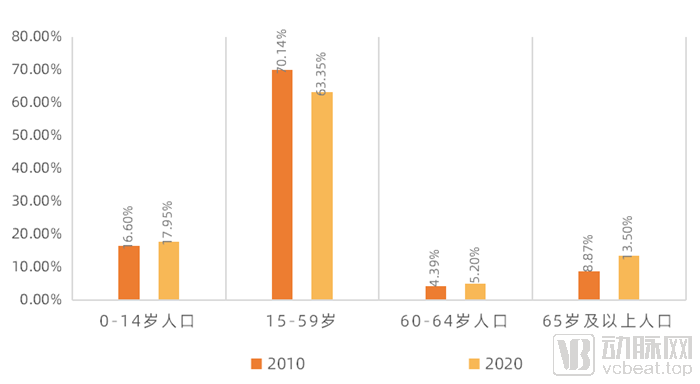 Comparison of China's Population Age Structure in 2010 and 2020
Among newborns, the fertility rate for second children has increased significantly, with the proportion of second-born children rising from around 30% in 2013 to approximately 50% in 2017.
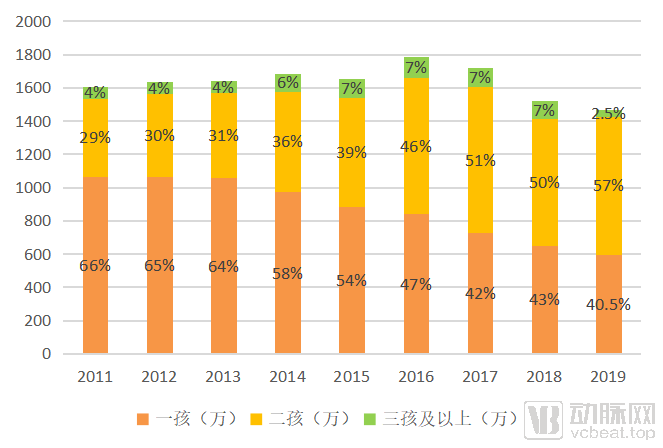 Statistics on First, Second, and Third-or-Higher-Order Births in China (Source: National Bureau of Statistics)
Population issues have always been a comprehensive, long-term, and strategic challenge for China. The development of the healthcare industry is closely intertwined with demographic changes. Therefore, we have selected and analyzed data closely related to healthcare in order to forecast trends in the healthcare industry.
The Birth Rate Continues to Decline, and the Aging Population Issue Becomes More Prominent
Since the founding of New China, the total population has been on an overall upward trend. However, census data indicate that the growth rate of China’s population has slowed in recent years. The average annual growth rate over the past decade was 0.53%, representing a decline of 0.04 percentage points compared with the previous decade. In terms of live births, China recorded 12 million births in 2020, with a relatively high proportion of second children among newborns. Although the number of newborns in 2020 decreased compared with the preceding two years, the scale remained substantial.
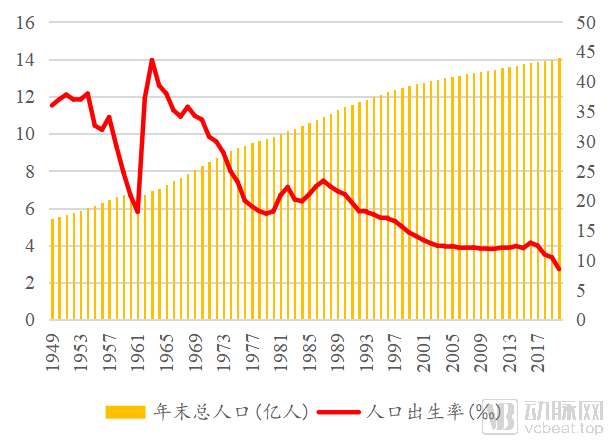 Total Population and Birth Rate in China by Year (Source: National Bureau of Statistics)
After undergoing a rapid transition from high to low fertility rates, the primary demographic challenge in China is no longer excessive population growth, but rather issues such as approaching ultra-low fertility levels and population aging. Against this backdrop, in November 2011, various regions across China began implementing the “two-child policy for couples who are both only children.” In October 2015, the “universal two-child policy” was introduced. In the following two years, 2016 and 2017, the number of births increased significantly, exceeding 18 million and 17 million, respectively. Moreover, in 2017, the number of second-born children surpassed that of first-born children for the first time.
Although the implementation of the two-child policy led to a baby boom in demographic changes, both the number of births and the birth rate have shown a downward trend since 2018. In 2018, China’s annual number of live births was 15.23 million, with a crude birth rate of 10.94 per thousand, which was already the lowest level since this data became available in 1952. In 2019, the annual number of live births fell further to 14.65 million, with a crude birth rate of 10.48 per thousand, hitting a new record low. According to the data released at this press conference, the total number of live births in 2020 was 12 million, with a crude birth rate of approximately 8.50 per thousand. Moreover, China’s total fertility rate among women of childbearing age stood at 1.3, indicating a relatively low fertility level.
Accompanying the decline in birth rates is the emerging issue of population aging. Census data reveals that over the past decade, China’s population aged 60 and above increased by approximately 86.37 million, with their proportion of the total population rising from 13.26% to 18.70%. As birth rates continue to fall, the challenge of population aging is expected to intensify in the future.
Declining Number of Women of Childbearing Age and Reduced Fertility Intentions
Changes in the number of newborns are closely linked to changes in the population of women of childbearing age. While the medical community generally considers 24–30 years to be the optimal childbearing age for women, we define the childbearing-age population as women aged 20–35, taking into account the legal marriage age and the growing trend of late marriage and delayed childbirth.
In its 2018 report, “Demographic Index and Healthcare Industry Survey,” VCBeat Institute used data from the Sixth National Population Census (2010) to project the number of people of childbearing age in China for 2020 and 2030. The figure below presents the analytical results from that report. As more detailed data on population age structure from the Seventh National Population Census have not yet been released, we are currently unable to update this chart; however, we believe that our assessment of the overall trend remains unaffected.
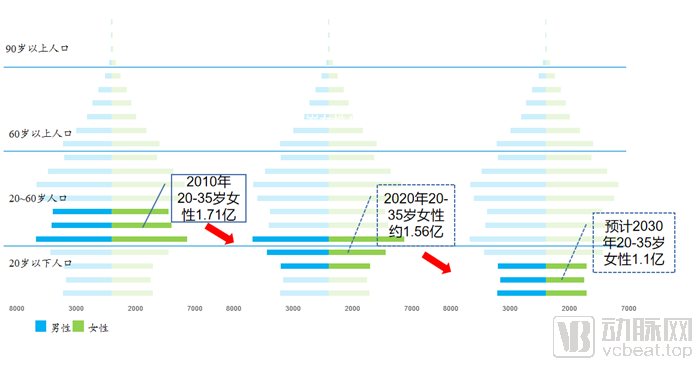
Projected Changes in China’s Population of Childbearing Age (Data Source: The Sixth National Population Census; data within the dashed lines are derived estimates)
As shown in the figure above, the number of women of childbearing age in China will continue to decline in the future, but the overall population remains relatively large. This forecast was previously highlighted by VCBeat in its report, “Analysis of Development Trends and Investment Opportunities in China’s Healthcare Industry in the Era of Low Fertility.”
Another key factor closely tied to the birth rate is the fertility intentions of the population of childbearing age.
Influenced by various factors, including economic considerations and social attitudes, an increasing number of residents of childbearing age have chosen to marry and have children later in recent years. Moreover, the COVID-19 pandemic in 2020 has heightened life uncertainties and concerns about hospital deliveries among the public, further reducing their willingness to have children.
However, the gender structure of China’s population has continued to improve over the past decade. Data show that the male population stood at 723.34 million, accounting for 51.24%, while the female population was 688.44 million, accounting for 48.76%. The overall sex ratio (number of males per 100 females) was 105.07, essentially unchanged from 2010 but slightly lower. The sex ratio at birth was 111.3, representing a decline of 6.8 compared with 2010.
What Opportunities Lie in the Healthcare Industry Amid Demographic Shifts?
Low fertility rates and population aging will undoubtedly have a significant impact on China’s healthcare industry, with the maternal and child health, elderly care, and commercial health insurance segments being the most directly affected.
Amid Low Fertility Rates, Demand for High-Quality Services in the Maternal and Infant Market Is Gradually Increasing
A low fertility rate means that the direct user base of the maternal and infant health industry is continuously shrinking. However, driven by consumption upgrades and shifting parenting philosophies, an increasing number of women and families are willing to invest more time and money in child-rearing, leading to growing market demand for high-quality maternal and infant care services.
In the future, families choosing to have children will predominantly fall into two categories: those with a strong desire for childbirth and those under minimal financial pressure. The former exhibit a high willingness to pay, while the latter possess strong payment capacity; both factors are conducive to supporting the development of the maternal and infant health market.
In this market context, companies should shift their focus from user quantity to service quality, while aligning their offerings with consumers’ actual needs; this approach will also contribute to the healthy development of the maternal and infant industry.
Aging Population Drives Continuous Growth in the Elderly Care Market
As the issue of population aging becomes increasingly prominent, it has become an industry consensus that the elderly care sector is poised for a golden opportunity. On one hand, the elderly population continues to rise; on the other, urbanization and the growing floating population have led to a steady increase in the number of “empty-nest” seniors. This trend has spurred substantial demand for elderly care services, thereby creating greater development opportunities for related industries such as rehabilitation, nursing, and chronic disease management.
Meanwhile, as the elderly population continues to grow, pressure on medical insurance will continue to increase. At present, cost containment in medical insurance has been repeatedly emphasized at both national and local levels, and commercial insurance will play an important role in payment. With people's increasing awareness of risk, public acceptance of commercial insurance is continuously rising, and more young people are purchasing commercial insurance. The development of the commercial insurance market is ushering in a favorable period.
In addition to the aforementioned sectors, industries such as assisted reproductive technology (ART) and consumer healthcare will also uncover their respective development opportunities amidst demographic shifts. Meanwhile, industry professionals should promptly monitor, anticipate, and explore these changes to formulate future development strategies, thereby seeking steady growth for both enterprises and the industry at large.
Reference Report: VCBeat Institute’s “Demographic Index and Healthcare Industry Survey: Sharp Decline in Newborns to Drive Turning Points in Maternity, Elderly Care, and Commercial Insurance Sectors”