

Molecular Partners Files for U.S. IPO Amid Setbacks: What’s Next for DARPin Therapeutics?

Molecular Partners
Clinical-Stage Biopharmaceutical Company
In April 2021, Swiss biotechnology company Molecular Partners filed a $100 million IPO application with the U.S. Securities and Exchange Commission, seeking to list on the Nasdaq under the ticker symbol “MOLN.”
Molecular Partners is currently developing DARPin protein therapies for infectious diseases and cancer. The company completed its initial public offering on the SIX Swiss Exchange in 2014, under the ticker symbol “MOLN.” For this U.S. listing, Molecular Partners plans to set the offering price based on the current market price of its shares on the SIX Swiss Exchange, although specific pricing terms have not yet been disclosed.


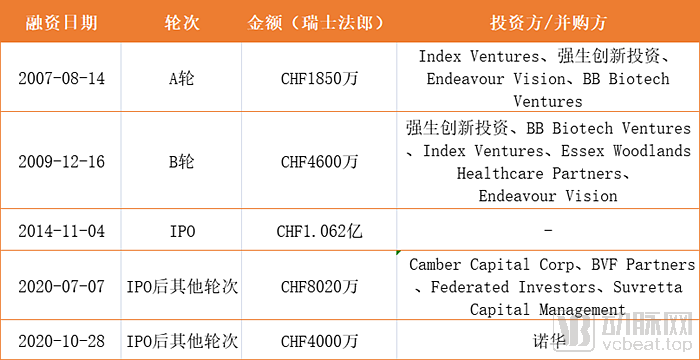
Prior to its listing in Switzerland, Molecular Partners completed two rounds of financing. The Series A round raised CHF 18.5 million,Led by Index Ventures, with follow-on investments from Johnson & Johnson Innovation, BB Biotech Ventures, and Endeavour Vision. The Series B financing amounted to CHF 46 million. All Series A investors participated in this round, and Essex Woodlands Healthcare Partners also joined the investor syndicate.
Molecular Partners translates to “Molecular Partners.” This name conveys a spirit of collaboration: between drugs and patients, within the company’s teams, and with external partners...
Molecular Partners’ journey to its current position is closely tied to “collaboration.” As it entered the field of drug development, the company firmly believed that technology and products are the core of an enterprise, while collaboration builds the strongest outer wall.
Molecular Partners aims to conquer the most severe and daunting diseases, such as cancer and infectious diseases. By leveraging DARPin technology, the company has developed a series of novel therapeutic approaches for serious conditions. These innovative candidates, currently in clinical stages, have attracted a steady stream of partners to Molecular Partners.
In October 2020, Molecular Partners collaborated with Novartis to develop two DARPin protein therapies against COVID-19.。Molecular Partners grants Novartis exclusive global licensing rights for MP0423 and MP0420. As part of the transaction, Novartis is required to pay Molecular Partners CHF 20 million and purchase 6% of Molecular Partners’ outstanding shares at CHF 23 per share, valued at approximately CHF 40 million.
Upon completion of Phase I clinical trials for two products (MP0423 and MP0420) by Molecular Partners, Novartis will pay Molecular Partners CHF 2.5 million. If product development proceeds smoothly, Molecular Partners will also receive an upfront payment of CHF 150 million. Furthermore, Novartis is required to pay Molecular Partners a royalty rate of 22% on commercial sales in certain specified regions.
In August 2020, Molecular Partners entered into a cooperation agreement with the Swiss government, which placed an order for the first batch ofEnsovibepVaccine Purchase Rights。The vaccine purchase volume stipulated in the agreement has not yet been finalized, standing at either 200,000 doses or 3 million doses. Molecular Partners has already received advance payments amounting to several million Swiss francs. However, the realization of this collaboration is contingent upon the success of Ensovibep’s clinical trials and its regulatory approval for market launch in Switzerland.
December 2018,Molecular Partners has entered into a collaboration agreement with Amgen, granting Amgen exclusive global rights to develop and commercialize MP0310.This collaboration brings Molecular Partners a $50 million upfront payment, with the potential to receive up to $497 million in development, regulatory, and commercialization milestone payments, as well as double-digit tiered royalties.
December 2013, Molecular PartnersWith RocheConclusionAlliance, join handsDeveloping New Cancer Treatments。Under this collaboration, Molecular Partners will receive an upfront payment and initiation fee of CHF 55 million. According to the agreement, upon the achievement of development and sales milestones for potential anticancer products, Molecular Partners will also be eligible for payments totaling CHF 1 billion.
The agreement reached between Molecular Partners and Roche primarily focused on the combined use of DARPin molecules and Pseudomonas exotoxin. Unfortunately, in 2015, due to toxicity-related concerns, Roche chose to terminate its Pseudomonas exotoxin conjugation programs, including those based on antibodies and DARPins.
Ultimately, the DARPin-toxin alliance between Roche and Molecular Partners was dissolved.
In December 2011, Molecular Partners entered into a strategic research collaboration and option agreement with Janssen Biotech.Based on the DARPin platform, both parties will jointly develop potential products for the treatment of immune diseases. As part of the agreement, Molecular Partners will receive substantial upfront fees, licensing fees, and research funding. Additionally, in later stages, Molecular Partners will be eligible to receive up to $200 million per project in development and commercialization milestone payments.
In May 2011, Molecular Partners and AbbVie (Abbvie)signed a cooperation agreement with its subsidiary Allergan, under which Allergan is responsible for the development and commercialization of the ophthalmic drug Abicipar.In this collaboration, Molecular Partners received a $45 million upfront licensing fee.
In July 2015, the Phase III clinical trial for neovascular (wet) age-related macular degeneration (nAMD) was initiated, and Molecular Partners again received a $15 million regulatory milestone payment. Upon completion of project development, Molecular Partners is eligible to receive up to $210 million in additional payments. Under the agreement, Molecular Partners will also receive $150 million from Allergan upon achievement of sales milestones.
As disclosed in the prospectus, as of December 31, 2020, Molecular Partners had received a total of CHF 277.6 million from its key collaboration agreements. After deducting costs associated with capital increases, the company raised a total of CHF 271 million across seven rounds of equity financing. Molecular Partners held cash, cash equivalents, and short-term time deposits totaling CHF 173.7 million.
To date, Molecular has not had any products approved for marketing or granted sales authorization. All of the company’s candidate products are in various stages of preclinical or clinical development.
Molecular also stated in its prospectus that the company has incurred significant operating losses since its inception.As of the end of 2020 and 2019, the net loss attributable to shareholders was CHF 62.8 million and CHF 36.3 million, respectively.

Targeting Three Major Disease Areas, Simultaneously Launching
Expanding Multiple "DARPin" Therapeutic Pipelines

MolecularThe company’s losses resulted from a combination of factors, including project R&D, clinical development of candidate products, research project costs, preclinical trials, business-related sales expenses, and corporate administrative costs. Ultimately, drug R&D is the largest consumer of capital.
2020, MolecularThe Company'sThe total number of employees reached 145, an 8% increase from 2019. MolecularThe company stated that more than85% of personnel are associated with the R&D sector.
MolecularWhat exactly are the company’s research areas? What products are currently under development? And what constitutes the core technology of these products?
Molecular Partners’ pipeline candidates are primarily based on a platform known as “DARPin.” The foundational DARPin technology was developed at the University of Zurich, which has granted Molecular Partners an exclusive global license and patent rights to this technology.
DARPin, also known as Designed Ankyrin Repeat Protein, is one of the most abundantly expressed binding proteins in the human genome and holds the potential to overcome the limitations of monoclonal antibodies. Scaffold-based DARPin proteins offer numerous advantages over conventional antibodies.
1. High affinity and specificity: high potency, low off-target risk;
2. High tissue penetration capability: DARPin proteins are relatively small, with a size only one-tenth that of antibodies, resulting in significantly superior penetration ability compared to antibodies and enabling them to reach targets outside the bloodstream;
3. DARPin proteins can simultaneously target six different sites;
4. Long shelf life and good stability; it can be stored for several years at 4°C;
5. DARPin proteins are derived from natural ankyrin repeat (AR) structures, do not carry antibody Fc fragments, and are not coupled to the immune system, thereby reducing immunogenicity;
6. Unlike antibodies, DARPin molecules do not contain disulfide bonds in their structure, allowing them to maintain structural stability and achieve high-level expression within the intracellular environment of prokaryotes. They are simple to produce, cost-effective, and can be rapidly prepared.
Molecular Partners has developed a unique DARPin platform based on DARPin technology, through which it has established multiple therapeutic candidate pipelines in areas including infectious diseases, oncology, and ophthalmology. Currently, DARPin therapies are in clinicalValidation has commenced in preclinical and clinical trials, involving up to 2,000 patients, including 1,900 ophthalmology patients and 75 oncology patients.。
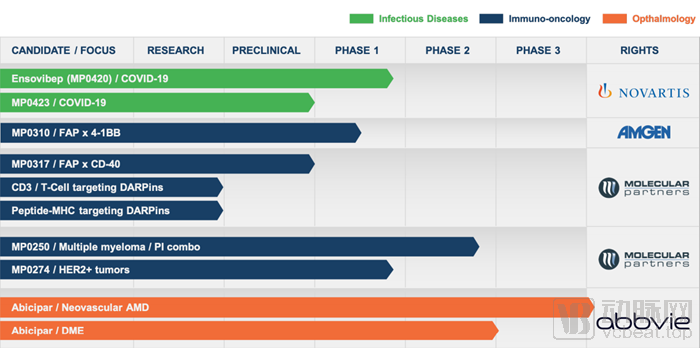
Image source: Molecular Partners official website
In April 2020, amid the outbreak of the coronavirus disease 2019 (COVID-19) pandemic, Molecular Partners launched its anti-COVID-19 therapeutic program. The company leveraged the multi-target binding capabilities of DARPin proteins to neutralize the SARS-CoV-2 virus. Infectious diseases subsequently became a key research focus for Molecular Partners.
Molecular Partners has developed two trispecific DARPin candidates for the treatment of COVID-19, namely Ensovibep (MP0420) and MP0423. These two candidates have demonstrated potent viral inhibitory efficacy against emerging viral variants.
In October 2020, Molecular Partners entered into an option agreement with Novartis to jointly develop, manufacture, and commercialize two of Molecular Partners’ anti-COVID-19 candidate products.
Under the terms of the agreement, Molecular Partners is responsible for Phase I clinical trials of two candidate products and all preclinical work for MP0423. Novartis is responsible for conducting Phase II and Phase III clinical trials. Novartis will also be responsible for all development and commercialization activities for the product.
In the Phase I clinical trial of MP0420, all 23 healthy volunteers demonstrated good tolerability. Molecular Partners stated that Phase II clinical trials of MP0420 have been initiated in the Netherlands, with a plan to enroll more than 40 patient volunteers.
Molecular Partners’ other candidate product, MP0423, is currently in the preclinical trial stage. MP0423 simultaneously targets three distinct regions of the coronavirus spike protein: the receptor-binding domain (RBD), the S1 N-terminal domain (NTD), and the S2 domain. By engaging multiple mechanisms of action concurrently, it demonstrates viral inhibitory activity beyond RBD neutralization capacity.
To better advance the anti-COVID-19 program, Molecular Partners has also entered into collaborations with AGC Biologics, Baccinex, Ivers-Lee, and the Swiss government.
Immuno-oncology is another key research area for Molecular Partners. Leveraging its DARPins platform, the company has established novel approaches to cancer therapy and developed multiple candidate products for the treatment of cancer.
These novel approaches are characterized by their distinct specificity: the drug is activated exclusively within the target tumor, simultaneously targeting multiple cancer cells and blocking their escape pathways. By leveraging the binding mechanism between immune cells and tumor antigens, this strategy not only eradicates the tumor but also avoids the toxicity issues commonly associated with conventional anticancer therapies. This approach broadens the therapeutic window for cancer treatment, enhancing efficacy while reducing the development of drug resistance in the human body.
MP0310It is the first candidate product in Molecular Partners’ immuno-oncology pipeline. MP0310 consists of fibroblast activation protein (FAP) and 4-1BB. Previous studies have found that although targeting 4-1BB holds strong potential for anti-tumor therapy, it also has non-negligible toxic side effects. To avoid potential toxicity issues, Molecular Partners has designed a strategy whereby immune cells are activated only when both 4-1BB and FAP bind simultaneously to target cells. This approach triggers localized activity within the tumor, thereby achieving therapeutic efficacy.
In 2018, Molecular Partners entered into a collaboration with Amgen. The two parties jointly evaluated MP0310 alongside Amgen’s oncology pipeline products, including Amgen’s bispecific T-cell engager (BiTE) molecules. In Phase I clinical trials, MP0310 demonstrated its ability to locally activate immune cells without causing systemic toxicity.
MP0317It is the second candidate in Molecular Partners’ immuno-oncology pipeline. MP0317 comprises FAP and CD40 binding domains. Its mechanism of action is similar to that of MP0310. Given the high density of FAP in the tumor stroma, its engagement with CD40 on immune cells induces clustering, thereby achieving localized activation of immune cells. Currently, MP0317 remains in the preclinical stage.
MP0250It is a traditional candidate product in oncology pipelines, distinct from MP0310 and MP0317. It binds to and inhibits the vascular endothelial growth factor (VEGF) and hepatocyte growth factor (HGF) pathways, thereby restoring the efficacy of common cancer therapies and enabling patients with drug resistance to respond to these treatments again.
In the clinical study of MP0250 for non-small cell lung cancer (NSCLC), Molecular Partners observed a higher incidence of renal adverse events (nephrotic syndrome), and similar adverse events have also been reported with other anti-VEGF agents. Consequently, Molecular Partners has decided to suspend the NSCLC program and refocus the development of MP0250 on multiple myeloma.
MP0274By binding to two distinct sites or epitopes on HER2, it induces cancer cell apoptosis. Antibody therapy is the first-line treatment for patients with HER2-positive cancers, but this approach is prone to drug resistance. Compared with conventional drugs, MP0274 represents a novel mechanism of action and has demonstrated favorable tolerability in clinical trials.
However, as a strategic decision, Molecular Partners has suspended the clinical study of the MP0274 project and shifted its investment to other projects with better development prospects.
Abicipar is Molecular Partners’ most advanced candidate in clinical development and is currently in the registration phase. It is a VEGF inhibitor indicated for the treatment of neovascular age-related macular degeneration (nAMD) and diabetic macular edema (DME).
Compared with current anti-VEGF therapies, abicipar offers a longer duration of action and less frequent dosing, while achieving equivalent or superior visual acuity improvements. Phase III clinical trials have demonstrated that quarterly injections of abicipar are non-inferior to three monthly injections of Lucentis per quarter.
In 2011, Molecular Partners exclusively licensed the project to Allergan, a subsidiary of AbbVie. In June 2020, the FDA rejected the marketing application for Abicipar. In its complete response letter, the FDA noted that it observed an intraocular inflammation rate of up to 15% in patients with neovascular age-related macular degeneration (nAMD) treated with Abicipar (2 mg/0.05 mL). This figure represents a significant disparity compared to the 0.6% incidence of endophthalmitis associated with ranibizumab.
Shortly thereafter, AbbVie withdrew its marketing authorization applications for Abicipar from the European Medicines Agency (EMA) and the Pharmaceuticals and Medical Devices Agency (PMDA). AbbVie stated that it would subsequently meet with the U.S. Food and Drug Administration (FDA) to discuss future development plans for Abicipar.
Affected by the failed market launch of Abicipar, Molecular Partners’ stock price once plummeted by as much as 40%.


As previously mentioned, Molecular Partners’ funding primarily comes from financing and R&D collaboration revenue. Most of these funds have been invested in product development.
Molecular Partners' External R&D Expense Data
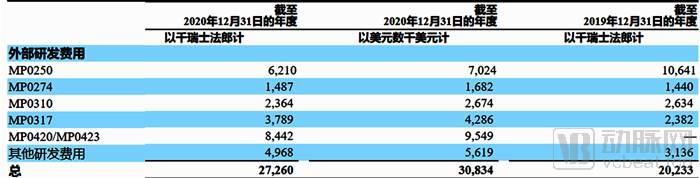
As disclosed in the prospectus, Molecular Partners’ external R&D expenditures totaled CHF 27.26 million in 2020, an increase of CHF 7.027 million from 2019. The company’s external R&D expense data indicate that this incremental spending was primarily allocated to the development of its COVID-19 antiviral drug candidates (MP0420 and MP0423).
As the project progressed, Molecular Partners’ total R&D expenditure reached CHF 56.075 million in 2020, representing a 29% increase from the CHF 43.498 million spent in 2019.
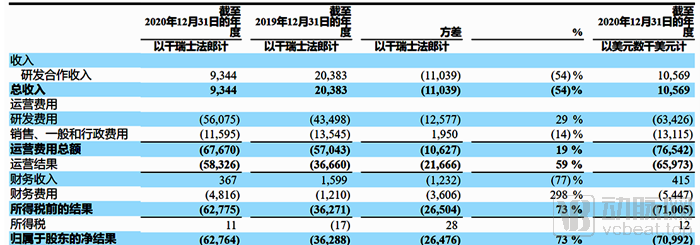
Selected Financial Data of Molecular Partners
As of the end of 2020, Molecular Partners’ total revenue was CHF 9.344 million, representing a 54% decline from the CHF 20.383 million reported in 2019. Molecular Partners stated that Amgen was the primary source of its revenue in both 2019 and 2020.
MolecularThe company has repeatedly emphasized in its prospectus that the companyThe company has incurred significant losses since its inception and is expected to continue operating at a loss in the foreseeable future, with no guarantee that it will ever achieve or sustain profitability.The impact of COVID-19 continues,The failure of Abicipar to reach the market is still fresh in memory, and Molecular Partners has no other products that are already marketed or pending approval...
Clinical drug development is a protracted and costly process, characterized by uncertain timelines and unpredictable outcomes. As evidenced by the key financial statements of Molecular Partners, in 2020, the company’s R&D expenditures were six times its revenue, excluding other operational expenses.
Molecular Partners still holds a portfolio of candidate products in preclinical or clinical stages,To complete the development and commercialization of these products,Molecular Partners also needs to invest a substantial amount of capital.
Molecular Partners relies heavily on its DARPin platform to identify and develop product candidates.As disclosed in the prospectus,Molecular Partners’ core DARPin technology patents are set to expire in September 2021. The company has decided to terminate its exclusive licensing agreement with the University of Zurich and will not renew it. This decision signifies that DARPin technology is no longer “unique,” and more formidable competitors may emerge.
Molecular Partners has navigated a challenging development path, yet it has maintained favorable recognition in the capital markets. As of 2020, the company had accumulated losses of nearly CHF 200 million; after deducting liabilities of CHF 80.326 million, its net assets stood at approximately CHF 100 million.
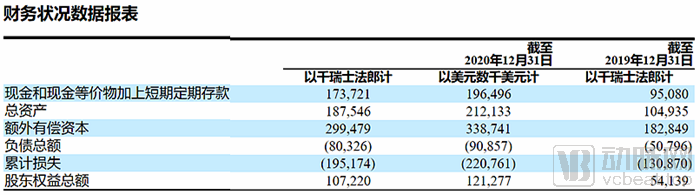 Molecular Partners' Financial Data
Product development remains the focal point of Molecular Partners’ future growth. The net proceeds from this offering, together with the Company’s existing cash resources, will be primarily used to advance its preclinical programs, includingPhase I clinical trials of MP0317 and MP0423. The remaining funds will be used to advance ongoing clinical trials and develop potential candidate products.
To date,Molecular CompanyNo revenue has been generated from commercial product sales, and in the coming period,Molecular Partners’ revenue still primarily relies on funding from collaboration agreements.
Molecular Partners’ financial position is far from robust. The failed launch of abicipar was a devastating blow, and the company urgently needs a victory to boost morale.