

Sustainable Development of Scientific and Technological Achievements Transformation and Industrialization: Insights from the Forum on Sci-Tech Commercialization
As a dedicated observer and chronicler of the innovative healthcare industry, VCBeat officially launched the Future Healthcare 100 Forum in 2015. Over the past six years, it has grown into a renowned summit in China’s innovative healthcare sector, facilitating the integration of industry and capital.
Over the course of three days, the conference will host 19 forums, bringing together 279 distinguished experts to focus on future trends, industry prospects, global perspectives, and venture capital dynamics. The forums include: Summit on Future Healthcare Trends, Summit on Future Healthcare Strategy, International Summit on Healthcare Innovation, Summit for Limited Partners and General Partners (LP-GP) in Future Healthcare Funds, Forum on Personalized Diagnosis and Treatment, Forum on Health Insurance Technology and Commercial Health Insurance, Forum on Innovative Practices in Primary Healthcare, Forum on Digital Therapeutics Innovation, Forum on Digital Marketing for Pharmaceutical Companies, Forum on the Development of High-Value Consumables, Forum on Innovative Development of Internet Hospitals, Forum on Translation of Scientific Achievements and Industrial Development, Forum on the Development of the Assisted Reproductive Technology Industry, Forum on Data Intelligence and Payment Innovation, Forum on Innovative Development of Smart Hospitals, Forum on Health Management Innovation, Forum on Digital Drug R&D (ITBT), Forum on Early Cancer Screening, and Forum on Innovation in the Medical Aesthetics Industry.
On April 17, the Forum on Transformation of Scientific Achievements and Industrial Development, part of the 5th Future Healthcare Top 100 Conference, kicked off. The event was organized by VCBeat, co-organized by the Zhong Nanshan Foundation, Chuangrui Investment, the Chinese Clinical Research Consortium, and the UK Beyond Lab, and supported by the Zhongguancun Zhiyou Angel Research Institute, the Zhongguancun Zhiyou Scientist Fund, Tsinghua University’s Global Health Industry Innovation Center, the Western Sichuan Medical Technology Transfer Center, the Sichuan International Medical Exchange Promotion Association, and Sinovation Ventures. Guests delivered speeches on topics such as transforming technologies into mature commercial products, industrial implementation, cultivating innovative talent, and bridging the gap between academia and commercialization. VCBeat has compiled the insightful perspectives shared by the speakers.
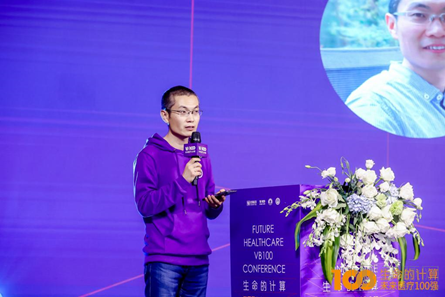
Li Datao | Founder of VCBeat
Li Datao, Founder of VCBeat, Shared Three “Ones” in His Conference Address.
First,A Set of Data and a Sentence. Each year, the Research Department issues a report on the translation of scientific achievements, extracting, summarizing, and synthesizing key data from it. Since I started my entrepreneurial journey in 2014, I have been particularly drawn to unmet clinical needs in the healthcare sector. This phrase is indeed classic; while it may seem commonplace due to its frequent use, I always perceive immense business potential within it. For instance, it raises critical questions about how technologies evolve, whether they can be commercialized, and if there is a viable market—all of which offer rich grounds for discussion.
Second,A Story. It discusses the various difficulties and obstacles in translating scientific research achievements into practical applications, particularly the clashes between universities and enterprises.
Third,An Expectation. The expectation is to leverage media platforms to bring together more individuals dedicated to scientific research and clinical studies, enabling the transformation of their ideas into products that can benefit a broader population.
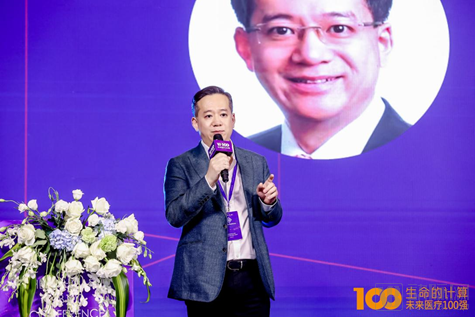
Han Wenxin | Co-Convenor and Secretary-General of the China Clinical Research Community
We aim to build an interconnected bridge among the government, experts, clinical institutions, enterprises, and investors. Our goal is to foster an ecosystem that aligns these stakeholders—government, clinical institutions, experts, enterprises, and industry—around a unified entry point, common context, and consistent standards, thereby facilitating greater consensus and joint efforts toward the translation of scientific achievements and industrial development in China. Even the most advanced technology remains significantly flawed if it fails to be implemented in practice; strictly speaking, it cannot be considered a high-quality product. Only when such technologies are more widely adopted for societal benefit can they ultimately fulfill the objective of our theme: achieving optimal outcomes.
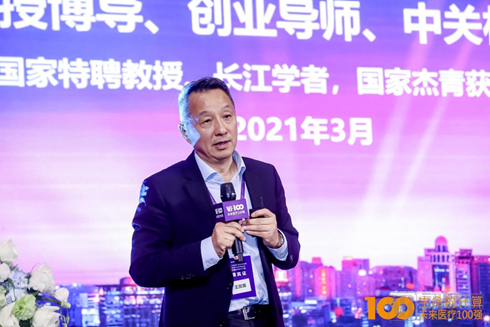
Wang Tianmiao | Professor at Beihang University
From Scientist to Angel: Two Transformations Required
First, we must shift from the first principles of science to the first principles of engineering. The first principles of science pertain to scientific issues, such as the sensitivity, degrees of freedom, and precision of medical robots. The primary tenet of engineering is to understand the pain points and challenges of specific scenarios, while ensuring reasonable pricing and ease of widespread adoption.
Second, medical devices, particularly robotic ones, are ventures co-founded by engineering students and physician PhDs. They establish long-term professional teams with renowned physicians and form sound partnership mechanisms. CFDA approval serves as the initial entry ticket to realizing this value.
From Scientific and Technological Achievements to Market Launch: Key Elements to Consider Include Timing, Location, and Human Factors
“Timing” essentially enables you to understand the overarching principles, recognize trends, and grasp the ecological environment. When operating through different channels, if the chosen track is narrow and short-lived, the value of translating achievements into practical outcomes will naturally be diminished. Therefore, in evaluating a track, we base our judgment on human nature and pinpoint the moment when scientific and engineering first principles are resolved through technological advancement.
“Geographic advantage” refers to the specific scenarios and sectors where scientific and technological achievements are commercialized. From a macro perspective, this encompasses fields such as medical imaging, robotics, genomics, 3D printing, and internet hospitals. However, when it comes to the actual translation of these achievements into practice, it is necessary to delve into specific medical departments and technologies to identify intersection points. These intersection points generally favor two categories: first, high-value pain points; second, significant technical barriers.
As for human resources, the pain points in product development, operations, and promotion at different stages are precisely determined by the varying stages and roles of individuals. Only when a company identifies the right direction and recruits the right talent can it cultivate deep expertise and grow into a towering tree.
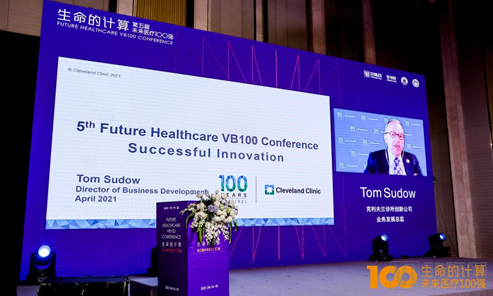
Tom Sudow | Director of Business Development, Cleveland Clinic Innovations
To commercialize technology, we must transform ideas and innovations into tangible solutions for patients, achieving industrial implementation. To drive innovation, enhance patient care, and deliver superior outcomes, we adhere to the 4P principle: identifying problems, finding the right people, emphasizing processes, and creating high-quality products.
First and foremost, we must address issues related to nursing care and health. By commercializing successful medical practices, we can help clients and patients resolve their challenges, thereby enhancing the quality of care delivered to patients. Secondly, regarding our people, we need to continuously invest more in human capital to provide greater support and advice to entrepreneurs, ultimately helping them achieve customized solutions.
Furthermore, regarding the process. It is important to recognize that different procedural steps are advanced during the course of clinical research. We must adhere to this workflow while ensuring the implementation of innovation throughout the entire process. By communicating with physicians and nurses to further refine the approach, we can conduct clinical analytical studies to validate the appropriate clinical perspective and attempt to resolve the issue.
Adopt a comprehensive approach. The goal is not to fall in love with your own product, but to fall in love with the process of identifying and resolving issues. You should cherish the ability to discover and solve problems, rather than becoming attached to the product itself. We need to pinpoint where the disconnects lie, where the needs are, and where our solutions can make an impact. In this process, we must be meticulous and critical; success depends on embracing a fault-finding mindset.
Align with your needs to identify the true demands of the market. Regularly ask yourself how such an invention can improve patient outcomes. This is particularly relevant in telemedicine; continually question how this information can enhance patient outcomes and seek answers through this reflection.
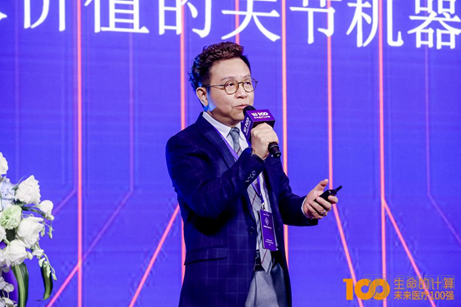
Lin Jin | Chief Physician, Department of Orthopedics, Peking Union Medical College Hospital
How to Define Clinical Value: Six Dimensions—Patient Benefit, Patient Satisfaction, Clinical Pain Points, Physicians’ Self-Actualization, Clinical Costs, and Payment Issues. The Logic of Scientific Research Innovation Should Be Based on These Six Dimensions.
Clinical needs provide the primary driving force. Technical requirements enable the design of high-quality products. By conceptualizing clinical needs and then brainstorming product functions, forms, and other attributes, and finally integrating various technologies, a new product can emerge. How do we extract these conceptual elements? Four key points must be considered: clinical requirements; the standards that must be met in clinical practice; whether traditional methods can achieve these standards; and if current clinical approaches fall short, what specific deficiencies or problems exist and whether they can be resolved. For instance, with our joint surgery robots and surgical instruments, all the visible components are ultimately transformed into an engineering-oriented conceptual framework.
Assessing the clinical value of a product ultimately comes down to four key principles: patient-centricity, low cost, minimal risk, and high satisfaction. We must understand the art of trade-offs; it is not necessary to meet every single requirement. Our goal is to address universal needs, with a primary focus on cost efficiency. We need to clearly define the costs involved and establish a phased approach—specifying what tasks are undertaken at each stage. Only through clear prioritization and trade-offs can we truly develop a useful product. Therefore, in medical innovation, we must navigate risks without succumbing to them—akin to “walking by the river without getting wet.” This is a crucial lesson to remember: quality and core value must always come first.
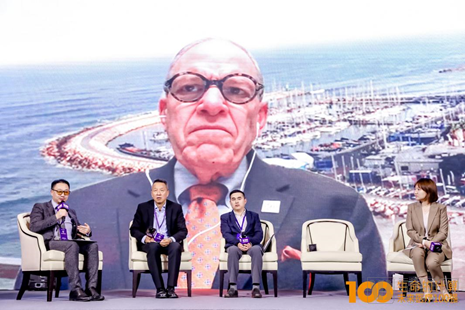
From left to right: Tang Haofu, Chairman of Chuangrui Investment; Professor Wang Tianmiao, Beihang University; Zhang Dawei, Dean of the Institute of Science and Technology Development, University of Shanghai for Science and Technology; Tom Sudow, Director of Business Development, Cleveland Clinic Innovations; Lei Juan, Deputy Director of the West China Transfer Center, West China Hospital, Sichuan University
Professor Wang Tianmiao, Beihang University:
Investigations have revealed a high level of urgency among department directors at major hospitals regarding the commercialization of medical innovations. The first step is to foster communication and collaboration among physicians, scientists, and even nurses to spark innovative ideas. Secondly, it is essential to understand the pain points within specific clinical scenarios and assess any gaps compared to existing solutions offered by similar companies, while further clarifying whether the innovator’s involvement is part-time or diversified. In other words, there is a need for professional Technology Transfer Licensing (TTL) agencies with angel investment capabilities, as well as mechanisms that facilitate direct engagement with clinicians in clinical settings. During the commercialization process, at least two approaches can be adopted: one involves licensing or assigning the technology rights; the other entails forming a team comprising the innovator’s colleagues or students, given that the innovator often holds a part-time role.
Zhang Dawei, Dean of the Academy of Science and Technology Development at USST:
A Sharing on the Transformation of Achievements in Medical Devices and Med-Engineering Interdisciplinary Fields at the University of Shanghai for Science and Technology (USST). The University of Shanghai for Science and Technology and Shanghai Jiao Tong University School of Medicine jointly established the USST-SJTU School of Medicine Med-Engineering Interdisciplinary Innovation Research Institute. A primary function of this institute is to collect clinical ideas or needs from physicians at its affiliated Grade III, Class A hospitals. Currently, it has supported three rounds of med-engineering interdisciplinary projects. In each round, physicians submit numerous ideas, concepts, and requirements. After these are documented, Shanghai Jiao Tong University School of Medicine conducts an initial screening and selection, as not every physician’s proposal can be developed into a viable project; some may represent individual rather than widespread needs. Following this elimination process, the University of Shanghai for Science and Technology assesses whether any faculty members can align with and undertake the technical aspects of the project. If a match is found, the project is implemented within the university.
Tom Sudow, Director of Business Development, Cleveland Clinic Innovations:
We need to understand the needs and problems, provide solutions for the problems, know the value needed by our entire market, and enable this value to be deeply cultivated in the market. Often, doctors have interesting ideas that fail to succeed in the market, so we end up spending more time validating their concepts.
Market demand is the ultimate determinant; thus, a product’s value can only be realized upon its entry into the market. Therefore, the market serves as both the primary driving force behind the development of this product and the ultimate platform for value realization.
Lei Juan, Deputy Director of the West China Transfer Center, West China Hospital, Sichuan University:
The purpose of scientific research is to serve the industry. In the innovation ecosystem, enterprises are always the main body of innovation, but clinical practice is the starting point of innovation. The deep integration of industry-university-research cooperation is the direction of the future. Solve service-oriented work and deeply bind industry-university-research with hospitals through market-oriented operations.
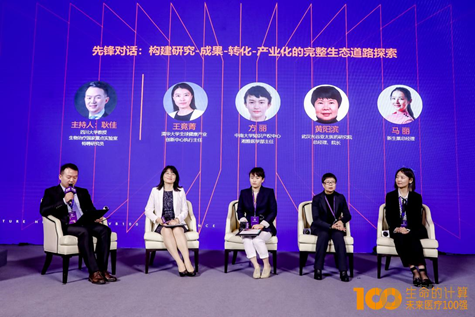
From left to right: Professor Geng Jia, Distinguished Researcher at the State Key Laboratory of Biotherapy, Sichuan University; Director Wang Jingjing, Global Health Industry Innovation Center, Tsinghua University; Director Fang Li, Xiangya School of Medicine Intellectual Property Center, Central South University; Dean Huang Yangbin, Wuhan Optics Valley Asia-Pacific Pharmaceutical Research Institute; and General Manager Ma Li, Newborn Nest.
Wang Jingjing, Director of the Global Health Industry Innovation Center at Tsinghua University:
We are engaged in translational medicine, which is essentially a true zero-to-one process. Relying solely on clinical practice is insufficient, as physicians primarily focus on practical application; while they can propose ideas, the challenge lies in determining who will implement them. For universities, as sources of original technological innovation, although we possess the technical know-how, it remains difficult to ascertain what forms or features physicians prefer and what solutions can be effectively integrated into clinical practice. Breaking down these barriers through interdisciplinary communication and collaboration is an arduous yet critically important endeavor.
Director Fang Li, Xiangya School of Medicine, Intellectual Property Center, Central South University:
Currently, the greatest challenge for hospitals within the technology transfer industry chain is how to achieve substantial growth and scale. This primarily involves two aspects: first, there is insufficient investment from social capital in our early-stage projects; second, there is a need to further drive physician teams to advance the commercialization of their innovations, thereby enabling them to expand and strengthen their operations.
Dean Huang Yangbin, Wuhan Optics Valley Asia-Pacific Pharmaceutical Research Institute:
The project should ideally have a clear translational focus, which I believe stems from the collaborative outcomes between clinicians and scientists. Clinicians possess a holistic, systems-level perspective, while scientists bring profound expertise in foundational theoretical disciplines such as molecular biology. This synergy creates a cohesive group capable of conducting more systematic and in-depth integrated research.
Ma Li, General Manager of Xinshengchao:
“People”—whether in the field of medical devices or new drug development, I believe the primary focus should be on people. This includes patients’ clinical needs, as well as the needs of early-stage entrepreneurs and scientists who are dedicated to addressing these unmet clinical demands.
“Endurance” is a process of bearing solitude and exercising patience. Whether it involves incubator platforms or industrial operations, scientists are human beings too; the entire R&D process often requires greater understanding and support from all stakeholders.
“Resilience” means perseverance and tenacity. There may be pitfalls and detours; navigating these obstacles is all part of the process.
“Benevolence” means returning to a heart of compassion. Everything we do, whether it is new drug development or medical devices, is truly about solving problems. Our greatest joy lies in staying true to our original aspiration: addressing unmet clinical needs. We approach all our work with a spirit of benevolence. Furthermore, we hope that our efforts will ultimately reflect a strong sense of social responsibility and create lasting social value.
Zhi ZhangPhD: The Translational Story and Reflections Behind Keytruda
The translational phase includes safeguarding innovations, advancing development, and encompassing novel molecules in new drug R&D as well as novel diagnostic approaches in diagnostic R&D.
The most fundamental aspect of translational work is our extensive collaboration with medical researchers, scientists from charitable organizations, enterprises, and academia to create and protect intellectual property, as well as to provide professional training, all of which fall within the scope of translational guidance and consulting. Second, we develop new interventions and diagnostic tools. This constitutes a core component of translational science, encompassing activities such as the discovery of novel drug candidate molecules, including antibody-based therapeutics. Third, translational funds primarily support original startups and innovative companies to drive their innovations forward.
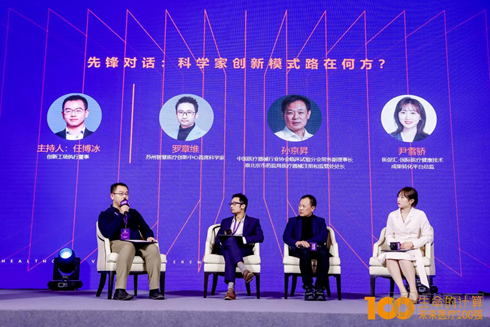
From left to right: Mr. Ren Bobing, Executive Director of Sinovation Ventures; Luo Zhangwei, Chief Scientist of the Suzhou Smart Healthcare Innovation Center and former Chief AI Scientist at Siemens China Research Institute (Suzhou); Sun Jingsheng, Executive Vice Chairman of the Clinical Trials Branch of the China Association for Medical Devices Industry and former Director of the Medical Device Registration and Regulation Division of the Beijing Municipal Drug Administration; Yin Xuejiao, Director of the Yicuhui International Medical and Health Technology Transfer Platform.
Luo Zhangwei, Chief Scientist of the Suzhou Smart Healthcare Innovation Center and former Chief AI Scientist at Siemens China Research Institute’s Suzhou Branch:
Identify innovation opportunities by addressing real-world needs. Furthermore, we must contemplate the trajectory of global development over the next few years, decade, or even two decades, and consider how we can change the world. These questions prompt us to reflect and have driven numerous innovations in our work. Regarding the commercialization of research achievements, including incubation, it is often necessary to rely on young talent. Because younger individuals tend to have more open minds, students should be granted a certain degree of autonomy to pursue their interests; however, faculty members must provide appropriate guidance.
Sun Jingsheng, Executive Vice Chairman of the Clinical Trial Branch of the China Association for Medical Device Industry (CAMDI), and former Director of the Medical Device Registration and Regulation Division of the Beijing Municipal Drug Administration:
The growing caution in innovation investment is primarily driven by the proliferation of innovations, among which pseudo-innovations are abundant. To ensure that an innovation truly matures into a marketable product and delivers tangible R&D outcomes, it is essential to adhere to the five-step R&D framework: Step 1: Functional Development; Step 2: Compliance Development; Step 3: Reliability Development; Step 4: Clinical Usability Study; and Step 5: Mass Production Feasibility Study.
MedPromo Hub-Yin Xuejiao, Director of the International Medical and Health Technology Achievement Transformation Platform:
Previously, scientists and enterprises primarily relied on collaborative R&D for technology transfer. A key challenge was determining the extent of scientists’ involvement in such collaborations and the amount of resources enterprises could commit under this model. Currently, new collaborative models and strategies are being explored. Scientists and enterprises are increasingly engaging through precisely defined, phased horizontal research projects based on stage-specific deliverables, or by establishing joint ventures involving two or three parties. In these arrangements, scientists typically participate throughout the entire project lifecycle by contributing equity valued at their intellectual property’s assessed worth. This approach helps ensure that cutting-edge technologies are effectively transferred from universities to the market, while enabling scientists to devote greater effort to ongoing R&D and operational activities throughout the commercialization process.
The first step in the commercialization of scientific and technological achievements has been taken, bringing research outcomes from universities to the market. The next focus should be extended to the sustainable development of these projects.