

Import Surge or Domestic Rise? Decoding the Five Major Trends Behind the CMEF 2021 Boom
“So many people, so much cutting-edge technology, and more domestically produced medical devices...” remarked a doctor who visited the 84th China International Medical Equipment Fair (CMEF) this year.
Indeed, the CMEF, which opened on May 13, 2021, at the National Exhibition and Convention Center in Shanghai, was a grand event. With an exhibition area of nearly 300,000 square meters, it attracted close to 5,000 exhibiting companies and was hailed as a carrier-level summit in the medical device industry. Crowds were seen gathering around booths showcasing globally leading medical device products.
Over the past five years, the global medical device market has maintained an annual growth rate of approximately 5%, while China’s market has consistently grown at a rate exceeding 15%. The booming China Medical Equipment Fair (CMEF) serves as a microcosm of the thriving ecosystem within China’s medical device industry.
For the industry, the CMEF exhibition signals trends in sector development; the greater the on-site enthusiasm, the more intense the competition. Attendees can directly witness the growing strength of domestically produced medical devices and the broader breakthroughs achieved across the medical device supply chain. Furthermore, with new entrants such as Alibaba, Tencent, and JD.com joining the market, the boundaries of the medical device industry are continuously expanding, leading to a more diverse competitive landscape. For companies, the products and solutions showcased at CMEF represent the cutting edge of the industry, sending important signals about manufacturers’ future strategic moves.
At CMEF, what key products did major companies showcase, and what significant signals and trends did they reveal? VCBeat (WeChat ID: vcbeat) has compiled the standout products and important trends in four major fields: medical imaging, artificial intelligence, surgical robots, and endoscopes.

I. Developing High-End Imaging Equipment: Domestic Brands Focus on Core Components
Driven by changes in market demand and policies promoting domestic production, the market share of domestically produced CT scanners has continued to grow in recent years, with an increasing number of manufacturers developing and launching high-end CT systems. As performance improvements in CT scanners have primarily focused on single-rotation scan time and the number of slices acquired per rotation, a greater number of detector rows enables shorter examination times, which is particularly advantageous for imaging moving anatomical structures. Consequently, a growing number of manufacturers are opting to increase the number of detector rows in their R&D efforts.
At the conference, United Imaging showcased its 320-row, 640-slice CT scanner, the “Tianhe 640 CT,” which features a 16-cm wide-area detector and a system rotation speed of 0.25 seconds per revolution. For cardiovascular examinations, the Tianhe 640-slice CT can accurately complete cardiac imaging within a single heartbeat, regardless of heart rate or rhythm, thereby easily accommodating coronary artery imaging under various conditions. Compared with 64-slice CT systems, it significantly improves examination efficiency for cardiovascular patients.
Another CT scanner showcased by United Imaging at the exhibition is its newly launched ultra-large-bore 320-slice CT, featuring an industry-leading maximum gantry aperture of 82 cm for diagnostic-grade CT systems and a gantry rotation speed of 0.25 seconds per revolution.
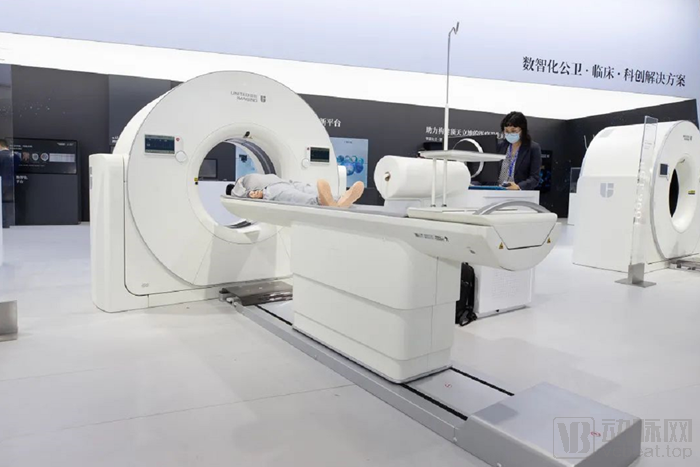
United Imaging Ultra-Large Bore 320-Slice CT
GE Healthcare has unveiled its new 256-slice CT product, the Revolution CT VICTOR. Manufactured at GE Healthcare’s Beijing Imaging Equipment Manufacturing Base, this device represents the latest hallmark achievement of GE Healthcare’s comprehensive “Made in China” strategy. Designed to meet the demand for high-end CT systems in Chinese clinical practice, this CT scanner builds upon the innovative coronary artery freeze-tracking platform and the 16 cm wide-body detector of the Revolution platform. It is also equipped with core hardware technologies such as the Performix™ X-ray tube and spectral imaging. These features enable true single-heartbeat coronary examinations under any heart rate or rhythm conditions, one-click stroke workflow and treatment management, and a one-stop solution for tumor screening, diagnosis, and follow-up. By providing richer information for high-definition, detailed imaging of cardiovascular, cerebrovascular, and oncological conditions, the system meets the needs of precise clinical diagnosis and high-throughput outpatient services.
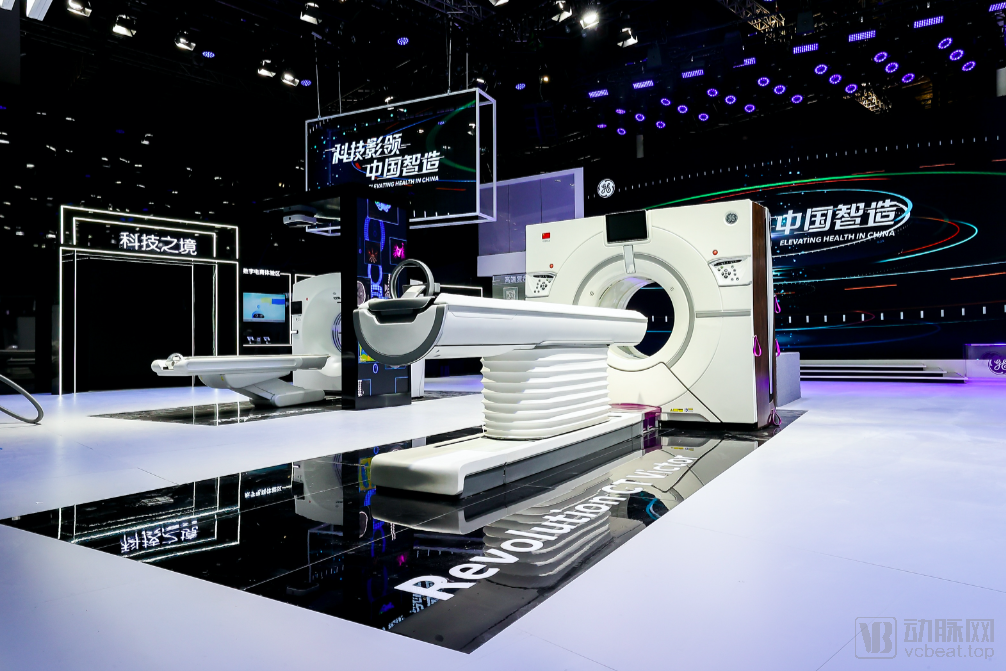
GE Healthcare Revolution CT VICTOR
NeuViz Epoch, a 512-slice multimodal panoramic CT scanner showcased by Neusoft Medical, features a 16cm wide-volume “Panoramic Light-Chaser” detector. It completes cardiac scans in as fast as 0.2 seconds, unaffected by breathing or heart rate variations. A single scan enables multimodal data analysis with multiple parameters and angles, reducing the burden of repeat examinations for patients.
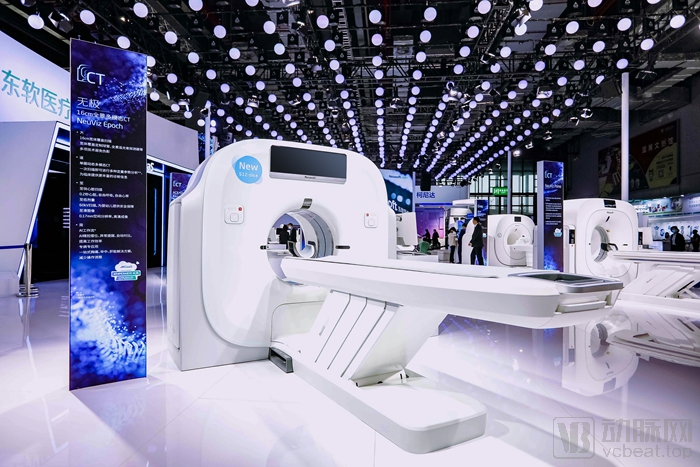
NeuViz Epoch: WUJI 512-Slice Multimodal Panoramic CT
Mingfeng Medical’s independently developed 256-row, 512-slice ultra-high-end CT—the Quantum Eye CT—is also a paradigm of breakthroughs in domestically produced CT systems. Based on true spherical detector design and self-developed Shenguang materials, this product effectively avoids the generation of cone-beam artifacts. Its integrated AI-based NDI+ low-dose iterative reconstruction technology enables lower radiation doses and reduced contrast agent usage.
In contrast to the aforementioned trends, Siemens has chosen “unmanned” CT as its strategic focus. It is understood that this “unmanned” CT is an upgraded version of Siemens Healthineers’ fever clinic solution, featuring a proprietary dual-mode, dual-control system and equipped with multiple intelligent cameras to support both “unmanned mode” and “staffed mode.” Its remote control system, GrandView matrix system, and embedded design ensure safe and orderly operation of CT scanners in fever clinics under any mode.
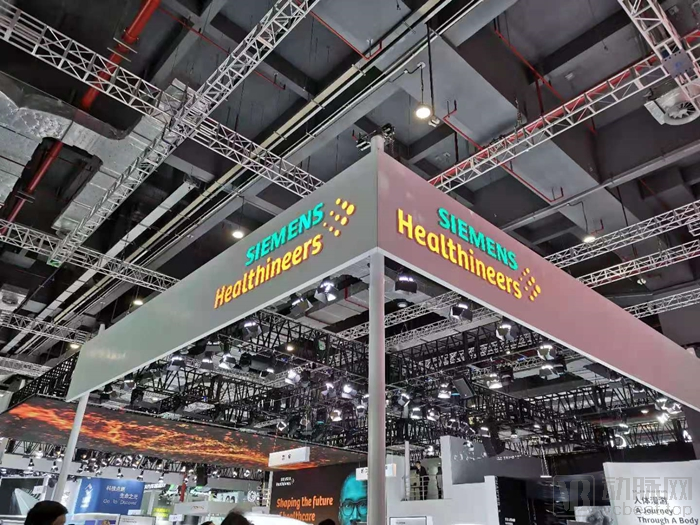 Siemens Healthineers Booth
In terms of core components, United Imaging Healthcare has launched a high-end “China Chip” dedicated to medical imaging. Its single-channel signal processing capacity per unit time can reach the 10-megahertz level, representing a tenfold increase in circuit processing capability compared to designs based on traditional general-purpose chips. It is reported that after being equipped with the “China Chip,” PET-CT systems can surpass the 200-picosecond technological “tipping point,” achieving an industry-leading time resolution of 190 picoseconds. This advancement significantly enhances PET-CT image quality, facilitating more precise diagnoses by physicians and enabling early detection and treatment.
FrameView Dexin, attending the conference for the first time, presented a series of medical imaging solutions based on photon-counting X-ray detector technology. Its product portfolio covers a wide range of disruptive innovations in cutting-edge fields, including digital mammography systems, 3D breast tomosynthesis systems, dental X-ray sensors, oral and maxillofacial CBCT, and high-definition orthopedic DR.
It is understood that photon-counting detection technology, hailed as the “next-generation medical X-ray imaging technology,” offers numerous advantages, including zero dark noise, high grayscale depth, an ultra-wide dynamic range, low radiation dose requirements for imaging, and the ability to generate multi-energy spectral images. Through significant breakthroughs in the core technology of photon-counting X-ray detectors, Frame View Dexin has successfully achieved industrial deployment of photon-counting technology.
II. Integrating with the Internet, Imaging Equipment Manufacturers Gradually Build Online Stores
The sales of large-scale medical equipment have always been a complex endeavor, characterized not only by numerous delivery projects but also by a heavy reliance on offline models for equipment maintenance, customer service, and training. Spurred by the COVID-19 pandemic, an increasing number of healthcare professionals have experienced the convenience brought by information and internet technologies. Consequently, some medical imaging companies have begun to develop their own online malls, striving to create one-stop platforms that integrate procurement, services, and solutions.
At the CMEF, Philips launched the “Philips Medical Online Mall,” offering users “cloud platform” services that include medical equipment procurement, access to equipment training demonstrations, professional solution-specific services, and post-purchase product upgrades and order management. Its fully integrated, end-to-end cloud-based ecosystem effectively supports healthcare professionals in working efficiently and enables streamlined hospital management.

It is understood that Philips’ online store also offers the “My Shenfeiyun” solution, which not only provides customers with comprehensive cloud-based services covering pre-sales, in-sales, and after-sales stages, but also significantly enhances service accessibility, achieving zero-distance service, timely response to needs, and instant service support.
Neusoft Medical’s Smart Selection Mall, aimed at promoting the high-quality development of non-public healthcare, integrates online consultation, ordering, payment, and services, significantly optimizing the customer procurement process. To better serve non-public healthcare clients, Neusoft Medical and JD Health formally established a strategic partnership at the conference, leveraging their respective strengths in products, platforms, and channels to jointly enhance disease education in China and facilitate the implementation of integrated online and offline diagnosis and treatment.
In terms of online retail, GE HealthCare has also made strategic moves. At the conference, GE HealthCare’s booth featured a Digital E-Commerce Experience Zone, showcasing its self-developed mini-program mall, “Mini Go”—a digital procurement service platform dedicated to serving customers—to hospital clients and small and medium-sized distributors. Furthermore, GE HealthCare partnered with JD Health and Tmall Health to demonstrate cross-industry collaboration between healthcare and e-commerce, achieving deep integration between the internet and the healthcare sector.
III. Surgical Robots Experience a "Surge in Popularity," with Comprehensive Expansion Across All Disease Categories
At CMEF, in addition to the large-scale imaging equipment with a strong technological appeal, the surgical robots with a futuristic design also drew significant attention. Crowds of visitors flocked continuously to each surgical robot display, reflecting extremely high interest.
The most eye-catching product is Fosun Pharma’s ARTAS, a hair transplant assistance robot. ARTAS is the world’s first hair transplant robot and has received approval from China’s CFDA and the U.S. FDA. Compared with manual follicular unit extraction, ARTAS delivers more consistent performance. It avoids the low follicle survival rates that can result from prolonged procedure times, inadequate operator skill, misjudgment, and other human factors such as emotional fluctuations.
Secondly, the ARTAS hair transplant robot features a high-definition stereoscopic imaging system that enables rapid and precise positioning with an accuracy of up to 50 micrometers. Its follicular unit extraction system can accurately harvest thousands of grafts in a single procedure by precisely targeting the angle of each follicle, thereby minimizing the risk of human error. Implanting 1,500 hairs takes only one hour, significantly reducing surgical time, while the survival rate of the transplanted hair exceeds 95%.
On-site information indicates that over 20 ARTAS systems have been deployed for clinical use in hospitals across China, including Shanghai Ninth People’s Hospital. The total cost per ARTAS robotic hair transplantation procedure is approximately RMB 100,000.
Orthopedic surgical robots were the predominant category among the surgical robots showcased on-site, with Zimmer Biomet, Stryker, and Tinavi Medical Technologies each unveiling their latest surgical robot products.
Stryker introduces the Mako SmartRobotics™ system. The Mako SmartRobotics™ system assists surgeons in performing unicompartmental knee arthroplasty, total knee arthroplasty, and total hip arthroplasty. Its fundamental principle involves analyzing patient-specific CT data to create personalized preoperative plans. During surgery, it provides real-time 3D bone imagery and joint kinematic parameters, enabling orthopedic surgeons to adjust or confirm the planned implant positioning through a minimally invasive approach. By strictly adhering to the patient’s unique joint anatomy, the system facilitates rapid postoperative recovery and restoration of proprioception.
The Mako SmartRobotics™ system is among the most advanced joint surgery robots internationally, with over 15 years of global application, more than 1,200 installed units, and over 350,000 procedures performed to date. It is understood that more than 20 hospitals in China have already implemented and are conducting Mako robot-assisted joint replacement procedures.
Tinavi, the first publicly traded company in the orthopedic surgical robotics sector, has introduced the Tiangji II Orthopedic Surgical Robot. Inheriting the high-precision characteristics of its predecessor, the Tiangji system, the Tiangji II provides orthopedic surgeons with a new, efficient, and intelligent workflow. It significantly enhances surgical efficiency, accommodates a broader range of complex surgical scenarios, and markedly improves the operative experience, enabling surgeons to maintain comprehensive, real-time control and proceed with greater confidence.
Zimmer Biomet has introduced the ROSA® Knee orthopedic surgical robot. ROSA is Zimmer Biomet’s robotic surgical solution for neurosurgery and orthopedics. Leveraging robotic surgical technology and dedicated surgical planning software, the system enables surgeons to perform procedures in a minimally invasive manner.
The uniqueness of ROSA lies in its role as a surgical navigation robot applicable to both neurosurgery and spinal surgery, with its initial applications in neurosurgery. ROSA’s orthopedic surgical robot was approved for launch in China in March 2020. It is reported that over 40 units of the ROSA neurosurgical robot have been installed in China, primarily indicated for epileptic electrode implantation and deep brain stimulation (DBS) implantation procedures.
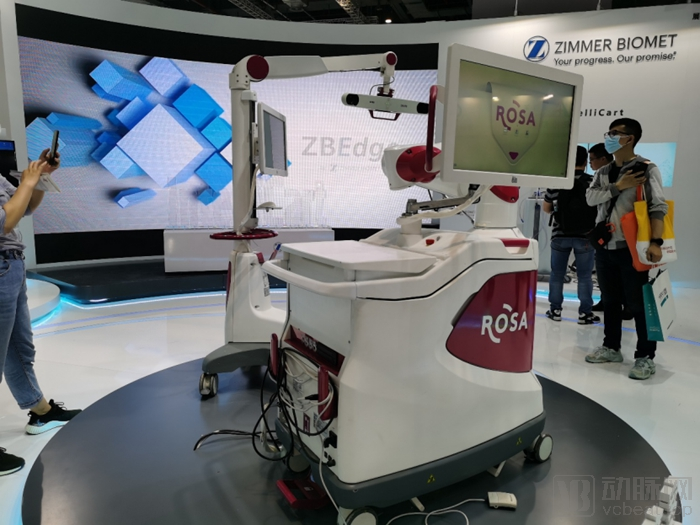
ROSA® Knee Orthopedic Surgical Robot
In addition to Zimmer Biomet’s ROSA, Chinese manufacturer Huake Jingzhun also showcased a series of neurosurgical robotic systems.
Huake Jingzhun® neurosurgical robot features the globally leading Holoshot® 3D structured light registration technology. A representative from Huake Jingzhun stated that the primary clinical applications of neurosurgical robots currently are epilepsy surgery and deep brain stimulation (DBS) implantation, with procedures such as brain tumor biopsies also experiencing rapid growth.
In the field of vascular intervention, Weimai Medical showcased its vascular interventional robot integrated with DSA (Digital Subtraction Angiography) equipment. With the assistance of this robotic system, physicians can perform coronary stent implantation while avoiding radiation exposure, enhancing procedural precision, and reducing the learning curve for interventional procedures. Notably, Weimai Medical’s vascular interventional robot features a bionic design that provides haptic feedback to operators, thereby improving the safety of robotic-assisted surgeries.
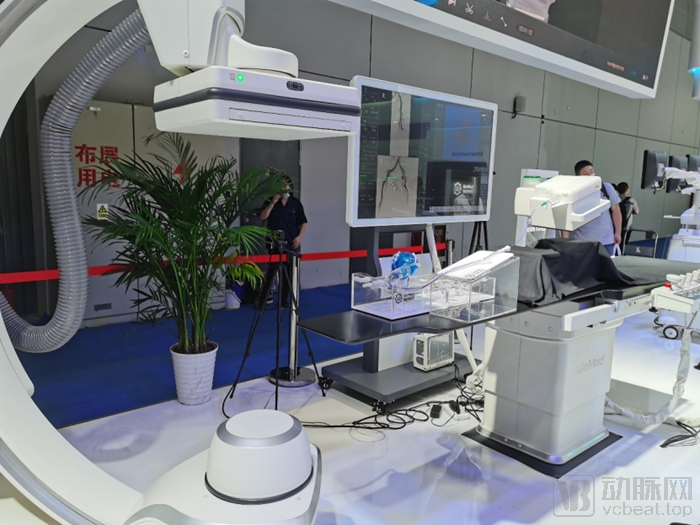
Vimai Medical Vascular Interventional Robot
In the field of diagnostics, MGI Tech showcased a 5G-enabled ultrasound robot capable of performing remote, real-time, rapid, and automated ultrasound examinations. By leveraging digital transformation and innovations in digital healthcare, this technology enables a model of “machine-based examination with expert interpretation,” thereby overcoming the temporal and spatial limitations inherent in traditional ultrasound diagnosis and treatment.
Robotic products, characterized by a high degree of functional integration and intelligent software, are destined to define the future trajectory of medical devices. It is foreseeable that as surgical robots in fields such as orthopedics and neurosurgery achieve commercialization and gain greater acceptance among clinicians and the general public, their application will expand to cover more medical specialties.
At this stage, how surgical robots can achieve greater clinical benefits remains a challenge that the industry needs to address collectively.
IV. Expanding AI Application Domains: The Development Path for AI Enterprises
In recent times, several AI-assisted diagnostic software products in China have obtained medical device registration certificates, covering application scenarios such as fundus images, pulmonary nodule imaging, and cardiovascular imaging. Against the backdrop of the continuous advancement of the digital economy, artificial intelligence has developed rapidly and achieved deep integration with an increasing number of application scenarios.
As one of the first companies to obtain a Class III medical device certification for AI-assisted diagnosis from the National Medical Products Administration (NMPA), Shukun Technology has launched AI-powered products in the cardiovascular and cerebrovascular fields, including coronary CTA, head and neck CTA, and an intelligent stroke-assisted diagnostic system. At this year’s China Medical Equipment Fair (CMEF), Shukun Technology unveiled a new product: the industry’s first artificial intelligence solution for liver MRI. Reportedly, this solution enables automatic recognition of different imaging sequences, automatic extraction of multiple lesions, automatic assessment of liver background, automatic volume measurement, and automatic description of lesion characteristics, while also generating standardized structured reports. This will significantly reduce the time radiologists spend interpreting abdominal images, particularly for the comprehensive evaluation of patients with multiple liver lesions.
 Shukun Technology Booth
Deepwise Medical’s solutions showcased at this event are more inclined toward an “integrated” approach. For instance, its “One-Stop AI Solution for the Nervous System” combines its existing head and neck CTA and stroke-assisted diagnosis products, enabling AI-assisted diagnosis of non-contrast head CT (NCCT), head and neck CTA, and CT perfusion (CTP). Similarly, the “Integrated Cardiothoracic Solution” provides AI-powered intelligent analysis of chest CT images and coronary CT angiography images, significantly improving physicians’ work efficiency.
Keya Medical’s exhibits at this event primarily featured two major product portfolios: Intelligent Diagnosis and Intelligent Treatment. Compared to last year, the number of products showcased by Keya has increased significantly. In addition to its flagship CT-FFR product, Keya Medical also introduced auxiliary diagnostic systems for head and neck as well as pulmonary image analysis. The Intelligent Treatment product line operates relatively independently. In the realm of Intelligent Treatment, Keya Medical currently focuses on addressing issues that can be extended from the auxiliary diagnostic process, thereby optimizing clinical workflows.
During the conference, Yizhun AI officially launched its “Intelligent Analysis System for Breast Tomosynthesis,” designed to address the diagnosis and analysis of whole-breast lesions across multiple devices. The system efficiently empowers early screening, diagnosis, and treatment of breast cancer, providing significant support for grassroots-level breast cancer screening programs.
V. Domestic Brands Aim for the High-End Market as Endoscopy Enters the 4K Ultra-HD Era
At CMEF, endoscopy has also become a key area of focus for domestic manufacturers. Numerous endoscope companies gathered at the event, with many exhibiting in clusters, and “4K high-definition” emerged as a frequently mentioned term in the endoscopy exhibition area.
The most prominent exhibitor in the endoscopy section was Olympus, a long-established medical optics company. Although there are numerous domestic manufacturers, Chinese endoscope companies still lag behind established medical optics giants like Olympus in terms of overall strength. At this CMEF, Olympus showcased its 4K ultra-high-definition imaging system, bipolar high-frequency ultrasonic dual-output surgical system, and comprehensive endoscopy center solutions.
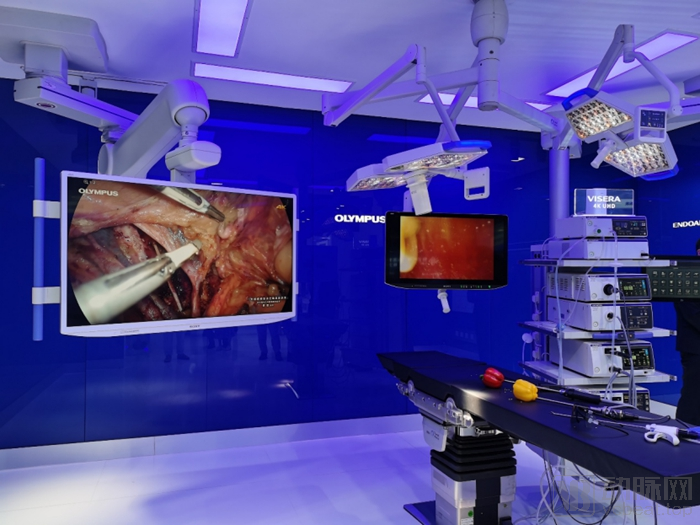
Olympus Products
Surrounding Olympus are numerous domestic endoscope brands. For a long time, the Japanese “big three” (Olympus, Pentax, and Fujifilm) have dominated China’s RMB 5 billion flexible endoscope market, leaving room for improvement among domestic brands. At CMEF, one could sense the determined efforts of Chinese manufacturers to catch up by focusing on high-end endoscopic products.
Taking SonoScape as an example, as a leading domestic player in flexible endoscopy, SonoScape unveiled multiple flagship products at CMEF, covering flexible endoscopes, rigid endoscopes, and interventional consumables for endoscopic procedures, thereby establishing a full-industry-chain presence in the endoscopy sector.
Among them, Sonoscape’s EG-UR5 endoscopic ultrasound system is the first domestically produced endoscopic ultrasound device. Endoscopic ultrasound utilizes ultrasonic waves to examine the walls of the gastrointestinal tract and surrounding organs, enabling visualization of lesions within the gastrointestinal wall and the physiological structures of adjacent extra-luminal organs that are not detectable by conventional endoscopy.With this product, Sonoscape has become the fourth company globally and currently the only one in China with the capability to research, develop, and manufacture ultrasound endoscopes.
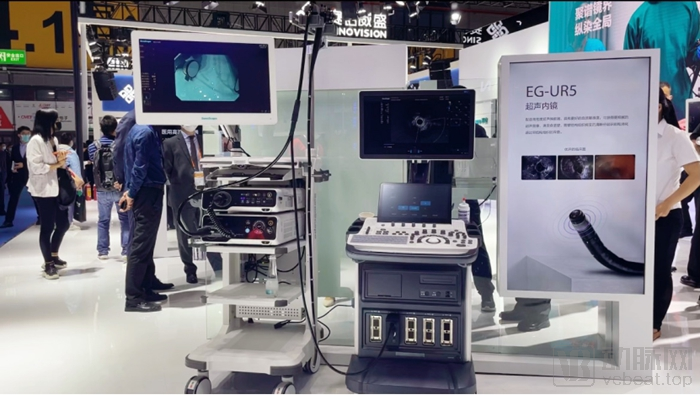
SonoScape EG-UR5 Endoscopic Ultrasound System
In the field of rigid endoscopy, Sonoscape has launched a 4K ultra-high-definition endoscopic camera system. This product features the latest generation of three-chip ultra-HD CMOS image sensors and incorporates China’s first quad-wavelength LED light source. Characterized by high brightness, a high color rendering index (CRI), and extended lifespan, this light source ensures effective illumination during surgical procedures.
Another leading player in the flexible endoscopy sector, Aohua Endovision, introduced the AQ-200 premium full-HD optical endoscopy system. Reportedly, the innovation of this product lies in its adoption of laser transmission technology for endoscopes. Laser signals are immune to electromagnetic interference and do not interfere with other electronic devices. The use of laser transmission enables higher data transfer rates and reduces information distortion, thereby delivering clearer and more detailed images.
Striving for premiumization and catching up with Olympus is a major trend.At the same time, it is intuitively evident on-site that rigid endoscope products are becoming increasingly homogeneous among the numerous manufacturers. The market is fragmented with many players, leading to fierce competition in the mid-to-low-end segments. Industry insiders attribute this primarily to the fact that, compared to flexible endoscopes, rigid endoscopes do not require considerations for maneuverability of the scope body; thus, their manufacturing processes and structures are relatively simpler, resulting in lower barriers to entry and more intense competition.
As the era evolves toward intelligence, the COVID-19 pandemic, coupled with industry transformation, has driven the entire sector into an upward trajectory. The products showcased at CMEF reveal leading manufacturers’ visions for the future of the medical device industry and emerging trends.
For domestic medical device manufacturers, the “golden decade” of the industry holds even greater promise. A thriving industrial ecosystem must be underpinned by strong sector competitiveness, yet the overall strength of China’s medical device industry still requires enhancement. Particularly in the high-end market, there is a pressing need for more competitive, high-performance products.