

Baiair Medical Enters the Over-10-Billion-Yuan Efficacy-Based Cosmetics Market with a Dedicated Commercialization Platform
During the China Beauty Expo, Fu Gang, Chairman of Baiyang Pharmaceutical Group, shared an interesting observation: new brands in the cosmetics sector often emerge online first, whereas in the new drug sector, the pattern is precisely the opposite, with brands debuting offline before expanding online. This difference is partly attributable to distinct sales channel strategies, as most cosmetics companies regard online platforms as their primary sales channel.
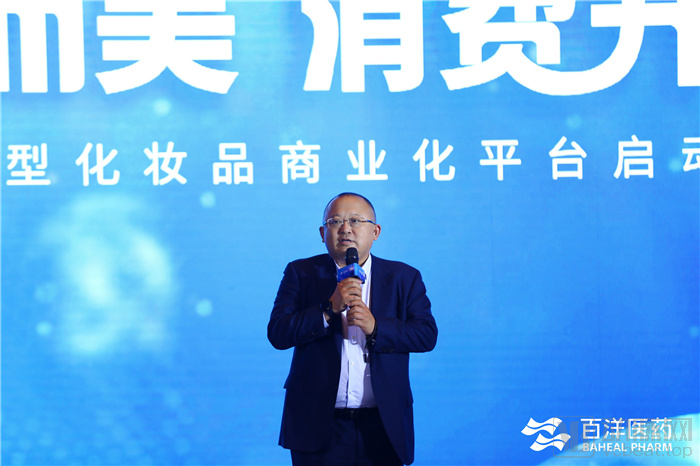
Fu Gang, Chairman of Baiyang Pharmaceutical Group
However, as the cost of acquiring traffic from public online domains continues to rise, the growth dividends of e-commerce platforms are gradually diminishing, particularly for new cosmetics brands. Even cosmetics brands that previously gained popularity through KOL-led marketing are finding their strategies increasingly ineffective, with their online market share being further eroded. How to better achieve sustainable development has become an urgent question for cosmetics brands to address.
On the other hand, since 2014, the cosmeceutical market has grown at a compound annual growth rate (CAGR) of 20%, reaching a market size of RMB 13.55 billion in 2019. Evidently, an increasing number of cosmetic brands are shifting their focus to their own products, striving to win consumer trust by developing cosmeceuticals that emphasize ingredients and efficacy. Given that cosmeceuticals account for over 60% of the total cosmetics market in Japan, Europe, and the United States, whereas this figure stands at no more than 20% in China, the situation presents both challenges and significant market potential.
Shifting to functional cosmetics represents only the most fundamental step for companies; the next critical challenge lies in determining how to more effectively reach consumers. At this juncture, Baiyang Pharmaceutical’s launch of China’s first commercialization platform for functional cosmetics offers a strategic approach to addressing the current development challenges faced by brands in this sector.
Data Experiment Support and Product Sales Become Challenges
The skin microbiome is composed of various microorganisms, including bacteria, fungi, viruses, and mites, together with tissues, cells, secretions, and the microenvironment on the skin surface. Professor Liu Wei, advisor to the Dermatology Branch of the Chinese Medical Doctor Association, points out that the skin microbiome is a relatively stable system. Once this system’s balance is disrupted due to specific causes, leading to the overgrowth of certain bacteria or microorganisms, it can easily result in skin conditions such as acne, eczema, dermatitis, dandruff, and skin sensitivity.
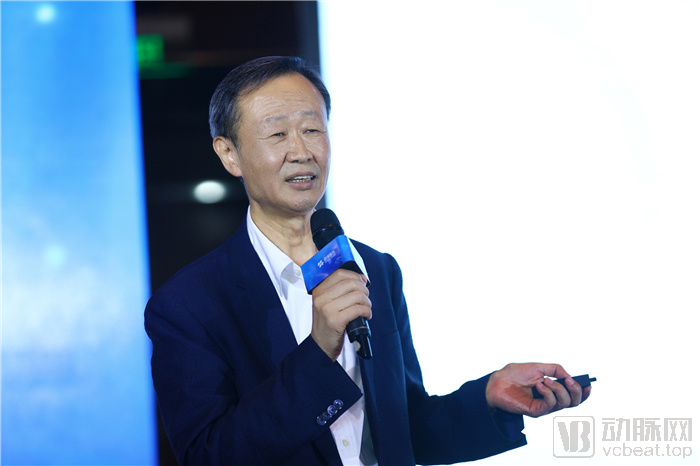 Professor Liu Wei, Advisor to the Dermatology Branch of the Chinese Medical Doctor Association
Research on the skin microbiome is predominantly conducted by large corporations, while small enterprises often lack the requisite research capabilities. Furthermore, even when compliant raw materials are incorporated, basic research is still required to verify whether they can effectively correct skin microbiome imbalances. The promulgation of the "Specifications for the Evaluation of Cosmetic Efficacy Claims" has placed greater emphasis on "experimental evidence." Consequently, providing experimental data support has become the primary hurdle for efficacy-oriented cosmetics.
Having addressed the aforementioned issues, brand operations and marketing will become the next critical challenges to confront. New cosmetic brands are facing increasingly high online customer acquisition costs. How can they sustain their presence in the online market? How can they expand into new offline markets? Is it feasible for them to rebuild offline distribution channels independently?
In fact, a close examination of the division of labor within the pharmaceutical industry reveals a clear trend: it is becoming increasingly unsustainable for individual pharmaceutical companies to build and maintain nationwide sales teams dedicated to a single product, with efficiency often falling short of expectations. Fu Gang, Chairman of Baiyang Pharmaceutical Group, has stated on numerous public occasions that “a professional commercialization platform is akin to a highway, while pharmaceutical products are like vehicles traveling on it; the more vehicles on the road, the lower the amortized cost per vehicle.” This principle applies equally to the operation, sales, and promotion of dermocosmetic brands. Burdened by high costs, companies find themselves unable to sustain these efforts independently. By leveraging third-party commercialization platforms, they can significantly reduce marketing expenses, thereby reallocating resources toward production and R&D investment, enhancing product quality, and maintaining their competitive edge.
Furthermore, the fact that functional cosmetics account for only 20% of the domestic cosmetics market share is, to some extent, attributable to insufficient consumer education in the current market. To foster market development, it is imperative to strengthen consumer education. However, companies themselves find it difficult to engage professional physicians to educate consumers.
On one hand, companies in the cosmeceutical sector are facing unimaginable difficulties; on the other, the market prospects for cosmeceuticals remain vast. As Generation Z consumers develop and mature their new consumption habits and mindsets, an explosive growth in the cosmeceutical market is inevitable. The key question is: How can cosmeceutical companies position themselves to capitalize on this impending surge during their development journey?
What Can a Commercialization Platform for Efficacy-Based Cosmetics Deliver?
Given that the demand for functional cosmetics remains unmet, suppliers are bound to emerge.
Baiyang Pharmaceutical has accumulated substantial strategic resources over decades of development, including a robust marketing network covering more than 300,000 pharmacies and over 12,000 medium-to-large hospitals. It has incubated multiple category-leading brands and established stable partnerships with hundreds of upstream enterprises, all of which have provided it with inherent competitive advantages. In the process of building its third-party brand commercialization platform, Baiyang Pharmaceutical has gradually developed three core capabilities: “category insights and brand operations, full-data-platform customer management, and mechanisms supporting long-term operations.” These capabilities are replicable across other sectors. Recognizing the challenges within the dermocosmetics industry, Baiyang Pharmaceutical took the lead in launching China’s first commercialization platform for dermocosmetics.
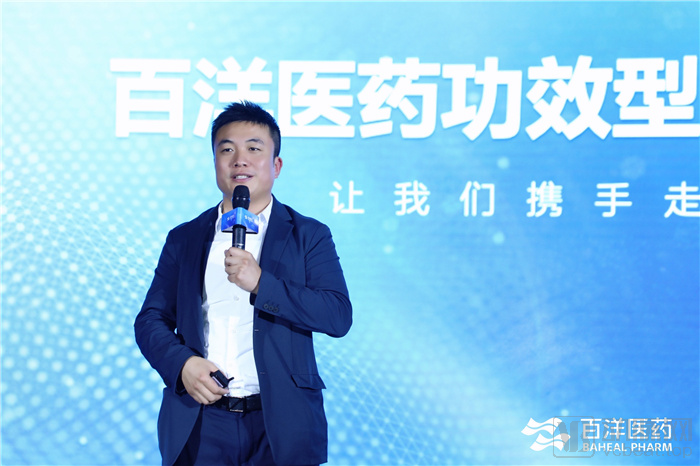 Li Zhenyu, General Manager of the New Retail Division at Baiyang Pharmaceutical
Li Zhenyu, General Manager of the New Retail Division at Baiyang Pharmaceutical, stated that the platform primarily addresses the challenges currently faced by cosmeceutical companies from three dimensions:
First, the medicalization of branding. Leveraging its access to over 10,000 hospitals, Baiyang Pharmaceutical can provide systematic medical support to partner enterprises, facilitating their engagement with clinical settings and physicians, thereby helping them build professional brands.
Second, marketing specialization. While providing experiential services for functional cosmetics in offline “shop-in-shop” pharmacies, online community management and engagement are facilitated through physicians, ultimately driving higher user conversion rates;
Third, channel functionalization. Provide users with more functional experiences related to cosmetics offline, including offering skin testing services, facilitating referrals to specialized dermatology clinics, providing professional consultation and advice, and monitoring subsequent product efficacy.
Prior to launching its commercialization platform for cosmeceuticals, Baiyang Pharmaceutical had already ventured into this sector. Between 2018 and 2020, the company pioneered three categories of cosmeceutical products, including microneedle eye masks, basement membrane repair formulations, and acne-prone skin microbiome balance solutions. Over the past three years, it has expanded its reach to more than 12,000 cosmetic retail channels and over 1,000 dermocosmetic channels, while continuously opening up its platform resources to the industry to maximize value creation.
Compared with China, the market for functional cosmetics is more developed abroad, partly due to well-established and professional pharmacy channels that offer a more reassuring purchasing environment and a more specialized consumer experience. To address the current shortcomings in the supply chain and professional service capabilities for functional cosmetics in domestic pharmacies, Baiyang Pharmaceutical is assisting pharmacies by setting up dedicated counters for functional cosmetics, curating optimal product categories, and collaborating with professional dermatologists. Through targeted training, the company aims to enhance the professional competencies of offline pharmacy staff, thereby delivering better services to patients.
Furthermore, Baiyang Pharmaceutical is currently collaborating with physicians across various hospitals to conduct clinical trials on the efficacy of its products, thereby establishing technological barriers. Meanwhile, through its Baiyang Yimei APP, Baiyang Pharmaceutical has accumulated a substantial user base interested in efficacy-driven cosmetics, while also connecting professional consumers with physicians. By leveraging these efforts, Baiyang Pharmaceutical has strengthened its position at both the academic and physician-patient levels, creating a robust competitive moat.
It is important to note that Baiyang Pharmaceutical’s functional cosmetics commercialization platform is not solely dedicated to providing offline marketing capabilities for functional cosmetic enterprises. Its Mengtuo Huixuan International Cosmeceutical Buyer Store facilitates both online and offline transactions, supporting retail enterprises in achieving specialized breakthroughs in non-pharmaceutical categories through a “store-within-a-store” model. By ensuring rigorous quality control, the platform better empowers enterprises while delivering superior service to every consumer.
Facilitating Expert Consensus to Establish Industry Standards
In the interview, Professor Liu Wei pointed out that the biggest issue currently facing the industry remains the lack of clarity in the formulation of relevant standards. Regarding efficacy claims and testing for ordinary cosmetics, the relevant regulatory authorities have not provided specific testing methodologies. In light of this, it is necessary for industry associations to reach expert consensus and establish industry standards to facilitate the development of the sector.
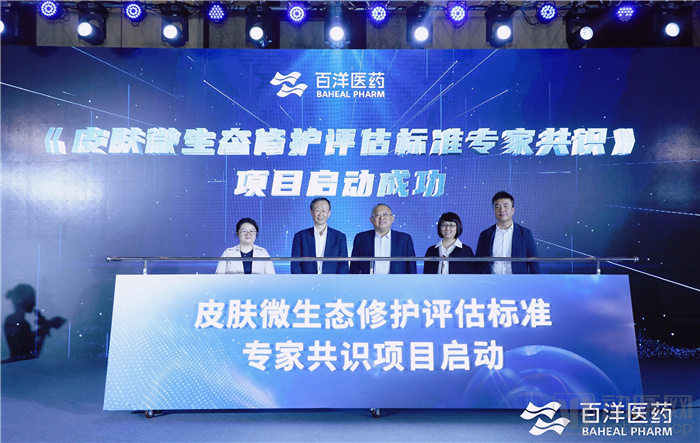
At the conference, Baiyang Pharmaceutical, together with a top-tier panel of dermatology experts including Academician Liao Wanqing of the Chinese Academy of Engineering and Professor Liu Wei, Advisor to the Dermatology Branch of the Chinese Medical Doctor Association, launched China’s first Expert Consensus on Evaluation Standards for Skin Microbiome Repair. The initiative aims to help partner brands demonstrate product efficacy in accordance with rigorous evidence-based medicine standards and facilitate standardized, professional promotion to consumers through physicians.
According to Professor Liu Wei, commercialization platforms for cosmeceuticals have emerged in response to market demands. In the future, as operational and marketing hubs for cosmeceutical brands, these platforms will exert greater influence—for instance, by helping transform expert consensus within the cosmetics industry into industry standards. Indeed, from the perspective of social division of labor, the trend of enterprises relying on third-party commercialization platforms is becoming increasingly pronounced. By leveraging such platforms, companies can rapidly and accurately enhance their commercial efficiency at half the previous cost, thereby avoiding low-level, repetitive investments in marketing infrastructure.
Against this backdrop, the development of Baiyang Pharmaceutical’s dermocosmetics platform is also poised to benefit, with more companies leveraging the platform to conduct their operations and build their own commercial ecosystems. It is reported that Baiyang’s dermocosmetics commercialization platform has already partnered with over 10,000 professional cosmetics chain stores. Leveraging Baiyang Pharmaceutical’s solid pharmacy network established over the past decade, the company aims to collaborate with core pharmacy chains this year to create 500 hybrid stores offering both pharmaceuticals and dermocosmetics.
“In the future, Baiyang Pharmaceutical will deepen its engagement in the functional cosmetics industry with a platform-oriented mindset, continuously aggregating professional resources. By collaborating with upstream brands and downstream channels with an open attitude, we aim to provide professional services to consumers while unlocking vast potential for industry development, thereby facilitating iterative upgrades across the sector,” stated Fu Gang, Chairman of Baiyang Group.