

Chinese Experts Finalize Consensus on Type 2 Diabetes Remission, Supported by Digital Health Platforms
Epidemiological surveys indicate that the prevalence of diabetes among adults in China has approached 13%. Diabetes has long been regarded as a progressively worsening disease capable of causing damage to various organs, including the heart, brain, and kidneys; however, this perception has been gradually changing in recent years.
On May 15, during the finalization meeting for the “Chinese Expert Consensus on the Remission of Type 2 Diabetes,” held in conjunction with the 2021 Peking University Diabetes Forum at the Beijing Conference Center, Professor Ji Linong, Director of the Department of Endocrinology at Peking University People’s Hospital, Director of the Peking University Diabetes Center, and former Vice President of the International Diabetes Federation, provided an analysis. He stated that the prevalence of type 2 diabetes in China has increased more than tenfold over the past three decades. This significant rise is clearly not attributable to changes in the genetic background of the Chinese population, but rather to dramatic shifts in lifestyle.Professor Ji remarked, “Based on my clinical experience over the past two years, if overweight patients newly diagnosed with type 2 diabetes are guided to focus on their weight—taught how to calculate their Body Mass Index (BMI), assisted in setting weight control goals, and actively encouraged to lose weight by modifying unhealthy lifestyles—diabetes remission can be achieved without pharmacological intervention in nearly all patients who demonstrate significant weight improvement. Many patients with a short disease duration and overweight or obesity can discontinue glucose-lowering medications after achieving substantial weight loss.”“Remission of diabetes entails more than just improved glycemic control; it also serves as a catalyst for positive changes in patients’ lifestyles, health beliefs, life attitudes, and family relationships. Equally important, normalization or significant improvement in weight reduces the risk of other obesity-related conditions, including cardiovascular and cerebrovascular diseases, cancer, fatty liver disease, hypertension, obstructive sleep apnea syndrome, and joint disorders. The concept of diabetes remission should be advocated unequivocally, without hesitation.”
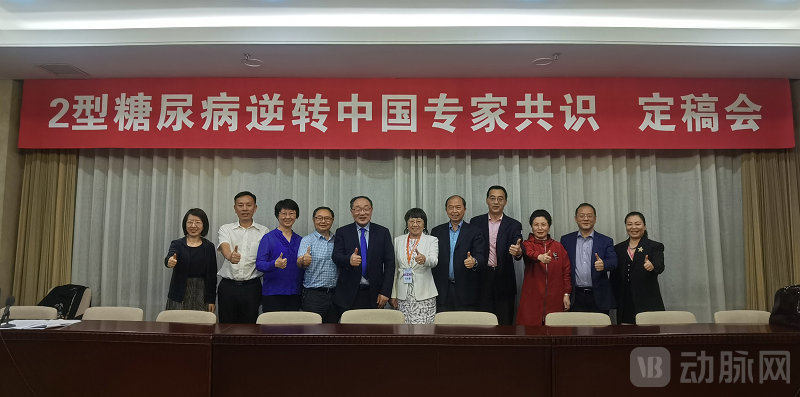
Professor Ji Linong stated that the release of this “Consensus” will be a historic milestone, as we take the lead in launching an initiative for the management and remission of diabetes in patients with high body weight. The “Consensus” should not merely represent the agreement of the few experts present here; rather, it aims to become a shared consensus and common practice among all physicians. We hope that our new initiative will benefit at least 100,000 to 200,000 newly diagnosed patients with obesity-related type 2 diabetes in China within five years, thereby delivering lifelong benefits to these patients, advantages to their families, and value to the nation.
In addition to Professor Ji Linong, the expert panel that participated in the finalization meeting for the “Consensus” included 23 endocrinology and nutrition specialists from across China, such as Professor Zou Dajin from Shanghai Tenth People’s Hospital, Professor Guo Xiaohui from Peking University First Hospital, Professor Sun Zilin from Zhongda Hospital Affiliated to Southeast University, Professor Zeng Longyi from The Third Affiliated Hospital of Sun Yat-sen University, and Professor Tian Haoming from West China Hospital of Sichuan University. These experts engaged in in-depth discussions on the initial draft of the “Consensus” through both online and offline channels. Professor Zou Dajin and several other panel members had previously actively practiced diabetes reversal services by coordinating local resources. Professor Zou stated, “Helping patients achieve diabetes reversal is more than a medical intervention; it reflects the profound commitment and compassion of healthcare professionals.”
The UK DiRECT study, published in 2019, found that intensive dietary intervention for type 2 diabetes with early-onset high body weight can gradually restore metabolic indicators (including blood glucose) to normal levels, achieving clinical remission. Some patients remained medication-free for years, confirming that diabetes can be reversed. "Diabetes reversal" helps patients avoid using glucose-lowering medications for extended periods, comprehensively improves cardiovascular risk factors, and enhances confidence and well-being; thus, it has increasingly gained attention from scholars. The development and promotion of the "Consensus," led by Professor Ji Linong, represent practical efforts to rapidly extend the benefits of research findings to the general public.
The development of this “Consensus” was supported by the JD Health Diabetes Center, Shanghai Shanqiu Liankang Health Management Co., Ltd., and Abbott. In April 2020, JD Health Group established its Diabetes Center, collaborating with physicians, medical institutions, professional associations, and other partners to build an integrated online-offline closed-loop system for diabetes health management. The JD Health Diabetes Center will also serve as an application platform for diabetes reversal.
In April 2020, JD Health established its Diabetes Center, collaborating with physicians, medical institutions, associations, and other partners to build an integrated online-to-offline closed-loop service for diabetes health management. By providing specialized and refined services—including medical consultations, daily blood glucose monitoring, and rehabilitation guidance—the Center comprehensively improves the efficiency of diabetes diagnosis and treatment as well as blood glucose control rates.
Zhao Xuming, General Manager of the Chronic Disease Project Department at JD Health, stated, “Diabetes management is specialized and complex, requiring responsible enterprises to integrate various resources to foster collective progress. JD Health aims to support the endocrinology expert group in developing and promoting the Consensus, thereby enabling more clinicians to assist patients with early-stage type 2 diabetes in implementing effective lifestyle management, enhancing their well-being and confidence in overcoming the disease. Furthermore, as chronic disease treatment costs in China have continued to rise in recent years, delaying the initiation of glucose-lowering medications by several years for newly diagnosed type 2 diabetes patients, while simultaneously extending the period free from complications, would significantly reduce medical expenditures and deliver substantial social value.”