

IPO-Bound Unicorn Keya Medical Charts Its Commercialization Path Forward
Keya Medical
International AI Medical Technology Service Provider
A review of the approval and evaluation data from the past three years reveals that AI-based medical devices for cardiovascular applications have been particularly favored by the Center for Medical Device Evaluation (CMDE). As of May 2021, a total of 12 AI products had obtained Class III medical device certificates issued by the National Medical Products Administration (NMPA), with cardiovascular AI accounts accounting for 30% of these approvals.
The first Class III medical device certification for AI-assisted imaging decision-support was awarded to Keya Medical’s “DeepVessel FFR.” This product is designed for the physiological assessment of coronary arteries, leveraging AI to rapidly evaluate whether coronary stenosis causes myocardial ischemia, thereby reducing unnecessary invasive coronary angiography and subsequent percutaneous coronary intervention (PCI).
Propelled by the success of “DeepVessel FFR,” Keya Medical has soared to new heights. When it secured the first-ever AI medical device approval, Keya Medical had only completed its Series A financing; within nine months, the company went on to close four additional funding rounds, raising over RMB 900 million.
In March this year, Keya Medical submitted its prospectus to the Hong Kong Stock Exchange, aiming to become the first publicly listed AI medical device company. By that time, Keya Medical had already become the first unicorn in the field of imaging AI, with a valuation exceeding $1 billion.
Nevertheless, sustaining such valuations and seeking further upside is no simple task. As the AI medical device industry enters a red ocean phase, corporate development increasingly relies on rational, data-driven support. For this emerging sector, there are no predecessors to guide the subsequent commercialization path; companies must press forward by their own light.
Under the current circumstances, Keya Medical is betting on two key areas.
The commercialization leap of its mature products is the first thing Keya Medical needs to strive for, and also its top priority.
Currently, Keya Medical has a total of two AI products poised for commercialization, with sales qualifications in three regions. In August 2018, DeepVessel FFR received CE certification in the European Union; in January 2020, DeepVessel FFR was approved by China’s National Medical Products Administration (NMPA); and in April 2020, the Intelligent Imaging Analysis System for Stroke received FDA 510(k) clearance.
The acquisition of three certifications has clarified Keya Medical’s strategic roadmap and laid the foundation for expanding its commercial scale within the market landscape. Centered on this core, and leveraged by secured funding, Keya Medical is transitioning from a phase of “full-speed R&D” to a parallel model of “R&D and sales.”
The prospectus data provides a precise description of Keya Medical’s strategic response. In 2020, the company doubled its workforce, increasing from 150 to 300 employees. Of this growth, 65% was attributed to the sales team and 35% to the R&D team.
The surge in human resources was accompanied by a corresponding rise in costs. In the same year, Keya Medical invested RMB 117 million in product research and development, and RMB 339 million in sales, talent benefits, and other related areas.
After substantial efforts, Keya Medical has achieved significant returns. In early 2020, the company collaborated with approximately 120 hospitals and established more than 70 joint centers. As of the release of its prospectus, its products had been implemented in 728 partner hospitals, representing a nearly fourfold increase. Notably, within this period, Keya Medical’s products entered 55% of Grade A tertiary hospitals, achieving preliminary coverage across all provinces and municipalities in China.
In addition to expanding its workforce, Keya Medical must also race to secure pricing codes.
As Deep Vein Fraction represents a novel diagnostic solution currently unavailable in Chinese hospitals, it is necessary to jointly apply for pricing codes with numerous hospitals across various provinces from the relevant government authorities. Only after this approval can hospitals charge patients for the use of the company’s products.
As of May 2021, Keya Medical had obtained approval for medical service price codes in four provinces—Hebei, Anhui, Shandong, and Jiangsu—with the approval process taking between 4 and 9 months. According to Keya Medical, price code approvals in multiple provinces and municipalities are currently proceeding in parallel, and a significant number of provinces are expected to complete the approval process within this year.
Following the approval of pricing codes, the construction of the distribution network emerged as the third challenge Keya Medical encountered in its commercialization process. Based on the changes in and descriptions of the number of distributors during the period shown in the prospectus, Keya Medical is gradually transitioning from traditional distributors to platform-based distributors, a shift that will, to some extent, enhance the implementation capacity of DeepVessel FFR.
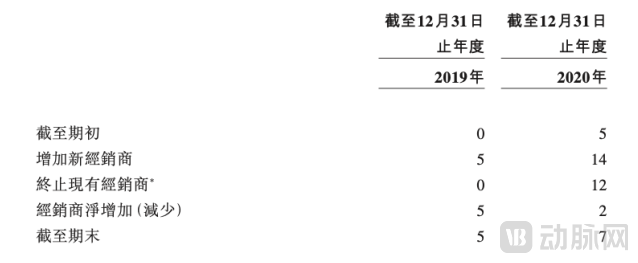
Changes in the Number of Distributors During the Period Shown
Overseas sales models differ from those in China. In the United States, Keya Medical offers CuraRAD ICH for the AI market through Nuance Diagnostic Imaging, a digital marketplace where subscribers can purchase AI models and connect with AI developers and radiologists from over 8,000 healthcare institutions.
Keya Medical is still exploring the sales model for CuraRAD ICH. As an emerging market, it offers Keya Medical, which holds a leading position, a certain degree of room for trial and error.
According to data from Frost & Sullivan, the number of CTA examinations performed in China increased from 3.6 million in 2015 to 6.2 million in 2020, representing a compound annual growth rate (CAGR) of 11.7%. The figure is estimated to further rise to 22.2 million by 2023, with a CAGR of 13.6% from 2020 to 2023.
Driven by factors such as data availability, favorable policies, increasing market acceptance of deep learning-based medical devices, and the unprecedented demand in China for non-invasive diagnostic tools for coronary artery disease, the market for deep learning-based CT-FFR products in China is expected to grow exponentially, reaching approximately RMB 13.7 billion by 2030.
For Keya Medical, the combined market size for CT-FFR in China, the European Union, and the United States is substantial. However, relying on a single product line exposes the company to various risks, such as displacement by new technologies, commercialization progress falling short of expectations, and failure to capture market share. As the economic adage goes, “Don’t put all your eggs in one basket.” The second key initiative undertaken by Keya Medical is to continuously diversify and enrich its product portfolio.
The pipeline disclosed in the prospectus shows that Keya Medical has divided its smart healthcare product line into two major categories: Smart Diagnosis and Smart Treatment. According to Cao Kunlin, President of R&D at Keya Medical, the company’s ultimate goal is to build an intelligent, full-course management system for single diseases. This involves leveraging AI to optimize every stage—including examination, planning, surgery, and follow-up—thereby enhancing the precision of physicians’ diagnoses and providing patients with a higher-quality medical experience. Keya Medical’s vision closely aligns with the futuristic healthcare scenarios depicted by many science fiction writers.
A further breakdown of the product pipeline reveals that the vast majority of Keya Medical’s products are concentrated in its Intelligent Diagnostics line (12 products), outnumbering those in the Intelligent Therapeutics line (5 products). At this CMEF, Keya Medical showcased several key products from its portfolio.
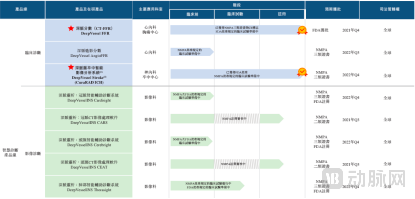
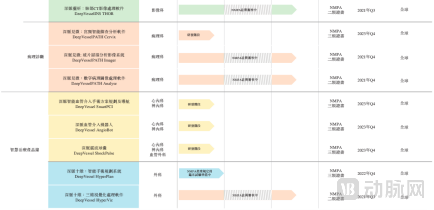
Keya Medical Pipeline Chart
The logic behind the smart diagnostic product line is very clear. Keya Medical has targeted three major application scenarios: cardiovascular and cerebrovascular diagnosis, pulmonary diagnosis, and pathological diagnosis. There are commonalities in product design and AI logic across these three product lines. Given its extensive experience in AI training for cardiovascular and cerebrovascular conditions, expanding its product lines is relatively straightforward. The primary obstacle to progress lies in acquiring disease-specific data.
Through this strategic layout, Keya Medical can ensure deep exploration of cardiovascular and cerebrovascular diagnosis and treatment while expanding its existing product lines. Meanwhile, it will accelerate the development of AI-assisted diagnostic scenarios through methods such as transfer learning, which will significantly expand the market size accessible to Keya Medical.
According to the report by Frost & Sullivan, the market size for deep learning-based CT-FFR is projected to reach RMB 13.714 billion; the market size for deep learning-based ICA-FFR is projected to reach RMB 6.788 billion; the market size for deep learning-based medical devices for stroke diagnosis is projected to reach RMB 5.964 billion; the market size for deep learning-based medical devices for image interpretation is projected to reach RMB 4.046 billion; and the market size for deep learning-based medical devices for pathological diagnosis is projected to reach RMB 1.057 billion. Based on these figures, the estimated total market size for deep learning applications in which Keya Medical operates is RMB 31.569 billion.
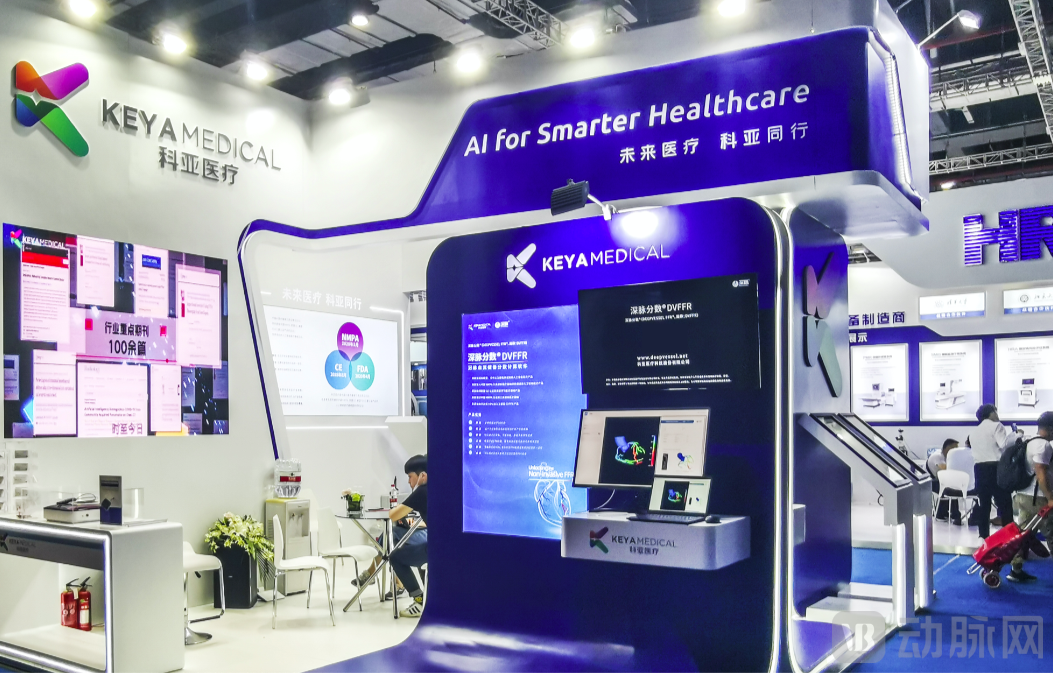
CMEF Keya Medical Booth
The smart therapy product line operates relatively independently. Cao Kunlin previously told VCBeat that, in the realm of smart therapy, Keya Medical is currently in an exploratory phase, primarily addressing issues that can be extended from the auxiliary diagnosis process.
Taking the “DeepPulse Shockwave Balloon” as an example, this product is analyzed as follows. Initially, when physicians assess vascular plaques using CT, DSA angiography, or intravascular ultrasound (IVUS), Keya Medical’s DeepPulse Analytics series can assist in identifying calcified plaques and calculating calcium scores, thereby providing guidance for clinical intervention. Subsequently, Keya Medical aims to enhance the examination and auxiliary diagnosis stages by offering more comprehensive clinical solutions. For instance, the “DeepPulse Shockwave Balloon” can precisely fracture calcified plaques with minimal damage to the vascular intima, facilitating successful vessel recanalization and improving vascular compliance. This helps ensure better stent apposition or enhances drug elution from drug-coated balloons, ultimately leading to improved patient prognosis. In essence, this represents an optimization and empowerment of the clinical diagnosis and treatment workflow.
Similarly, Keya Medical has also developed corresponding products for the markets of surgical planning and navigation, as well as deep learning-based vascular interventional robots.
Its interventional or surgical planning products primarily involve three steps: image acquisition, image modeling, and interventional or surgical simulation. Raw patient image data are acquired via CT and MRI equipment and then imported for three-dimensional modeling to generate model images of the patient’s affected region. Subsequently, computer software is used to formulate interventional or surgical plans, with the simulated interventional or surgical pathways clearly displayed within the three-dimensional model images. After obtaining the three-dimensional reconstructed model, the computer software can be employed to perform interventional or surgical simulations.
The “Shenmai Vascular Interventional Surgical Robot,” showcased at Keya Medical’s booth at the Shanghai CMEF, has attracted significant attention. Reportedly, its functional features include assisting physicians throughout the entire process of coronary angiography and percutaneous coronary intervention (PCI), while shielding them from X-ray exposure. Leveraging an image navigation system and knob-controlled advancement, it precisely positions interventional devices—such as angiographic guidewires and catheters, exchange catheters, balloons, and stents—at locations specified by the physician. Furthermore, its fatigue-free mechanical movements help reduce intraoperative risks for patients.
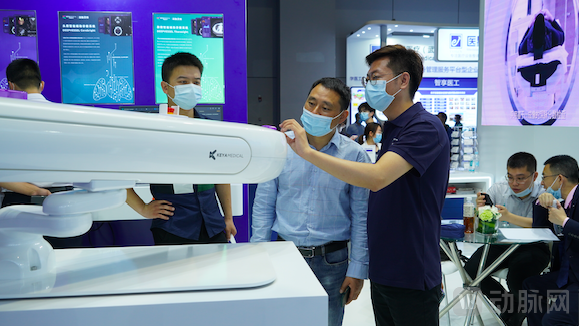
"DeepVein Vascular Interventional Surgical Robot" Displayed at the Keya Medical Booth at CMEF 2021
Both markets boast substantial scale. According to Frost & Sullivan, the market size for deep learning-based vascular interventional robots is projected to reach RMB 27.088 billion by 2030, while that for interventional or surgical planning products is expected to hit RMB 27.341 billion. Currently, no vascular interventional robot has received approval from the National Medical Products Administration (NMPA), presenting Keya Medical with an opportunity to take the lead.
With the cumulative total of its 17 product lines, Keya Medical is currently involved in a medical market nearing RMB 100 billion in scale, which is sufficient to support its future development. But does such expansion make logical sense?
Looking back at the development of Keya Medical, it is not difficult to see that the approval of the Class III medical device certification for DeepVessel FFR was an extremely important turning point, propelling the company from an obscure Series A tech startup directly to the forefront of its initial public offering.
VCBeat believes that the approval of a Class III medical device certificate sends a clear signal to the capital market, primarily including:
1. Keya Medical has the strength to provide artificial intelligence solutions in a market worth hundreds of billions, with the potential to become a cardiovascular giant in the era of intelligent diagnosis and treatment.
2. Keya Medical is capable of proposing reasonable clinical trial protocols and has accumulated sufficient clinical experience, enabling it to accelerate clinical approval during product line expansion.
3. Since cardiac imaging training requires the completion of 3D modeling, it is more challenging than CT-based imaging products. Therefore, when expanding into CT-assisted diagnostic scenarios, Keya Medical has the potential to leverage its “high-dimensional” expertise to address “lower-dimensional” applications.
4. The DeepVessel Fraction product itself delivers significant social benefits and can generate revenue for Keya Medical. With a mature product portfolio in place, Keya Medical’s operational risks will be lower than those of most competitors.
This influx of capital has provided Keya Medical with substantial financial backing, which in turn has accelerated the commercialization of its solutions. This virtuous cycle has effectively strengthened Keya Medical’s core competencies. Consequently, the company is well-positioned to become the first AI medical imaging enterprise to list on the secondary market, a milestone that would serve as a significant boost to the broader medical AI industry.
Entrepreneurs often seek to derive formulas for success from the growth trajectories of high-quality enterprises; however, Keya Medical’s rise is not easily replicated. Nevertheless, we can still extract valuable insights from its experience.
The expansion of AI production lines serves as a prime example. Although the diversification of Keya Medical’s product portfolio may appear complex, it is fundamentally driven by the urgent needs of clinicians. For instance, AI-based reconstruction of medical images of the liver, lungs, and other organs enables both physicians and patients to gain a clear understanding of specific anatomical and physiological conditions. This allows doctors to formulate surgical plans with greater precision and efficiency, maximizing the resection of diseased tissue while minimizing damage to healthy tissue, thereby improving surgical outcomes—a benefit to both healthcare providers and patients.
Meanwhile, there are certain commonalities among Keya Medical’s three major product series, allowing for mutual support during the R&D process. For instance, while cardiology and neurology differ in their clinical applications, they share many underlying technologies. Consequently, the extensive development experience accumulated in cardiology can be rapidly applied to other circulatory system diseases, helping Keya Medical quickly expand its product portfolio.
Second is the importance of product value. The current AI industry has become a red ocean, and both new and established companies must deliver products that can convincingly demonstrate their efficacy to hospitals, physicians, and patients in order to maintain their market position.
For instance, Keya Medical’s DeepVessel FFR secured regulatory approval not only due to its robust performance but also because of its significant societal value. These two factors determine whether medical AI products can overcome the dual challenges of passing NMPA review and achieving commercial implementation.
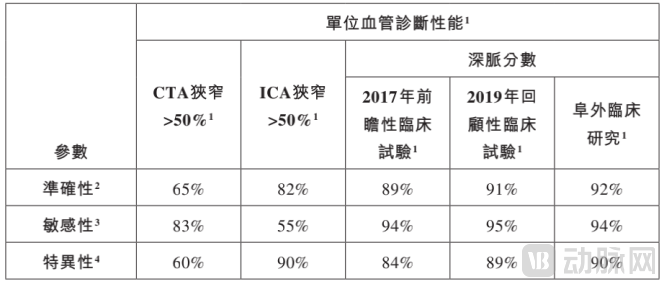
At the Fuwai Clinical Research Center, all metrics of the Deep Vein Score exceeded 90%.
It is extremely challenging to develop a product that integrates both of the aforementioned attributes. Medical technology companies need to return to the clinical fundamentals, seeking solutions within clinical pathways and physicians’ operational workflows. Keya Medical has identified not the sole entry point for artificial intelligence, but rather one among many; on the contrary, AI still has numerous opportunities to intervene and become pivotal in transforming medical diagnosis. However, achieving this state will require time for the entire industry to mature and consolidate its advancements.