Home Life Biosciences Launches First-in-Human Trial of ER-100, a Groundbreaking Epigenetic Rejuvenation Therapy for Age-Related Eye Diseases

Life Biosciences Launches First-in-Human Trial of ER-100, a Groundbreaking Epigenetic Rejuvenation Therapy for Age-Related Eye Diseases

Jun 11, 2026 18:11 CST Updated 18:11

Life Biosciences

Drug Developer

Image


A “rejuvenation” injection has been administered to the human eye, potentially ushering in a new era of anti-aging for humanity; however, any catastrophic error could deliver a fatal blow to the entire medical field.


By Ling Jun


Image

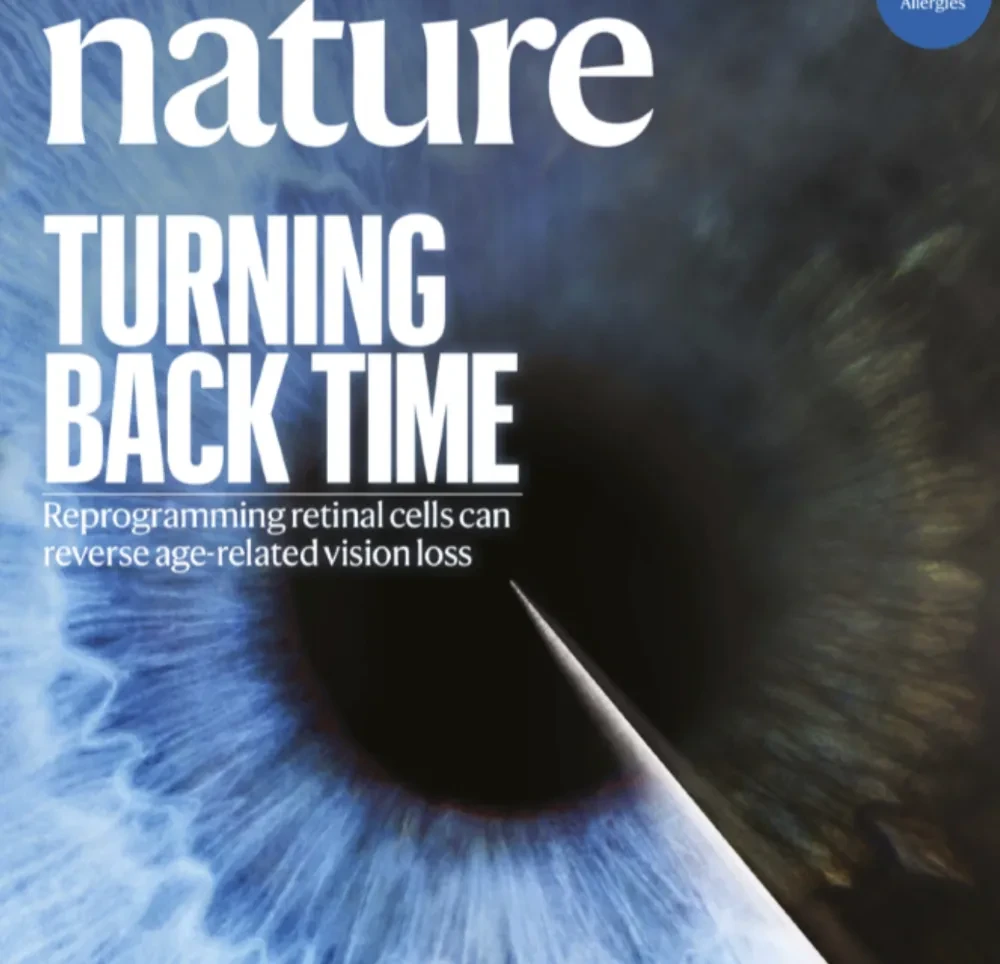
A therapy claiming to “rejuvenate” human cells has recently completed its first patient dosing. This also marks the first attempt to directly reprogram cells within the human body using this technology.Inducing Senescent Cells to Rejuvenate

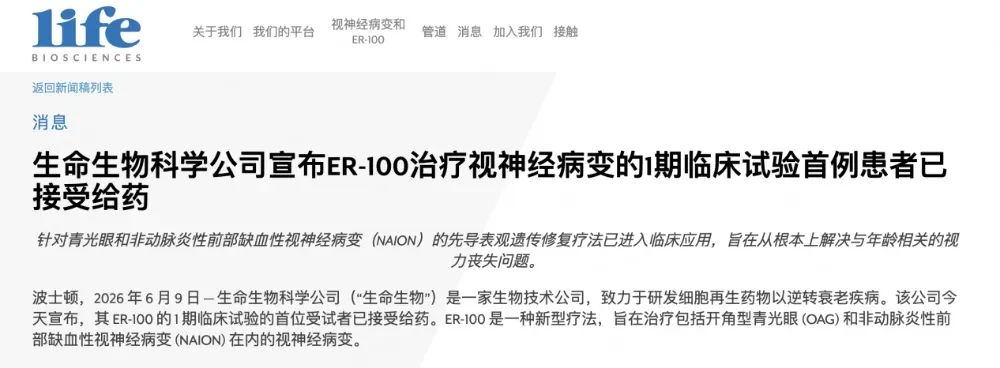
On June 9, local time, U.S. biotechnology companyLife BiosciencesAnnounced that the first patient to receive treatment was a glaucoma patient,Conduct AssessmentER-100TherapySafety and Tolerability, including subjectsVisual FunctionRecovery Status.


ER-100is a highly imaginative and innovative gene therapy that works byActivate3Gene, thereby transformingSenescent Cells, to restore themYoungof the timeFunction.The researchers also designed a switch—doxycycline.If discontinuedThis antibiotic“Activating the Youth Program”will close

“If gene reprogramming technology can be safely applied to humans, it will hold tremendous potential.”"University of WashingtonInstitute for Healthy Aging and LongevityMatt KaeberleinProfessor to Naturestated.

But he is equally concerned,This technology is still in its very early stages, with a high potential for catastrophic side effects.

Image

Image
"Rejuvenation Injection"

Life BiosciencesEstablished in 2017, byDepartment of Genetics, Harvard Medical SchoolProfessorAnti-Aging SpecialistDavid SinclairCo-founded.

According to the company's official website,Life Biosciences is dedicated to developing cellular regenerative therapies that restore aged and damaged cells to a younger, healthier state.Achieving Cellular Regeneration and Functional Recoveryto reverse and prevent multiple aging-related diseases

The core technology to achieve this goal was founded by the company."Epigenetic Repair"platform. It canWithout altering the cellular genetic sequenceBy activating three artificially introduced genes,EraseCellEpigenetic Scars Left by AgingRejuvenationof timeGene Expression Patterns

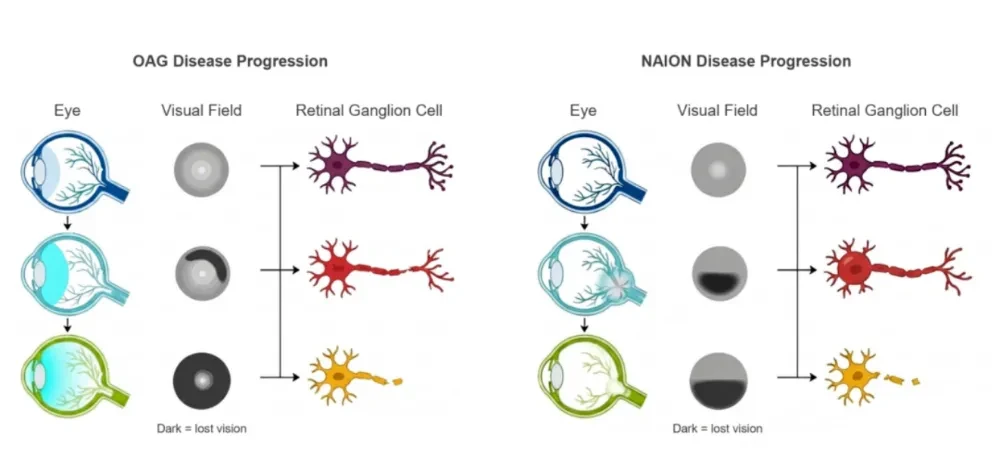
Although “reversing aging-related diseases” may sound distant and ambitious, during the specific development process, the research team pragmatically focused first onOptic Neuropathydiseases. The most prominent among them are open-angle glaucoma andNon-arteritic anterior ischemic optic neuropathy

Image

Relevant statistical data show that there are approximately 70 million patients with open-angle glaucoma worldwide, whoseRetinal Ganglion Cells (RGCs)Continuous cell death will ultimately lead to blindness. Currently, the core of commonly used clinical treatment strategies, such as lowering intraocular pressure, isDelaying Ganglion CellsDeath, butUnableReversalAlreadyInjury orDeathlecells

AndER-100The therapy, on the other hand, is based onAdeno-Associated Virusas a carrier (AAV), injecting three genes capable of “turning back the aging clock” into the eye,Activation of Retinal Ganglion CellsInternalofEpigenetic Reprogramming”,Erase Epigenetic Damage Accumulated with Aging, restoring it to a youthful state, thereby saving, or even reversing, vision loss.

According to the company's plan, the firstClinical TrialsInclude 6 initiallyglaucoma patients,Then attempt treatment.Non-arteritic anterior ischemic optic neuropathy——This diseaseSimilarly caused by irreversibleRGCCaused by injury, patientVisionMeetingRapid decline within hours or days, which can lead to severe blindness; currently, there is no available treatment.

Image

In an interview with Nature,Life BiosciencesChief Scientific Officer Rosenzweig-Lipson stated that at this stage,The company focuses on only one type at a time.Ageing-RelatedDiseasePerformHuman BodyResearch"We are not currently focused on systemic anti-aging."We hope to achieve this in the future, but it is not yet attainable at present.Not available."He said."

It is understood that the company has also initiated R&D related to liver diseases,In a mouse model of metabolic dysfunction-associated steatohepatitis (MASH), another therapyER-300CompletedAchieved Positive Preclinical Data

“This field is currently extremely hot,” a biotech executive with decades of experience in cell research told “Medical World,” but it is too novel, and the technical aspects remain uncertain. “Drug development ultimately hinges on safety, efficacy, and controllability; regarding these three aspects, everyone is still taking a wait-and-see approach.”

Pete Williams, Australian Centre for Eye ResearchCommenting in Nature: “ThisA Great Boon for Glaucoma PatientsBut does this mean that the modified cellsReallyCanYounger, and can be reprogrammed to extend lifespan, which is a bigger problem.

Image
Making Senescent Cells "Partially Young"

To understand this technology and its future prospects, we must first begin withOSKM——Oct4Sox2Klf4c-MycLet’s start with these four genes. In 2007, Japanese scientist Shinya Yamanaka utilizedOSKM, human'sSomatic CellsSuccessfully reprogrammed intoInductionSexPluripotent Stem Cells(iPSC)。

Taking skin cells as an example, they become iPSC, which is equivalent to its withdrawal.Embryonic stem cell-likestate, can redifferentiate into almost all human cell types, including cardiomyocytes, hepatocytes, and neurons.

This discovery ushered in a new era of modern regenerative medicine. In 2012, Shinya Yamanaka was awarded the Nobel Prize for this achievement.

and includingLife BiosciencesFounderDavid Sinclairanother group of American scientists, includingShinya YamanakaImprovements were made on the basis of the technology.

If Shinya Yamanaka invented “reprogramming,” what they have achieved is “partial reprogramming.”

Specifically, the new technology eliminatesOSKM"Most Dangerous"c-MycGenes, these genes induce cells to revert to iPSCthe key, but there is also a risk of carcinogenesis. Switching toOSKAfterwards, in addition to being safer, scientists discovered that when introduced into the body, it could appropriately turn back the “cellular clock,” but not so far as to revert to iPSC

In layman's terms, skin cells remain skin cells, only younger.

2020,David Sinclairet al. published animal study results in Nature, introducingOSKof aged mice,in the retinaNerveCellofGene Expression PatternsRecoveryto andlevels comparable to those in young mice. TheyThe number of surviving retinal ganglion cells doubled, and the amount of nerve regeneration increased fivefold.VisionalsoRecovery Achieved

Harvard University’s official website states: “ThisFirst Proof,It is possible to safely complex tissues (such as those in the eyesNeurons)Reprogramming to an earlier age.

Image
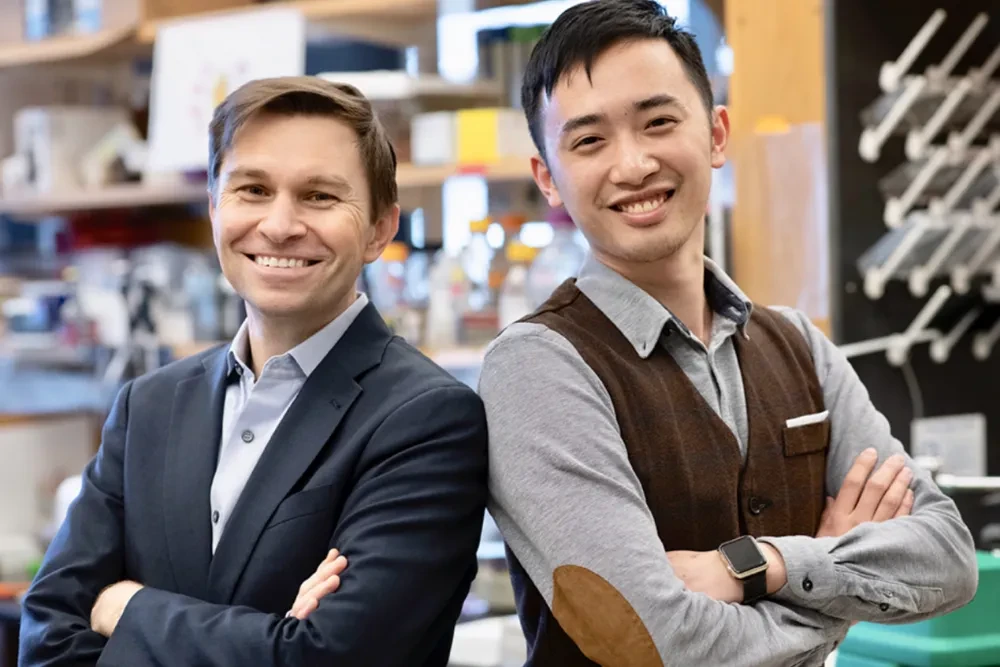
Co-InvestigatorDavid Sinclair andChinese ScholarDr. Yuancheng Lu

A series of related studies has since sparked a “rejuvenation” boom, with numerous startups and investors jumping on the bandwagon. Some companies are even leveraging artificial intelligence to identify more effective gene combinations capable of activating cellular rejuvenation. After all, treating age-related diseases, reversing aging, and even extending lifespan have been humanity’s ultimate goals for thousands of years.

ButLife BiosciencesUndoubtedly the most radical among them. At a time when the academic community still harbored widespread concerns about new technologies, they were the first to advance to the stage of human clinical trials.

Paul Knoepfler, Stem Cell Research Scholar at the University of California, DavisIt is believed that being safe and effective in mice does not necessarily mean it is equally applicable to humans."The Greatest Concern of This New Trial, stillThe patient may develop ocular cancer or a benign teratoma, either of which would be catastrophic."He said."

Pete Williamstold Nature that he was very pleased to have a new strategy for treating retinopathy, but alsoLife BiosciencesExpressed concern over the excessive attention received."It has been overhyped.If catastrophic errors occur, they could bring to all of usTroublesome.” he said.

Image
The Test Closest to the Truth

According toLife BiosciencesAccording to this view, eye diseases were selected as the first indication for targeted research because ocular cells are easy to monitor.Ocular"Renovation,"Probability of Life-Threatening Side EffectsMoreLow.

Meanwhile,Different cells respond toPartial Reprogrammingvarying responses, andThe eyeball is a closed, independent chamber; injected into itOSK”Not easily spread toOther Body Parts, the safety margin is easiest to control.

Furthermore,Life BiosciencesAn additional “safety valve” was also constructed. The researchers designed a set ofInducible Expression System, only after the patient takes doxycycline,will onlyEnableDownstream OSKThreeof the genefunction. After discontinuing the medication, threeGeneRegardingInSilenceStatus.

But the problem is,EvenClosed the valveOSKmay still occur inContinuousLow levels ofExpression, this "Low Level"In the human body"Is it safe?

Theoretically,OSKonly makes cells “moderately young,” but over time,CellWill it accidentallyReturniPSCStatus,Not only has it completely lost its identity and function, but alsoUncontrolled proliferation leading to tumor formation

All of these areLife BiosciencesAn answer must be provided.One of the Core Safety Issues

It is well known that the induction system has defects.—ItNeverCompletely shut down,Therefore, I am concerned that this therapy may be unsafe..” United StatesProfessor Jeanne Loring, Stem Cell Biology, The Scripps Research Instituteindicated.

Paul Knoepflerit is considered that, although there areMouse StudyResults,But non-human primate studies, but has not yet undergoneIndependent Peer ReviewRelease. “NowIs there sufficient preliminary data?to support the initiation of human clinical trials? It remains unclear.

But in any case,Life Bioscienceshave already taken a step forward, and this will also beTo dateTo date, thisFieldMostA Test Closer to the Truth.

Once successful, the results will be explosive, enabling “Rejuvenation of Multi-Organ Cellular Youth”, a neurodegenerative disease,Heart, KidneyOpens New Doors for the Treatment of Organ Failure DiseasesOnce an unexpected event occurs, it will inevitably deliver a fatal blow to the entire field.

After all, for a long time, the field of anti-aging research has been hovering in the gray area between "serious medicine" and "storytelling" or "excessive marketing," with related controversies never ceasing.

What Constitutes “Reversing Aging”? Pete Williams Stated in an Interview:“Now, if I train an elderlyMale"Becoming very strong does not mean that he is also young."

Recent Trending Videos
Image


Source: Medical World

Proofreading: Cai Cai

Operations: Zhao Jing

Responsible Editor: Wang Hang


*“Medical Circle” strives to ensure that the content published is professional and reliable, but makes no representations regarding its accuracy; relevant parties are advised to independently verify the information before adopting it or using it as a basis for decision-making.*

Recommended Reading

Image


Image


Image↓↓↓ ClickRead the original textUpperMedical Community Doctor StationView More Medical Information in the App