

WeDoctor Tackles Rural Healthcare Challenges with 'Mobile Hospital' Serving 28 Million Members
Recently, Xu Fujun, Deputy Secretary of the Party Committee of the Bayingolin Mongol Autonomous Prefecture (hereinafter referred to as “Bazhou”) in the Xinjiang Uygur Autonomous Region and Commander of the Hebei Provincial Frontline Command for Aid to Xinjiang, led relevant officials from the Prefectural Government Office and the Korla Economic and Technological Development Zone on a study visit to Zhengzhou to examine WeDoctor’s new model of grassroots medical services through its “Mobile Hospital.” The delegation aims to introduce digital healthcare service models into aid-to-Xinjiang initiatives, thereby providing the people of Bazhou with safe, efficient, convenient, and high-quality medical and health services.
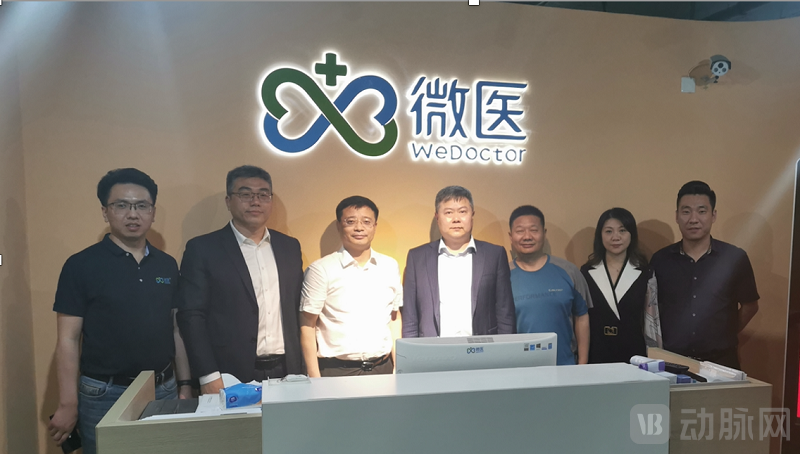
Xu Fujun (third from left), Deputy Secretary of the Party Committee of Bazhou and Commander of the Hebei Provincial Forward Command for Xinjiang Aid Work, and his delegation visited WeDoctor
Data shows that primary healthcare institutions account for approximately 95% of China’s entire medical and health institution system, yet they handle only 52% of the nation’s diagnosis and treatment volume. To address the challenges faced by primary care—namely, weak medical capabilities, limited drug availability, and insufficient diagnostic services—China has focused on strengthening primary care and addressing shortcomings since the launch of the new round of healthcare reforms, thereby promoting equitable and accessible health services. In recent years, the deep integration of digital technologies into the healthcare sector has been comprehensively facilitating the delivery of high-quality medical services to the primary level and reshaping the primary healthcare ecosystem. Represented by WeDoctor, the largest digital healthcare service platform in China, innovative models that leverage digital tools to empower primary care and solidify the foundational “safety net” of public health have been implemented across many regions nationwide, yielding positive results.
WeDoctor’s “Mobile Hospital” leverages its internet hospital platform, integrating technologies such as the internet, Internet of Things (IoT), big data, cloud computing, and artificial intelligence. By deploying a novel combination of “vehicles, kits, and stations”—specifically cloud-based mobile clinic vehicles, cloud-based mobile clinic kits, and medical and health workstations—it provides a comprehensive healthcare service system covering the entire process, including examinations and tests, diagnosis, prescription, medication dispensing, and medical insurance settlement. This approach reconstructs the ecosystem of primary healthcare services. Practical experience demonstrates that it effectively enhances primary care capabilities and significantly improves the efficiency of family doctor contracting and public health services, thereby facilitating the efficient operation of health-centered regional close-knit medical consortia—namely, Digital Health Consortia—and truly implementing the tiered diagnosis and treatment system.
Equipped with intelligent diagnostic and treatment systems, medical collaboration platforms, and cloud-based Hospital Information Systems (HIS), along with smart devices such as ultrasound and electrocardiogram (ECG) units, the Cloud Mobile Clinic can assist in performing 53 specific tests across seven major categories. It provides standardized diagnosis and treatment protocols for 100 diseases, effectively bringing a comprehensive suite of services—including examination, testing, diagnosis, prescription, and medication dispensing—directly to residents’ doorsteps. The portable mobile medical smart terminal, known as the Cloud Medical Kit, not only enables seven types of checks, including ECG, blood pressure, and blood oxygen saturation, facilitating grassroots doctors in conducting home visits for health examinations and follow-ups, but also supports tasks such as family doctor contract signing and resident health record establishment. Affectionately dubbed the “Barefoot Doctors of the 21st Century,” this kit significantly enhances accessible healthcare delivery.
Bayingolin Mongol Autonomous Prefecture is home to numerous ethnic minorities. Its terrain features an interlaced mosaic of high mountains, rivers, Gobi deserts, and sandy deserts. Characterized by its vast territory and sparse population, the region faces a relative shortage of medical resources, and the comprehensive service capacity of primary healthcare requires further enhancement. Xu Fujun stated that WeDoctor’s “Mobile Hospital” service model will serve as a robust instrument for medical and health aid to Xinjiang, addressing gaps in “basic medical security” and helping to elevate the healthcare service capabilities in Bayingolin. Xu expressed his hope that WeDoctor will promptly implement this model in Bayingolin to benefit the local population.
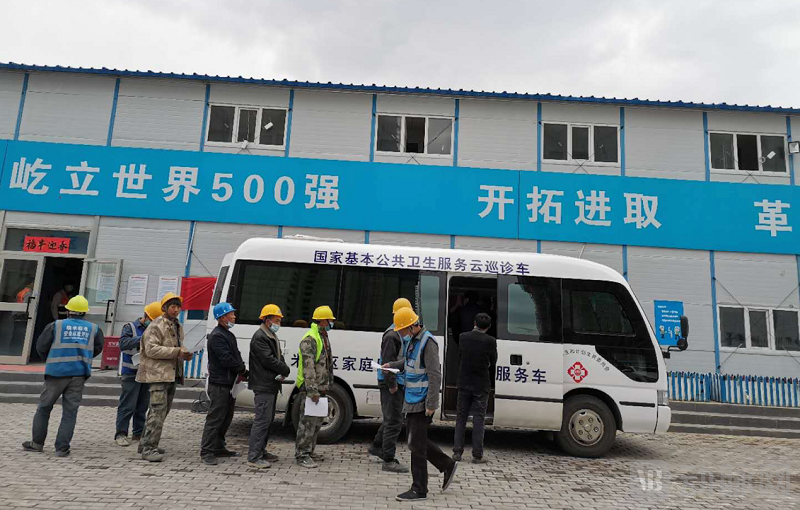
Urumqi’s Midong District in Xinjiang Delivers Physical Examination Services to Enterprises via Cloud-Based Mobile Clinics
In fact, in the vast region of Xinjiang, the “Mobile Hospital” model has been playing a significant role for many years. In 2019, the Midong District “Internet + Healthcare” Intelligent Tiered Diagnosis and Treatment Platform, jointly developed by WeDoctor and the Midong District Government of Urumqi, was launched, with the “Mobile Hospital” playing a crucial role within this system. To date, the platform has cumulatively served 657,100 patient visits, enrolled 216,760 individuals in family doctor service contracts, and conducted 756 remote consultations. During the COVID-19 pandemic, the Tianjin Municipal Committee of the Communist Party of China and the Tianjin Municipal People’s Government partnered with WeDoctor to integrate the “Internet + Health Poverty Alleviation” model into their aid-Xinjiang initiatives, donating “Mobile Hospitals” to Cele County and the 11th Division of the Xinjiang Production and Construction Corps, respectively. These efforts played a vital role in both epidemic prevention and control and health-focused poverty alleviation.
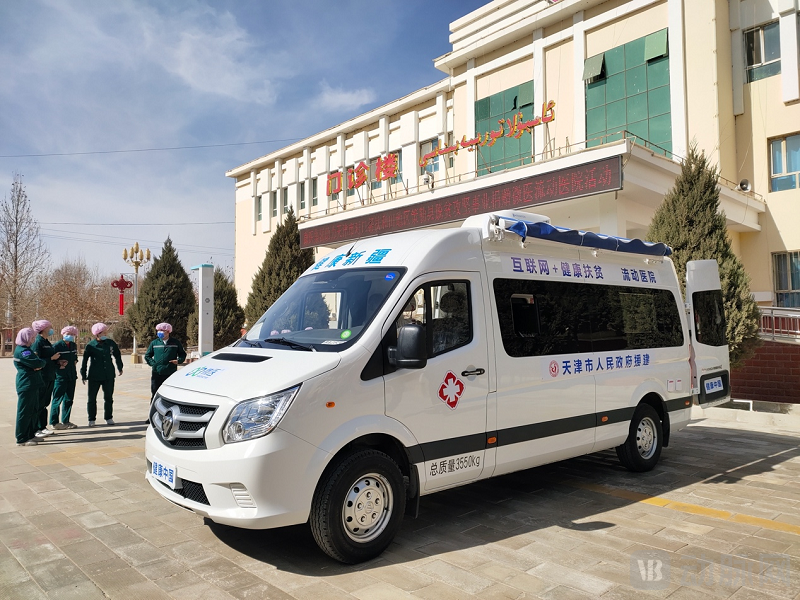
Tianjin City Donates “Mobile Hospital” to Cele County, Xinjiang
“We aim to leverage WeDoctor’s leading advantages in digital healthcare services to support the development of health initiatives in Bayingolin Mongol Autonomous Prefecture and enhance the health status of people of all ethnic groups in Xinjiang, thereby achieving a virtuous and coordinated development between public health and socioeconomic progress,” said a relevant official from WeDoctor. The company’s Mobile Hospital operations have already covered 12 provinces and municipalities across China, reaching 69 counties, and providing health maintenance services to over 28 million members. In various regions, it has assumed multiple responsibilities, including medical care, health management, disease control and prevention, emergency response, and epidemic prevention and control.
It is understood that the “Mobile Hospital” also possesses strong scalability, enabling it to provide personalized functions and services tailored to regional development needs based on the healthcare demands of different areas. For instance, public health examination vehicles, mobile medical service vehicles, early cancer screening vehicles, DR imaging vehicles, mobile CT vehicles, and mobile (traditional Chinese medicine) pharmacies can be selected and configured according to actual requirements, thereby forming a mobile healthcare service system with diverse capabilities. Furthermore, by integrating with platforms for chronic disease management, health insurance supervision, and national health information, the “Mobile Hospital” can effectively assist regions in establishing a comprehensive digital healthcare community ecosystem that integrates supervision, collaboration, empowerment, and service delivery.
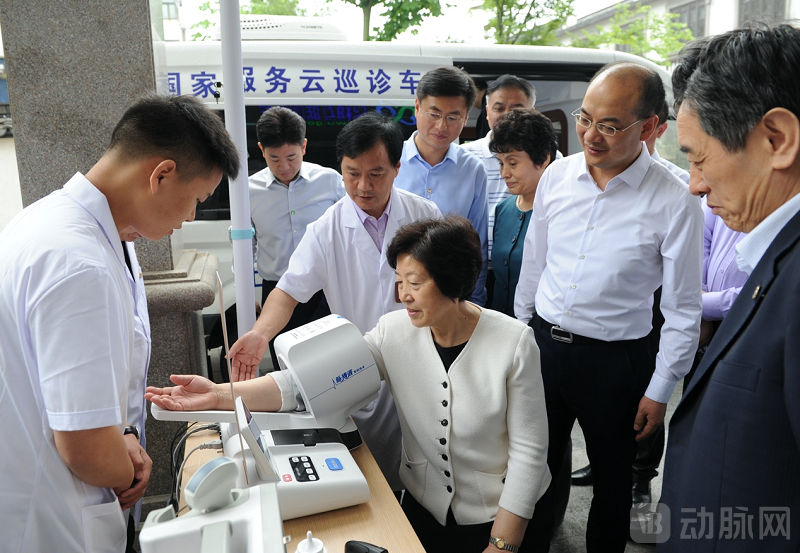
In May 2018, Vice Premier of the State Council Sun Chunlan experienced the cloud mobile clinic service during her field research on “Internet + Healthcare” in Wuzhen.
Health is the “1,” while everything else is “0.” This year’s National Conference on Primary Healthcare emphasized the need to fully advance high-quality development in primary healthcare. As digital healthcare service models such as “Mobile Hospitals” are implemented in more regions across China, primary healthcare capabilities will be significantly enhanced, holding promise for truly providing comprehensive, full-lifecycle health protection for the population and improving people’s sense of gain.