

Unlocking the Blue Ocean of Full-Cycle Primary Care: How Grassroots Smart Healthcare Innovation Centers Drive New Growth in the Medical Industry
The primary healthcare market, characterized by a large population base and robust demand for medical services, constitutes the main arena of China’s healthcare system. According to the China Health Statistics Yearbook 2020, the number of primary healthcare institutions in China exceeded 950,000 in 2019, an increase of more than 10,000 from 2018, accounting for 95% of all healthcare institutions nationwide.

Previously, due to factors such as skewed policy incentives, a shortage of talent, and insufficient capital investment, the primary healthcare market has long been plagued by issues including poor infrastructure, low service capacity, fragmented supply chains, and a lack of patient trust. Fortunately, with the rapid development of internet technology, continuous advancements in artificial intelligence, revolutionary breakthroughs in biomedical technology, and supportive policies, the obstacles hindering the growth of the primary healthcare market are gradually being resolved.
Policy is the core driver of development in the primary healthcare market, with tiered diagnosis and treatment being the most far-reaching policy. In recent years, multiple policies on tiered diagnosis and treatment have been successively introduced at both national and provincial levels. In 2020, the sudden outbreak of the COVID-19 pandemic exposed weaknesses in the services provided by primary healthcare institutions. The government has once again emphasized enhancing the service capacity of these institutions, prompting many provinces and municipalities to issue documents for the construction and renovation of township health centers and community health service centers. As a result, the service capacity of primary healthcare institutions has been further strengthened.
Driven by factors such as the pandemic and policy changes, an increasing number of patients are seeking care at the primary level, creating a vast blue-ocean market and ushering in a period of explosive growth for the primary healthcare sector. In the future, primary healthcare institutions will assume greater responsibilities in initial consultations, rehabilitation, chronic disease management, and disease screening.
The vast market potential has attracted numerous pharmaceutical, internet healthcare, medical informatics, and diagnostic testing companies to accelerate their expansion into the primary healthcare sector. AstraZeneca has been deeply engaged in this market for many years. What sets it apart is that AstraZeneca does not merely focus on improving drug accessibility at the primary care level; instead, leveraging its innovative ecosystem, it actively supports the establishment of a comprehensive whole-course diagnosis, treatment, and management system for chronic diseases in primary care settings, delivering a distinctive and noteworthy outcome.
As early as 2015, AstraZeneca established a county-level team to begin its strategic deployment in the primary healthcare market. The “Smart Healthcare Consortium” innovative solution, specifically developed for county-level regions, encompasses eight core modules: health poverty alleviation, training for primary care physicians, county-level chronic disease management networks, health managers, county-level emergency rescue networks, early screening for major diseases, integrated diagnosis and treatment across county, township, and village levels, and big data for medical consortia. This framework aims to achieve a whole-process management model for patients in county-level areas. By 2020,“Smart Healthcare Consortium” has been implemented in 30 counties.
It is worth noting that chronic disease management and disease screening are the key focuses of AstraZeneca’s current strategy in primary healthcare.
In recent years, chronic diseases and cancer have moved significantly up the rankings of leading causes of death in China, making it imperative to strengthen chronic disease management and early disease screening.Primary care is both a weak link and the main front for early disease screening and chronic disease management.Primary care regions face severe aging challenges, with a large population of chronic disease patients and individuals in the early stages of disease, resulting in significant unmet needs for chronic disease management and screening. Furthermore, while primary care institutions are numerous, they account for a small proportion of total patient visits, indicating substantial untapped potential for chronic disease management and early disease screening services.
For community health service centers, AstraZeneca is also actively collaborating with partners to provide support.Smart Community Chronic Disease Management Center (iCDMC)Construction efforts are underway to assist communities in implementing intelligent chronic disease management and providing precise training for general practitioners. To address the pain points of primary healthcare, such as the lack of service offerings, technical expertise, and reputation, AstraZeneca’s Feiying Project, in collaboration with its partners, provides primary care clinics with integrated solutions tailored to their specific diagnostic and treatment needs, along with one-stop supply chain services for medical devices and consumables. Additionally, the project offers patient-engagement initiatives, including screening and health management services, to help drive patient traffic to these clinics.
In the fields of lung cancer, breast cancer, and prostate cancer, AstraZeneca actively supports public welfare screening initiatives conducted by the government and academic/professional associations. These efforts facilitate screening, early diagnosis, and early treatment for high-risk populations, help enhance primary care diagnostic and therapeutic capabilities, and contribute to improving a comprehensive healthcare service system that covers the entire disease course and full life cycle.
In April 2021, at the 2021 Taihu Bay Life and Health Future Conference, AstraZeneca once again emphasized the opportunities in the primary healthcare market and signed strategic cooperation memoranda with nine partners, including Da An Gene, Healthy World, Chengyi Jiaren, and Hengsheng Medical. Together, they aim to support integrated, whole-course disease management for diagnosis and treatment in county-level areas across oncology, respiratory, digestive, and metabolic disorders, thereby promoting the development of closely-knit county-level medical consortia.
Now, the primary healthcare market has become an important territory for AstraZeneca.Going forward, AstraZeneca will continue to focus on the healthcare needs of patients at the primary care level, and sustain collaborations with governments, commercial partners, multinational corporations, and local innovative enterprises to jointly build a county-level healthcare ecosystem.
On May 28, 2021, AstraZeneca will take a significant step forward in primary care.
Driving innovation across the entire healthcare industry, including the primary care market, is a key strategy for AstraZeneca in China. The China Center of Innovation (CCiC) is an open platform for medical innovation co-created by AstraZeneca and partners from government, industry, academia, research, healthcare, and investment sectors. Centered on patients, it deeply understands patient needs and provides collaborative support to foster healthcare innovation.The Innovation Center integrates three core functions: “joint expert research, collaborative industry innovation, and shared success in outcomes,” aggregating ecosystem resources to incubate innovative healthcare models.Support multiple relevant associations and societies in developing integrated diagnosis-and-treatment, whole-course management solutions, and facilitate their practical implementation, with the aim of benefiting a broad patient population.
Since 2017, the China Digital Health Innovation Center has launched multiple innovative solutions covering major disease areas in China, including respiratory, cardiovascular, metabolic, oncology, digestive, and renal conditions, benefiting tens of millions of patients. Currently, AstraZeneca is establishing regional innovation centers with distinct characteristics across China, including in Wuxi, Beijing, Guangzhou, and Hangzhou.
Notably, the China Health IoT Innovation Center in Wuxi was launched in 2017. The center aims to collaborate with partners to develop integrated diagnosis and treatment solutions for comprehensive disease management across various therapeutic areas, as well as to showcase, train, and incubate innovative healthcare projects, thereby accelerating their implementation and widespread adoption. As of March 2021, the center’s integrated diagnosis and treatment solutions for comprehensive disease management had been implemented in more than 7,000 hospitals.
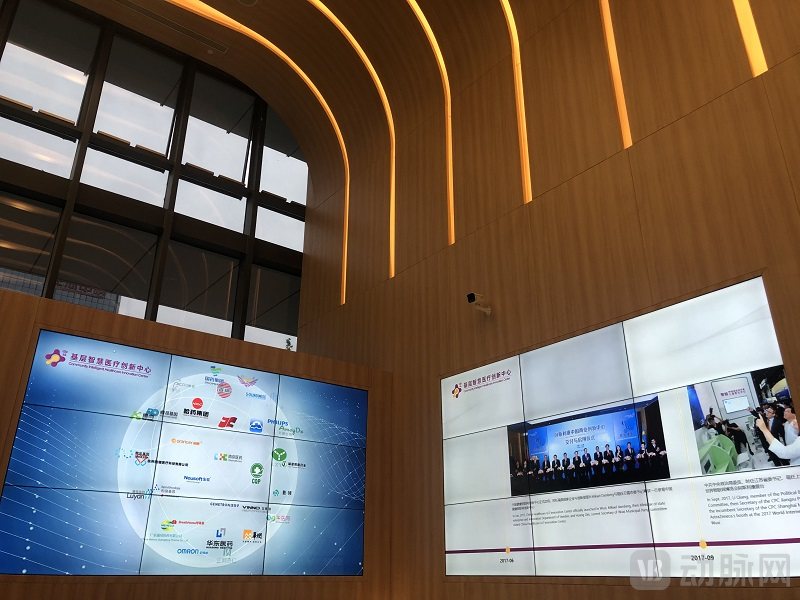
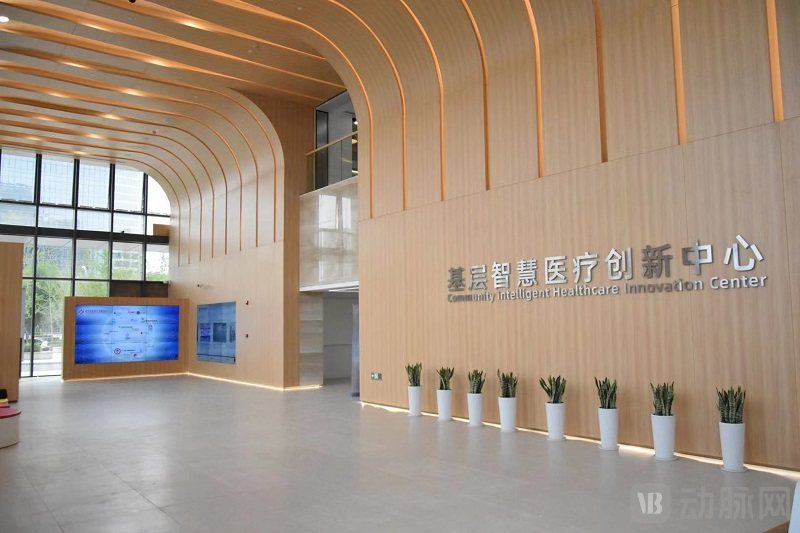
The Primary Care Smart Healthcare Innovation Center in Beijing focuses on “Primary Care Smart Healthcare” and primarily develops solutions related to primary care.It is reported that following the establishment of the Beijing Primary Care Smart Healthcare Innovation Center, AstraZeneca will leverage this platform to collaborate with numerous ecosystem partners. By harnessing innovative technologies such as 5G, the Internet of Things (IoT), and artificial intelligence (AI), they aim to explore disease screening and chronic disease management services in primary care hospitals, providing smart solutions to address the uneven quality of healthcare services in the primary care market.
On May 28, AstraZeneca China’s Northern Headquarters will officially commence operations in the Beijing Economic-Technological Development Area; the Beijing Primary Care Smart Healthcare Innovation Center will open its doors and host the Primary Care Smart Healthcare Partner Forum.The forum will invite healthcare professionals (HCPs) from primary care institutions, government representatives, ecosystem partners, and investment firms to engage in discussions on hot topics such as primary healthcare policies, chronic disease management at the grassroots level, and primary disease screening. It aims to create a high-quality forum and a premier platform for project exchange within the smart primary healthcare industry.
