

Dual Innovation in Products and Business Models: How Neusoft Medical Constructs Imaging Differentiation

Neusoft
Comprehensive Solution Provider for Clinical Diagnosis and Treatment
When it comes to imaging equipment such as CT and MRI, Neusoft Medical, as a pioneer in China’s medical imaging device industry, has achieved numerous groundbreaking milestones. For instance, the first self-developed CT scanner in China was created by Neusoft Medical, ushering in the era of industrialization for domestically produced CT systems.
Over the past 23 years, Neusoft Medical has become one of the leading global providers of medical imaging equipment. Today, Neusoft Medical has established nine major product lines. Among these, eight are hardware-focused: Computed Tomography (CT), Magnetic Resonance Imaging (MRI), Digital Subtraction Angiography (DSA), Digital X-ray (XR), Nuclear Medicine Imaging (PET/CT), Radiation Therapy (RT), Ultrasound (US), and In Vitro Diagnostics Laboratory Automation (IVD). The strategic MDaaS product line is integrated across all hardware offerings.
Opportunities and challenges coexist at all times. As the demand for diagnostic imaging services continues to rise in the Chinese market, healthcare institutions’ demand for imaging equipment such as CT, MRI, and DSA systems has also increased. This represents a diversified incremental demand that not only imposes higher technical requirements on imaging equipment but also poses significant challenges in terms of cost control and production capacity.
Against this backdrop, Neusoft Medical has outlined two development paths to support the company’s sustainable growth.
First, by aiming to pioneer the most cutting-edge medical imaging equipment technologies, we will lead the entire industry and realize “Smart Imaging • Created in China.”
Second, aiming to establish an inclusive medical imaging ecosystem, enabling primary healthcare facilities to access medical imaging equipment as widely as possible.
Achieving the aforementioned two objectives is no easy feat. The former entails high R&D intensity and substantial investment, requiring robust corporate capital for support; the latter tests a company’s capacity for business model innovation, enabling mature imaging equipment to penetrate lower-tier markets. However, from the current perspective, Neusoft Medical has successfully balanced both aspects, thereby establishing competitive barriers.
To gain a deeper understanding of Neusoft Medical’s development model, VCBeat visited the Neusoft Medical booth at the 2021 CMEF and conducted interviews with Wu Shaojie, CEO of Neusoft Medical, and Han Donglong, Senior Vice President and Chief Marketing and Operations Officer of Neusoft Medical, in an attempt to answer the following four questions.
Medical Imaging Equipment: Can Cutting-Edge Technology and Accessibility Coexist?
What Exactly Is MDaaS, the Strategic Product Line Touted by Neusoft Medical?
Is e-commerce an effective sales model for medical imaging equipment?
Why Establish Independent Imaging Centers?
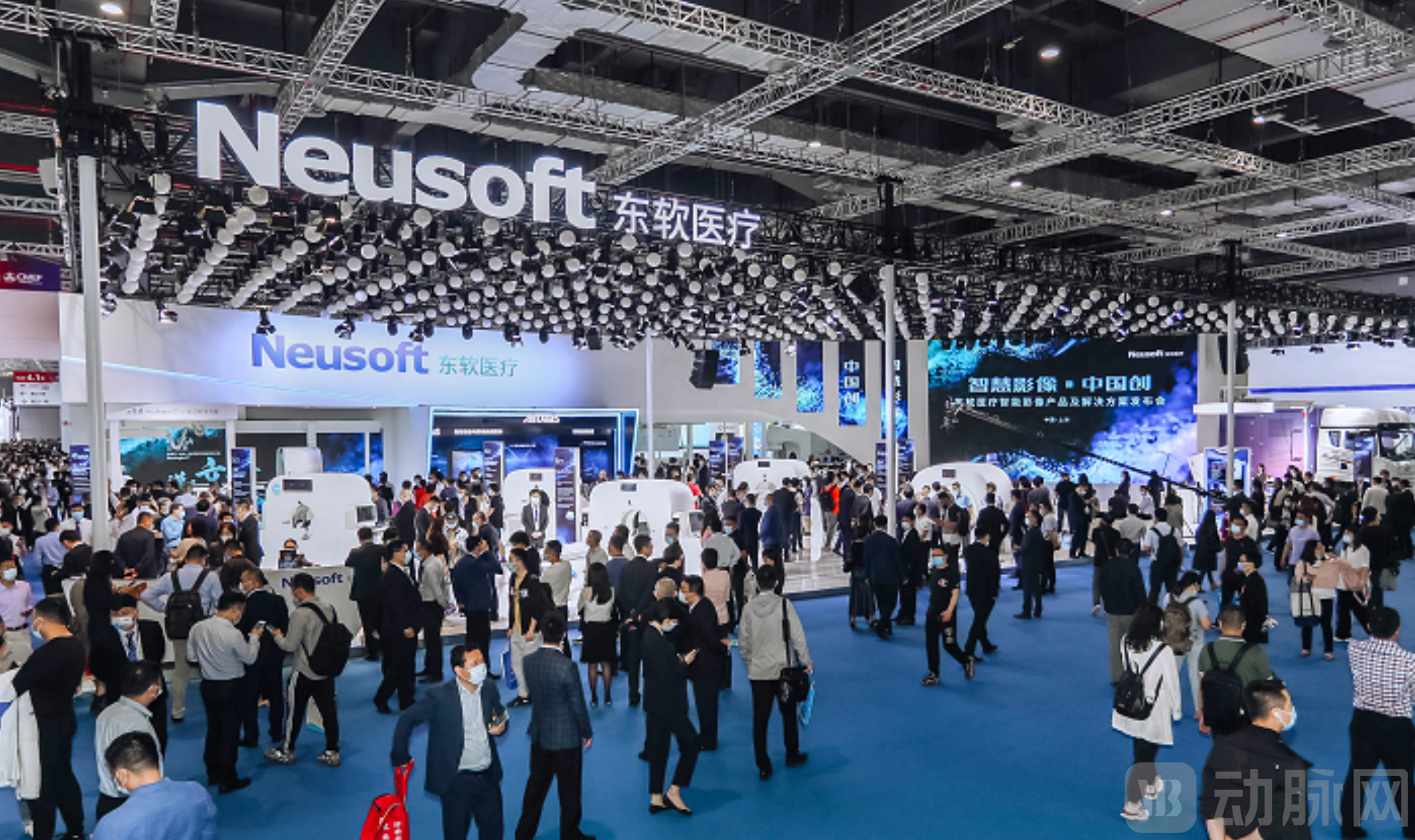
To date, Neusoft Medical’s business can be divided into four segments: digital diagnostic and treatment equipment, in vitro diagnostic (IVD) equipment and reagents, MDaaS solutions, and equipment services and training. These four segments are further subdivided into nine product lines, including CT, MR, and DSA. This strategic layout was not achieved overnight; rather, it has been gradually developed and accumulated through more than two decades of exploration by Neusoft Medical. As a result, each product line maintains its independence and is capable of competing effectively in the market on its own merits.
Medical imaging equipment constitutes the core of Neusoft’s entire business portfolio. In this industry, the performance limits of top-tier equipment serve as a company’s safety baseline, largely determining the breadth of the market it can reach. Within the high-demand markets for CT and MR systems, Neusoft has pushed its technology to the utmost level.
At this CMEF, Neusoft Medical’s NeuViz Epoch 16cm Panoramic Multimodal CT serves as a prime example. This CT scanner represents the pinnacle of spiral CT technology. Equipped with a 16cm wide-coverage “Panoramic Light-Chaser” detector, it can rapidly complete cardiac scans in approximately 0.2 seconds. Its exceptionally high rotation speed means the system is not constrained by respiratory or heart rate variations. Furthermore, its multimodal imaging capabilities enable multi-parameter, multi-angle data analysis from a single scan, effectively reducing the burden on patients caused by repeat examinations.
Overall, the NeuViz Epoch CT overcomes the contradictions inherent in the imaging chain of traditional wide-detector CT systems. Under stable conditions, it ensures "ultra-high-speed rotation" and "ultra-wide coverage," seamlessly integrating "low radiation dose" with "high-definition images."
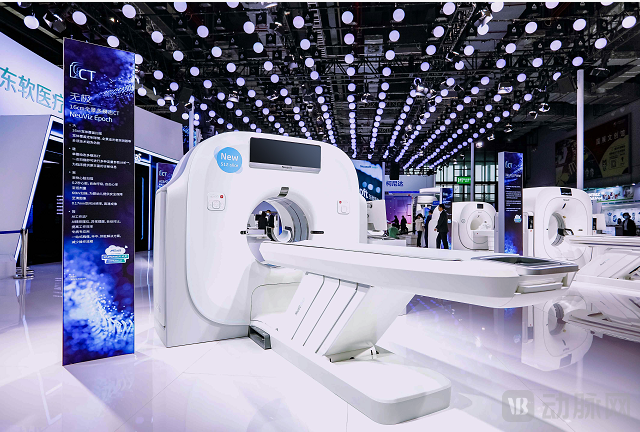
NeuViz Epoch Infinite CT
The newly released 1.49T MRI NeuMR Libra also represents an industry benchmark. The NeuMR Libra features a wide patient table, ambient lighting strips, and coil mirror designs to ensure scanning convenience and comfort. Meanwhile, new seamless stitching and motion artifact correction technologies effectively guarantee image quality while enhancing flexibility for both patients and clinicians.
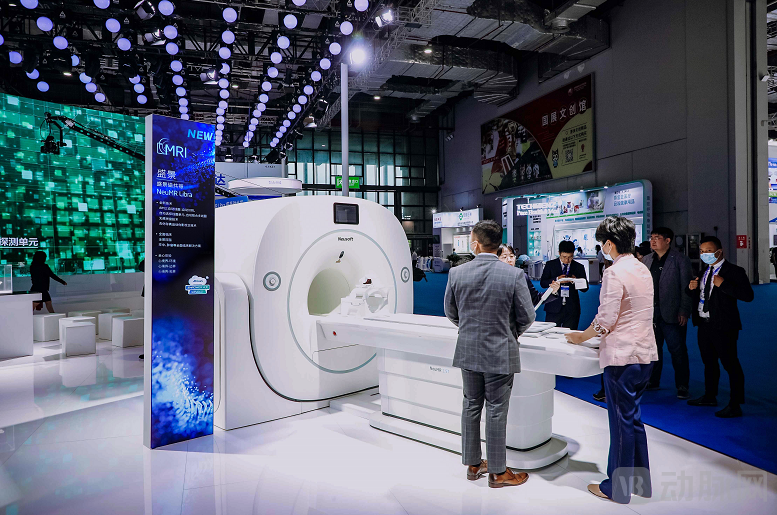
1.49T MRI NeuMR Libra Shengjing
“Even with such a rich product portfolio, Neusoft Medical continues to explore whether it can break through traditional frameworks and create something new by leveraging complementary strengths,” said Wu Shaojie, CEO of Neusoft Medical.
“The NeuAngio-CT Han Wenjing is Neusoft Medical’s most significant innovation this year. This device pioneers the integrated use of CT and DSA. Patients no longer need to be transferred or wait, as a single scan provides a one-stop solution for stroke and tumor management, effectively improving the efficiency of emergency and critical care. For this hybrid system, we have combined a 63/64-row (126/128-slice) high-precision, high-speed sliding-rail CT with a trackless ceiling-mounted dual-isocenter DSA. These two modalities can switch seamlessly and rapidly, enabling pre-procedural planning, intraoperative guidance, and post-procedural evaluation. The IDM and O-Dose dual-platform dose protection technologies effectively reduce radiation exposure for both patients and medical staff.”
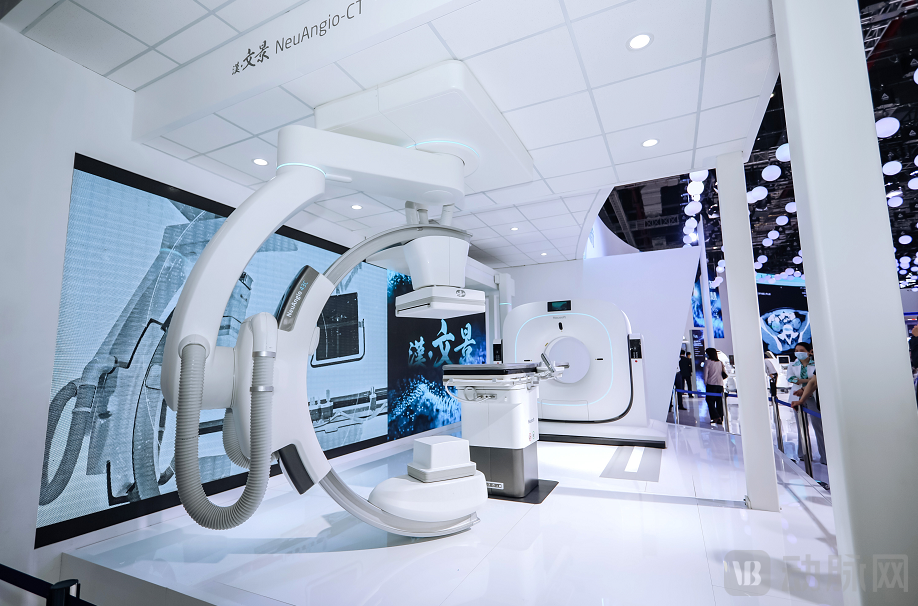
NeuAngio-CT Han·Wenjing
In addition to high-end equipment, Neusoft Medical also focuses on actual market demands. After the COVID-19 pandemic, the importance of deploying imaging equipment in primary healthcare settings has gradually increased. Taking CT as an example, it is a highly effective tool for diagnosing pneumonia. However, unlike large tertiary hospitals, primary healthcare institutions require equipment that aligns with their demand volume and offers controllable costs.
The NeuViz ACE digital 9-slice CT scanner showcased in the exhibition area is a product specially developed by Neusoft Medical to address the characteristics of primary healthcare institutions. “During the design process, we selected appropriate core CT components tailored to the needs of primary care settings, thereby reducing procurement costs for customers. Meanwhile, we have maintained the manufacturing standards of high-end CT systems, enabling the ACE CT to perform rapid, low-dose scans,” stated Wu Shaojie.
MDaaS, short for Medical Devices & Data as a Service, is an open intelligent service platform built by Neusoft Medical based on medical devices and medical imaging data, integrating technologies such as the Internet, artificial intelligence, and big data. According to Wu Shaojie, there are two main reasons for developing this product line.
First, with the continuous iteration of imaging equipment, the information contained in a single image has increased dramatically. In this context, relying solely on the human eye for image recognition may not be sufficient to process all the available information. The assistance of applications such as artificial intelligence is becoming increasingly important in this situation.
Second, many primary healthcare institutions have the capacity to acquire imaging equipment of a certain standard but may struggle to recruit physicians with sufficient qualifications. For such users, we can connect their purchased devices to the cloud, leveraging AI and remote consultations with specialists from major hospitals to assist in diagnosis.
Currently, Neusoft Medical has established NeuMiva, an open intelligent medical imaging cloud platform. Artificial intelligence diagnostic software, lung cancer screening software, and cardiovascular disease screening software from domestic and international partners can be integrated into the NeuMiva cloud platform. Hospitals at all levels can access various algorithm-based software on demand through NeuMiva and pay per use. This creates a win-win situation for all parties involved: algorithm and software providers can generate revenue by leveraging Neusoft Medical’s extensive user base; hospitals at all levels can benefit from affordable access to a wide range of intelligent diagnostic software; and patients can receive precise diagnosis and treatment.
In addition, the NeuMiva cloud platform facilitates interoperability among hospitals at all levels through remote diagnostic services, enabling the decentralization of high-quality medical resources. It provides a platform for professional exchange and learning among physicians via training programs, thereby comprehensively enhancing the diagnostic capabilities of primary care institutions. For instance, after a patient undergoes an examination at a primary care hospital, specialists located thousands of miles away can remotely interpret imaging studies and conduct consultations.
MDaaS also includes operational services for cloud-based diagnostic platforms and the joint establishment of imaging centers, among other offerings. With cloud service support, hospitals are not required to build independent data centers; instead, their data can be stored directly on the cloud platform established by Neusoft Medical. To this end, Neusoft Medical has developed a regional public cloud, enabling hospitals within the region to upload their data to this platform. Local health commissions can leverage this cloud platform to monitor specific healthcare conditions within their jurisdictions. Notably, migrating hospital data to the cloud reduces the use of physical film. Furthermore, patients can share digital images with other specialists for review and diagnosis, thereby avoiding redundant examinations and minimizing the waste of medical resources.
Neusoft Medical Provides Comprehensive Stroke Center Solutions for County-Level Hospitals, Leveraging MDaaS to Build Specialty Medical Consortiums. In stroke diagnosis, Neusoft Medical offers equipment such as CT and MRI scanners; for treatment, it provides intelligent angiography systems. Furthermore, to enhance the medical capabilities of county-level hospitals, Neusoft Medical will train clinicians and collaborate with Xuanwu Hospital to establish specialty medical consortiums, enabling doctors to consult stroke experts during emergency rescue operations to ensure timely and safe patient care.
Overall, MDaaS serves as a connector within the entire product ecosystem. It bridges offline and cloud environments, primary care hospitals and tertiary hospitals, and patients and physicians. Through these connections, Neusoft Medical multiplies its existing medical resources and effectively allocates them to areas with genuine demand. This is the core capability of MDaaS.
Under the traditional model, medical device sales largely involved sellers seeking out buyers. Since sellers could not accurately ascertain buyers’ needs, companies had to adopt a near-“exhaustive” approach, proactively establishing contact with every hospital. However, in the internet era, information has become more readily accessible, and buyers have gained greater leverage. In this context, Neusoft Medical aims to create an authoritative portal that allows buyers to easily access comprehensive product information.
Since last year, Neusoft Medical has partnered with JD Health and Sinopharm Group to list CT scanners, X-ray systems, ultrasound devices, and other products on their online marketplaces. “After one year of operations, we have indeed acquired more customers through this channel and are continuously optimizing the online sales experience,” Han Donglong, Senior Vice President and Chief Marketing and Operations Officer at Neusoft Medical, told VCBeat.
At this CMEF, Neusoft Medical and JD Health officially signed a strategic partnership agreement to seek deep innovation in marketing networks. In the future, medical equipment marketing will no longer rely solely on offline models. Empowered by the internet, customer engagement has become more efficient, thereby reducing the marketing costs associated with these processes.
The non-public healthcare market is a key sector for the application of e-commerce models. Currently, Neusoft Medical holds a significant market share. This market places great emphasis on cost-effectiveness, with substantial demand for affordable CT scanners, ultrasound systems, and digital radiography (DR) equipment priced under one million yuan. Through the e-commerce model, non-public medical institutions can acquire the aforementioned equipment at lower prices.
Regarding the issue of partners, Han Donglong stated, “Quality assurance is crucial in the healthcare industry. In our expansion of partnerships, we prioritize platform quality. Sinopharm and JD.com are partners with mature supply chain models and strong brand influence.”
Not limited to horizontal expansion in imaging equipment, Neusoft Medical is also attempting vertical expansion in the imaging industry. According to Wu Shaojie, Neusoft Medical has jointly established two imaging centers with hospitals, a model that may continue to be extended.
“We co-established independent imaging centers with hospitals for two reasons. On one hand, we leverage our equipment advantages to help hospitals build independent imaging centers in a cost-effective manner. On the other hand, by utilizing MDaaS, we can more effectively offload hospital workloads,” explained Wu Shaojie in an interview.
Most hospitals are located in city centers, where their capacity, equipment rooms, and other aspects are constrained by geographical limitations. This constraint further exacerbates the difficulty patients face in accessing medical care. In some large hospitals, patients typically wait nearly a week or even longer for imaging examinations.
For Neusoft Medical, proprietary equipment means that imaging centers are no longer a capital-intensive investment. By partnering with hospitals, Neusoft Medical has the potential to build independent imaging centers on a large scale. Therefore, through the development of multi-regional independent imaging centers, Neusoft Medical can alleviate long patient wait times and enhance the overall healthcare experience.
Revisiting the Impact of MDaaS. Currently, many small and medium-sized hospitals possess imaging equipment but lack diagnostic capabilities, or have limited diagnostic expertise. In such scenarios, Neusoft Medical can collaborate with these institutions by aggregating their imaging data on the cloud and leveraging artificial intelligence to facilitate timely diagnoses, thereby effectively promoting the development of tiered diagnosis and treatment systems.
“Over the past few years, Neusoft Medical has consistently strengthened its products and business operations in terms of intelligent precision, ease of use, interconnected collaboration, equitable accessibility, and safety and reliability,” said Wu Shaojie. “In other words, these five keywords are the concrete embodiment of our distinctive features and represent the core competitiveness we strive for in our future business development.”
Among these, equitable accessibility is Neusoft Medical’s mission. The company aims to make advanced imaging examinations available in every corner of China, enabling a broader population to benefit from diagnostics powered by cutting-edge technology and science. To achieve this goal, it is essential to lower the barriers to accessing imaging equipment and build robust connectivity capabilities.
Second is interconnected collaboration. With the continuous development of medical alliances and medical consortia, the demand for vertical coordination within the healthcare system continues to expand. Against this backdrop, MDaaS is leveraged to disseminate the expertise of top-tier specialists to primary care institutions.
The most critical aspect remains intelligent precision. The application and development of artificial intelligence, big data, and the internet signify that modern medical equipment is no longer composed solely of hardware and software. To date, Neusoft Medical has leveraged AI technology to enable intelligent diagnostic analysis across many of its software solutions. This aligns perfectly with Neusoft Medical’s slogan at CMEF, “Smart Imaging • Created in China,” which represents the core of its future development strategy.