

Raydber Completes Series B2 Financing to Advance High-Performance, Portable, and Accessible TB Screening Solutions
Recently, LDEBIO (Guangzhou Leide Biotechnology Co., Ltd.), an international leader specializing in total immunodiagnostics and tuberculosis infection screening, announced the completion of its tens-of-millions-yuan Series B2 financing round. This round was jointly invested by Luxin Venture Capital and Qudao Asset Management. The funds will be used to build a marketing team, increase marketing investment, develop innovative total immunodiagnostic products, and enhance reagent production capacity.
Immunodiagnostics and immunotherapy have emerged as the fastest-growing fields in recent years, exerting an increasingly profound influence on healthcare systems. Dr. Lou Jianrong, Chairman and General Manager of LDEBIO, stated, “The immune system plays a critical role in defending against pathogenic microorganisms from external sources, monitoring cellular mutations internally, and maintaining homeostasis within the body. Many major immune-mediated diseases, such as infections and cancers, are closely associated with imbalances in human immune function.”LDEBIO has established the world’s first comprehensive immune in vitro diagnostic system, centered on dynamic cellular functional diagnostics and integrated with static biomarker detection, to enable earlier, more comprehensive, and accurate diagnosis of major immune-mediated diseases.”
LDEBIO’s innovative R&D, built upon its core technology platform for total immunoassay in vitro diagnostics,AIMTB Tuberculosis Infection Detection SystemandRA_CP: Citrullinated Protein Detection Product for Rheumatoid ArthritisIt has successively obtained registration and marketing approval from the National Medical Products Administration (NMPA), while diagnostic products for organ transplantation and tumor immunology are also under rapid development.
Compared with mainstream international products, AIMTB offers higher sensitivity, specificity, and stability, while overcoming two major bottlenecks: complex operation with limited throughput, and high cost hindering widespread adoption.It is the world's first IGRA product capable of large-scale tuberculosis infection screening.RA_CP utilizes citrullinated protein antigens as detection targets, overcoming the limitations of the serological markers rheumatoid factor (RF) and anti-CCP antibodies specified in current international guidelines. Characterized by high sensitivity and high specificity, it is the world’s first in vitro diagnostic product capable of detecting rheumatoid arthritis (RA) in patients who are negative for anti-CCP antibodies. This innovation significantly reduces the incidence of missed or misdiagnoses, enabling earlier and more precise diagnosis of rheumatoid arthritis.
Tuberculosis is one of the deadliest respiratory infectious diseases, having claimed hundreds of millions of lives over the past two centuries. According to the WHO’s Global Tuberculosis Report 2020, there were nearly 2 billion people with latent tuberculosis infection worldwide and approximately 9.96 million new cases of tuberculosis in 2019. In China, the population with latent tuberculosis infection is estimated at around 300 million, with 833,000 new tuberculosis cases, ranking third globally. The Chinese government attaches great importance to tuberculosis prevention and control, and has successively introduced a series of policies, regulations, and technical specifications, including the Action Plan to End Tuberculosis (2019–2022), the Technical Specifications for Tuberculosis Prevention and Control in China (2020 Edition), and the Guidelines for Tuberculosis Prevention and Control in Schools in China (2020 Edition).
Lou Jianrong believes that,The tuberculosis screening market will become the most promising niche segment in the field of in vitro diagnostics.
Tuberculosis is categorized into latent tuberculosis infection (LTBI) and active tuberculosis disease. The World Health Organization (WHO) estimates that approximately 3 million tuberculosis patients worldwide are not diagnosed and treated in a timely manner each year. These individuals serve as mobile sources of infection, sustaining transmission within the population through droplets and respiratory routes, thereby posing a serious threat to public health. Both the WHO and international and domestic experts have clearly stated that the key to tuberculosis prevention and control lies in actively screening for, identifying, and treating latent tuberculosis infection while simultaneously treating active tuberculosis disease. Many countries, including China, mandate strengthened active tuberculosis screening for high-risk priority populations—such as individuals in congregate settings (schools, military units, and prisons), close contacts of bacteriologically confirmed pulmonary tuberculosis patients, the elderly, individuals with TB/HIV coinfection, patients with diabetes mellitus, and healthcare workers—and implement standardized treatment regimens. These measures aim to prevent the onset of tuberculosis and accelerate the decline of the tuberculosis epidemic.
Meanwhile, the widespread market launch of monoclonal antibody drugs, represented by adalimumab and its biosimilars, along with other immunotherapies, has driven a rapid increase in demand for tuberculosis infection testing.Studies have shown that the risk of progression from latent tuberculosis infection to active tuberculosis increases sharply in individuals with latent tuberculosis infection who undergo immunosuppressive therapy.The prescribing information for the aforementioned biologic immunosuppressive agents explicitly mandates tuberculosis (TB) infection screening prior to treatment initiation, which will lead to a significant increase in the volume of pre-treatment TB testing.
Furthermore, influenced by the COVID-19 pandemic, national and public attention to respiratory infectious diseases such as tuberculosis has been increasing day by day.
Therefore,Amid public health containment needs, the rapid advancement of immunotherapy, and the context of the COVID-19 pandemic, large-scale active tuberculosis screening has become imperative.The shift from passive case finding to active screening for tuberculosis is an inevitable trend, and the TB screening market is poised for explosive growth.
IGRA is the latest international in vitro immunodiagnostic method for Mycobacterium tuberculosis infection and the only in vitro diagnostic technology capable of accurately detecting latent tuberculosis infection. It effectively addresses the limitations of the TST technique, which is subject to interference from the Bacille Calmette-Guérin (BCG) vaccine, exhibits a false-positive rate exceeding 50%, and requires a follow-up visit after three days.
However, traditional IGRA products have stringent requirements for laboratory environments, involve complex operations, and incur high costs. Consequently, they are currently used only in tertiary hospitals and large third-party medical laboratories, making it difficult to promote their adoption in primary healthcare institutions and among large populations.There is an urgent market demand for a high-performance, portable, and widely accessible IGRA-based tuberculosis testing product.LDEBIO has achieved breakthroughs in four key areas to promote the decentralization, convenience, and scalability of IGRA technology, thereby unlocking the blue-ocean market for proactive tuberculosis screening, stated Lou Jianrong.
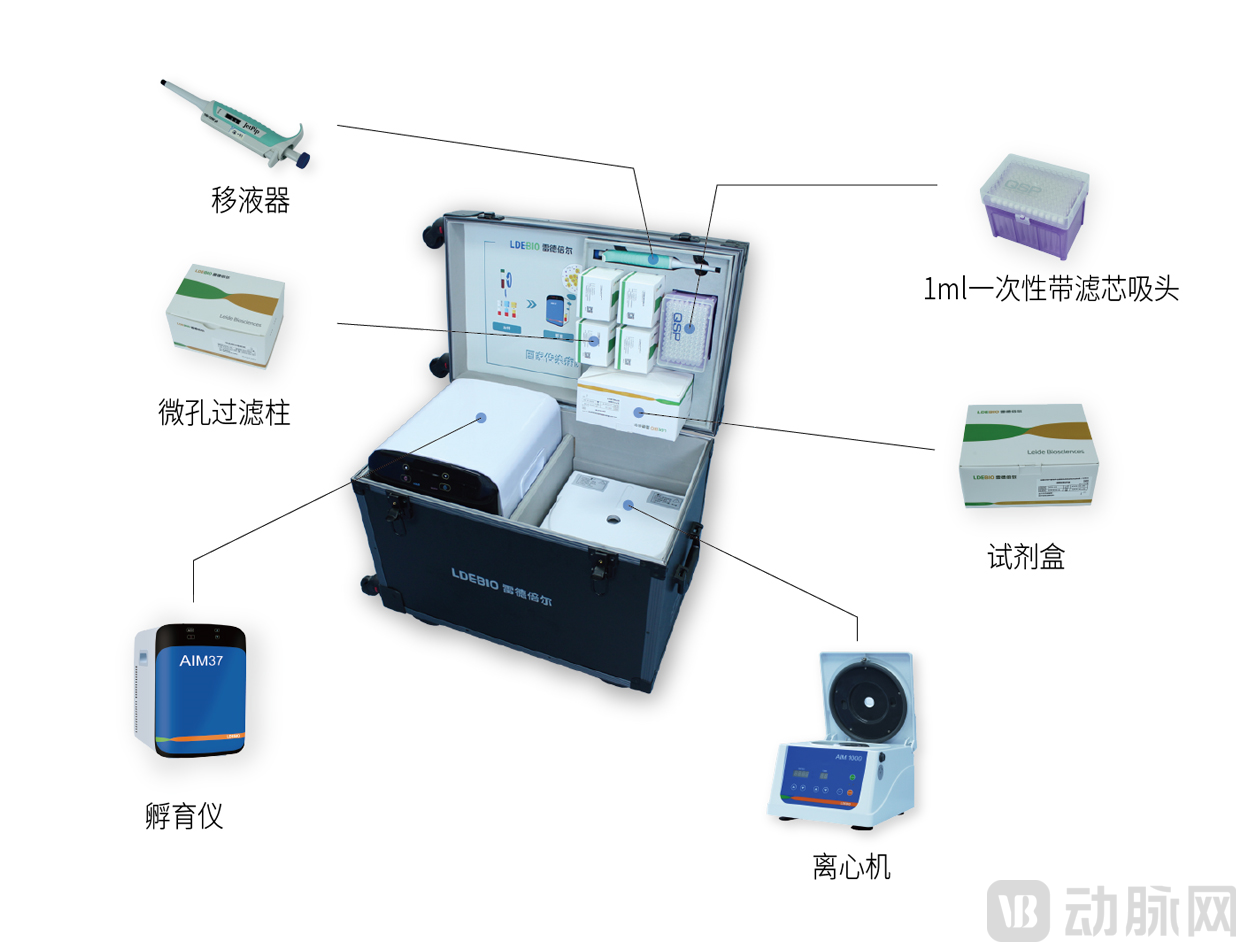
First, the product performance has reached a world-class level.AIMTB enables immediate testing or post-stimulation storage for centralized batch testing with a blood sample volume of only 1.8 mL. Its performance demonstrates over 95% concordance with leading international products, while offering higher sensitivity, thereby effectively proving the product’s superiority.
Second, it is easy to operate.The development of AIMTB-compatible equipment has reduced requirements for laboratory environments and operators. Manual pre-processing of a single sample takes only three minutes, significantly reducing labor intensity, minimizing testing errors, and improving sample throughput.
Third, it is mobile.In grassroots areas, where medical resources are scarce and the population is dispersed, the portability and mobility of the AIMTB portable on-site tuberculosis infection detection kit facilitate the deployment of TB screening products to the primary care level, enabling rapid detection and screening for tuberculosis infection based on IGRA technology.
Fourth, it possesses exceptionally strong cost control capabilities.The primary cost of in vitro diagnostic (IVD) products lies in core raw materials. Most IVD reagents in China rely on imported core raw materials, resulting in persistently high costs. Since its inception, LDEBIO has placed significant emphasis on the independent research and development and production of core raw materials. The company currently offers more than 10 types of raw material products, and maintains international leadership in the R&D and manufacturing of key raw materials such as high-purity PHA-L, CCP turbidimetric reagents, and IFN-γ antibodies.Products such as AIMTB and RA_CP have basically achieved self-sufficiency in raw materials.
Leveraging innovative breakthroughs in these four areas, LDEBIO has effectively addressed multiple pain points associated with tuberculosis (TB) screening technologies, including operational complexity, high costs, and difficulties in deployment at the primary healthcare level. Currently, LDEBIO has established a nationwide marketing network across nine major regions in China, fostering strong collaborative relationships with key clients such as medical institutions, Centers for Disease Control and Prevention (CDCs), and third-party testing laboratories. The company has successfully implemented numerous large-scale TB screening demonstration projects in multiple provinces and municipalities, driving the rapid development of the active TB screening market in China. Furthermore, LDEBIO has achieved breakthroughs in Southeast Asian markets, including Indonesia, and is actively expanding into international markets in Africa, Europe, and the Americas.
LDEBIO is dedicated to innovation and R&D in the field of total immunity in vitro diagnostics, creating higher-value products and services for human health. With patient benefits at its core and clinical needs as its guide, LDEBIO continuously innovates and strives to create value for customers, employees, the company, and society, aiming to become a world-class innovative enterprise in in vitro diagnostics.
Du Lin, Investment Director at Luxin Venture CapitalLDEBIO’s management team has been deeply engaged in the industry for nearly two decades, possessing a profound and forward-looking understanding of clinical needs. The company’s development direction and technical implementation capabilities are mutually reinforcing, spanning from the development of raw materials for diagnostic products to their clinical application. This synergy positions LDEBIO with the potential to become an international leader in comprehensive immunodiagnostics and tuberculosis infection screening. Research and applications concerning the relationship between the immune system and diseases have been a key focus of clinical research in recent years and will remain so in the foreseeable future. We fully recognize the company’s strategic focus on the market for diagnosing immune-mediated diseases. Meanwhile, LDEBIO has established a robust product portfolio for short- to mid-term development, including its AIMTB tuberculosis infection detection assay and RA_CP rheumatoid arthritis detection assay, thereby ensuring a clear, well-structured development pathway across short-, mid-, and long-term horizons.
About Luxin Venture Capital
Luxin Venture Capital Group Co., Ltd. (600783.SH), controlled by Shandong Luxin Investment Holding Group Co., Ltd., is the largest professional venture capital firm in Shandong Province and one of the most influential in China. Its notable portfolio companies in the healthcare and medical sectors include 3D Medicines, RemeGen, Abclonal, Zhongke New Life, Silicon-Based Bionics, Boying Medical, Rigene Biotechnology, Vimai Medical, Shiling Technology, Dajian Biopharma, and TCR2 Therapeutics.
About Qudao Assets
Guangzhou Qudao Asset Management Co., Ltd. (“Qudao Asset”) is a professional private equity investment fund focused on the healthcare industry. Its investors include multiple publicly listed healthcare companies, government guidance funds, and overseas investors, such as Daan Gene, Hengji Daxin, and Boji Medicine. The fund’s industrial resources deeply cover areas including in vitro diagnostics (IVD), new drug R&D, and CRO/CMO services. The Qudao Asset team possesses extensive industry experience and a robust resource network, providing enterprises with strategic resources and capital market support through industrial chain integration, strategic M&A, and equity investments.