

Digital Therapeutics Alliance Welcomes First Chinese Enterprises Amid Over 30 Funding Rounds in a Year: How Hot Is DTx?

Weimai
Digital Health Service Platform Provider
What will be the “pig” riding the wind at the forefront of the healthcare sector in 2021? While answers may vary, anyone paying attention to digital therapeutics (DTx) will undoubtedly include it among the top contenders.
The reasons are obvious. At the “Top 100 Future Healthcare Companies” conference, recently hosted by VCBeat, the Digital Therapeutics Innovation Forum—one of the sub-forums—was packed with attendees, making it undeniably the most popular among the 16 sub-forums. The unprecedented level of enthusiasm was a rare sight even for seasoned experts in the healthcare industry present at the event.
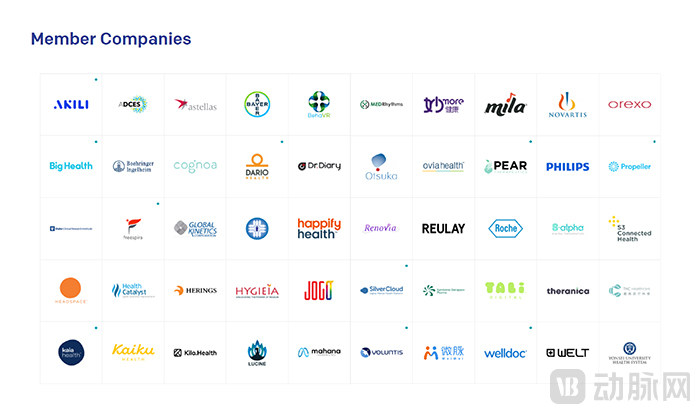
Shortly thereafter, domestic companies such as Weimai joined the Digital Therapeutics Alliance (hereinafter referred to as DTA), becoming among the first Chinese member organizations and collectively driving industry attention to digital therapeutics to a boiling point.
Many people may be puzzled by the sudden surge in popularity of digital therapeutics, but if you have been following VCBeat (WeChat ID: Vcbeat), you would have likely spotted the early signs. Over the past few years, VCBeat has consistently focused on digital therapeutics, providing extensive forward-looking coverage. In fact, digital therapeutics did not achieve overnight fame; rather, they underwent a gradual and progressive growth process. Their current prominence is simply the natural outcome of this development.
Digital therapeutics began to gain momentum as early as 2016. At that time, it was predicted that the sector would flourish over the next five years, encompassing hundreds of companies and generating approximately $6 billion in revenue. In 2017, industry pioneers established the Digital Therapeutics Alliance (DTA), a non-profit trade association in the United States, with members including digital therapeutics companies, universities, research institutions, and clinical experts.
DTA has defined digital therapeutics and differentiated them from other concepts, thereby addressing common uncertainties. DTA posits that digital therapeutics are software-based interventions that provide patients with evidence-based therapeutic measures to prevent, manage, or treat diseases.
Digital therapeutics can be used independently or in conjunction with medications, devices, or other therapies. These products integrate the latest advancements in design, clinical validation, usability, and data security, and are subject to regulatory review and approval as required. Digital therapeutics need to provide intelligent and accessible tools for patients, healthcare providers, and payers to address a variety of clinical scenarios.
Simply put, in the traditional system, patients obtain medications from pharmacies based on prescriptions issued by physicians. Digital therapeutics, however, simply replace the medication with a specific app—though it may also involve a product combining software and hardware.
DTA has further established 10 core principles for digital therapeutics, thereby clarifying the definition:
1. Can prevent, manage, or treat a disease;
2. Interventions are generated through software-driven processes;
3. It integrates best practices in design, manufacturing, and quality;
4. Enable users to participate in product development and usability processes;
5. User privacy and security must be ensured;
6. It represents best practices for the deployment, management, and maintenance of application products;
7. Publish trial results, including clinically significant findings, in peer-reviewed journals;
8. Undergo review and certification by regulatory authorities in accordance with requirements for product risk, efficacy, and intended use;
9. Make corresponding declarations based on clinical evaluation and regulatory status;
10. Collect, analyze, and apply real-world evidence or product performance data.
Furthermore, based on the scope of functional coverage and clinical evidence requirements, the DTA also categorizes digital health products into Digital Health, Digital Medicine, and Digital Therapeutics. Its connotation has gradually become more focused, thereby further distinguishing Digital Therapeutics.
Digital health is the broadest concept, encompassing all products that help consumers improve their lifestyles and health-related outcomes, such as common general wellness mobile apps (e.g., step counters) and internet hospital platforms. Digital health products that incorporate diagnostic and/or intervention functions are defined as digital medicine. Within digital medicine, products that serve an intervention function are further defined as digital therapeutics.
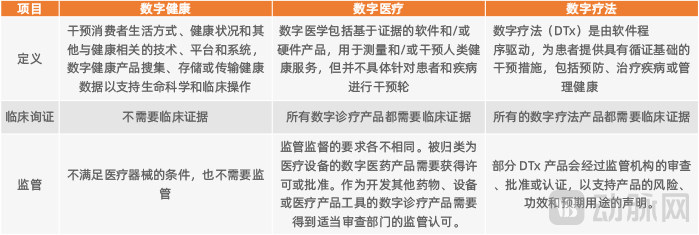
Compared with the other two, the core of digital therapeutics lies in evidence-based medicine and intervention in diseases. It requires that the efficacy of digital therapeutics be supported by clinical trial data, including systematic reviews and meta-analyses, randomized controlled trials, and cohort study results; furthermore, it mandates that digital therapeutics must exert a certain impact on patients’ health status or the natural course of the disease, such as in disease prevention, treatment, or management.
By definition, digital therapeutics primarily serve three functions: disease prevention, treatment, and management. Among these, the treatment of specific diseases is the fundamental reason for the initial emergence of digital therapeutics.
Digital therapeutics are not applicable to all scenarios; diseases requiring antibiotic treatment can absolutely not be cured by digital therapeutics alone. Clinical trials have demonstrated that digital therapeutics exhibit significant efficacy in managing behavior-mediated conditions that are not adequately addressed by existing pharmacotherapies, such as depression, post-traumatic stress disorder (PTSD), smoking cessation, and insomnia.
Traditional pharmacotherapy has limited efficacy for behavior-mediated disorders and carries a high risk of opioid addiction. Opioid analgesics, primarily derived from poppy extracts, are the primary drivers of the most severe drug abuse crisis in the United States, with opioid-related mortality rates rising rapidly in recent years. Meanwhile, substance use disorders (SUDs) associated with alcohol or other non-opioid substances result in annual losses exceeding $700 billion due to healthcare costs, crime, and lost productivity, while also inflicting immense suffering on families and society.
Digital therapeutics enable patients to access treatment conveniently, effectively enhance patient engagement, and strengthen quality control of therapeutic interventions. Admittedly, digital therapeutics cannot directly replace pharmacological interventions, nor do they exert a placebo effect; rather, they serve as a beneficial complement to conventional therapies. However, for patients with behavior-mediated conditions, behavioral modifications may yield more significant efficacy and fewer side effects than antidepressant medications. Meanwhile, digital therapeutics can also effectively improve patients’ medication adherence.
Pear Therapeutics is one of the most successful companies in the field of digital therapeutics and was among the first nine pilot enterprises for digital therapeutics approved by the FDA. Its portfolio includes four digital therapeutic products designed to treat substance use disorder (reSET), opioid use disorder (reSET-O), insomnia and its associated depression (Somryst), and schizophrenia (Pear-004). With the exception of Pear-004, which received Emergency Use Authorization during the COVID-19 pandemic, the first three products have obtained FDA 510(k) clearance for market launch.
Significant Achievements of Digital Therapeutics in the Rehabilitation Treatment of Children with Autism in China
Although digital therapeutics in China have a relatively short development history, significant achievements have been made. Recently, Weimai’s “Weimai e-Visit” digital therapeutics platform, built on the “Neumann AI Architecture + Kailin Sand Full-Course Disease Management System,” passed the DTA review. Building on this foundation, Weimai has developed a comprehensive digital therapeutics solution for home-based intervention in autism.
Autism, also known as autistic disorder, Autism Spectrum Disorder (ASD) and autism are umbrella terms for a range of complex neurodevelopmental disorders. These disorders describe, to varying degrees, difficulties in social interaction, verbal and nonverbal communication, and repetitive behaviors.
Childhood autism is not a psychological disorder; however, most children with autism experience psychological issues, such as cognitive, emotional, and behavioral problems. Furthermore, social withdrawal or introversion is not synonymous with autism. The concept of autism was introduced in China only in the early 1980s, when the first case of childhood autism was diagnosed. With advances in medicine, China has classified autism as a psychiatric disability since 2006, incorporating it into the relevant social support systems.
The number of children with autism is far greater than we imagine. According to data from the "Report III on the Development Status of China's Autism Education and Rehabilitation Industry," there were over 3 million children aged 0–14 with autism in China as of 2017.
However, there is a prominent contradiction between the service capacity and demand of autism rehabilitation institutions for children in China. As of 2018, the service capacity of educational and rehabilitation institutions for children with autism in China increased from less than 200,000 (in 2016) to over 300,000, representing a 30% increase. Nevertheless, it is estimated that there are more than 2 million children with autism in China, with an annual increase of nearly 200,000. There is nearly a tenfold gap between service capacity and demand.
Furthermore, the cost of rehabilitation for children with autism is also exceedingly high. In China, rehabilitation institutions for children with autism typically charge between 120 and 500 yuan per half-hour session, amounting to nearly 8,000 yuan per month. Well-equipped autism rehabilitation centers may charge over 100,000 yuan per month. Although the government provides corresponding subsidies for rehabilitation training, this still constitutes a significant financial burden for most families.
Due to the accessibility of digital therapeutics, more children with autism spectrum disorder can receive timely and effective treatment; meanwhile, it also helps reduce overall medical costs.
Currently, the digital therapeutic solution for childhood autism developed by Weimai has been validated as effective through clinical evidence-based medicine, and its efficacy may be superior to that of traditional treatments. In a study involving 70 children with autism treated at a provincial children's hospital, data from a randomized controlled trial showed that after 12 weeks of digital therapy for home-based intervention, the observation group's ATEC scores decreased from 96.9 ± 7.04 to 84.14 ± 7.00, and ABC scores decreased from 80.74 ± 5.03 to 71.77 ± 4.19. In contrast, the control group receiving traditional intervention saw their ATEC scores decrease from 95.49 ± 7.23 to 90.91 ± 5.51, and ABC scores decrease from 80.26 ± 5.97 to 76.40 ± 5.19.
Compared with traditional offline intervention models, the digital therapeutic solution for childhood autism developed by Weimai breaks through time and space constraints, enabling children to receive continuous intervention training while awake. This approach integrates intervention into daily life, significantly improving patients’ conditions. Meanwhile, the digital therapy for home-based autism intervention substantially reduces therapists’ workloads under the traditional model; therapists no longer need to be involved throughout the entire intervention process but are only responsible for supervising its implementation. The system formulates intervention plans and pushes corresponding courses based on assessment results, shifting the role of intervention implementer to parents, who have more time to accompany their children. This simultaneously reduces parents’ reliance on therapists and realizes an integrated hospital-community-home management model. Currently, Weimai’s digital therapeutic solution for childhood autism has initiated preliminary collaborations with several hospitals and is conducting multi-center clinical validation.
It is understood that, leveraging the platform service capabilities and vertical digital therapeutic product R&D capabilities of its “Weimai e-Visit” digital therapeutics platform, Weimai has collaborated with numerous hospitals across China to carry out digital therapeutics practices and validations for dozens of specialized diseases. Its digital therapeutics products under development cover multiple areas, including sleep disorders, hypertension, diabetes, autism spectrum disorder, attention-deficit/hyperactivity disorder (ADHD), and sports rehabilitation, encompassing the entire process of disease prevention, management, and treatment. Furthermore, the “Weimai e-Visit” digital therapeutics platform has now opened its service and channel capabilities to all digital therapeutics companies. By integrating in-hospital Electronic Medical Records (EMR) and user Real-World Data (RWD), it aims to jointly promote the improvement of the digital therapeutics ecosystem in vertical disease fields within China.
Digital therapeutics for disease prevention are digital interventions designed to prevent disease onset in individuals who have not been diagnosed but are at risk.
Neurotrack is one of the pioneers in digital therapeutics for disease prevention. It leverages eye-tracking technology, data analytics, machine learning, and remote coaching to build a cognitive health platform designed to detect, prevent, and slow the progression of dementia and Alzheimer’s disease. In China, companies are also engaging in similar explorations.
Alzheimer’s Disease Is One of the Key Focus Areas for Digital Therapeutics in Disease Prevention in China
The industry’s concerted focus on Alzheimer’s disease as a key research priority is closely tied to the underlying mechanisms of the condition. According to data released by Alzheimer’s Disease International in 2018, there were 50 million people living with dementia worldwide in 2017, a figure comparable to the population of South Korea or Spain. Approximately two-thirds of these cases were attributed to Alzheimer’s disease.
Among these, patients in China account for a substantial proportion. A recent study by Professor Jia Jianping’s team from the National Clinical Research Center for Geriatric Disorders at Xuanwu Hospital of Capital Medical University, published in the international medical journal The Lancet Public Health and titled “Prevalence, risk factors, and management of dementia and mild cognitive impairment in adults aged 60 years or older in China: a cross-sectional study,” estimated the current status of dementia among the elderly in China, yielding concerning results.
Research estimates indicate that the prevalence of dementia among adults aged 60 and older in China is 6.0%. Of this, Alzheimer’s disease accounts for 3.9%, vascular dementia for 1.6%, and other types of dementia for 0.5%. There are 15.07 million individuals aged 60 and older with dementia in China, including 9.83 million with Alzheimer’s disease, 3.92 million with vascular dementia, and 1.32 million with other types of dementia. The prevalence of mild cognitive impairment is 15.5%, affecting approximately 38.77 million people.
However, despite the growing global patient population and rising incidence rates, the actual proportion of patients receiving treatment remains very low due to insufficient public awareness of the disease and the stigma associated with it among most patients. The first domestic "Survey Report on the Living Conditions of Families of Alzheimer’s Disease Patients" shows that only 7.58% of patients sought medical attention after noticing abnormalities such as forgetfulness and confusion. Data indicates that globally, only 22% of Alzheimer’s disease patients have received a diagnosis; in China, merely 21% of patients have obtained a standardized diagnosis, and only 19.6% have received pharmacological treatment.
Regrettably, the pathogenesis of Alzheimer’s disease remains unclear to date, resulting in slow progress in the development of chemical drugs and extremely limited efficacy of existing pharmacological treatments. Since 1998, global efforts have been relentlessly directed against dementia. A total of 100 drug candidates have entered clinical trials, yet only four have received regulatory approval, with their indications and target patient populations being highly restricted.
Early preventive interventions can delay the onset and progression of the disease and may even cure some patients, representing the most effective approach currently known. The Lancet Commission on Dementia Prevention, Intervention, and Care states that more than one-third of dementia cases worldwide could be prevented through early intervention.
Although there is currently no method to halt disease progression in its late stages, evidence suggests that Alzheimer’s disease can be treated and managed with medication if detected early, helping patients improve cognitive function and delay clinical progression by 10–15 years.
Addressing the characteristics of Alzheimer’s disease, namely its long latency period and slow progression, Shanghai Tehuofen Intelligent Technology Co., Ltd., established in 2020, has proposed a three-dimensional prevention and control strategy encompassing screening, prevention, and treatment. Building on this framework, the company has developed digital therapeutics to enable early intervention in Alzheimer’s disease and delay its onset and progression.
Through its investigation, Tehuofen discovered that Alzheimer’s disease currently suffers from a significant rate of missed diagnoses, primarily due to low public awareness of the condition and the subtle nature of its early-stage symptoms.
Meanwhile, traditional medical scale-based screening for Alzheimer’s disease suffers from low efficiency, low accuracy, and a lack of longitudinal and cross-sectional comparability. Specifically, screening methods relying on traditional medical scales are inefficient and struggle to conduct large-scale population screening within a short timeframe. The manual nature of these assessments often leads to reduced accuracy due to subjective judgments based on individual experience and errors in timing measurements. Furthermore, paper-based scales pose significant challenges in patient data collection. Coupled with the lack of interoperability among healthcare institutions’ information systems, conducting in-depth longitudinal and cross-sectional comparisons of patient data remains difficult.
Tehuofen’s game-based AI screening digital therapeutic integrates artificial intelligence, big data analytics, and vital sign acquisition and recognition systems, covering dimensions such as memory, attention, calculation ability, and orientation. By leveraging AI and big data analytics, it establishes dynamic assessment scales to enhance the efficiency of Alzheimer’s disease screening and improve the precision of data and result analysis.
According to a 10-year longitudinal study tracking 2,832 participants conducted by the University of South Florida, scientifically designed cognitive games (including cognitive speed training, memory training, and reasoning training) can reduce the risk of individual cognitive decline or dementia by half. In other disease areas, similar game-based digital therapeutics have already received approval. In June 2020, Akili Interactive Labs’ game-based digital therapeutic received FDA Breakthrough Device Designation.
Brain science-based cognitive games leverage AI adaptive algorithms to integrate sound, imagery, physical activity, and immersive scenarios into the brain’s neurofeedback loop. This process elicits robust biochemical reactions in the brain through specific stimuli, promoting the growth of dendrites and axons in neurons within key regions such as the prefrontal cortex and hippocampus, and facilitating their connection with other neurons to form new neural networks.
Currently, Thoven, a leading domestically developed gamified screening and assessment system for cognitive impairment, has completed clinical testing. In a controlled clinical trial conducted by Thoven in collaboration with the Shanghai Mental Health Center of Shanghai Jiao Tong University School of Medicine, involving 151 elderly participants, the gamified screening system achieved a detection rate of over 85% for mild cognitive impairment (MCI) within three minutes. Its sensitivity and practicality surpassed those of existing internationally recognized assessment tools, positioning it as an effective solution for clinical use and large-scale screening in the post-pandemic era. Meanwhile, Thoven’s series of digital therapeutic products designed for treatment and intervention are nearing development, with some expected to enter clinical trials by the end of 2021.
Digital therapeutics for chronic disease management primarily refers to digital interventions that guide patients in self-managing the conditions and factors influencing disease progression, with the aim of controlling the condition, reducing complications, or minimizing side effects. Generally, the application of digital therapeutics in chronic disease management requires combination with hardware or pharmaceuticals. As their advantages become increasingly evident, digital therapeutics are garnering growing attention from pharmaceutical companies.
First, digital therapeutics can provide pharmaceutical companies with unprecedented data that goes far beyond randomized controlled trials. By delivering real-time patient outcomes to pharmaceutical companies and physicians, and leveraging accurate, standardized big data, digital therapeutics can continuously offer robust supportive capabilities that can be used to improve treatments and even create entirely new products.
Secondly, digital therapeutics can improve patient adherence to treatment by tracking usage and providing necessary support. Meanwhile, the real-time feedback loop of digital therapeutics enables patients to receive care more quickly and effectively, thanks to regular symptom updates and more personalized treatment plans.
Take digital therapeutics that combine digital sensors with respiratory medications as an example. For patients with chronic obstructive pulmonary disease (COPD), a small sensor attached to the top of their inhaler automatically records data during use. The collected data is transmitted to a mobile application to track medication adherence (patients can choose whether to share this data with their physicians) and provides personalized feedback and insights on how to prevent long-term complications. Clinical trials have demonstrated significant efficacy, showing a 58% increase in medication adherence, a 48% increase in symptom-free time, and a 53% reduction in emergency department visits.
Finally, digital therapeutics can also help pharmaceutical companies obtain patent term extensions for their drugs, which is highly attractive to the industry. Typically, drug patents last for 20 years; however, considering the time required for clinical trials, new drugs ultimately have only about 10 years of market exclusivity before their patents expire. As patents expire and generic drugs enter the market, sales of originator drugs typically plummet to less than 20% of their original levels.
Patent term extensions can help pharmaceutical companies prolong the patent life of their drugs, thereby increasing revenue streams. Taking the U.S. FDA’s 505(b)(2) pathway as an example, pharmaceutical companies can secure patent term extensions by redeveloping existing drugs, which incentivizes them to invest in research and development and improve their products. The FDA has approved the combination of drugs with digital therapeutics—serving as a supplement and enhancement to traditional therapies—as a means to qualify for such patent term extensions.
As the widely recognized pioneer of mobile health, Welldoc is a typical representative of digital therapeutics for chronic disease management. By integrating with Dexcom’s continuous glucose monitoring (CGM) devices, Welldoc’s BlueStar digital therapeutic can transmit blood glucose data obtained from CGM to physicians, enabling them to gain a comprehensive understanding of patients’ 24-hour blood glucose fluctuations; it can also facilitate insulin delivery via an insulin pump when necessary.
Bluestar’s digital therapeutic has received FDA clearance, covering not only type 2 diabetes but also type 1 diabetes. Patients with type 1 diabetes have completely lost the ability to produce insulin and require lifelong insulin injection therapy. Therefore, devices used for type 1 diabetes must exhibit high reliability and precision, as any oversight could pose a life-threatening risk to patients.
Digital Therapeutics for Chronic Disease Management in China Hold Immense Potential
China currently has corresponding digital therapeutics for chronic disease management, which have obtained NMPA certification. In November 2020, RECOVERY PLUS (Chengdu Shangyi Information Technology Co., Ltd.; hereinafter referred to as Shukang) received Class II medical device certification for its “Exercise Testing and Exercise Prescription Video Software.”
Shukang’s digital therapeutics for chronic disease management are primarily indicated for the rehabilitation of chronic diseases and chronic pain, such as hypertension, diabetes, post-discharge care for heart failure, and post-operative recovery for cancer patients. Using “Shukang,” physicians can perform remote intelligent assessments based on patients’ specific conditions and their cardiopulmonary/musculoskeletal status, prescribe personalized exercise and nutrition regimens, provide video-guided training, offer remote video consultations, monitor data throughout the entire process, conduct intelligent quantitative follow-ups, and enable AI-driven management.
Patients need only wear the smart hardware and follow the rehabilitation exercise videos to complete the treatment process. During training, the system provides risk alerts to remind patients to exercise caution. Meanwhile, data generated during exercise is uploaded in real time, allowing physicians to monitor training progress and physiological metrics via the backend, intelligently adjust exercise prescriptions, and make manual corrections as needed.
The Shukang APP can effectively control patients' blood glucose levels, even achieving reversal effects. In the clinical study titled "Impact of Exercise Under Remote Monitoring on Prognosis in Patients with Type 2 Diabetes," jointly conducted by Shukang and West China Hospital of Sichuan University, 27% of diabetic patients using digital therapeutics reduced their medication dosage, and 12% completely discontinued medication.
This demonstrates that Shukang’s digital therapeutic for chronic disease management can help patients adopt healthy lifestyles, thereby effectively stabilizing and lowering blood glucose levels, potentially freeing them from lifelong medication dependence and reducing healthcare costs. Meanwhile, physicians can leverage this platform to provide online patient management and treatment, transitioning from a “one-to-one” to a “one-to-many” care model, enhancing management efficiency, and enabling large-scale, low-cost treatment delivery.
Currently, Shukang has collaborated with more than 30 Grade A tertiary hospitals in China to conduct 11 clinical studies on conditions including type 2 diabetes, coronary heart disease, and metabolic obesity. Notably, Shukang also participated in the project “Study on the Efficacy of Exercise Rehabilitation Under Remote Monitoring for Discharged Patients with Novel Coronavirus Pneumonia,” led by Professor Li Jian’an, International Fellow of the American Academy of Medicine and Director of the Department of Rehabilitation Medicine at the First Affiliated Hospital of Nanjing Medical University, which demonstrated significant clinical outcomes.
Digital therapeutics originated in the United States and have undergone years of development. Due to their efficacy in addressing the opioid crisis and their strong synergistic potential with pharmaceutical products, they have received robust support from the U.S. Food and Drug Administration (FDA). Following early exploratory efforts, the FDA established a separate approval category and regulatory pathway tailored to the unique characteristics of digital therapeutics.
In September 2017, the FDA approved Pear Therapeutics’ ReSET, making it the first prescription digital therapeutic. Although several similar products had been approved prior to this, Pear Therapeutics was the first to receive certification under the formal definition of a digital therapeutic. Subsequently, the FDA adjusted its policies to pave the way for more prescription digital products.
In January 2019, the FDA announced the launch of the Pre-Cert for Software Pilot Program. Tailored to the rapid pace of software updates, this program allows selected companies to make minor modifications to their devices without submitting a review application for each change. Furthermore, the FDA will ensure that other aspects of the regulatory framework, such as new software validation tools, possess sufficient flexibility to align with the unique characteristics of this rapidly evolving field, thereby guaranteeing that these new technologies meet established safety and effectiveness standards.
In April 2020, during the COVID-19 pandemic, the U.S. Department of Health and Human Services (HHS) and the Food and Drug Administration (FDA) jointly issued the “Enforcement Policy for Digital Health Devices for Treating Psychiatric Disorders During the Coronavirus Disease 2019 (COVID-19) Public Health Emergency.” This policy temporarily waived certain requirements for low-risk software tools related to mental health, such as those pertaining to reporting corrections and deletions, as well as registration and listing obligations.
The FDA has designated two categories of digital therapeutics for temporary exemption from approval and registration: one is “digital behavioral therapy devices for mental health disorders and other digital therapeutic devices”; the other is “low-risk comprehensive wellness care and digital health products for the treatment of mental health and psychological conditions.”
Mandating the temporary waiver of approval and registration requirements for low-risk digital therapeutics during the pandemic can rapidly expand their accessibility, thereby enabling patients to more conveniently access digital therapeutics for mental health.
Of course, this does not mean that these low-risk digital therapeutics can be released arbitrarily. They still need to undergo quality assessments, including software validation and cybersecurity evaluations.
The FDA also requires companies to clearly label their products so that users can easily distinguish between those with full approval and those authorized only under emergency use. Additionally, companies must clearly indicate the product’s indications, applicable age groups, and a description of clinical trials; if the product includes content not covered in FDA guidance, this must also be clearly stated.
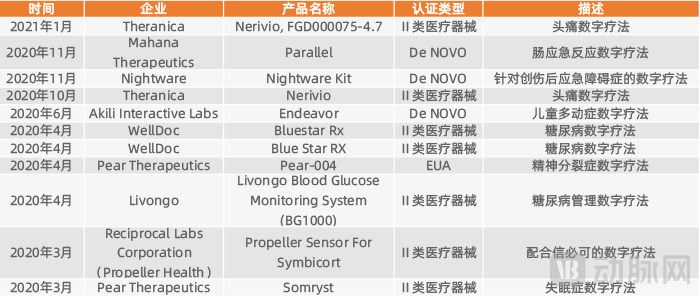
This temporary measure has further accelerated the approval of digital therapeutics. Since 2020, multiple digital therapeutics have received FDA approval.
Relatively speaking, China has adopted a more conservative stance toward digital therapeutics. The "Guiding Principles for Technical Review of Mobile Medical Device Registration," issued by the China Food and Drug Administration (CFDA) in December 2017, clarified that all standalone mobile medical software or software-hardware combinations used for patient management are classified as medical devices, necessitating clear definitions of their regulatory scope and requirements. Both software and hardware manufacturers are required to submit corresponding registration application materials based on the product characteristics of their mobile medical devices, assess the applicability of the specific provisions outlined in the Guiding Principles, and provide detailed justifications for any provisions deemed not applicable. Manufacturers may also adopt alternative methods that comply with regulatory requirements, provided they supply comprehensive research and validation data.
In addition, China has yet to provide clear definitions for digital therapeutics (DTx) regarding their definition, scope, and application scenarios. Relevant guidance on DTx-like interventions is fragmented and scattered across various domestic policies related to internet technology, healthcare informatization, smart healthcare, chronic disease management, and electronic products. This aligns with the broader context that the development of digital therapeutics in China is still in its nascent stage.
In terms of financing, digital therapeutics have gained favor in the capital market over the past year or so. According to statistics from VCBeat Orange, there have been more than 30 financing, M&A, and collaboration events in the digital therapeutics industry from 2020 to the present. In our previous statistics, there were only slightly more than 70 such events during the four-year period from 2016 to the end of 2019.
In August 2020, Teladoc, long regarded as a pioneer in the telemedicine industry, acquired Livongo, a leading company in the digital therapeutics sector, for $18.5 billion, setting an industry record. This is only the beginning; in the future, the digital therapeutics industry may deliver even more profound impacts.
After years of development, digital therapeutics (DTx) have reached a pivotal moment and are poised for rapid growth. This momentum is inextricably linked to the long-term commitment of leading DTx companies to strengthening their core competencies, thereby demonstrating their intrinsic value. Meanwhile, supportive regulatory initiatives from overseas authorities have also served as a significant contributing factor.
Encouragingly, with the approval of the first digital therapeutic and the participation of the first batch of domestic companies in international alliances, China’s digital therapeutics sector has seen some pleasant surprises. Currently, industry organizations are being established to further promote the development of digital therapeutics. Meanwhile, we hope that regulatory authorities will promptly formulate policies tailored to the characteristics of the industry and standardize regulations, thereby effectively preventing the harm caused by substandard or fraudulent products undermining the sector.
As one of the earliest institutions in China to focus on digital therapeutics, and as a supporting organization for the Digital Therapeutics Systems Engineering Professional Committee (Preparatory) of the China Association for Promotion of Rehabilitation Technology Transformation and Development—the first industrial association for digital therapeutics in China—VCBeat will continue to monitor developments in the field of digital therapeutics and provide you with first-hand reports. Please stay tuned.
References
China.org.cn: “Sun Menglin: Release of the Report on the Development Status of China’s Autism Education and Rehabilitation Industry III”
The Paper: “Guarding the Lonely Planet: The Growth Journey of Children with Autism”