The Era of Full-Category Pharmaceutical E-Commerce Arrives: Supply Chain Digitalization and Intelligence as the Key Enabler
In recent years, policies in the pharmaceutical industry have been continuously updated and innovated, ranging from the generic drug consistency evaluation and the revision of the Drug Administration Law to centralized volume-based procurement of drugs and reforms in medical insurance payment. Meanwhile, the pandemic-driven shifts in doctor-patient behavior have had a profound impact on pharmaceutical companies’ branding and pharmaceutical distribution, while relevant authorities are accelerating the implementation of “Internet + Healthcare.” It is evident that China’s pharmaceutical and healthcare industry is undergoing significant transformation.
The rise of internet technology has transformed traditional interaction models across various industries, a trend also evident in the development of the pharmaceutical sector. As users seek more convenient and efficient medication purchasing experiences, pharmaceutical e-commerce has emerged in response. Born from user demand, pharmaceutical e-commerce will continue to evolve alongside changing consumer needs. Amidst this dynamic development, how far has pharmaceutical e-commerce come, and what stage has it currently reached?
To better analyze the current state of China’s pharmaceutical e-commerce industry and explore future innovative models, VCBeat Research Institute, in collaboration with JD Health, conducted user surveys and combined them with market data analysis. Building on relevant research methodologies and theories, we have thoroughly examined the development trends of the pharmaceutical e-commerce sector in recent years and summarized its future trajectory. This effort has culminated in the release of “The Pharmaceutical E-Commerce Revolution Responding to User Needs: 2021 China Pharmaceutical E-Commerce Industry Study,” aiming to provide reference and insights for the industry’s continued growth.
As an emerging channel for pharmaceutical consumption in the internet era, e-pharmacy has experienced years of rapid growth. The continuous expansion of the e-pharmacy market signifies user acceptance of this novel online medication purchasing model. Judging from current development trends, the market size of e-pharmacy continues to maintain strong growth momentum and is not expected to subside in the near term.
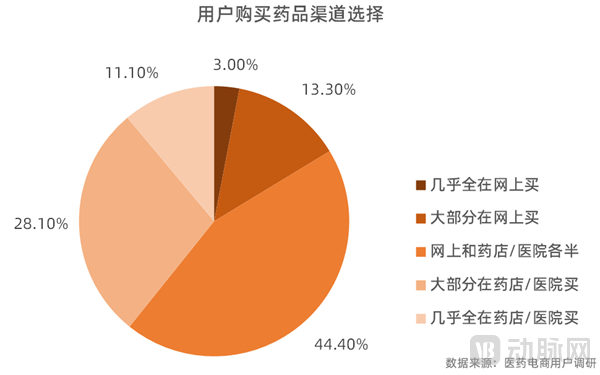
With the development of the pharmaceutical e-commerce industry, a large number of users have gradually established the habit of purchasing medicines primarily through pharmaceutical e-commerce channels.Data from user research indicates that more than half of pharmaceutical e-commerce users have established a habit of purchasing medications primarily online, or at least through a hybrid online-offline approach. These long-term users, who appreciate the speed and convenience offered by online medication purchases, constitute the first cohort of core users for pharmaceutical e-commerce platforms.
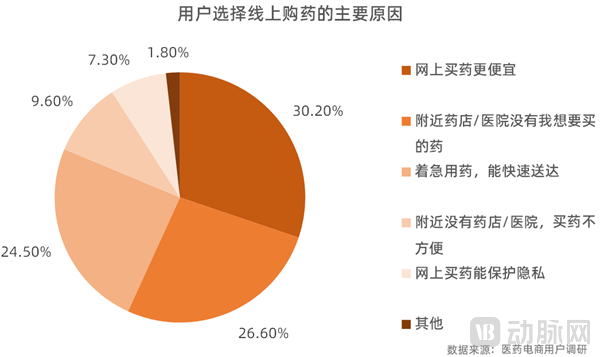
The formation of a core user base has redefined the role of pharmaceutical e-commerce within the overall drug distribution channel. It is no longer merely a supplement to offline distribution channels but has evolved into an independent operational logic and supply chain system tailored to its unique characteristics. Beyond price considerations, consumers’ preference for purchasing medications online is driven not only by the unavailability of drugs through offline channels but also by factors such as “urgent need for medication with rapid delivery” and “inconvenience due to the absence of nearby pharmacies or hospitals.”
Compared to offline distribution channels,The core advantages of pharmaceutical e-commerce are most prominently reflected in the aspects of "speed" and "comprehensiveness."“Fast” refers to comprehensive coverage of various regions and application scenarios, enabled by an advanced supply chain system; while “Complete” primarily denotes a full range of product categories in pharmaceutical e-commerce drug supplies.
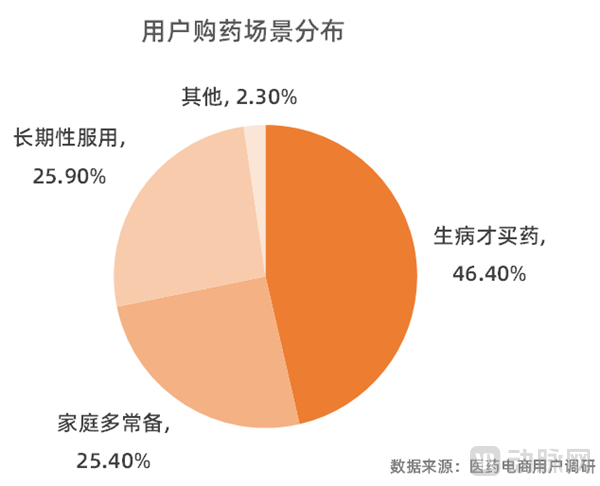
Regarding “speed,” the current online-to-offline (O2O) operational model of pharmaceutical e-commerce is already sufficient to meet users’ medication delivery needs. Users can flexibly choose their method of obtaining medications based on the urgency of their needs.This flexible and adaptable operational strategy has enabled pharmaceutical e-commerce to achieve comprehensive coverage across all scenarios.Other user survey data also indicate that the delivery strategies currently offered by pharmaceutical e-commerce platforms largely meet the needs of the general consumer base (see the full report for details).
Therefore, the core issue that pharmaceutical e-commerce must focus on in its next stage of development centers on “comprehensiveness.”
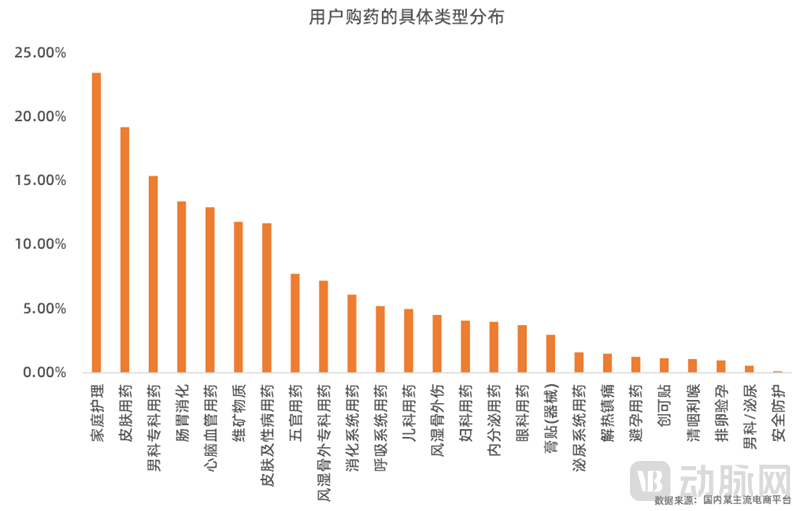
As user trust in pharmaceutical e-commerce platforms grows, more consumers are choosing to purchase medications through these channels. The expansion of the user base has led to a more complex demographic composition and a diversified distribution of user needs. This diversification is reflected not only in purchasing scenarios but also in the types of medications purchased. Data from a leading domestic pharmaceutical e-commerce platform shows that among all 25 drug categories, the largest category—home care products—accounts for less than 25% of total sales. Seven categories each account for 10%-20%, ten categories hover around 5%, and only eight categories have relatively lower shares.
The user base for future pharmaceutical e-commerce will continue to expand, bringing more diversified user demands. Under this trend,Pharmaceutical e-commerce platforms must expand toward comprehensive category coverage to fully address the diverse medication purchasing needs of different user groups.
So, how far has the full-category coverage of pharmaceutical e-commerce progressed?
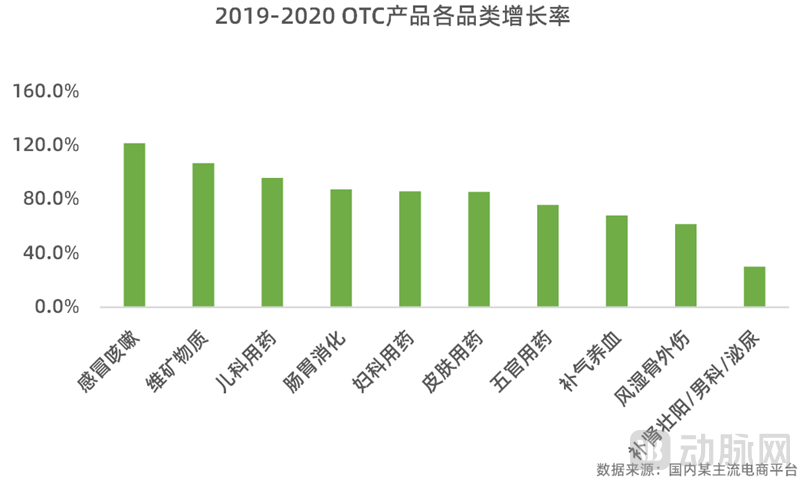
The OTC market has long been the primary battleground for the pharmaceutical e-commerce industry. Given the relatively open promotional requirements for OTC products, their online sales and marketing have been continuously carried out since the inception of pharmaceutical e-commerce.Years of market development have led to steady growth in the OTC user base and product categories within the pharmaceutical e-commerce sector. The market size for OTC products has risen steadily, largely driven by the expansion of users and product offerings.
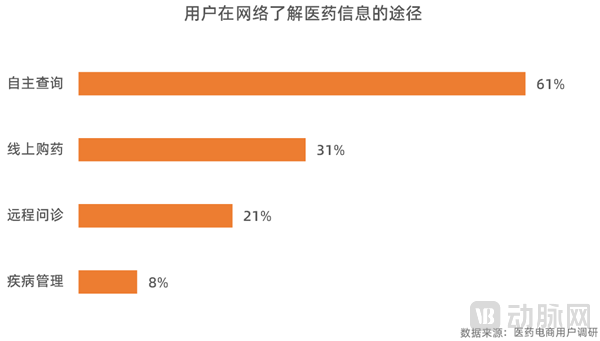
In addition to providing products to users, pharmaceutical e-commerce platforms also serve a complementary role in patient education, given that consumers are accustomed to independently researching and selecting OTC medications. These platforms guide patients toward adopting sound health concepts and choosing OTC products that best suit their needs.
Of course, neither the steady state of drug sales nor the standardization of user services implies that the online market for OTC products has been fully exploited. On the contrary, there remains a substantial untapped market for OTC products. In the future, OTC products will continue to maintain stable growth, playing their role as a “stabilizer” in the development of pharmaceutical e-commerce and ensuring its long-term, stable expansion.
AndIf pharmaceutical e-commerce platforms aim to accelerate their growth from the current baseline, they must continue to cultivate the prescription drug market.
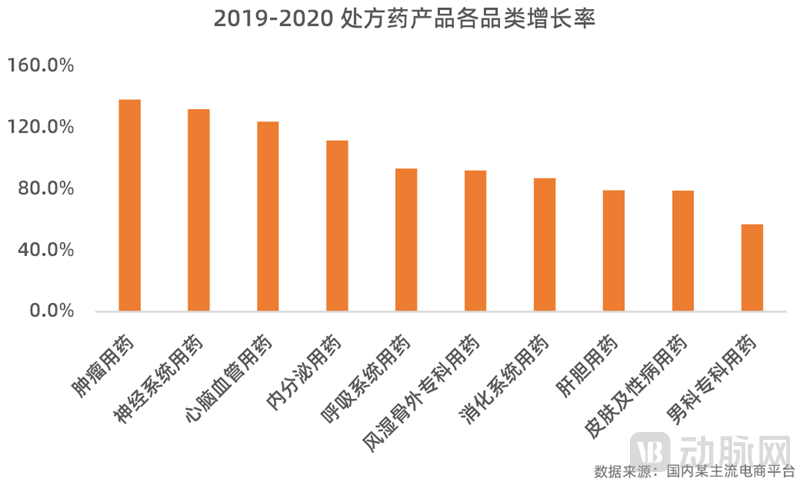
Between 2019 and 2020, significant shifts occurred in the growth patterns of various prescription drug categories, most notably marked by a substantial acceleration in the growth rates of oncology drugs and endocrine medications. This change was likely driven by patients turning to online channels for medication purchases due to the inconvenience of offline pharmacy visits during the pandemic. In fact, a large number of prescription drug users first discovered e-pharmacy platforms as a result of the pandemic, utilized their follow-up consultation and prescription renewal services, and subsequently established a habit of purchasing medications online.
Pharmaceutical e-commerce has long failed to make breakthroughs in prescription drugs, with policy uncertainty being one of the key reasons. Regulations regarding the online sale of prescription drugs have fluctuated multiple times. In the latest version of the "Measures for the Supervision and Administration of Online Drug Sales (Draft for Comments)" released after the pandemic, policies have detailed the requirements and regulatory methods for selling prescription drugs online, with clear definitions. If this regulation is officially implemented in the future, the market for online sales of prescription drugs will finally be liberalized, leading to further expansion of the pharmaceutical e-commerce market and enabling its drug supply to truly enter an era of full-category offerings.
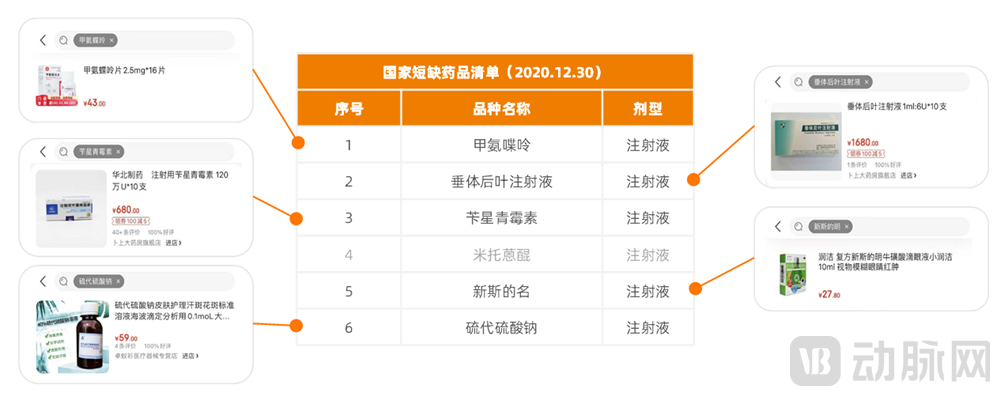
"Pharmaceutical e-commerce platforms actually possess unique advantages in the supply of prescription drugs."Online channels have demonstrated clear advantages, particularly for products with dispersed user bases, limited consumption in specific regions, and frequent shortfalls in offline supply. For instance, among the six critical medicines listed as being in short supply in the "Notice on the National List of Shortage Drugs" issued by the National Health Commission at the end of 2020, a search conducted on the app of a mainstream pharmaceutical e-commerce platform in April 2021 revealed that five of the six were effectively available on the platform.
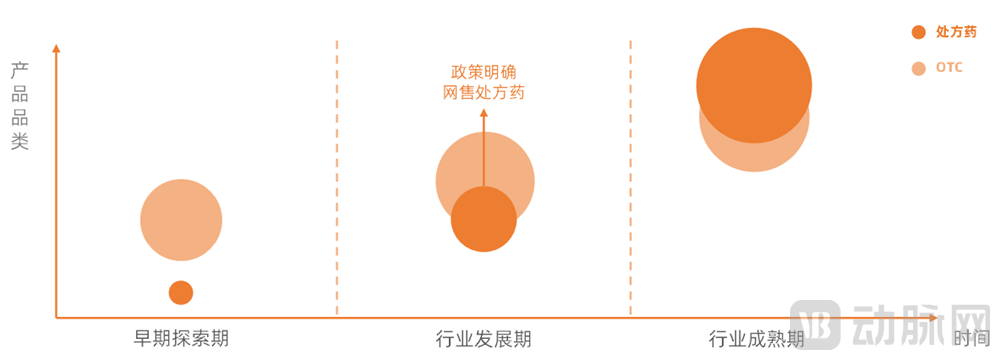
From the perspective of China’s pharmaceutical sales structure, prescription drugs have consistently dominated the market. Should regulations governing the online sale of prescription drugs be formally clarified in the future, pharmaceutical e-commerce will rapidly expand during its growth phase and swiftly transition into maturity. The prescription drug category within pharmaceutical e-commerce will quickly diversify, establishing a comprehensive, full-category pharmaceutical supply system.
Historical sales performance in the pharmaceutical e-commerce sector indicates that consumers are generally willing to embrace the convenience of purchasing prescription medications online. Consequently, following the completion of industry expansion, the composition of the pharmaceutical e-commerce sector will evolve to align with the offline pharmaceutical market, resulting in a supply structure increasingly weighted toward prescription drugs.
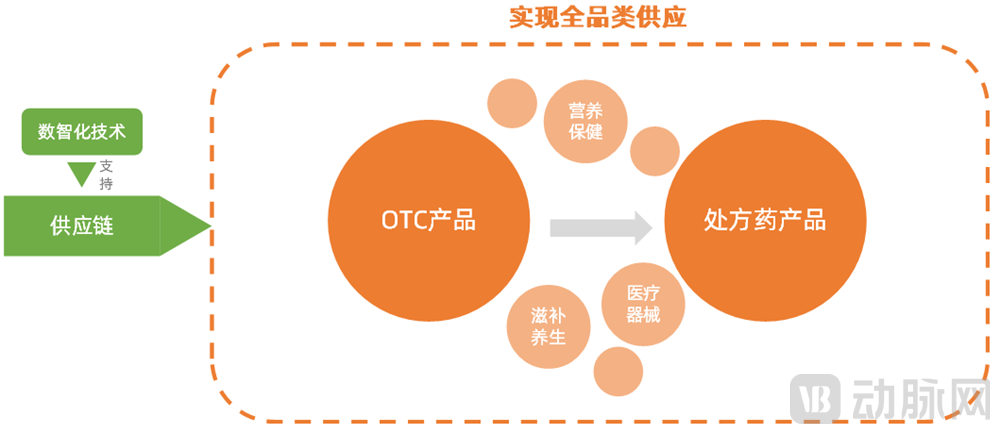
Compared with OTC products, prescription drugs are subject to stricter regulatory requirements in distribution. For pharmaceutical e-commerce platforms to achieve comprehensive coverage of the prescription drug category, a holistic upgrade of the supply chain is indispensable. Therefore, during the process of expanding into the full range of prescription drugs, a digitalized and intelligent supply chain system will play a critical supporting role.
In the future, with the establishment of regulations for the online sale of prescription drugs, the prescription drug market accessible to pharmaceutical e-commerce will be rapidly unleashed, leading to a swift expansion of its market space. Meanwhile, relying on the overall improvement of social resources and technological capabilities such as supply chains and big data, the pharmaceutical supply chain will comprehensively integrate and upgrade towards specialization, digitalization, and intelligence. Leveraging upgrades in digital and intelligent technologies, pharmaceutical e-commerce will develop a more robust supply chain system, thereby supporting the accelerated expansion of all drug categories.
The above is an excerpt from “The Pharmaceutical E-commerce Revolution Responding to User Needs—China Pharmaceutical E-commerce Research Report 2021.” Scan the mini-program QR code below via WeChat to access the full report.