

Patient-Centric Professional Pharmacy Services: A New Retail and Marketing Model in Pharmaceutical E-Commerce
In recent years, policies in the pharmaceutical industry have been continuously updated and innovated, ranging from the consistency evaluation of generic drugs, the revision of the Drug Administration Law, to centralized volume-based procurement of medicines, and reforms in medical insurance payment. Meanwhile, the pandemic-driven shifts in doctor-patient behavior have had a profound impact on pharmaceutical companies’ branding and pharmaceutical distribution, while relevant authorities are accelerating the implementation of “Internet + Healthcare.” It is evident that China’s pharmaceutical and healthcare industry is undergoing significant transformation.
The rise of internet technology has transformed traditional interaction models across various industries, a trend also evident in the development of the pharmaceutical sector. As users seek more convenient and efficient medication purchasing experiences, pharmaceutical e-commerce has emerged to meet this demand. Born out of user needs, pharmaceutical e-commerce will continue to evolve in response to changing consumer preferences. Amidst this dynamic development, how far has pharmaceutical e-commerce come, and what is its current state?
To better analyze the current state of China’s pharmaceutical e-commerce industry and explore future innovative models, VCBeat Research Institute, in collaboration with JD Health, conducted user surveys and combined them with market data analysis. Building on relevant research methodologies and theories, we have thoroughly examined the development trends of the pharmaceutical e-commerce sector in recent years and summarized its future trajectory. This effort has culminated in the release of “The Pharmaceutical E-Commerce Revolution Responding to User Needs: 2021 China Pharmaceutical E-Commerce Industry Study,” aiming to provide reference and insights for the industry’s continued growth.
As an emerging channel for pharmaceutical consumption in the internet era, e-pharmacy has experienced years of rapid growth. The continuous expansion of the e-pharmacy market signifies user acceptance of this new online medication purchasing model. Judging from current development trends, the market size of e-pharmacy continues to maintain strong growth momentum and is not expected to wane in the near term.
As users’ medication purchasing has shifted en masse to online channels, the accompanying diagnostic and treatment services must also be provided online to meet users’ needs for guidance on medication purchases. ThereforePharmaceutical e-commerce platforms need to further build their own diagnostic and treatment service capabilities to address the growing user demand for such services.
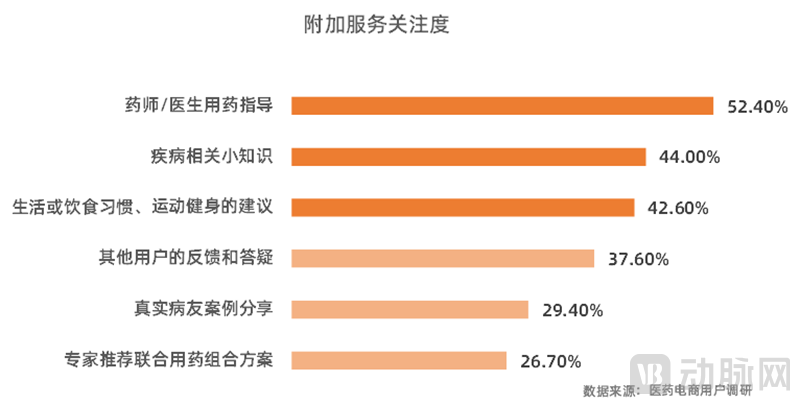
Following the trial by fire of the pandemic, user acceptance of online medical consultations has significantly strengthened. In surveys, more than half of respondents indicated they would pay attention to “pharmacist/physician medication guidance” offered on pharmaceutical e-commerce platforms.This indicates that, fundamentally, users require access to relevant diagnostic and treatment services on pharmaceutical e-commerce platforms.
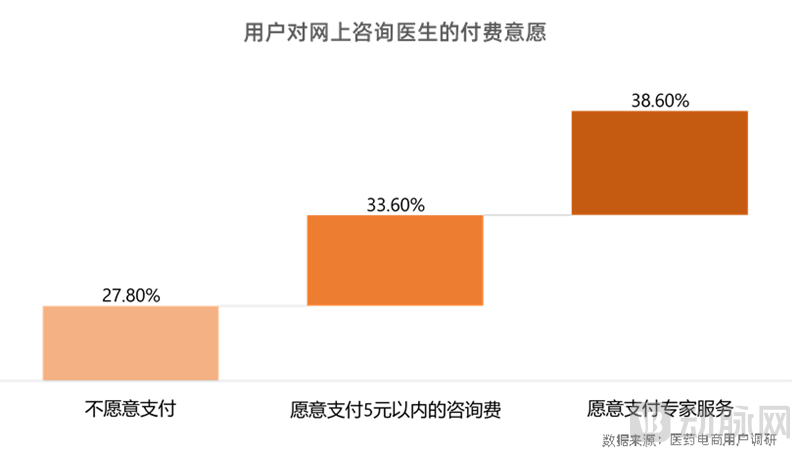
Secondly, users not only require services but also demonstrate a positive attitude toward paying for diagnostic and treatment services.Based on current user research, over 70% of users are willing to pay for related consultation services, and nearly 40% of the user base is prepared to pay a premium for expert-level services.
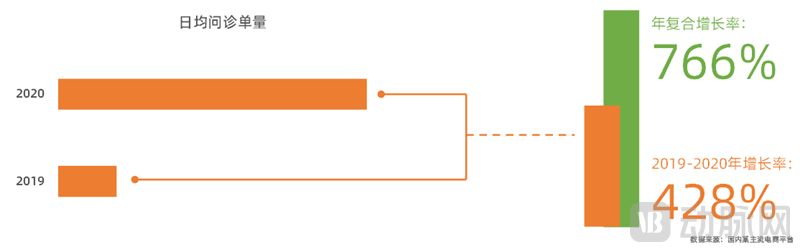
It is evident from the diagnostic and treatment service data provided by pharmaceutical e-commerce platforms that,Users' acceptance of online consultations was translated into actual consultation volumes during the 2020 pandemic.Online consultation services provided by a major domestic pharmaceutical e-commerce platform in 2020 surged by 428% compared to 2019. During the pandemic, pharmaceutical e-commerce platforms not only shouldered the responsibility of ensuring drug supply but also accommodated a substantial volume of online consultation requests, driving consultation volumes to a new milestone.
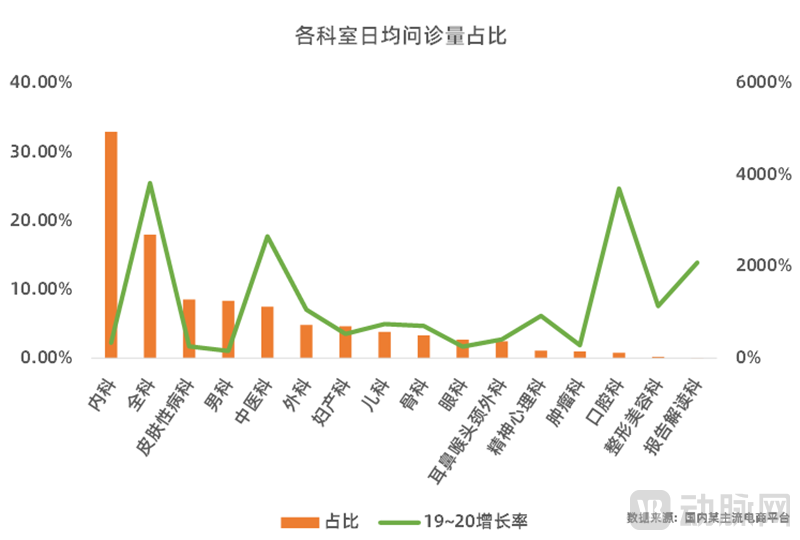
From the perspective of departmental distribution, specialties that are more amenable to or hold greater advantages in online consultations have already absorbed a substantial volume of diagnostic and treatment demands while maintaining high growth rates. Internal medicine and general practice are typical specialties well-suited for telemedicine. Clinical practice in internal medicine primarily relies on medical history taking supplemented by examination materials uploaded by patients, allowing for effective remote delivery. General practice, covering common diseases, frequently occurring conditions, and general acute cases, serves as a versatile first point of contact for patients who are uncertain about which specialty to choose.
Driven by the catalytic effect of the pandemic, certain clinical departments that previously accounted for a relatively small proportion have experienced significant growth in patient volume. Therefore, in the post-pandemic era,The online diagnosis and treatment demands that pharmaceutical e-commerce can accommodate have not yet been fully unleashed, leaving substantial room for future growth.
In internet-based medical consultations, patients undergoing follow-up visits benefit the most. Having already received an initial assessment from a physician, their disease progression is relatively easier to monitor, and in many cases, their subsequent medication regimens remain largely unchanged. Therefore, follow-up consultations are more amenable to being conducted online. Physicians can basically grasp the patient’s disease progression through online communication alone and issue follow-up prescriptions electronically.
Consequently, policies have primarily regulated internet-based diagnosis and treatment to the follow-up consultation stage. Since the 2018 issuance of the Administrative Measures for Internet-Based Diagnosis and Treatment (Trial), it has been explicitly emphasized that “internet-based diagnosis and treatment activities shall not be conducted for first-visit patients.”As the pandemic has driven a surge in demand for online medical consultations, internet-based follow-up visits are rapidly developing a standardized framework, and the overall market continues to expand.
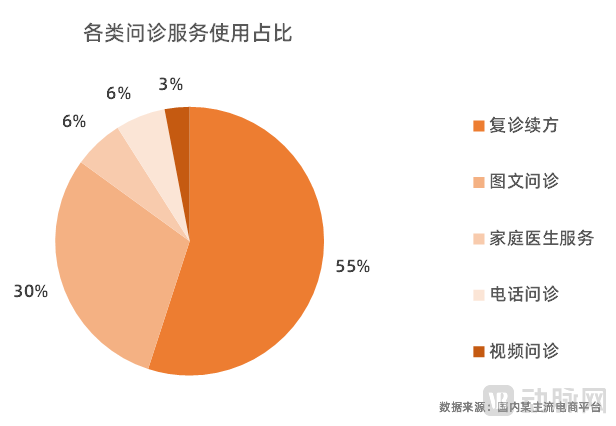
Diagnostic and treatment services offered by pharmaceutical e-commerce platforms also point in the same direction.Follow-up visits for prescription renewals have become the most frequently used type of online consultation service by users on pharmaceutical e-commerce platforms,Accounting for over 50%, it has left behind light consultations, which are primarily conducted through text-and-image inquiries. Patients seeking follow-up care on pharmaceutical e-commerce platforms now enjoy the convenience of follow-up consultations with prescription renewals and online medication purchases, attracting an increasing number of such patients to manage their long-term chronic diseases through this channel.
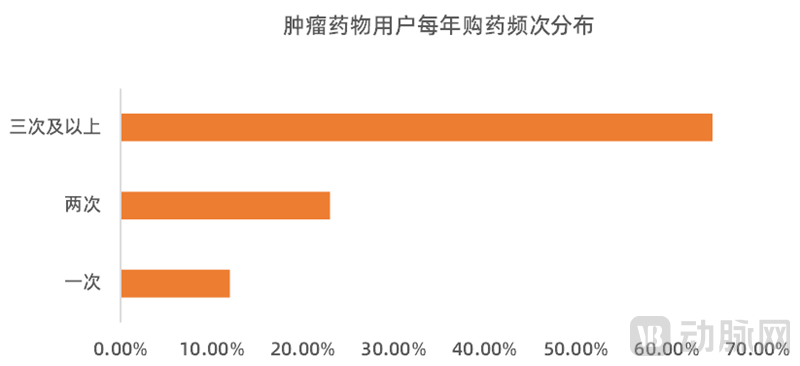
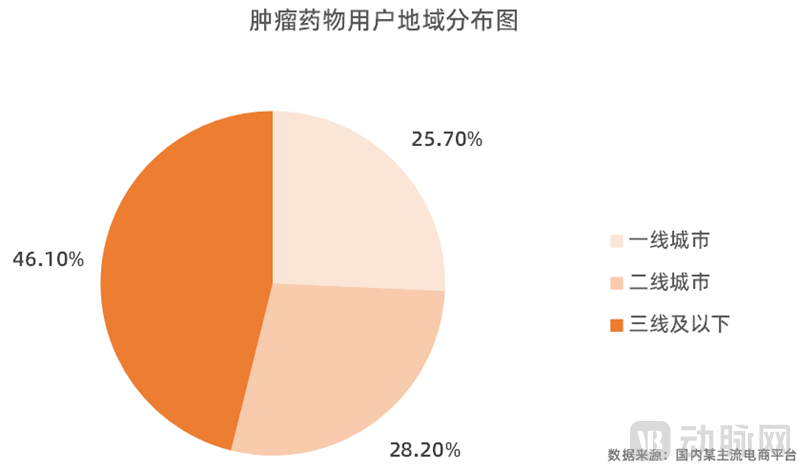
Taking oncology drug users as an example, nearly 70% of those purchasing oncology medications on pharmaceutical e-commerce platforms make such purchases three or more times per year on average, demonstrating exceptionally high user stickiness. Moreover, close to half of these users are from third-tier cities and below, representing the grassroots market that has sparked extensive discussion in recent years.
Many oncology drugs are classified as novel and specialized medications, for which there has long been a significant supply gap in primary care markets. Due to limited demand and stringent storage requirements at the primary care level, grassroots medical institutions and pharmacies generally do not maintain stable supplies of these drugs. Consequently, even with a valid prescription from a physician, patients often cannot purchase these medications at nearby hospitals or affiliated retail pharmacies in their local communities. This imbalance between supply and demand has become a key entry point for pharmaceutical e-commerce platforms into the oncology drug market. The low geographic constraints characteristic of pharmaceutical e-commerce have been fully leveraged in the distribution of oncology drugs, thereby unlocking substantial potential in lower-tier markets.
With the emergence of the first core user base for pharmaceutical e-commerce, users have raised demands beyond mere medication purchases. In previous business models, pharmaceutical e-commerce platforms had already established their own drug supply and distribution capabilities. However, users’ new needs are now focused on online consultation services, aiming to achieve a seamless integration between medical consultations and medication purchases through these platforms.
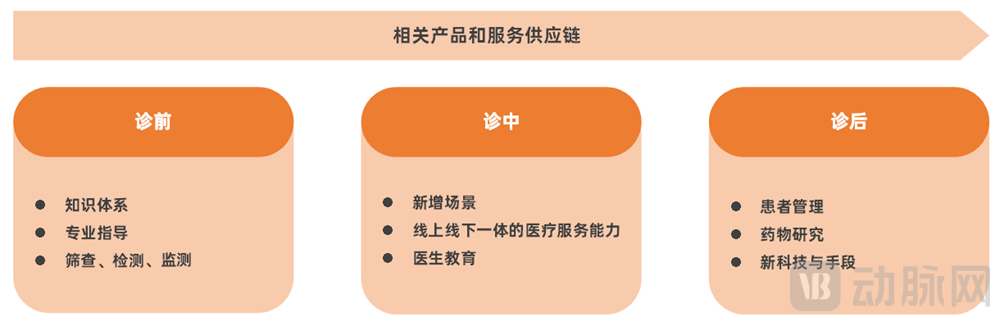
The integration of online medical consultations has expanded the services offered by pharmaceutical e-commerce platforms beyond mere medication sales and delivery. The comprehensive coverage of the entire patient journey—“pre-diagnosis, during diagnosis, and post-diagnosis”—built around the supply chain of pharmaceutical products and services, constitutes a new model for pharmaceutical e-commerce: patient-centric, professional service-oriented pharmaceutical retail.
The emergence of this new model has enhanced the medication purchasing experience for a broad user base with diverse needs to varying degrees. For over-the-counter (OTC) products, which lean toward self-diagnosis and treatment, patient education and the dissemination of correct health concepts by platforms can effectively improve the accuracy of users’ self-diagnosis and treatment. In the realm of prescription drugs, the model establishes an online communication channel between doctors and patients, providing significant support particularly for those undergoing follow-up consultations.
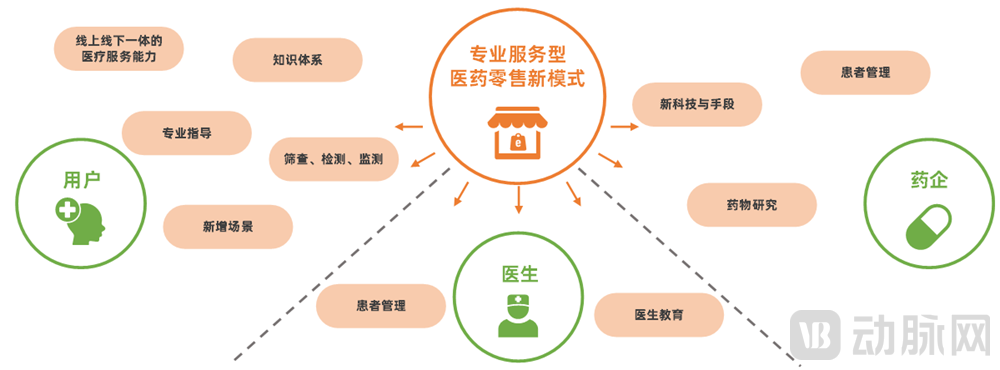
In the future, this new model of professional service-oriented pharmaceutical retail and marketing will become the “standard” for the pharmaceutical e-commerce industry, always providing solutions centered around user needs.The new model of pharmaceutical e-commerce will continue to address emerging user needs, providing comprehensive healthcare protection through a long-term, sustainable service philosophy.
The above is an excerpt from “The Pharmaceutical E-commerce Revolution in Response to User Needs—China Pharmaceutical E-commerce Research Report 2021.” Scan the WeChat mini-program code below to access the full report.
