

Sinotherapeutics Inc. Files for IPO on Shanghai Stock Exchange's STAR Market

Sinotherapeutics
High-end pharmaceutical formulation technology and its product development and production
Recently, according to the Shanghai Stock Exchange, Sinotherapeutics Inc. (hereinafter referred to as “Sinotherapeutics”) has submitted an initial public offering (IPO) application for listing on the STAR Market of the Shanghai Stock Exchange, with Haitong Securities Co., Ltd. serving as the sponsor.
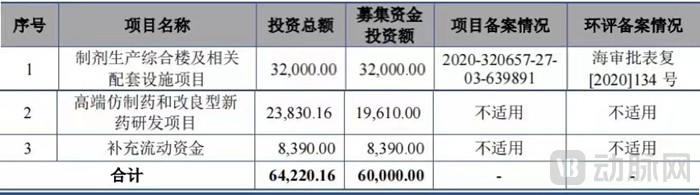
Sinotherapeutics is a high-tech enterprise driven by R&D innovation, primarily engaged in the research and development, production, and sales of high-end generic drugs, as well as CRO services. For its A-share listing, the company plans to raise RMB 600 million. After deducting issuance expenses, the net proceeds will be entirely allocated to the following specific projects:
Source: Prospectus
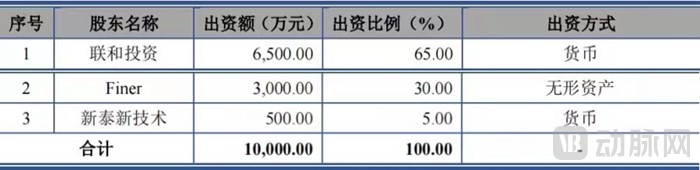
Shanghai Sinotherapeutics Pharmaceutical Technology Co., Ltd. was established on August 13, 2012, and was jointly founded by Lianhe Investment, Xintai New Technology, and Finer.
Source: Prospectus
In recent years, the global pharmaceutical market has continued to expand, with total pharmaceutical expenditure steadily increasing. However, structural differentiation has emerged, characterized by a gradual slowdown in the growth of originator drugs, while the growth rate and market share of generic drugs have risen rapidly. According to data from the "China Generic Drug Blue Book," since 2017, the global market share of generic drugs has exceeded 50%, continuing to grow at a rapid rate of approximately 10%, which is twice the growth rate of innovative drugs.
According to IQVIA’s “Global Medicine Spending and Usage Trends: Outlook to 2024,” released in March 2020, the global pharmaceutical market generated net revenues of $955 billion in 2019. This figure is projected to exceed $1.115 trillion by 2024, representing a compound annual growth rate (CAGR) of 3.15%. The substantial scale of demand in the pharmaceutical market provides a solid foundation for the continued development of generic drugs.
Secondly, given the higher success rate and relatively lower costs of generic drug development compared to new drugs, their products are more competitively priced in the same market. This aligns with the objective of governments worldwide to reduce pharmaceutical expenditures, thereby enhancing their opportunities to participate in government-supported volume-based procurement programs.
As the difficulty and capital barriers to new drug development continue to rise, the number of newly approved drugs has slowed. Meanwhile, a large number of world-class blockbuster patented drugs have successively lost patent exclusivity, providing a continuous stream of targets for generic replication and fostering growth in generic drug R&D. According to the Global Drug Patent Expiration Database, 1,666 compound patents will expire worldwide between 2013 and 2030. This wave of patent expirations has created a favorable environment for the development of generic drugs.
In China, over the past decade, the pharmaceutical industry—particularly the generic drug sector—has experienced rapid growth alongside the nation’s robust economic expansion and increasing healthcare expenditure. However, the industry remains characterized by low-level redundancy. Many generic drug products fail to meet critical quality standards, including bioequivalence requirements, thereby falling short of international benchmarks. This discrepancy compromises drug efficacy and safety, underscoring an urgent need to strengthen R&D innovation capabilities and ensure compliance with production quality standards.
According to Frost & Sullivan, the total market size of generic drugs in China reached $103 billion in 2018, marking continuous growth since 2014. The market size is projected to reach $137.7 billion by 2023. Data from Zhiyan Consulting indicates that the total number of drug approval numbers in China previously stood at 189,000, with over 95% being for generic drugs. Furthermore, among 3,244 chemical drug varieties, 262 major varieties accounted for 70% of the total registration approvals. Driven by factors such as the rising prevalence of chronic diseases, an aging population, and healthcare cost containment measures, the market size of generic drugs in China is expected to maintain rapid growth in the future.
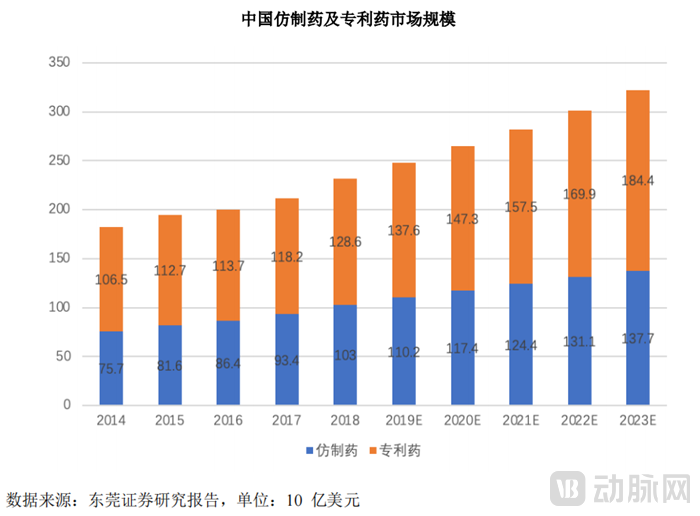 Image source: Prospectus
In the field of high-end generic drugs, Sinotherapeutics has obtained ANDA approvals for three products: bupropion hydrochloride extended-release tablets, propafenone hydrochloride sustained-release capsules, and posaconazole enteric-coated tablets. Notably, posaconazole enteric-coated tablets are the first FDA-approved generic version of this drug and have also received marketing approval from the NMPA, making them the first generic version approved in China.
Among these, the product bupropion hydrochloride extended-release tablets is a novel antidepressant and one of the most prescribed products in the United States, widely used for the treatment of depression. Bupropion hydrochloride extended-release tablets were initially approved by the FDA in 1985 and have currently been approved for four indications: major depressive disorder, seasonal affective disorder, obesity, and nicotine addiction;
The active ingredient of Propafenone Hydrochloride Sustained-Release Capsules is propafenone. Propafenone exhibits membrane-stabilizing activity and competitive beta-adrenergic receptor blocking effects, which reduce myocardial excitability, prolong the action potential duration and effective refractory period, and slow conduction. Clinically, it is indicated for the prevention and treatment of ventricular and supraventricular premature beats, ventricular or supraventricular tachycardia, Wolff-Parkinson-White syndrome, and recurrence of ventricular fibrillation after electrical cardioversion.
Posaconazole Enteric-coated Tablets, a high-end generic drug developed by the company, contain posaconazole as the active ingredient. Posaconazole is a second-generation triazole antifungal agent derived from itraconazole. It exerts its therapeutic effect by inhibiting ergosterol synthesis and is used to treat invasive Aspergillus or Candida infections, making it one of the most commonly prescribed medications for invasive fungal infections.
Currently, Sinotherapeutics has obtained 42 domestic patent rights, including 13 invention patents, secured 8 software copyrights, and acquired 14 overseas patents. The company has established three major technology platforms: the "Poorly Soluble Drug Solubilization Technology Platform," the "Sustained- and Controlled-Release Drug Formulation R&D Platform," and the "Fixed-Dose Combination Drug Formulation R&D Platform."
Centered on its “Solubility Enhancement Technology Platform for Poorly Soluble Drugs,” Sinotherapeutics has established a target drug screening system and possesses comprehensive capabilities in the design and application of solubility enhancement systems. The company has mastered various preparation techniques, including self-emulsifying liquid formulation, milling, solvent evaporation, co-precipitation, hot-melt extrusion, fluidized bed spray coating, and solvent granulation. Centered on its “Sustained and Controlled-Release Drug Formulation R&D Platform,” it has mastered microtablet manufacturing processes, gastric-retentive controlled-release technology, and matrix-type sustained and controlled-release technology. Centered on its “Fixed-Dose Combination Drug Formulation R&D Platform,” it has developed the capability to manufacture dosage forms such as multi-component bilayer tablets, multilayer tablets, pellet coating and drug loading, coated active pharmaceutical ingredient (API) tablets, multi-particle capsules, and microtablet capsules.
Sinotherapeutics also participated in and completed the research and development of five high-end generic drugs through collaborative development, including macitentan tablets, sevelamer carbonate tablets, metformin hydrochloride extended-release tablets, quetiapine fumarate extended-release tablets, and esomeprazole enteric-coated capsules.
Furthermore, among the projects currently under application, Sinotherapeutics has completed three ANDA submissions and eight NMPA submissions for its independently developed high-end generic drugs; for co-developed high-end generic drugs, it has completed two ANDA submissions and three NMPA submissions. In addition, several improved new drug projects are under development, one of which has already obtained clinical trial approval from the NMPA.
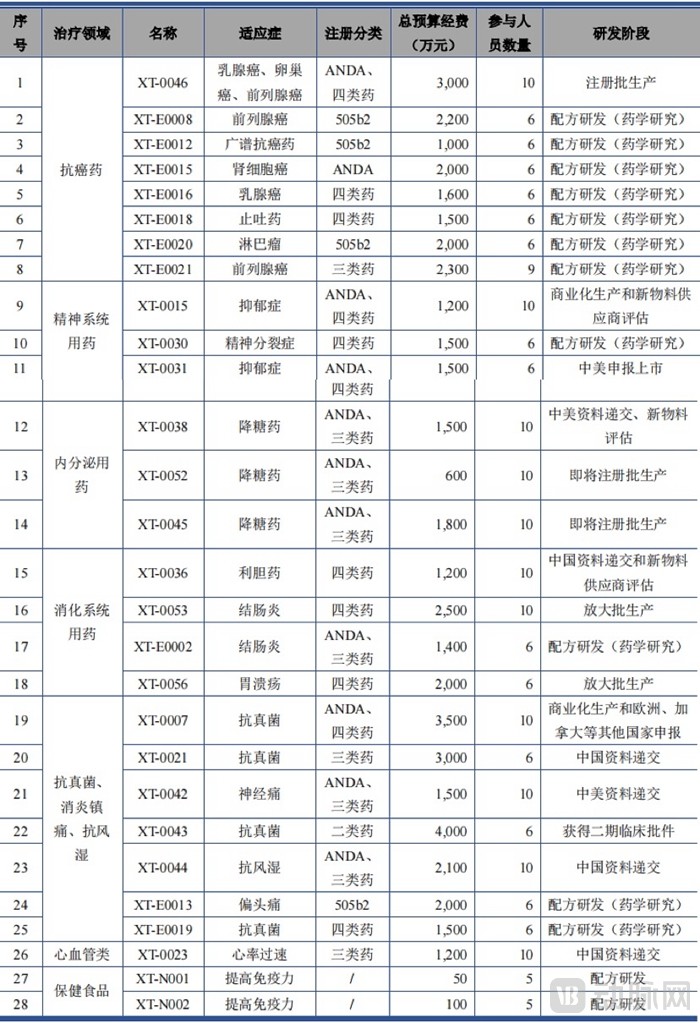 Image source: Prospectus
In the field of CRO services, Sinotherapeutics’ clients include multiple listed companies such as Ascletis Pharma (1672.HK), Ascentage Pharma (6855.HK), Zai Lab (9688.HK), Allist Pharmaceuticals (688578.SH), and Cisen Pharmaceutical (603367.SH), as well as renowned domestic and international pharmaceutical enterprises including Pfizer Upjohn, Haihe Biopharma, and Innovent Biologics.
The Company’s CRO services primarily focus on pharmaceutical formulation CRO services, which span both clinical and preclinical CRO domains. Preclinical formulation CRO services mainly include studies on the physicochemical properties of active compounds and the development of dosage forms for animal efficacy and toxicology studies. Clinical formulation CRO services are primarily centered on the research, development, and manufacturing of formulations for clinical trials, providing new drug developers with quality-compliant investigational product samples covering Phase I through Phase IV clinical trials.
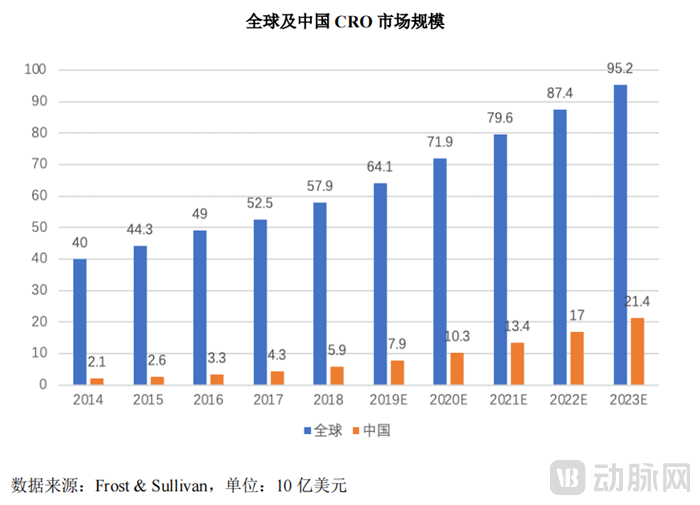
From the perspective of the overall CRO services market, China’s CRO market size is relatively small compared to the mature markets in developed countries. However, in recent years, with China’s economic growth and the rapid development of the pharmaceutical industry, the number of new drug R&D enterprises and their R&D investments have continued to rise, driving demand for CRO services. As a result, the growth rate of China’s CRO services market has been significantly higher than the global average.
According to Frost & Sullivan, the market size of China’s CRO industry grew from USD 2.1 billion in 2014 to USD 5.9 billion in 2018, representing a compound annual growth rate (CAGR) of 29.2% during this period, with expectations for further growth in the future. In the segmented market of formulation CRO services, due to constraints such as technical capabilities, capital investment, specialized equipment for unique formulations, and quality management, the industry faces high barriers to entry. As a result, companies capable of providing CRO services for novel, specialized, and high-end formulations are relatively scarce.
 Source: Prospectus
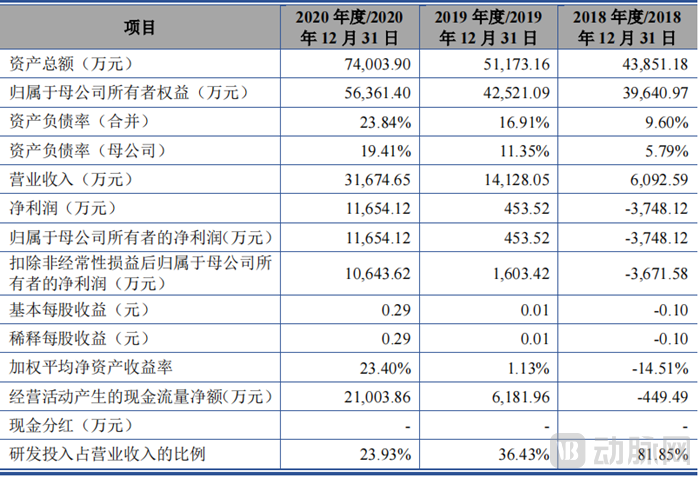
Amid the simultaneous R&D across three major technology platforms and multiple product lines, along with the continuous expansion of its formulation CRO services, Sinotherapeutics reported annual revenues of RMB 60.9259 million, RMB 141.2805 million, and RMB 316.7465 million over the past three years, achieving a compound annual growth rate (CAGR) of 128.01% during this period.
 Source: Prospectus
In August 2019, the delayed-release tablets of posaconazole received ANDA approval and were launched on the market, becoming the first generic version of posaconazole delayed-release tablets in the U.S. market. This achievement drove a rapid increase in sales of high-end generic drugs for Sinotherapeutics. In 2020, as the COVID-19 pandemic severely impacted the United States, the demand for this type of product increased in the U.S. market because posaconazole can be used to treat complications caused by COVID-19, thereby driving a significant rise in revenue.
In the future, as industry regulations become increasingly stringent, ordinary generic drugs shift toward high-end generics, and the market for high-end generics becomes more globalized, technical barriers within the industry will continue to rise. Consequently, the “integration of imitation and innovation” model will emerge as a strategic trend that offers both self-sustaining revenue generation and innovative capability.
In the CRO services sector, patent cliffs are stimulating pharmaceutical companies to continuously innovate new drugs, thereby increasing R&D expenditures. Due to factors such as talent availability and labor costs, CRO business centers are shifting toward emerging markets like China. The industry as a whole is expected to trend toward vertical integration or specialized service offerings in the future.