

CITIC Xiangya Hospital Trials Specialized HMO for Assisted Reproduction with Over 50,000 Annual Transfer Cycles, Files IPO Prospectus
After much deliberation, Li Xue and her husband decided to proceed with assisted reproductive technology (ART), some time after they had initially planned to conceive. With advancing age and an increasingly fast-paced lifestyle, natural conception has proven less straightforward. However, ART is by no means easy either. Currently, the two mainstream clinical ART approaches are intrauterine insemination (IUI) and in vitro fertilization (IVF). The success rate per cycle is relatively low, and it is common for patients to undergo one to two oocyte retrieval procedures and three to four embryo transfer attempts.
Each IVF cycle involves more than 10 steps, from comprehensive pre-treatment health screenings to ultrasound confirmation of fetal development, including down-regulation, ovarian stimulation, trigger injection, oocyte/sperm retrieval, in vitro fertilization, embryo culture, and embryo transfer, at a cost of tens of thousands of yuan.
The complexity and high cost of assisted reproductive technology (ART) procedures have made Li Xue hesitant to make a decision, yet time is not on her side. Clinical studies indicate that, compared with patients under 35 years of age, the live birth rate per fresh ART cycle drops by 50% in patients aged 38–40, and falls to merely 1% in those over 44. Delaying initiation will only prolong the ART journey.
Recently, CITIC-Xiangya Reproductive and Genetic Hospital (hereinafter referred to as “CITIC-Xiangya”) launched several HMO-model medical packages. For couples who meet the physical assessment criteria, they can sign package agreements worth tens of thousands of yuan. Under these agreements, CITIC-Xiangya provides 0–1 cycles of ovarian stimulation and oocyte retrieval, embryo culture, 2–3 embryo transfers, related stimulation medications during the process, and unlimited down-regulation treatments. The 1.0 version of this series of medical packages is underwritten by People’s Insurance Company of China (PICC). If a patient fails to achieve a successful pregnancy after three embryo transfers within two years of signing the agreement, they will receive a full refund of the package price.
Experts from CITIC-Xiangya told VCBeat that the cost of three embryo transfer cycles typically exceeds RMB 60,000–70,000. If conception fails, this undoubtedly represents a significant financial loss. “We began collaborating with the Yiweidu team in early 2021 to design and develop HMO-model medical packages. During the design phase, we conducted surveys among thousands of patients, and approximately one-third expressed interest in signing up.” In 2019, CITIC-Xiangya completed 52,798 treatment cycles, making it the medical institution in China with the highest concentration of assisted reproductive technology cases.
Experts have stated that even at CITIC-Xiangya, many patients fail to complete the entire assisted reproductive technology (ART) process; they may drop out after initial screenings or discontinue treatment after a single embryo transfer. “This approach is highly detrimental to patients’ chances of conception and hinders effective patient management by physicians.” Medical care packages deeply integrate patients, healthcare institutions, insurance companies, treatment protocols, and medication practices. These packages streamline the complex ART procedures into a structured, step-by-step process. By incorporating insurance coverage mechanisms, these packages provide financial compensation if treatment ultimately fails to achieve the desired outcome. Adopting an HMO (Health Maintenance Organization) model enhances diagnostic and treatment efficiency while alleviating both the financial and psychological burdens on patients.
After careful consideration, Li Xue and her husband decided to sign up for the medical care package.
With the official launch of the CITIC-Xiangya Lugu Main Hospital on May 20, the hospital has been progressively transforming into an “Internet+” smart hospital. The Yiweidu team, established in 2020, is an innovative payment technology platform specifically designed for patients with various medical conditions. On May 28, CITIC-Xiangya and Yiweidu Technology formally signed an exclusive nationwide partnership agreement.

CITIC-Xiangya Lugu Main Hospital Officially Begins Operations
Under the medical package agreement, the period during which patients are entitled to benefits provided by CITIC-Xiangya and PICC spans from the completion of the health check-up to 47 days post-embryo transfer. This coverage can be extended through additional riders to 12 weeks post-transfer, 27 weeks post-transfer, or even until live birth. Zheng Xuening, CEO of Yiweidu, told VCBeat that the definition of the insurance period was determined by her team based on big data modeling. “This timeframe is sufficient to evaluate the actual outcomes of embryo transfer while also meeting the risk management requirements of insurance companies.” In the future, the Yiweidu team will closely monitor the operation of the medical package and maintain ongoing communication with doctors and patients. Meanwhile, to enable families with limited financial resources to access the medical package, Yiweidu simultaneously launched a charitable donation welfare program at the signing ceremony.
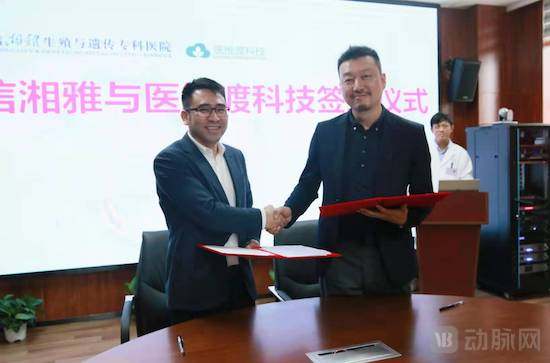
CITIC-Xiangya Signs Agreement with Yiweidu
Zheng Xuening is a serial entrepreneur with extensive practical experience in both internet healthcare and health insurance. He stated that the decision to pilot the HMO model with specialized insurance for assisted reproduction was driven, in part, by the substantial market potential of this sector. According to the latest national epidemiological survey on reproductive health conducted by Academician Qiao Jie’s team, the prevalence of infertility in China rose from 12% in 2007 to 18% in 2020, and assisted reproductive technology (ART) is considered one of the most effective treatments for infertility. Data from market research firm Frost & Sullivan shows that the compound annual growth rate (CAGR) of China’s assisted reproduction services market reached 13.6% between 2014 and 2018. Frost & Sullivan predicts that over the next five years, the market will accelerate, growing at a CAGR of at least 14.5%. Data from the Seventh National Population Census, released in early May, indicated that China had 12 million newborns in 2020. Amid low fertility rates, a series of pro-natalist policies are further driving up demand for assisted reproduction services.
On the other hand, all expenses associated with assisted reproductive technology (ART) are not reimbursable through medical insurance. Given the relatively low success rate of pregnancy per fresh embryo transfer, many patients undergo one to two oocyte retrievals and three to four embryo transfers over a period of two to three years. This process involves numerous steps and incurs substantial overall costs. Driven by the imperative need for childbearing, ART imposes significant financial pressure on patient families. Meanwhile, providing refined, personalized medical services to each ART patient and implementing continuous, timely, and effective out-of-hospital patient management can substantially improve pregnancy success rates and reduce costs across various aspects.
The Yiweidu team stated that the essence of assisted reproductive technology (ART) insurance is insurance for individuals with pre-existing conditions. Compared with traditional commercial insurance covering standard risks, insurance for those with pre-existing conditions represents an innovative field posing greater challenges across product design, underwriting, and risk management. While most small and medium-sized ART centers offer only five or six treatment protocols, CITIC-Xiangya has developed nearly twenty differentiated, specialized treatment plans, leveraging medical big data from 7.3% of all oocyte retrieval cycles nationwide. “The launch of CITIC-Xiangya’s medical package series has been largely enabled by the aggregation of medical big data according to specific standards.”
To address the need for medical institutions to improve the efficiency of specialized assisted reproductive technology (ART) services, Yiweidu has developed an online doctor-patient platform. This platform facilitates positive interactions among medical assistants, physicians, and patients. Patients can remotely consult with medical assistants, who, together with physicians, provide professional guidance based on information aggregated by the system and existing hospital records. In emergency situations, appointments can be arranged directly.
Furthermore, Yiweidu is fostering collaboration with the information technology departments of medical institutions to upgrade and optimize Hospital Information Systems (HIS). This enables physicians to select medical care packages and input relevant data directly within the system, thereby achieving deep integration between hospital systems and the triad of “medical care, pharmaceuticals, and insurance.” To enhance clinicians’ understanding and utilization of the online platform and system interface, Yiweidu conducts regular remote training and exchange sessions for clinical physicians. Based on physician feedback, the company iteratively improves the functionalities of both the online platform and the system interface. This process generates medical and commercial data that support the continuous updating and iteration of medical care packages, covering modules such as patient profiling, premium calculation and ratemaking, process control, and post-consultation services.
“Building on this foundation, we have been fully involved in the establishment of national specialty alliances among healthcare institutions, integrating all subordinate hospitals within these alliances into the HMO system,” stated the Yiweidu team. “By collaborating with healthcare institutions to develop formularies and diagnostic and treatment service catalogs recognized by commercial insurers, Yiweidu’s solutions have the potential to truly achieve deep integration of clinical practices, medication use, and the medical, pharmaceutical, and insurance sectors.”
Over the past five to six years, the internet insurance and insurtech sectors have expanded rapidly at a 40% growth rate. The multiple tailwinds from new business models, emerging technologies, and favorable policies have attracted industry giants and prominent investors to enter the market. As these sectors mature further, coupled with the acceleration driven by the pandemic, they are projected to maintain steady growth with a compound annual growth rate (CAGR) of over 9% in the next decade.
From the perspective of the Yiweidu team, insurance for healthy and sub-healthy individuals has become a highly saturated “red ocean,” whereas insurance for individuals with pre-existing conditions remains an underexplored area for insurers, still in its exploratory stage. Objectively speaking, it is precisely those with pre-existing conditions who most urgently need insurance coverage; moreover, this group demonstrates a stronger subjective awareness of insurance needs, making it a niche market segment filled with both opportunities and challenges. The other side of the coin is that developing insurance products for individuals with pre-existing conditions has always been a major challenge for insurers. Such products require comprehensive analysis and actuarial assessment from both medical and insurance perspectives to strike a balance between claims payouts and profitability.
Consequently, Zheng Xuening and several partners co-founded Yiweidu to explore innovative solutions for healthcare payment. The Yiweidu team comprises seasoned professionals with extensive experience in insurance product development, commercial operations, and medical sales. In practice, Yiweidu has achieved basic coverage for assisted reproductive technologies (ART) and is currently expanding its offerings to include additional conditions such as gynecologic oncology and cerebrovascular diseases. The Yiweidu team informed VCBeat that their HMO model, similar to that of CITIC-Xiangya, has already been implemented in more than 20 reproductive centers across China, and they will formally sign an agreement with another top-five national reproductive center in June.
“We initially anticipated that driving business growth would be challenging, given the high barriers for all relevant stakeholders. The sector must navigate the dual regulatory frameworks of both the insurance and healthcare industries; furthermore, the collection and analysis of medical and commercial data rely entirely on internal capabilities. Although HMO models have been frequently attempted in China, their results have generally been mediocre,” stated the Yiweidu team. “However, once we commenced operations in the post-pandemic era, we found that progress came naturally. This is because clear pain points exist for patients, healthcare institutions, and insurance companies alike—not only in assisted reproductive technology (ART) but also in the treatment of other diseases. Integrating processes through a model characterized by controllable risk, smooth operations, and outcome-based payment can not only enhance diagnostic and therapeutic efficiency but also facilitate proactive control over cost structures.”
Drawing on experience with the implementation of innovative payment solutions for assisted reproductive technologies, the Yiweidu team has grown more confident in deepening and replicating the HMO model across additional disease areas. “On one hand, we are working to integrate more ecosystem partners into our current ‘healthcare + insurance’ HMO model; on the other hand, pilot insurance programs for other patient populations with chronic conditions have already been launched at several leading medical institutions.”