

Investing at the Inflection Point: Seizing the Great Era of Healthcare Digitalization

MPCi
Venture Capital Institutions in High-Tech Startup Fields
Since the full-scale outbreak of the epidemic in early 2020, the “fire” of digital health has never gone out.
Whether it is the policies issued around the field of digital healthcare, or the constant “buzz” emerging within the industry, both have been dramatically boosting its visibility across the entire medical community. However, beyond these factors, what most intuitively reflects its surging popularity is the capital market’s strong preference for the digital healthcare sector.
 Data source: Artery Orange Database; Graphic by VCBeat
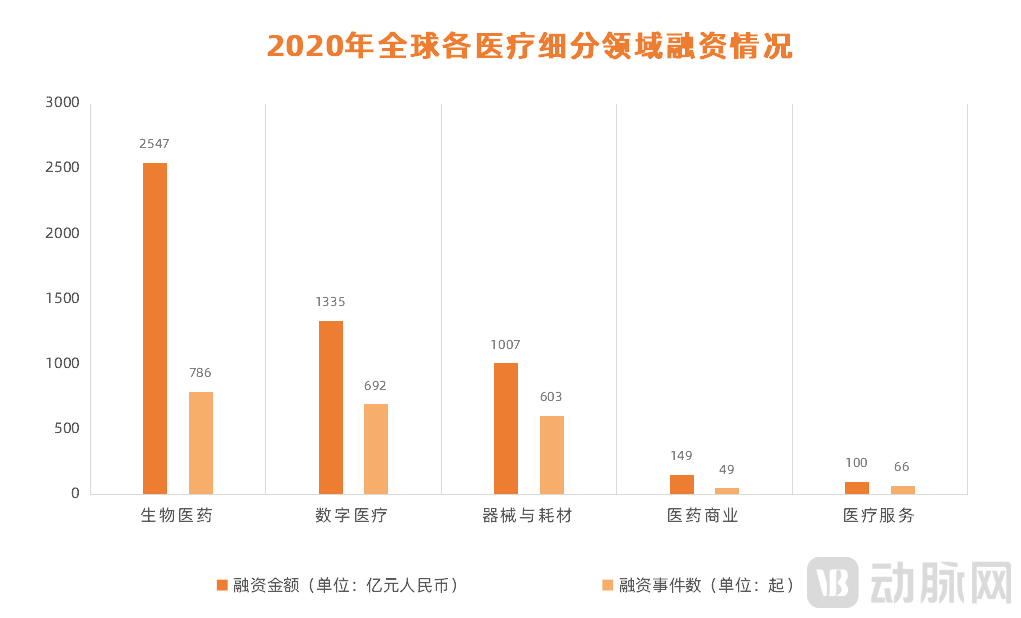
According to statistics from the VBInsight database,In 2020, a total of 692 investment and financing transactions occurred globally in the digital health sector, with total funding reaching RMB 133.5 billion, ranking second among medical subsectors, only behind biopharmaceuticals.
Source: Arterial Orange Database; Graphic by VCBeat
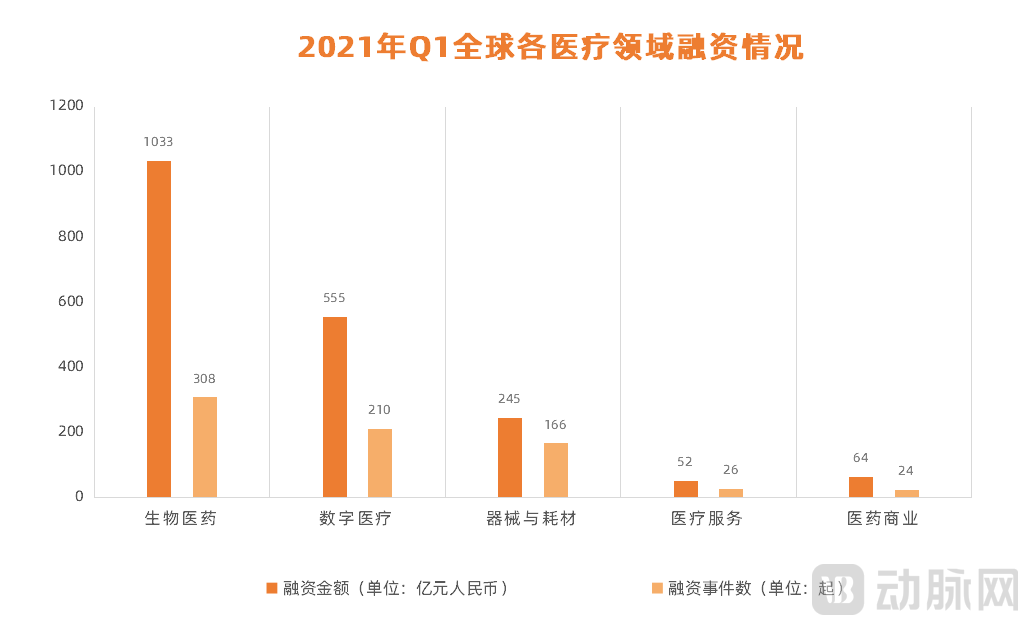
And this year, such “favoritism” continues. According to the Global Healthcare Industry Capital Report for Q1 2021,In Q1 2021, a total of 210 investment and financing transactions occurred in the global digital health sector, with total funding reaching RMB 55.5 billion, essentially flat compared to the same period last year.
It is evident that digital healthcare, which emerged in 2011, has returned to the public spotlight after a period of stagnation. While multiple factors have contributed to this “resurgence,” such as the evolving societal demands and the deep integration of internet technologies, the most significant driver remains the redefinition of the digital healthcare landscape brought about by the COVID-19 pandemic, which is widely regarded as a “turning point” in the industry’s development.
What exactly is an inflection point? In everyday life, the term refers to the point at which the trend of a phenomenon begins to change. In mathematics, it denotes the point on a curve where its concavity changes from upward to downward or vice versa. In media studies, it signifies the space for incremental growth.For the digital transformation of the healthcare industry, the “inflection point” may well be the optimal time for investment.
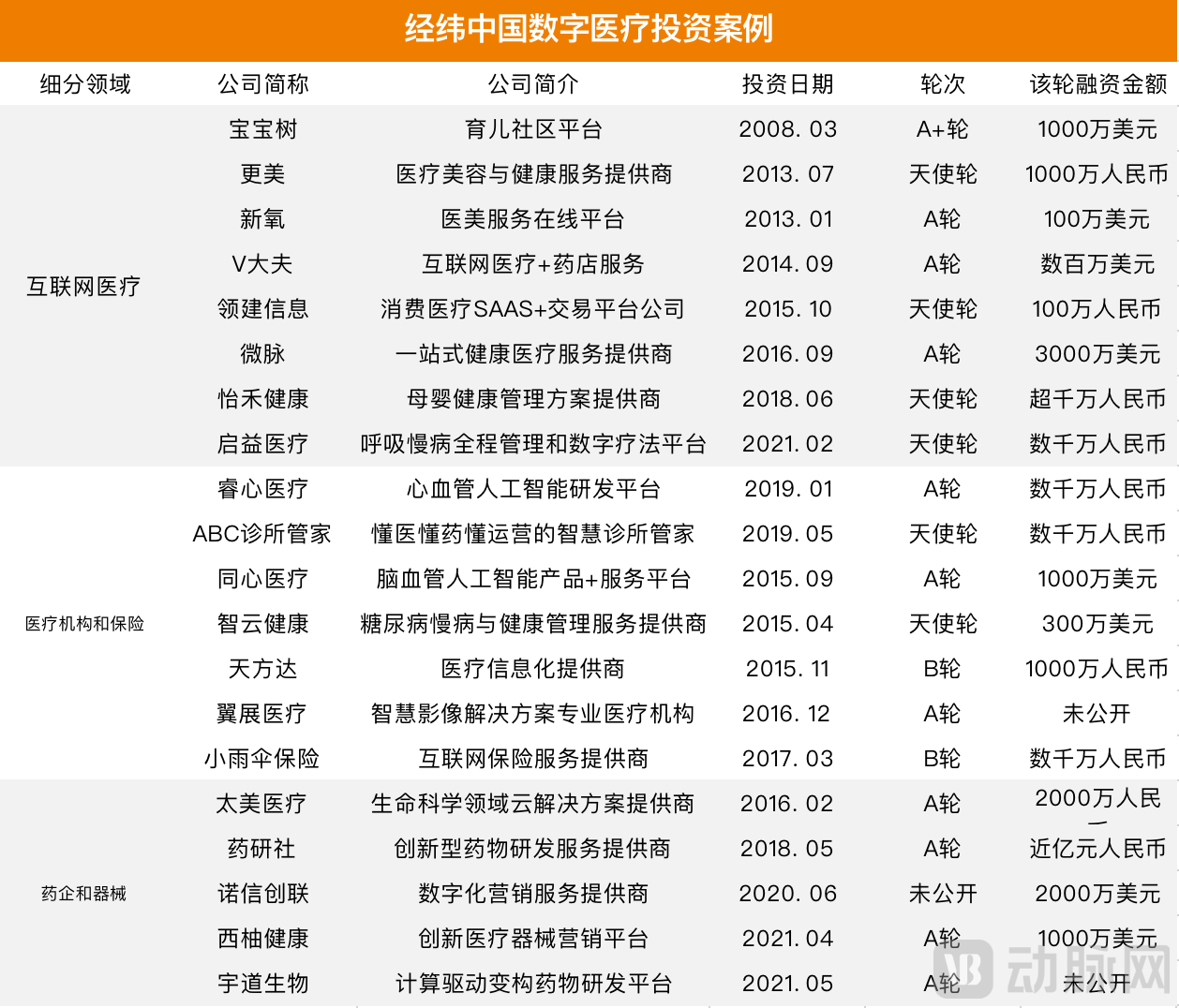
“The inflection point for investment” has always been the core logic behind Matrix Partners China’s entry into the digital health sector. As one of the most professional investment firms in China’s digital health space, Matrix Partners China has consistently demonstrated great enthusiasm and a spirit of professional exploration in this field, identifying and investing in early-stageTaimei Medical, Zhiyun Health, So-Young, Yaoyanshe, Weimai, Nuoxin Chuanglian, Gengmei, Linkcare Information, Ruixin Medicalamong leading domestic digital health enterprises.
These portfolio companies have also successively achieved dual breakthroughs in both business operations and capital markets over the past year. According to VCBeat, Taimei Medical Technology completed a Series F financing round of over RMB 1.2 billion in September 2020. As China’s leading digital operations platform for the life sciences industry, it saw continued participation from Matrix Partners China (MPCi), which had led its Series A round. Zhiyun Health, a benchmark enterprise in chronic disease management in China, secured RMB 1 billion in financing in early 2020, marking the largest funding amount globally in the chronic disease management sector to date; MPCi was the lead investor in its angel round. Weimai, an internet healthcare company, closed a USD 100 million Series C+ round at the end of 2020, with MPCi continuing to invest. The platform now serves tens of millions of users, fostering a patient habit of “turning to Weimai for medical care.” In August 2020, Yaoyanshe announced the completion of over RMB 600 million in Series C+ and D financing, further solidifying its leadership in the innovative CRO industry, with MPCi increasing its stake for the fourth time. Nuoxin Chuanglian, Ruixin Medical, and Lingjian Information also each completed at least two rounds of significant financing within the past 12 months.

Early intervention and sustained investment—each real-world case underscores Matrix Partners China’s high vertical focus and strong expertise in the digital health sector. On this basis, VCBeatSun Linghao, Investment Director at Matrix Partners ChinaAn exclusive interview was conducted. According to multiple founders we interviewed, Sun Linghao has been one of the most active investors in China’s digital health sector over the past three years. We aim to examine the development trajectory and future trends of China’s digital health landscape from the perspective of an industry investor, providing an in-depth analysis of investment firms’ market-entry strategies and underlying rationale. Our goal is to offer strategic guidance to entrepreneurs and investors in the digital health arena on how to navigate the evolving market dynamics.
Inflection Point: The Optimal Time to Invest in Digital Health
Q: It has been over a year since you wrote the article “A Medical Industry Chain Worth 6 Trillion Yuan: What Are the Opportunities in New Medical Services?” I would like to know, if you were to describe MPCi’s digital health investments over the past year in one sentence or with one keyword, what would it be?
A: Over the past twelve months, the theme of our Digital Health Group has been “Investing in the Critical Inflection Point of Healthcare Digitalization in a Great Era.” This inflection point refers not only to the underlying shifts reshaping the industry but also to the growth milestones achieved by founders.
Q: Why is the inflection point emphasized?
A: Writer Wang Xiaobo once offered a fitting description of an inflection point: “On a deserted island, I welcomed the dawn; as the sun rose, suddenly one hundred thousand golden trumpets sounded in unison.” As healthcare investors, we observe continuous industrial transitions and evolution across various subsectors, including pharmaceuticals, medical devices and diagnostics, and healthcare services, which continually generate structural opportunities for healthcare digitalization. This process resembles tectonic shifts, with powerful undercurrents at work. By identifying which unmet needs represent genuine opportunities and determining when true inflection points will be reached, we can discover great companies.
Q: Can you provide an example of a specific inflection point event?
Answer: In the second half of 2019, we witnessed the implementation of volume-based procurement (VBP) for pharmaceuticals, which profoundly altered the terminal pricing logic and hospital access thresholds for prescription drugs. This, in turn, prompted changes in pharmaceutical companies’ marketing and sales behaviors. Consequently, we identified VBP as a significant inflection point in the industry, predicting that digital marketing would truly accelerate after a decade of evolution. Over the past two years, innovative pharmaceutical marketing platforms have undergone a valuation reassessment, validating our judgment.
Q: How did Matrix Partners China identify these inflection points?
A: Identifying industry inflection points requires a deep dive into digitalization within the healthcare sector, with a focus on the digital transformation of pharmaceutical R&D and marketing, medical devices, and healthcare services. For instance, in our early-stage investments in innovative drugs, our understanding of the R&D processes for different modalities—such as small molecules, antibodies, cell therapies, and gene therapies—enables us to identify opportunities for digitalization and intelligence in new drug development. Assessing the growth inflection points of founders is an art that demands continuous accumulation of experience and reflective practice to enhance our understanding of people; this is both difficult and highly challenging.
Q: You described the inflection point of growth as an art. How do you define a founder’s “growth inflection point”? What types of founders do you choose to invest in?
A: High-quality founders across different industries share certain personality traits. From our perspective as investors, two factors are critical for entrepreneurs in digital health: first, abstraction ability, and second, cognitive iteration. Abstraction ability requires the team to extract insights from the inherent frameworks of the healthcare industry, identify digitalization opportunities, establish a clear and effective logical system, and efficiently communicate it to the team, customers, and shareholders. The founder’s cognitive iteration determines the company’s business momentum, team momentum, and capital momentum. When this accumulated momentum reaches an inflection point, it will be fully released from within outward, providing the enterprise with a continuous source of driving force. At times, the “slope” of iteration is more important than the absolute level of cognition.
Investors: Developing a Systematic Approach Through Deep Industry Engagement
Q: When discussing founders, it is impossible not to mention investors. So, what are the criteria for investors in the digital health sector?
A: With a results-oriented approach, the enduring expectation from investors is how to systematically replicate success. This goal is challenging yet imbued with a strong sense of mission. Personally, I believe that investing in digital health first requires composite capabilities; ideally, one should be an adept investor in both pharmaceuticals and medical devices, thoroughly understanding the R&D processes for drugs and medical devices, while also possessing a fundamental grasp of post-launch market access, academic marketing, distribution channels, and Sales Force Effectiveness (SFE). Secondly, one must have keen industry acumen, deeply immersing oneself in the healthcare sector to contemplate the macro-evolution of both the supply side and the payment side. When advanced productive forces and relations of production emerge, one should be bold in practice while rigorous in validation. Finally, it is essential to remain true to one’s original aspiration, genuinely contributing to industry progress through the leverage of capital, maintaining humility and reverence, and continuously drawing insights from industry experts.
Q: Since we’re on the topic of investors, as one yourself, could you share your personal experience?
A: I studied at the School of Pharmacy, Fudan University. During pharmacology experiments, I was required to handle mice. Due to my limited manual dexterity and empathy for small animals, I worked significantly slower than my classmates. As a form of punishment, I was often kept behind by our professor to bury all the mice in black plastic bags. That experience completely extinguished my enthusiasm for further academic pursuits. Later, I interned at Roche Pharmaceuticals and the China Food and Drug Administration (CFDA), where I gained insights into academic marketing and drug regulation. Ultimately, I chose to explore the intersection of healthcare and finance. Before joining Matrix Partners China, I worked in pharmaceutical company auditing, healthcare private equity, and investment banking. In 2016, I had the privilege of joining Matrix Partners China. This year marks my eighth year in healthcare investment, and I have increasingly come to realize how challenging it is to excel in this field. Currently, I dedicate one-third of my time to investing in digital health and two-thirds to co-investing in biopharmaceuticals and medical devices with my colleagues.
Q: MPCi has significant investment influence in the healthcare sector, as reported by VCBeat.Many of the companies featured in recent financing news are also your portfolio companies. This interview marks the first time we’ve discussed MPCi’s in-depth perspectives on digital health. What do you believe is the core driver behind such achievements?
A: Since its establishment in 2008, Matrix Partners China has grown into one of the most active investment firms in China’s healthcare sector. Having cumulatively invested in 100 healthcare companies, we have gained an increasingly clear understanding of healthcare digitalization. I was fortunate to join the firm early in my career and work under our managing partners, Zhang Ying and Xu Chuansheng, from whom I learned how to conduct early-stage investing and how to evaluate founders. My mentor, Xu Chuansheng, has been investing in digital health at the frontline for many years, witnessing the ups and downs of this sector. Furthermore, as digital health is a cross-disciplinary industry, we collaborate closely with Matrix Partners’ partners of diverse styles—including Zuo Lingye, Wan Haoji, Xiong Fei, Yu Zhiyun, Hua Dong, Xiao Min, and Li Xiong—to strive for better performance at the overall fund level. As Zhang Ying previously stated, if 10 is a perfect score, we are currently at a 7, and we hope to strive relentlessly to reach 8.3.
Q: You previously mentioned the Digital Healthcare Team. Is this team also a crucial component in the evolution and growth of Matrix Partners China?
A: Yes, facing the cross-industry nature of digital health, investment firms also need to undergo organizational innovation. Around September or October last year, I had an in-depth one-hour discussion and review with two senior partners. Based on our long-term optimism about this field, Matrix Partners China established a dedicated Digital Health Team. The team comprises members from both the healthcare and internet teams, who will fully leverage their respective professional advantages. They remain committed to upholding Matrix’s core investment philosophy, seeking the long-term value of healthcare digitalization through persistent and sustained efforts.
Q: How does Matrix Partners China deliver effective post-investment support?
A: For entrepreneurs, choosing a type of investment institution means selecting the kind of culture that will accompany their company’s growth over the long term. As a leading fund that places great emphasis on post-investment support, Matrix Partners China has always adhered to its core culture of candor and sincerity—frankly addressing issues that arise during a company’s development and sincerely leveraging our own resources to help enterprises overcome growth challenges. This fosters a long-term, mutually beneficial relationship. For investors, this is also a process of mutual learning; the industry insights gained through post-investment engagement are often more profound than those acquired prior to investment. Our digital health ecosystem has been progressively refined, and we believe it will provide even deeper empowerment to our portfolio companies in the future.
The Future of Digital Healthcare: Only by Enduring Solitude Can One Sustain Prosperity
Q: Over the past year, digital health has seen numerous hotspots, such as digital therapeutics, AI-driven drug discovery, digital marketing, and innovative payment models. How do you view these trends in digital health?
A: In mathematical terms, I view market hotspots as the “integral” of substantial information asymmetry. As an early- to growth-stage investment firm, we do not chase short-term trends; instead, we focus on genuine digital transformation and efficiency improvements. In many emerging sectors, we evaluate both whether entrepreneurs have a clear business logic and whether the company can provide business and data validation at different stages—both elements are indispensable. We have seen too many seemingly self-consistent business models disproven in practice, and we aim to increase our win rate by navigating the cumulative process of uncertain events. In investing, maintaining independent thinking and enduring solitude is exceedingly difficult, but this is precisely the allure of early-stage investment.
Q: Have you recently come across any founders or companies that have excited you?
A: There have been many recent developments, so we will not cite specific examples. The most exciting trend is the expanding boundaries of healthcare digitalization. We are focusing on underlying technological innovations in certain fields. At first glance, some products may appear to belong to traditional medical device companies; however, software-driven system control is actually the core of their offerings. In-depth interdisciplinary research frequently provides us with new insights.
Q: You review over a thousand healthcare startups annually. What mindset do you believe practitioners deeply engaged in the digital health sector should adopt?
A: Driven by population aging and technological advancements, China’s healthcare industry is flourishing and currently undergoing digitalization, automation, and intelligent transformation. It is indeed fortunate to invest in outstanding entrepreneurs during this pivotal era for the industry. However, such transformation cannot be achieved overnight; it is a process of continuous accumulation that requires the passage of time and iterative cognitive evolution. The long-term value of healthcare digitalization lies in this persistent, gradual progress, akin to water dripping through stone. Many companies often find that just as they rejoice at having avoided one pitfall, they face another hill that demands arduous climbing. To adapt a quote from novelist Gabriel García Márquez: “Wherever you go, remember that memory is an endless road; all past springs are gone forever. Even the most brilliant and smooth moments are, in essence, fleeting. Only cognition endures.”
At the end of the interview, Sun Linghao shared a short anecdote.
Euclid, the ancient Greek mathematician known as the “Father of Geometry,” authored Elements around 300 BC, opening a window from this ancient mathematical discipline to the future world and revealing the essence of the universe to those eager for knowledge at the time. However, spatial geometry remained stagnant thereafter, lying largely dormant for nearly 2,000 years, until the emergence of the youthful genius Gauss changed this situation.
At the age of 12, Gauss had already begun to question the foundational proofs in elementary geometry. No longer confined by the dogma of the parallel postulate, he rethought these principles and constructed a complete theory of non-Euclidean space beyond the framework of Euclid’s Elements, which later became known as non-Euclidean geometry. This work contributed to some extent to the emergence and vigorous development of Einstein’s theory of relativity.
It is evident that had Gauss not thought outside the box and broken established rules, spatial geometry might have remained in a “closed state” for a considerable period, thereby slowing humanity’s pace of cosmic exploration.
This logic also applies to the current digital health sector.For entrepreneurs and investors, it is essential to possess the courage and resilience demonstrated by Gauss in his discovery of non-Euclidean geometry. They must transcend existing frameworks, engage in deep thinking, and identify genuine needs and innovations within the industry and market, thereby uncovering business opportunities that represent future productive forces and production relations amidst uncertainty.
In a sense, digital health knows no bounds, possessing the potential for continuous expansion within the healthcare industry. As one of the most professional and active early-stage investors in China’s digital health sector, Matrix Partners China is committed to working with entrepreneurs to push business boundaries and looks forward to partnering with the innovators of this remarkable era!