

Zhang Yiming Steps Down as ByteDance CEO to Embark on Life Science Ventures
“Only a few can foresee the future and create trends.”
On May 20, in an internal company-wide letter issued by Zhang Yiming, founder of ByteDance, he statedThe Dawn of Impact: Virtual Reality, Life Sciences, and Scientific Computing on Human Life, and to seize this opportunity, innovators need to break through business inertia to explore. To this end,Zhang Yiming Decides to Step Down as ByteDance CEO, Committing to Remain Engaged in the Wave of Technological Transformation for the Next Decade
The letter specifically mentioned that ByteDance is currently exploring new philanthropic initiatives in areas such as educational charity, brain diseases, and the digital preservation of ancient texts. “I have personally made some investments, and I have more ideas, hoping to engage more deeply,” said Zhang Yiming.
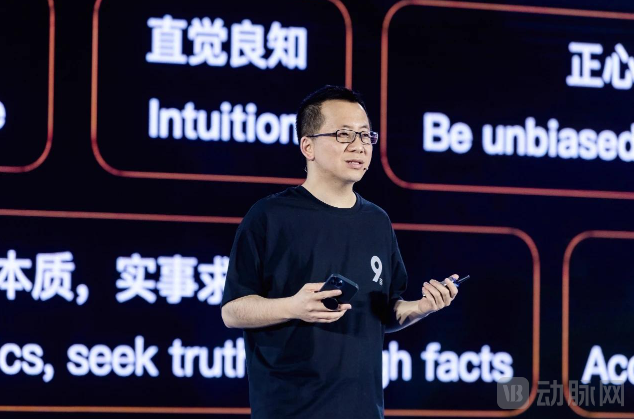
(Zhang Yiming, Founder of ByteDance; Image source: ByteDance official website)
Interestingly,Zhang Yiming has long harbored a passion for life sciences.It is reported that when Zhang Yiming was admitted to Nankai University in 2001, he had applied for a major in biology, but missed the opportunity to pursue research in this field due to academic adjustment. Now, as the helm of a leading new economy company in China, with a net worth of RMB 175.5 billion (according to the 2021 New Fortune 500 Richest List), Zhang Yiming undoubtedly has more possibilities.
“We are more prone to focusing on changes in business models and updates to brand channels, while rarely noticing that technological变革 is already brewing.”Corroborating Zhang Yiming’s internal letter,In recent years, the life sciences sector has witnessed an investment boom.. Data from the VCBeat database shows that in 2020, there were a total of 2,199 financing events in the global healthcare industry, with the total amount of financing reaching a record high of $74.9 billion (approximately RMB 516.93 billion), a year-on-year increase of about 41%;Among them, biopharmaceuticals, characterized by high R&D complexity, topped the sub-sectors with $36.9 billion.
Beyond the venture capital sector, technological innovation has become a top priority in China’s 14th Five-Year Plan at the national level. Meanwhile, the launch of the “Everest Plan for Basic Research in Higher Education Institutions” has further solidified the position of technological innovation in academic research.
It is not difficult to find that,These phenomena all point in one direction: focusing on original innovation in core technologies.And this is precisely the key to whether the future health and wellness industry can usher in disruptive innovation.
Against this backdrop, Zhang Yiming is about to embark on a journey toward the vast and promising frontier of life sciences.
Life sciences encompass numerous subfields, and the area of brain diseases chosen by Zhang Yiming is undoubtedly one of the most cutting-edge, highly watched, and challenging domains.
First, brain disorders have become an inescapable social issue, with enormous market demand.In terms of the number of affected individuals, relevant data indicate that approximately 1 billion people worldwide currently suffer from brain disorders, including Alzheimer’s disease, stroke, Parkinson’s disease, epilepsy, and autism spectrum disorder in children, accounting for 28% of the global burden of disease.
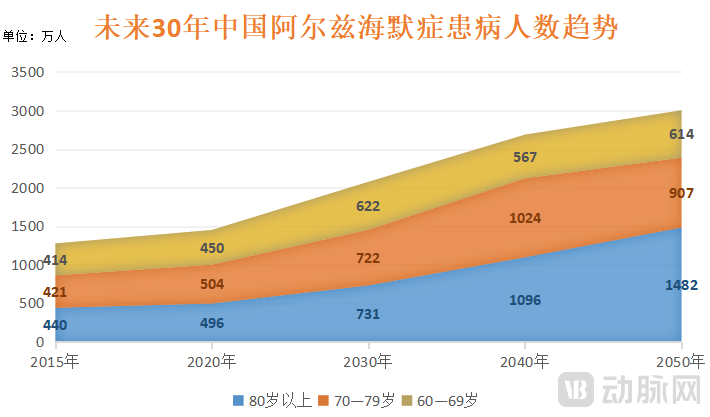
(Data source: CNKI; chart by VCBeat)
In response, the United States, the European Union, and Japan have successively launched brain science initiatives since 2013. The EU took the lead by launching the €1 billion Human Brain Project, followed by the United States, which introduced a $4.5 billion BRAIN Initiative. In 2016, “Brain Science and Brain-like Research” was designated as one of the major scientific and technological innovation projects and programs in China’s 13th Five-Year Plan Outline. According to GlobalData, the global market for Alzheimer’s disease treatments alone is projected to reach $13 billion in 2023.
Furthermore, brain science is regarded as the final frontier of human scientific inquiry and the field most likely to give rise to revolutionary changes.Academician Yang Xiongli, Director of the Academic Committee of the Institute of Brain Science at Fudan University, previously stated at an academic conference: “Only by gaining a deeper understanding of the brain’s mechanisms of operation can we drive progress in various related disciplines.”
This lies in the fact that brain science research requires multidisciplinary support and integration, such as neuroimaging, biosensing, human-computer interaction, and emerging technologies like AI and big data. It is important to note that the human brain contains approximately 100 billion neurons, which are precisely assembled into neural circuits that operate efficiently at all times. Therefore, gradually understanding this refined and highly complex “system” will bring tremendous benefits to human health and well-being.
Taking artificial intelligence as an example, current AI products on the market fall far short of the capabilities portrayed in science fiction films. This is because existing AI products are not designed based on the working principles of the human brain; they disregard neural mechanisms and are conceived solely from the perspective of computational science. Therefore, with breakthroughs in brain science, AI research must draw upon the brain’s characteristics in information processing and intelligence realization to achieve significant advancements.
From the current progress, in addition to various countries’ “Brain Projects” betting on brain science at the level of academic funding, an increasing number of industry professionals are also entering the field and exerting their efforts.Among them, Elon Musk, the “Silicon Valley Iron Man,” is most representative for his research and breakthroughs in brain-computer interfaces.
In 2016, Tesla founder Elon Musk announced the establishment of Neuralink, a company primarily focused on researching “brain-computer interface” (BCI) technology. This involves implanting microscopic electrodes into the brain to facilitate “interaction” between computers and neurons via electrical currents. Leveraging Musk’s substantial influence in the tech industry, BCI technology rapidly gained significant attention.
Just this February, Neuralink released a new video on YouTube showing a 9-year-old rhesus monkey controlling a ping-pong game with its thoughts, indicating that brain-computer interface technology is entering a phase of accelerated breakthroughs.
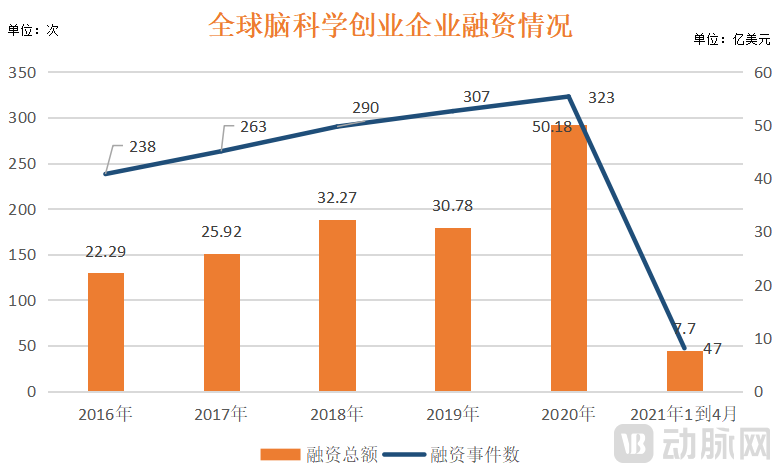
(Data source: CB Insights; graphic by VCBeat)
Amid the fervor, Chinese enterprises have also begun to actively position themselves.In mid-2025, Alibaba unveiled a cutting-edge technology at the Taobao Maker Festival called “Taobao Mind Purchase,” announcing its formal entry into the brain-computer interface (BCI) sector. This initiative is a collaborative project between Taobao and NeuraMatrix, a BCI company incubated by Tsinghua University. Additionally, Tencent’s top-tier machine learning R&D team, Youtu Lab, while dedicated to medical AI, is also exploring directions in brain-computer interfaces.
In addition to large corporations, a cohort of innovative enterprises is continuously exploring the field of brain disorders. For instance, Beijing Younao Galaxy Technology Co., Ltd., a neuroscience company that recently secured over RMB 100 million in Pre-A financing this year, is dedicated to advancing precision diagnosis and treatment for brain disorders. The team has successfully developed the “Individual Precision Brain Functional Atlas” and, leveraging this atlas along with novel hardware and software technologies, has launched its first series of products, including the Individual Precision Brain Function Platform and the Brain Atlas Instrument.
“In the past, brain science was largely composed of fundamental research far removed from practical applications. Today, after decades of accumulation, brain science is entering a period of explosive application growth, with an entirely new trillion-yuan industry based on brain science taking shape,” said Robert Desimone, co-founder of UBrain Galaxy, member of both U.S. National Academies, and Director of the McGovern Institute for Brain Research at MIT, in a previous interview with VCBeat.
In summary, brain diseases represent a field with substantial market demand but significant technical and scientific research challenges. Precisely because it is sufficiently cutting-edge and fraught with challenges, research in brain science holds profound significance. This will give rise to entirely new market growth, while also offering greater scope for expansion and imaginative possibilities within existing commercial landscapes.
Since last year, ByteDance has been continuously extending its reach into the healthcare sector.
VCBeat has found through analysis that,ByteDance has established a dual-channel online and offline presence in the healthcare sector, with simultaneous advancements in both services and R&D.
In terms of specific business operations, first, the company has acquired Baikenmingyi.com, a professional medical content platform (acquired and consolidated in May last year). Second, it has launched an independent internet healthcare brand, “Xiaohe Medical.” This app offers comprehensive features such as online consultations, access to a medical encyclopedia, physician search, and health record-keeping tools. In collaboration with 1024 Internet Hospital, it provides services including online consultations, telemedicine, and online medication guidance. Third, it has established an offline clinical institution named “Songguo Clinic.” Fourth, it is currently building a team focused on Next-Generation Sequencing (NGS) to dedicate itself to biomedical research and development.
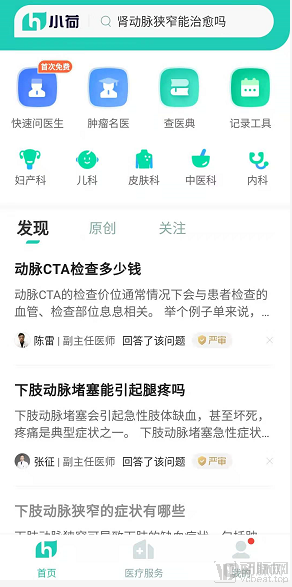
("Xiaohe Medical" Interface)
In fact, it is not just ByteDance; the medical and healthcare sector has long been a key area where major internet giants are intensifying their efforts.This includes already-listed companies such as Alibaba Health, JD Health, and Ping An Good Doctor, as well as Tencent, Baidu Health, Meituan, and Pinduoduo, which are continuing to strengthen their efforts in this sector.
Based on the development trajectories of major industry players, all have achieved significant milestones in the healthcare sector. Taking JD Health as an example, its inaugural annual earnings report following its public listing revealed that the company’s total revenue for 2020 reached RMB 19.38 billion, representing a year-on-year increase of 78.8%. Under non-IFRS measures, it posted a profit of RMB 750 million, a year-on-year surge of 117.7%. In terms of user base, JD Health’s annual active users totaled 89.8 million as of December 31, 2020, reflecting a net addition of 33.7 million over the year—a growth rate exceeding one-third—demonstrating strong momentum.
But likewise,As internet giants delve deeper into the healthcare sector, they are increasingly encountering a range of challenges.Based on the financial performance of currently listed industry giants, pharmaceutical e-commerce accounts for a significant proportion of revenue. For instance, Alibaba’s financial reports indicate that its proprietary pharmaceutical business remains the primary component of its revenue. In the first half of fiscal year 2021, Alibaba Health generated RMB 6.036 billion from its proprietary pharmaceutical business and RMB 925 million from its pharmaceutical e-commerce platform, totaling RMB 6.961 billion, which accounted for 97.2% of its total revenue. The same pattern applies to JD.com. In 2019, JD Health’s annual revenue reached RMB 10.8 billion, with health product sales serving as the main source of income.
Across the entire internet healthcare industry, business models for services other than pharmaceutical sales remain immature.Online appointment registration, triage, hospital navigation, and mobile lab report inquiries face intense homogenized competition, while market education for telemedicine, online diagnosis, and doctor-patient online interaction still requires time.
To this end,Major industry leaders are expanding their server-side boundaries in pursuit of greater breakthroughs.For instance, at the 5th Future Healthcare Top 100 Conference recently hosted by VCBeat, Zhu Shunyan, Chairman and CEO of Alibaba Health, unveiled the company’s new strategic vision, aiming to strengthen its healthcare services and become a “trusted expert” in safeguarding the health of users and their families. Last month, Baidu Health also launched three major support initiatives for its ecosystem partners, including efforts to help 100 public hospitals upgrade their online capabilities, so as to refine its “Internet + Healthcare” service chain and comprehensively enhance the platform’s healthcare service capabilities.
Therefore, in summary,Despite the entry of major internet giants into the healthcare sector, these initiatives remain in their early stages, and their capacity to empower healthcare continues to require further development.In the healthcare services sector, this requires not only greater investment in resources, talent, and capital, but also a sufficiently deep understanding and insight into healthcare on the part of major enterprises. All of these necessitate the accumulation of time.
Moreover, over decades of development, the internet has fundamentally transformed numerous niche sectors within the healthcare industry at the business model level.As technology iterates, tech giants are increasingly penetrating the upstream segments of the healthcare industry, such as pharmaceutical R&D and basic scientific research. This trend may unlock greater potential for internet giants’ strategic deployment and development in the healthcare sector.
Not only Zhang Yiming,In recent years, tech titans have been actively exploring the field of life sciences.
Not long ago, Colin Huang, founder of Pinduoduo, announced his resignation and expressed his intention to conduct research in the fields of food science and life sciences, aiming to “feel the stones along the path ten years from now.” Robin Li, founder of Baidu, has also expressed interest in life sciences and formally established the life sciences platform company “BioMap” last September. In 2016, Chen Tianqiao, founder of Shanda Interactive Entertainment, and his wife Luo Qianqian funded the establishment of the Chen Tianqiao and Chrissy Luo Institute for Brain Science, dedicated to fundamental biological research on the brain.
In addition to personally engaging in the life sciences sector, leaders of tech giants are also actively donating to establish scientific awards to reward scientific research, thereby inspiring more people to dedicate themselves to research in the life sciences.
For example, in 2015, several scientists and entrepreneurs, including Robin Li, founder of Baidu; Yang Yuanqing, CEO of Lenovo Group; Xu Xiaoping, founder of ZhenFund; and Rao Yi, a professor at Peking University, jointly established the Future Forum. At this forum, they planned to establish a non-governmental science award. Consequently, in 2016, the Future Science Prize was officially announced. The prize features three categories: “Life Science,” “Physical Science,” and “Mathematics and Computer Science,” with each award carrying a cash prize of $1 million.
Academician Yang Chen-ning remarked that the Future Science Prize is the first award established by a non-governmental public welfare organization in China, initiated by entrepreneurs, thereby filling the gap for authoritative civilian science and technology awards in the country. “Sweden has the Nobel Prize, Hong Kong has the Shaw Prize, and the Future Science Prize, as an emerging contender, will exert an even more profound influence.”
As is well known, innovation has been placed at the core of China’s modernization drive in recent years. However, innovation is not “low-hanging fruit” that can be easily picked; it requires substantial talent, funding, and resources.Relevant data show that China’s expenditure on basic research has long accounted for approximately 5% of its total R&D investment. In 2019, it surged by 22.5%, exceeding 6% for the first time. It is projected to reach 8% in 2020, with a target of 15% by 2025. By then, China’s total R&D spending is also expected to surpass that of the United States.It can be seen that China is placing increasing emphasis on basic research.
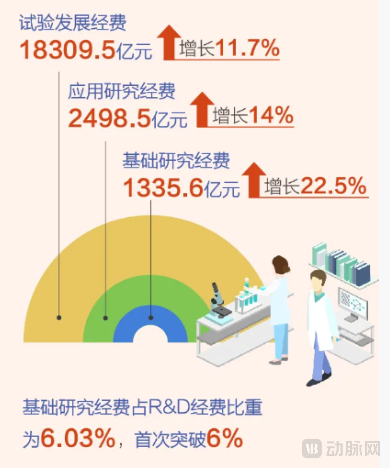
(2019 National R&D Investment in China; Source: National Bureau of Statistics)
There are three reasons behind this. First, from the perspective of economic development trends, global historical experience shows that all countries with a per capita GDP approaching or reaching $10,000 will inevitably embark on the path of technological innovation. Second, given the current international landscape, competition in scientific and technological strength has become a key factor in strategic rivalry among major powers. Third, advancements in foundational technologies will drive transformations across various industries, thereby fostering more sustainable long-term economic growth.
Thus, Zhang Yiming’s foray into the vast frontier of life sciences is not only an effort to identify potential new directions for ByteDance’s future, but also a choice aligned with the tide of history. As People’s Daily previously stated regarding the responsibilities that tech giants should bear:The vast expanse of technological innovation and the infinite possibilities of the future are truly more exhilarating.