

East China Medicine's 'Youthful Needle' Gains Popularity: What Surprises Remain in Its Aesthetic Pipeline?
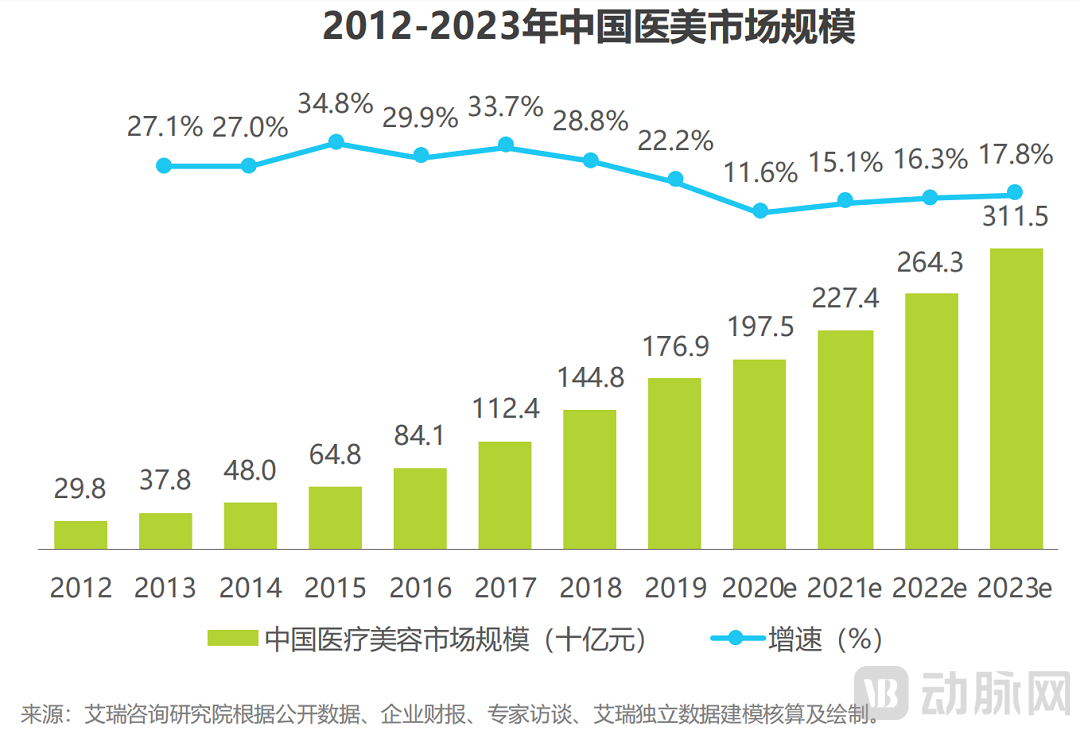
On October 29, during trading hours, the A-share medical aesthetics sector continued to climb, with significant gains seen in related stocks such as Huadong Medicine (000963), Imeik (300896), and Lancy Co. (002612). Since the beginning of this year, medical aesthetics has emerged as a new hotspot in the capital market, attracting considerable investor interest. Overall data shows that the A-share medical aesthetics sector index surged from March 9, reaching its first-half peak of 2,194.41 points on June 1, significantly outperforming the broader market and other major sector indices. According to iResearch, China’s medical aesthetics market size is projected to reach RMB 311.5 billion by 2023, with the overall market expected to continue expanding.
Although regulatory oversight of the medical aesthetics industry has tightened since 2021, stringent regulations will ultimately foster a healthier and safer industry environment. Given the persistent long-term consumer demand for self-improvement and ongoing technological advancements, upstream companies that operate in compliance with these high regulatory standards and technical barriers will enjoy more pronounced competitive advantages.
As one of the first listed pharmaceutical companies in China to strategically position itself in the aesthetic medicine manufacturing sector, Huadong Medicine’s 2021 third-quarter report also demonstrated robust growth in its aesthetic medicine business. In the first three quarters of this year, Sinclair, its core subsidiary in the aesthetic medicine sector (including the consolidated results of the newly acquired Spanish company High Tech), achieved operating revenue of £53.06 million (approximately RMB 473 million), representing a year-on-year increase of 127.4%. Of this, Sinclair’s standalone revenue grew by 79.24%, with its full-year revenue expected to reach a historic high. Following the release of the third-quarter report, Huadong Medicine’s stock price surged for three consecutive trading days.
As the medical aesthetics market continues to expand, it is also plagued by widespread irregularities. These issues primarily include chaotic product pricing, lack of safety guarantees, proliferation of false information, and unlicensed operations. Data shows that nearly 50% of individuals seeking aesthetic improvements have received injections of unapproved products, such as skin-whitening and fat-dissolving injections, which have not been certified by the National Medical Products Administration (NMPA).
On June 10 this year, eight departments, including the National Health Commission and the Ministry of Public Security, announced the launch of a campaign to address irregularities in the medical aesthetics industry. Recently, People’s Daily Online published an article stating that stringent regulation should safeguard the development of the medical aesthetics industry and return it to its essence. The regulatory authorities’ tough crackdown on the medical aesthetics sector not only provides concrete protection for consumer rights but also reflects long-term considerations for promoting the healthy development of the industry.
The prevailing market view is that stringent policy regulation will benefit the healthy and sustainable development of the medical aesthetics industry in the long run. Soochow Securities believes that tighter regulations will accelerate the gradual replacement of unauthorized parallel imports with authorized genuine products. Previously, only about 30% of injectable medical aesthetic products were authorized genuine goods; as regulatory oversight continues to intensify, the proportion of such authentic products is expected to rise steadily. Consequently, upstream licensed manufacturers of compliant medical aesthetic products and midstream accredited medical aesthetic institutions are poised to reap sustained benefits.
Furthermore, the essence of medical aesthetics remains rooted in medicine; most medical aesthetic products have extended from clinical applications to aesthetic uses. The upstream sector of medical aesthetics is characterized by high R&D barriers and stringent regulatory oversight. Changjiang Securities points out that the majority of upstream medical aesthetic products in China are classified as Class III medical devices. Compared with developed countries overseas, China has a relatively longer approval cycle and stricter regulations for such products. Companies that secure Class III medical device certification early enjoy a significant competitive advantage.
Huadong Medicine, as a professional and time-honored pharmaceutical company, is deeply cultivating the global medical aesthetics industry. Notably, the company’s star product, Ellansé, also known as “Girl Needle,”®EllanséTMBecoming the first imported regenerative filler to receive Class III medical device certification from China's National Medical Products Administration (NMPA).
Ellansé®EllanséTMSince its official launch and sales debut in China this August, the product has become a “viral hit” in the mainland market, leveraging its unique advantages of “immediate filling, long-lasting effects, and natural metabolism.” It has rapidly expanded its market share, achieving over RMB 100 million in advance payments by the date of the third-quarter report release, far exceeding market expectations.
Huadong Medicine also acknowledged that Sinclair sells its medical aesthetic products in multiple markets worldwide, and price disparities across different countries and regions have led to gray market goods impacting the legitimate product market. In response, the company has strengthened controls from both production and distribution channels to mitigate the impact of gray market products. On one hand, the company imports Ellansé from abroad into China.®EllanséTMThe product packaging features a QR code for authenticity verification, allowing aesthetic patients to scan and trace the product’s origin. On the distribution side, Huadong Medicine rigorously selects partner institutions in the Chinese market and continuously strengthens physician training and certification, ensuring that every certified physician is qualified to administer Ellansé.®EllanséTMStandardized and excellent injection techniques provide higher-quality and safer services to aesthetic patients.
Upstream medical aesthetic products combine the high R&D barriers of pharmaceuticals with strong consumption upgrade attributes, featuring a favorable competitive landscape and superior growth potential. In terms of development drivers, rising consumer spending power serves as the fundamental engine, while technological advancements act as the key driving force, jointly propelling the rapid growth of the medical aesthetics industry.
The essence of medical aesthetic products remains that of medical devices, subject to stringent regulation by the National Medical Products Administration (NMPA), and still requiring rigorous clinical trials and other stages prior to registration and market approval. Expanding indications through independent research and development and technological innovation to meet the differentiated needs of aesthetic seekers is the key cornerstone for building competitive barriers in medical aesthetic products, as well as the ultimate purpose and mission of the healthcare industry.
Currently, Huadong Medicine operates four R&D centers, including its wholly-owned subsidiaries Sinclair (UK) and High Tech (Spain), as well as its equity-invested companies R2 Aesthetics (US) and Kylane (Switzerland). The company also maintains five production bases worldwide in the Netherlands, France, the United States, Switzerland, and Bulgaria, with its core products marketed in over 60 countries and regions globally.
Among them, Ellansé®EllanséTMHaving obtained approval from China’s National Medical Products Administration (NMPA) and CE certification in the European Union, this product is a global exclusive of Huadong Medicine. It has been marketed overseas for many years with stable sales performance, demonstrating strong potential to become a blockbuster aesthetic medicine product. According to Sinclair’s annual report, the Ellansé series achieved a compound annual growth rate (CAGR) of 82.4% from 2014 to 2017.
“Ellansé” is uniquely characterized by its triple effect of “immediate filling, long-lasting maintenance, and natural metabolism.” More importantly, its core components, PCL and CMC, are naturally metabolized by the human body, ensuring safety with no residue. Since its market launch overseas many years ago, it has demonstrated an extremely low incidence of adverse reactions.
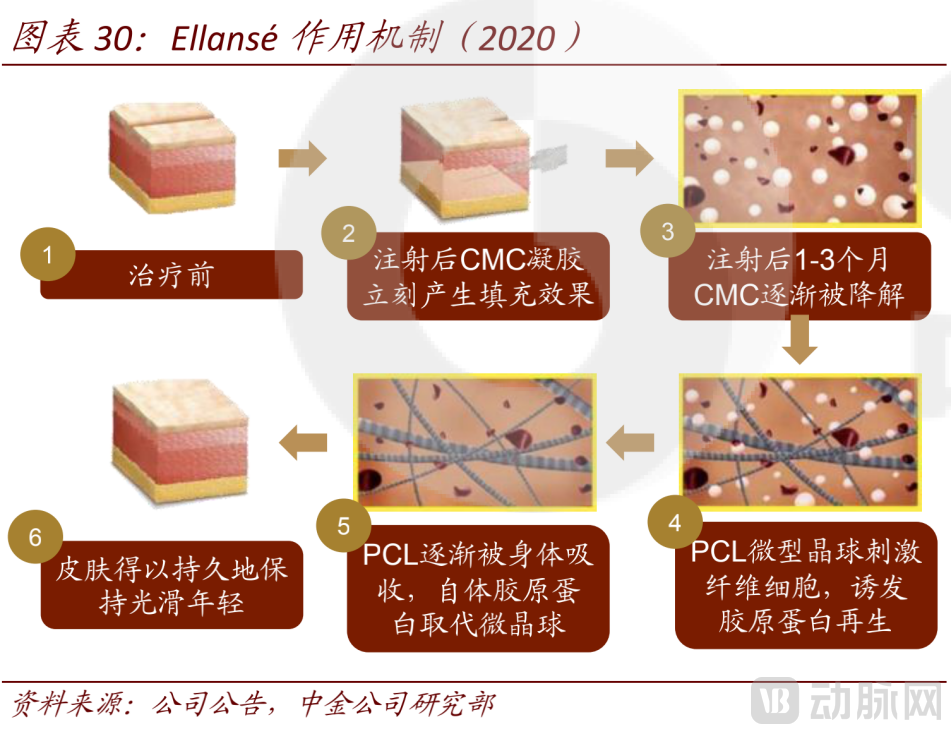
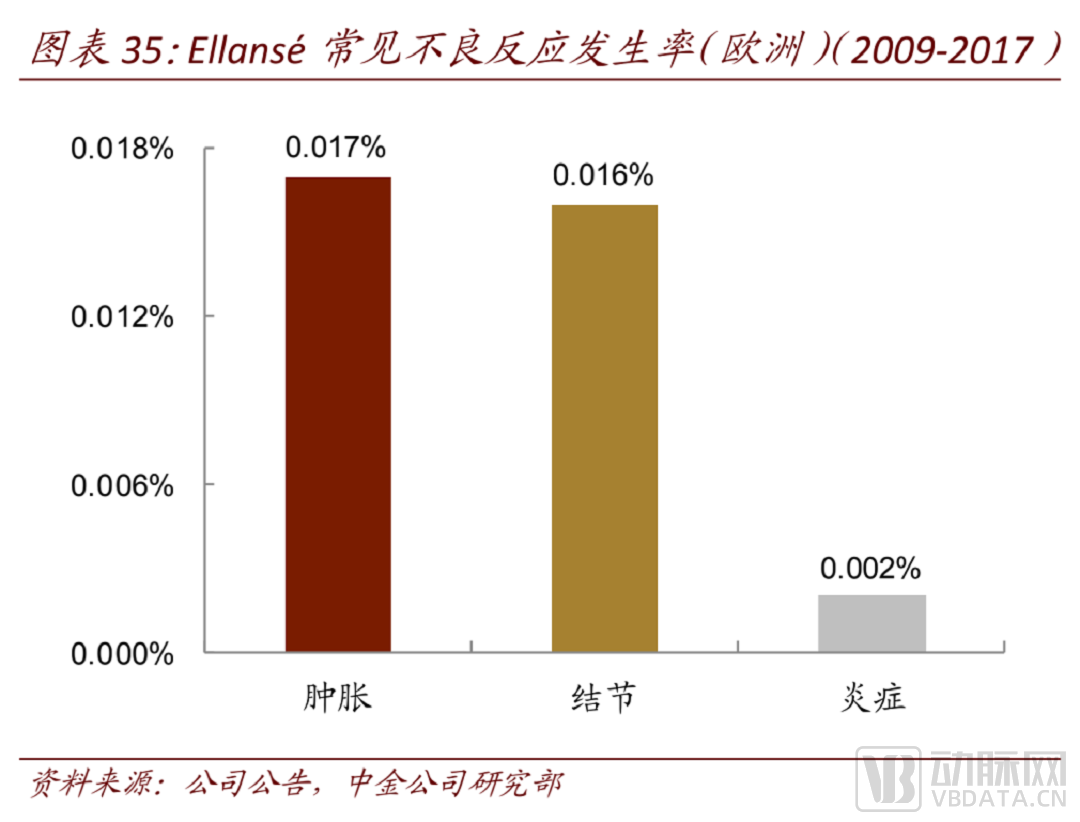
It is reported that Ellansé is currently®EllanséTMCurrently, the number of contracted partner hospitals in China has exceeded 120, with over 200 physicians trained and certified. Huadong Medicine plans to gradually expand its network to 300–500 hospitals next year, leveraging Ellansé®EllanséTMLeading the Industry into the Regenerative Era.
In the field of minimally invasive aesthetic medicine, Huadong Medicine has also made strong strides by launching multiple innovative products. Among them, the company’s MaiLi®A new series of premium lidocaine-containing hyaluronic acid fillers has even surpassed Juvederm in enhancing skin volume and elasticity. The product’s proprietary OXIFREE technology enables a lower degree of hyaluronic acid modification and superior rheological properties, delivering more exceptional and long-lasting aesthetic outcomes with smaller injection volumes, thereby leading its category. Reports indicate that MaiLi®Hyaluronic acid is currently undergoing registration and filing in China, with an expected market launch in 2024.
According to Frost & Sullivan data, the market size for injectable medical aesthetic procedures in China is projected to reach RMB 78 billion in 2024. Benefiting from the continuous development of injectable medical aesthetic services and the increasing diversification of product types, the overall market size of hyaluronic acid products for medical aesthetics in China is expected to further expand, reaching RMB 12.04 billion in 2024.
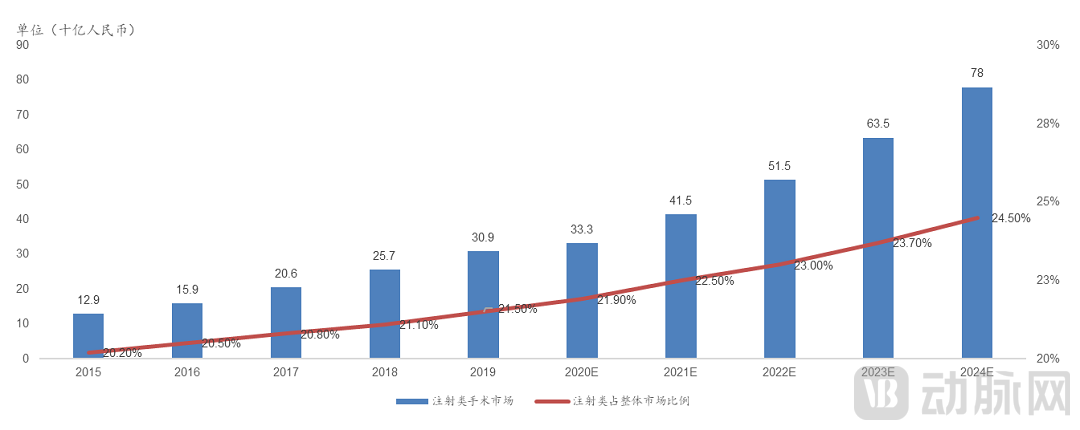
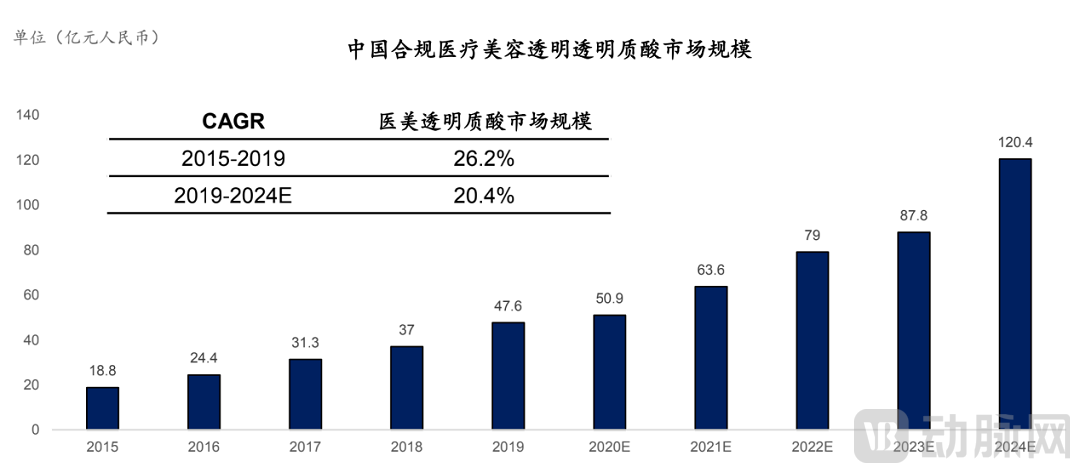
(Image source: Frost & Sullivan Report)
However, as the demands of aesthetic seekers become increasingly diversified, single-component hyaluronic acid is struggling to meet these needs. In the future, composite hyaluronic acid will become a key factor in product differentiation. In response, Huadong Medicine has proactively positioned itself in the field of innovative materials for medical aesthetic fillers—chitosan. Recently, Sinclair (UK) entered into a strategic partnership with KiOmed (Belgium), securing rights to four global innovative KiOmedine products currently under development.®Exclusive global license (excluding the United States) for KiOmedine chitosan-based medical aesthetics products and all subsequently developed chitosan-related medical aesthetics products in the field of dermatological aesthetics.®A high-purity, natural (non-animal-derived), medical-grade chitosan derivative developed using proprietary patented technology, featuring deep hydration, increased collagen content, and anti-aging benefits. Compared to hyaluronic acid products, which primarily function as fillers, KiOmedine®Fillers are not only expected to extend the duration of hyaluronic acid’s effects, achieving long-lasting volumizing results, but also to simultaneously meet the multifaceted needs of aesthetic seekers, with the potential to reshape the product landscape of the hyaluronic acid market.
In addition to injectable products, another major category of popular non-surgical treatments in the “light medical aesthetics” sector is photoelectric aesthetic devices (also known as energy-based devices). According to China’s classification and management standards for medical devices, most photoelectric aesthetic devices are classified as Class III medical devices. Photoenergy applied to different skin layers can address specific concerns: the epidermis (acne treatment, spot removal, skin brightening, etc.), the dermis (stimulating collagen regeneration, skin tightening, and anti-aging), and the subcutaneous fat layer (fat reduction and body contouring). Due to their minimal invasiveness, rapid recovery, and suitability for routine skincare maintenance, photoelectric aesthetic treatments are highly favored by consumers.
According to a research report by Zhongtai Securities, the market size of photoelectric medical aesthetic devices in China is approximately RMB 2–3 billion, with a CAGR of over 15%, driven by robust end-user demand for photoelectric treatments. Compared with overseas markets, the penetration rate of China’s medical aesthetics market remains low, suggesting that the growth potential for photoelectric devices will be even broader in the future.
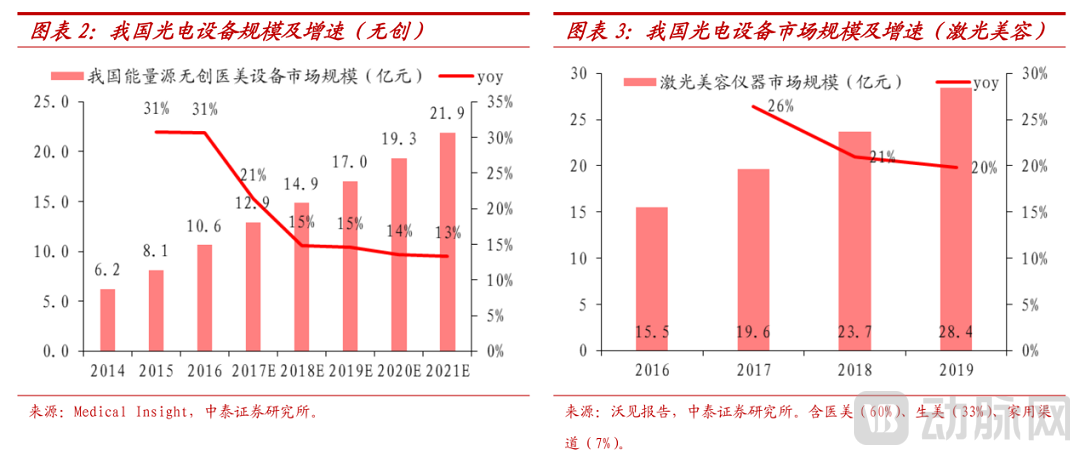
As early as 2019, Huadong Medicine entered the field of photoelectric medical aesthetic devices by securing exclusive distribution rights in China for equipment from U.S.-based R2 Aesthetics, thereby laying the groundwork for the advent of the cryo-aesthetics era. The company’s latest announcement stated that R2 Aesthetics’ Glacial™ Spa (F0) cryo-contact beauty device is being actively prepared for launch in the Chinese market, with commercial sales expected to commence in the fourth quarter of 2021.
Notably, the F0 Cold Touch Beauty Device was developed by a core technical team led by Dr. Rox Anderson, M.D., known as the father of modern laser medicine and Director of the Wellman Center for Photomedicine at Massachusetts General Hospital. Employing innovative Cryomodulation™ technology, it effectively addresses skin tone concerns such as uneven complexion, dullness, yellowish discoloration, and sensitivity-induced redness, while also demonstrating efficacy in fading pigmentation spots, acne marks, and dark circles.
Furthermore, the body contouring market is emerging as a major hotspot. According to Deloitte’s “White Paper on the Development of China’s Body Contouring Market Industry 2021,” the market size of China’s body contouring sector was approximately RMB 10.5 billion in 2020, with a projected compound annual growth rate (CAGR) of 24% from 2020 to 2022, surpassing the 18% CAGR of the overall medical aesthetics market. Due to the high safety and comfort levels of non-invasive fat reduction devices, order volumes for two categories of non-invasive treatments—cryolipolysis and radiofrequency lipolysis—achieved annualized growth rates of 318% and 216%, respectively, over the past three years, gradually becoming mainstream in body contouring. Consumers have given particularly prominent overall evaluations to cryolipolysis, with high mention rates regarding its efficacy, comfort, and safety.
In February 2021, Sinclair, a wholly-owned subsidiary of Huadong Medicine, acquired 100% equity interest in High Tech, formally entering the Chinese market for non-surgical body contouring and medical aesthetics. Currently, the overseas and domestic launch plans for High Tech’s products under development are also progressing. Specifically, registration-related work in China for the cryolipolysis product Cooltech Define and the laser hair removal device Primelase is scheduled to officially commence by the end of 2021. Safyre, an RF-based product already marketed overseas for facial rejuvenation and body contouring, is expected to be launched in China in the second quarter of 2022.
Currently, the global competitive landscape for cryolipolysis products is favorable, with Allergan’s CoolSculpting being the only option available in China.®The product was approved for market launch in 2018. Other manufacturers in the international market include EnSheng from South Korea and High Tech from Spain. According to Medical Insight, High Tech’s cryolipolysis products ranked second in market share within the EMEA (Europe, the Middle East, and Africa) region for body contouring and skin tightening devices in 2019.
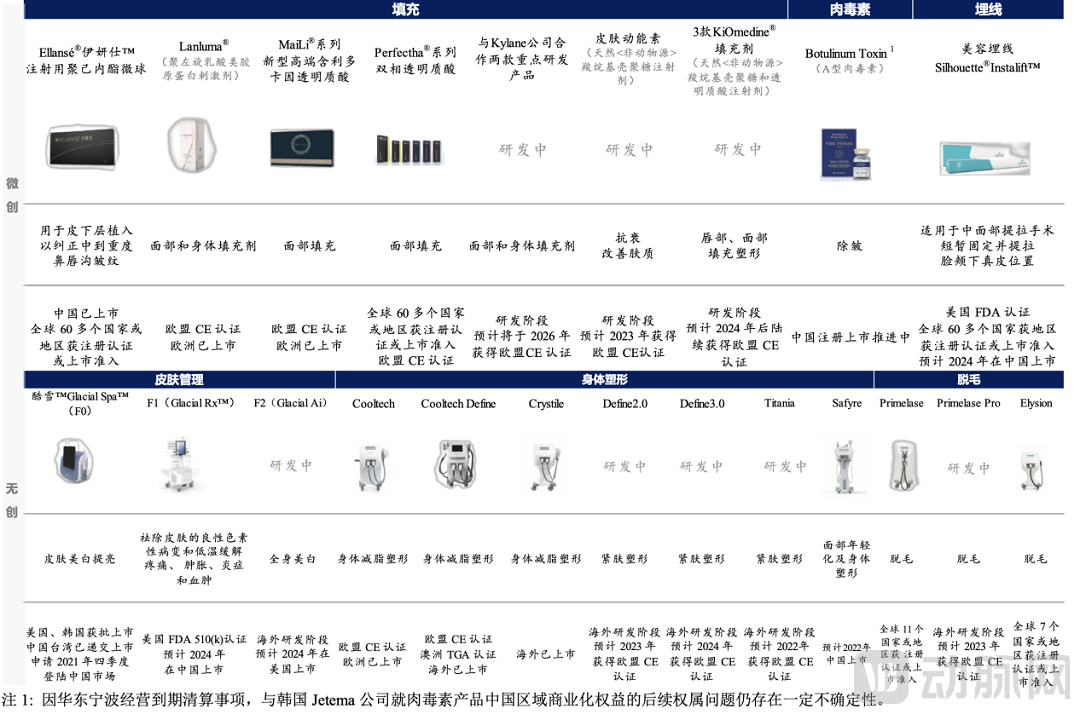
Source: Huadong Medicine's 2021 Q3 Report
Since its acquisition of the UK-based Sinclair in 2018, Huadong Medicine has witnessed rapid growth in its medical aesthetics sector. The company now boasts a portfolio of more than 20 products in the non-invasive and minimally invasive aesthetic fields, ranking among the industry leaders in both product count and coverage. This robust product pipeline will continue to fuel the global expansion of its medical aesthetics business. As an established pharmaceutical enterprise, Huadong Medicine entered the medical aesthetics market with a high starting point, a high degree of internationalization, and a diverse product pipeline. Upholding the scientific rigor characteristic of the pharmaceutical industry, the company is deeply committed to advancing the medical aesthetics sector. All registration and manufacturing processes for its aesthetic products strictly adhere to national regulations, setting a benchmark for industry standardization.