

Chinese Tumor Treating Fields Developer Hailai Innovations Completes $770M Series C Funding Round, Files for IPO
VCBeat has learned at the earliest opportunity that,Jiangsu Hailai Xinchuang Medical Technology Co., Ltd. (hereinafter referred to as “Hailai”) announced the completion of its C-round financing of RMB 500 million,This round of financing was led by Yunfeng Capital, with participation from Temasek, Lilly Asia Ventures, Sanzheng Health Investment, CPE Yuanfeng, and Qiming Venture Partners. Existing shareholders Legend Capital, Taifu Capital, and Hillhouse Innovation continued to participate. The funds raised will be primarily used for Hailai’s development of product pipelines in new indications, acceleration of clinical projects, and recruitment of high-end talent.
Since its inception, Hailai has secured multiple rounds of financing from world-class investment institutions, including Hillhouse Capital’s venture arm, Lilly Asia Ventures, Yunfeng Capital, Temasek, Legend Capital, and CPE Yuanfeng.
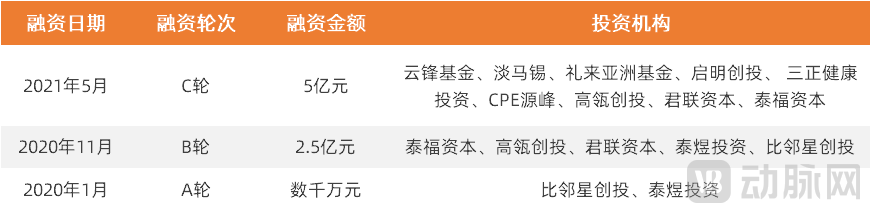
Overview of Hailai's Historical Financing Rounds
The completion of this funding round has pushed Hailei’s cumulative fundraising total to over RMB 800 million. Notably, this amount exceeding RMB 800 million was raised in just a year and a half. What kind of company is Hailei, and in which niche sector does it operate, that has attracted such intense competition and generous commitments from numerous top-tier investment institutions?
Tumor Treating Fields (TTF) is a physical therapy modality that interferes with cancer cell division. Currently, this technology has been sequentially introduced into clinical practice in the United States, China, Europe, and Japan.NovoCure is the only medical company worldwide with a marketed TTF product. Hailai is the first company in China and the second globally to commercialize tumor treating fields technology and enter multicenter clinical trials.
In 2016, Hailai was born in Wuxi, Jiangsu Province, a fertile ground rich with innovative vitality, and began to focus on the research and development, production, and clinical studies of Tumor Treating Fields (TTF). Although the company was officially registered and established in 2016, its founding team had already identified TTF as an emerging oncology treatment technology that was still a blank space in China as early as 2014. After overcoming various challenges in technological R&D, the initial Hailai team successfully developed a prototype within two years.
In 2019, the companyEFE-G100 (indicated for glioblastoma multiforme [GBM])) ProjectMulti-center clinical trials were successfully conducted at seven renowned hospitals across China and have now been expanded to nine hospitals nationwide. Based on the data from enrolled patients, the clinical results have shown encouraging trends, with an interim analysis scheduled to commence in 2022.
Beyond the EFE-G100 project, Hailai has several other models respectively targetingNon-Small Cell Lung Cancer, Pancreatic Cancer, Ovarian CancerThe products have currently obtained registration test reports, and multi-center clinical trials are expected to be gradually initiated by the end of 2021. For other indications (including major cancer types such as liver cancer and gastric cancer), Hailai is also concurrently developing its products.
The principle of TTF in cancer treatment is that alternating electric fields at specific frequencies interfere with the movement of charged particles and polarized molecules within cells during mitosis, preventing the normal formation of certain intracellular structures and even causing cell membrane rupture. This induces apoptosis in tumor cells during mitosis, thereby achieving the goal of tumor treatment.Normal tissue cells differ from cancer cells in their division rate, geometric shape, and electrical properties; therefore, the frequency of Tumor Treating Fields (TTFields) therapy can be adjusted to specifically affect cancer cells while leaving healthy cells largely unaffected.
In principle, Tumor Treating Fields (TTF) can target all solid tumors without inducing drug resistance, offering broad market prospects. As a physical therapy, TTF causes fewer side effects to the human body compared with traditional cancer treatments such as radiotherapy and chemotherapy. Combining TTF with conventional therapies can yield superior treatment outcomes.
To date, tumor treating fields have not demonstrated systemic toxicity in any clinical studies or clinical applications, with mild to moderate skin irritation being the most common adverse effect.An increasing number of clinical studies also support the combination of tumor treating fields with other cancer therapies, including radiation therapy, certain chemotherapy agents, and certain immunotherapies.Currently, more than 18,000 patients worldwide have received tumor treating fields therapy.
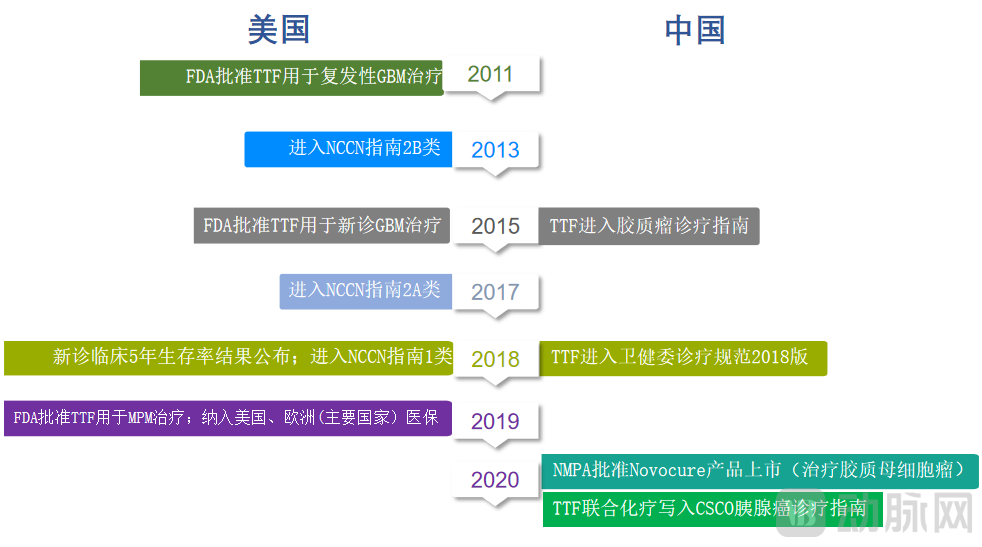
Development and Application of TTF Technology in China and Abroad (Image Source: Hailai BP)
(Editor’s Note: FDA—U.S. Food and Drug Administration; NCCN—National Comprehensive Cancer Network; MPM—Malignant Pleural Mesothelioma; NMPA—National Medical Products Administration; CSCO—Chinese Society of Clinical Oncology)
As early as 2011, the FDA had already approved Novocure’s (NASDAQ: NVCR) TTF product for the treatment of recurrent glioblastoma (GBM). In the following years,TTF technology has been successively incorporated into the NCCN Guidelines (Category 2B), the Chinese Guidelines for the Diagnosis and Treatment of Gliomas, the NCCN Guidelines (Category 2A), and the NCCN Guidelines (Category 1).Achieved the highest level of global recognition. In 2019, the FDA approved Novocure’s second TTF product for the treatment of malignant pleural mesothelioma (MPM). In the same year, TTF products were included in the national reimbursement drug lists of the United States and major European countries.
This April, the field of Tumor Treating Fields (TTF) technology once again witnessed encouraging new progress.
Novocure Discloses Latest Progress in LUNAR, a Pivotal Phase III Clinical Study of Tumor Treating Fields in Patients with Stage IV Non-Small Cell Lung Cancer Following Progression on Platinum-Based Chemotherapy(Editor’s Note: LUNAR is a pivotal Phase III study designed to evaluate the efficacy of tumor treating fields (TTF) therapy combined with immune checkpoint inhibitors or docetaxel, compared with immune checkpoint inhibitors or docetaxel monotherapy, in patients with stage IV non-small cell lung cancer who have experienced disease progression during or after platinum-based chemotherapy.)
Following a routine review of the study by the Independent Data Monitoring Committee (DMC), Novocure was informed thatBased on the current enrollment timeline and the number of observed events, the prespecified interim analysis of the LUNAR study will be expedited. Following review of the interim analysis report, the Data Monitoring Committee (DMC) stated that there was no evidence indicating that Tumor Treating Fields therapy increases systemic toxicity.The LUNAR study should continue.
The DMC also pointed out that continuing to enroll patients until reaching 534 cases might be unnecessary and ethically questionable for those randomized to the control group with an 18-month follow-up.The DMC recommended reducing the study sample size to 276 participants and shortening the follow-up period to 12 months, which would still provide sufficient statistical power for both the primary and secondary endpoints.In addition, the DMC raised no other comments on the design of the LUNAR study.
Novocure accepted the DMC’s recommendations and notified the FDA of its response, indicating that it would incorporate the adjustments proposed by the DMC into a supplemental submission to the Investigational Device Exemption (IDE) application. According to the latest update on the evening of May 18,The FDA has approved the Investigational Device Exemption (IDE) supplement submitted by Novocure,Agreed to reduce the enrollment requirement for the company’s Phase III pivotal clinical study of tumor treating fields in non-small cell lung cancer (NSCLC) to 276 patients and to shorten the patient follow-up period to 12 months.
The DMC’s analysis and recommendations regarding Novocure’s clinical trial of TTFields in non-small cell lung cancer (NSCLC), along with the FDA’s acceptance of the reduced patient enrollment and shortened follow-up period for this trial, undoubtedly highlight the broad prospects for the future development of TTFields and have once again drawn public attention to Novocure.
It can be said that Novocure’s success (with a market capitalization of $18.25 billion as of May 20) is built upon its continuous exploration and deep commitment to Tumor Treating Fields (TTF) products. Currently, Novocure has two TTF products approved for marketing. The company’s other clinical research programs cover indications including brain metastases, non-small cell lung cancer (NSCLC), pancreatic cancer, ovarian cancer, liver cancer, and gastric cancer. Among these, the indications for brain metastases, NSCLC, pancreatic cancer, and ovarian cancer have advanced into pivotal Phase III clinical trials.
Leveraging its accumulated R&D experience and a high-caliber team, Hailai is concurrently advancing the development of Tumor Treating Fields (TTF) therapeutic products for glioblastoma, pancreatic cancer, non-small cell lung cancer, and ovarian cancer.The EFE-G100 project, indicated for glioblastoma multiforme (GBM), is currently conducting clinical trials at nine renowned hospitals across China. Fudan University Huashan Hospital has already enrolled dozens of patients. Current data show satisfactory trial results, with certain parameters outperforming Novocure’s clinical data. An interim analysis is expected to be initiated in 2022, which is highly anticipated.
Furthermore, several of Hailai Innovation’s products targeting non-small cell lung cancer, pancreatic cancer, and ovarian cancer have all obtained registration testing reports, with multicenter clinical trials scheduled to be gradually initiated by the end of 2021. In addition to the indications for which product development has already been completed, the Hailai team is also dedicated to research and therapeutic product development for major disease areas such as gastric cancer and liver cancer, aiming to benefit a broader patient population at the earliest possible time.
Benchmarking against leading companies in niche segments, why has Hailai secured a first-mover advantage in China? What strategies has Hailai employed to rapidly advance its product pipeline and catch up with international peers?
The ability to overcome formidable challenges in the research and development of advanced technical equipment within just a few years, achieving a leap from “nothing” to “something,” was made possible not only by Hailei’s robust R&D team but also by the company’s “precise control” over key milestones throughout its development.
In 2014, upon learning that Tumor Treating Fields (TTFields) therapy was about to enter clinical application in the United States, Hailai immediately contacted Novocure, seeking to introduce this technology to China through market collaboration to benefit Chinese glioma patients. However, the proposal was explicitly rejected by the U.S. side. In response, Hailai’s founding team promptly resolved to independently develop China’s own TTFields device.
As a result, the core team members resigned from their highly promising, high-paying positions to devote themselves fully to the research and development of tumor treating fields (TTFields) devices, demonstrating a “burning one’s bridges” commitment.Hailai Founder & CEO Huang YongIn his words, it is called “leaving no retreat for oneself to unleash one’s maximum developmental potential.”
Currently, Hailei employs over 80 staff members, with more than 40% of its R&D personnel holding master’s degrees or higher. The team features interdisciplinary backgrounds and complementary skill sets, comprising outstanding professionals with clinical experience from top-tier hospitals, senior R&D talents from renowned domestic and international universities and research institutions such as Harvard University, Peking University, and Zhejiang University, as well as senior management executives with extensive industry expertise. This talent advantage enables Hailei to rapidly conduct multi-pipeline product development and upgrades.
Meanwhile,Leveraging its first-mover advantage, Hailai has secured priority access to high-quality academic and clinical resources in China:Given the gap in the field of Tumor Treating Fields (TTF) technology, academic experts in China have expressed strong support for the research and development of TTF devices. Currently, Hailai has assembled a collaborative team of experts comprising seven academicians, multiple chairpersons of sub-specialty committees under the Chinese Medical Association, and numerous renowned experts and professors in the industry. Among these, the clinical partner hospitals for its glioblastoma multiforme (GBM) treatment product include nine nationally renowned hospitals across China, such as Huashan Hospital Affiliated to Fudan University, Beijing Tiantan Hospital Affiliated to Capital Medical University, West China Hospital of Sichuan University, The Second Affiliated Hospital of Zhejiang University School of Medicine, and Jiangsu Province People’s Hospital.
The perfect alignment of academic and clinical resources enables Hailai to seamlessly integrate product development with clinical research, thereby accelerating progress.Professor Li Wenbin, Director of the Comprehensive Oncology Treatment Center, Chief Physician, and Doctoral Supervisor at Beijing Tiantan Hospital, Capital Medical UniversityIt stated: “Currently, TTF has become part of the standard treatment for glioblastoma. With further advancement in basic experimental research and clinical trials, combination regimens integrating electric field therapy with chemotherapy, targeted therapy, and immunotherapy will bring greater benefits to more patients with glioma.”
In addition to being “bold in vision,” “daring in exploration,” and willing to “burn their bridges,” another valuable trait of the Hailai team is their foresight regarding future development.Since its inception, Hailai has placed intellectual property (IP) at a high strategic priority.We have specifically engaged top-tier Asian patent law firms and renowned domestic patent experts to serve as the company’s patent advisors. Huang Yong stated that the Hailei team’s emphasis on intellectual property (IP) not only safeguards the team from frivolous infringement disputes but also effectively establishes a robust patent moat for the company. To date, the Hailei team has filed more than 30 patent applications, including over 10 invention patents.
As TTF technology rapidly advanced in the United States, achieving encouraging breakthroughs along the way, the Hailai team remained highly focused and under pressure, intensively spearheading R&D efforts to overcome technical challenges for TTF devices in China, while actively advancing their product pipeline through clinical trials.
Since entering the TTF field in 2014, the Hailai team has accumulated seven years of technical expertise. In particular, following the commercial translation of its first tumor treating fields (TTF) product for glioblastoma multiforme (GBM), Hailai has gained comprehensive experience in TTF product development, validation, manufacturing scale-up, and clinical implementation. Regarding how to appropriately seize key timing milestones in product development, Huang Yong told VCBeat,From the initiation of a new indication project to obtaining clinical trial approval, the fastest timeline currently appears to be two and a half years.
Taking the company’s ongoing clinical research on its non-small cell lung cancer (NSCLC) product as an example, Hailei initiated the R&D project in January 2019 and finalized the product design for NSCLC in August 2020, a process that took 20 months. It then took nearly another six months to obtain the registration report by February 2021, amounting to a total of nearly two years. In contrast, given that Novocure’s product has already been approved for entry into the Chinese market, other manufacturers would typically require approximately three years to complete the entire process from initiating a new indication project to obtaining clinical trial approval.
Currently, the results of Hailei’s basic research on its non-small cell lung cancer (NSCLC) project are also highly satisfactory. The findings demonstrate that Hailei’s TTF device inhibits the proliferation of NSCLC cells in both in vitro cultured cell lines and tumor cells in mouse models.
The following are some of the achievements Hai Lai has made in basic research on non-small cell lung cancer:
1. In cell-based assays, the efficacy of Hailei products was validated against two non-small cell lung cancer (NSCLC) cell lines, A549 and H1299:
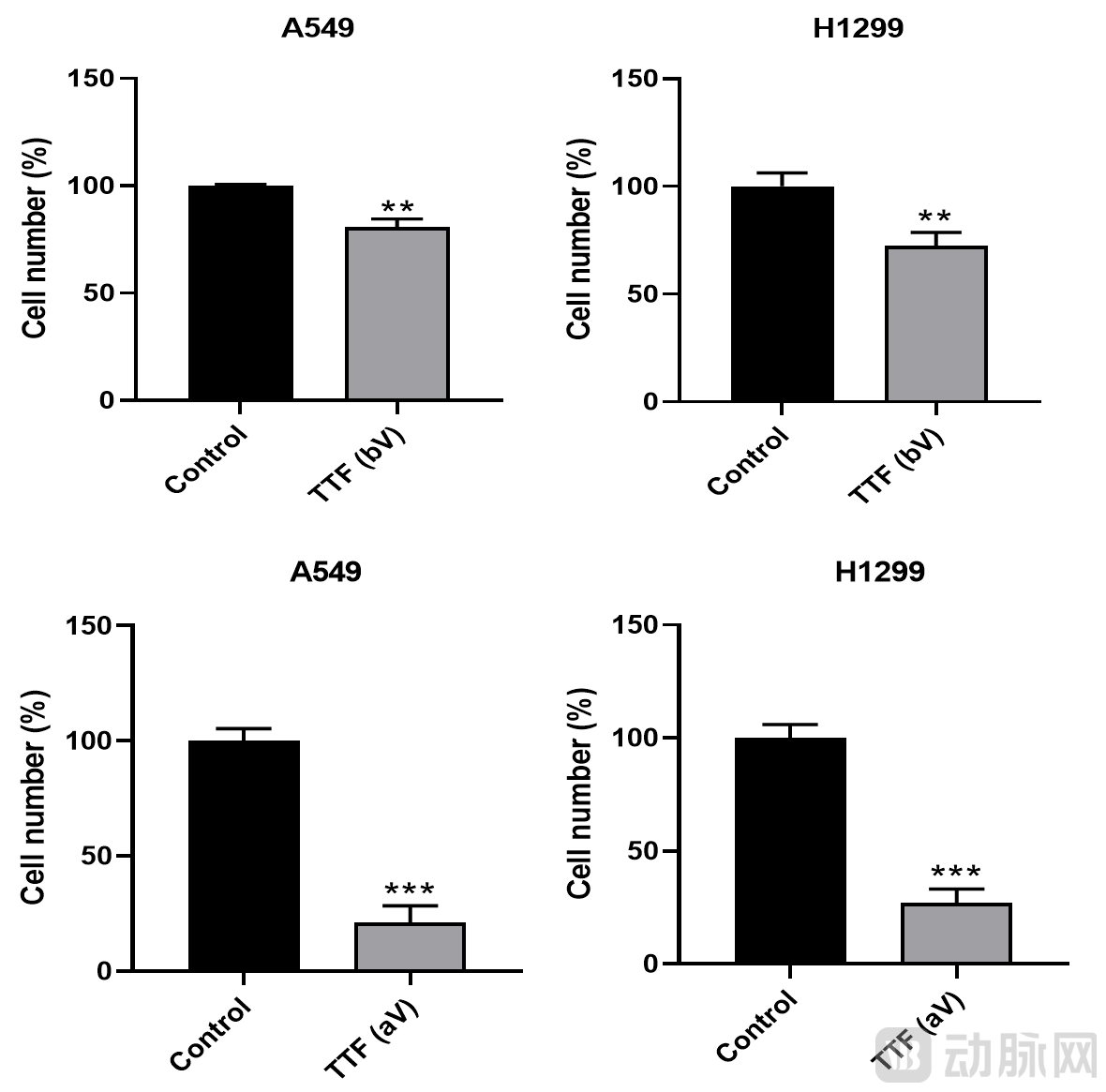
Figure 1. TTF inhibits the proliferation of both A549 and H1299 non-small cell lung cancer (NSCLC) cell lines (electric field intensity: a > b). In the stepwise experiments, higher field intensities demonstrated superior efficacy compared to lower intensities (**p < 0.01, ***p < 0.001).
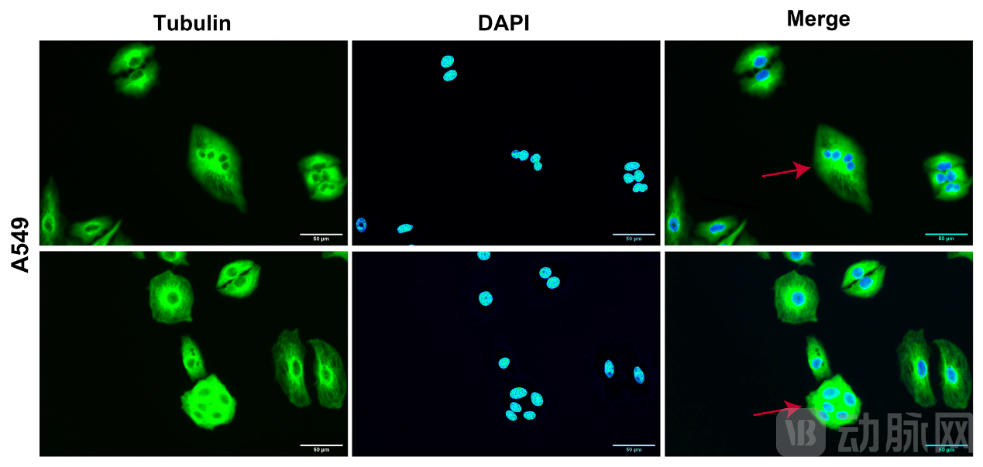
Figure 2. Immunofluorescence images of tubulin in A549 cells after TTF treatment. Multinucleated cells (red arrows) indicate that A549 cells undergo abnormal mitosis under TTF exposure.
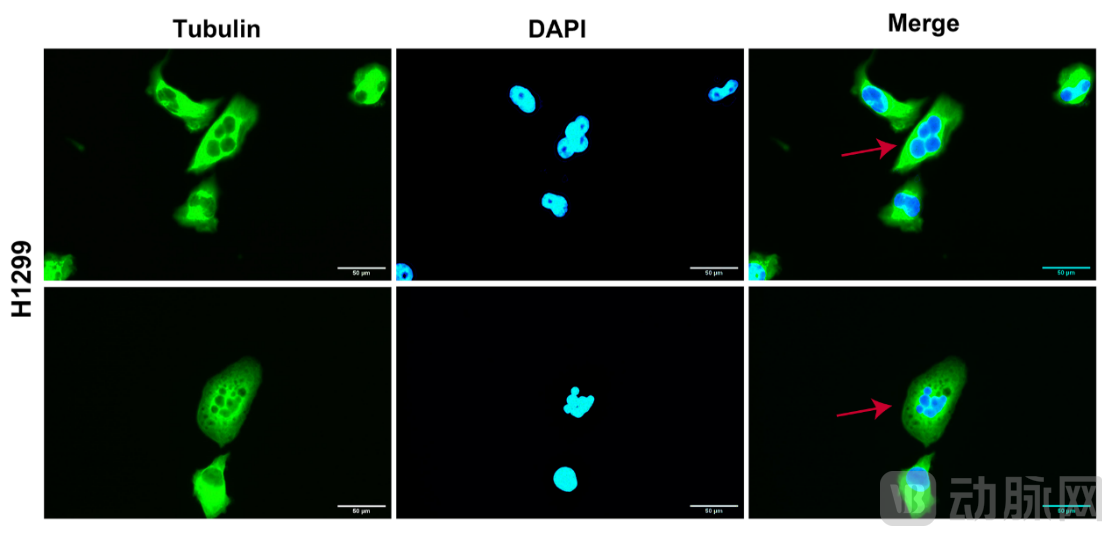
Figure 3. Immunofluorescence images of tubulin in H1299 cells after TTF treatment. Multinucleated cells (indicated by red arrows) demonstrate that TTF induces abnormal mitosis in H1299 cells.
2. In animal experiments, the efficacy of electric field therapy was also demonstrated by comparing tumor volumes in four groups of non-small cell lung cancer model mice:
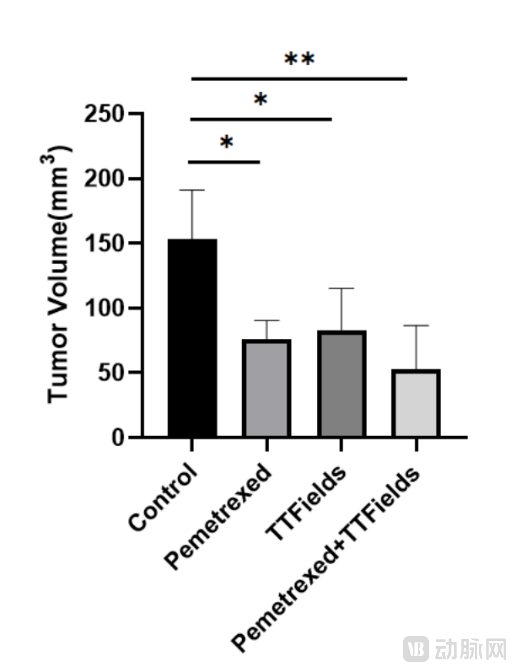
Figure 4. Differences in tumor volume in mice (**p<0.01, *p<0.05). Compared with the control group, tumor volumes were significantly reduced in the pemetrexed group, the TTFields group, and the combination group (pemetrexed + TTFields). Both TTFields and pemetrexed chemotherapy significantly inhibited tumor growth, while the combination therapy demonstrated superior efficacy compared to either TTFields or chemotherapy alone.
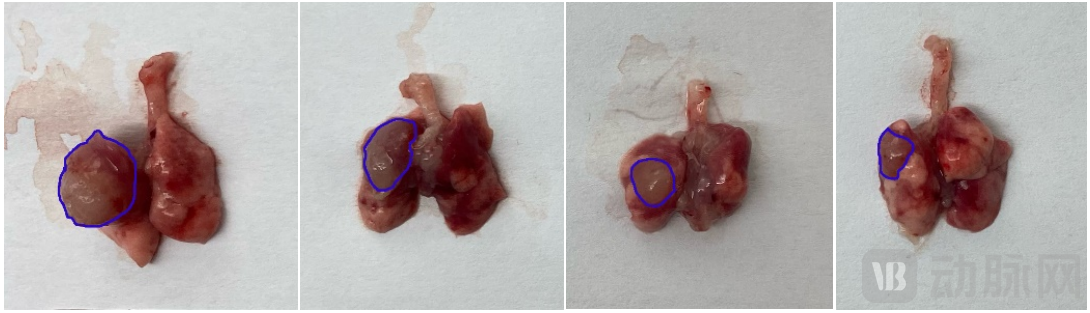
Figure 5. Tumor growth in the control group, pemetrexed group, TTFields group, and combination group (pemetrexed + TTFields), respectively.
Currently, Hailai’s nationwide multicenter clinical trial program for its non-small cell lung cancer (NSCLC) product is advancing steadily. Clinical trial approval is expected to be obtained by the end of 2021, a timeline anticipated to precede the market entry of Novocure’s comparable products into China.According to estimates by the Haili team, Novocure’s product for non-small cell lung cancer is expected to be approved around the end of 2022, with approval from China’s NMPA no later than the first half of 2023.
For corporate development, this appears to be a race against time. As the first company in China to initiate a TTF project for non-small cell lung cancer, can Hailai continue to “outrun time”? We remain relatively optimistic about its prospects.
Regarding the company’s future development plans, Huang Yong stated that Hailai will progressively advance multi-center clinical trials for four products this year (targeting glioblastoma [GBM], non-small cell lung cancer, pancreatic cancer, and ovarian cancer), with the aim of obtaining four regulatory approvals between 2023 and 2025. For the EFE-G100 project, which is currently the most advanced in its pipeline and indicated for GBM, Hailai strives to secure its first Class III medical device registration certificate in 2023. Within three years, Hailai will initiate its initial public offering (IPO) application process.
For Hailai, which places great emphasis on research and development, the most pressing need remains high-quality, highly skilled talent. A portion of the funds raised in this financing round will be allocated to recruiting top-tier talent teams. Guided by its employment philosophy of “not only filling the bucket but also igniting the fire,” Hailai aims to continue attracting outstanding individuals and actively recruit high-level professionals in fields such as clinical medicine and academic research.
In terms of corporate hardware facilities and premises, Hailai currently operates a GMP-compliant manufacturing facility spanning over 1,000 square meters, featuring a Class 100,000 cleanroom for sterile production and a Class 10,000 biological laboratory. All laboratory equipment consists of top-tier domestic and international brands. To accommodate the expanding demands of future product research and development (R&D) and production, Hailai will commission its new 8,000-square-meter R&D and production base, which includes an SPF-grade animal laboratory and a 5,000-square-meter GMP sterile manufacturing facility, thereby providing a superior environment for product R&D and production.
Dr. Huang Xiao, Executive Director of Yunfeng Capitalstated: “Tumor Treating Fields (TTFields) is an innovative non-invasive cancer therapy that specifically inhibits mitosis in tumor cells through alternating electric fields, holding the potential to improve survival benefits for patients with various refractory and recurrent solid tumors. As TTFields treatment incurs high costs overseas, we support HaiLai XinChuang, a leading Chinese developer of TTFields technology, in its independent innovation efforts. We aim to facilitate the expansion of TTFields into indications such as non-small cell lung cancer and pancreatic cancer, ensuring that Chinese patients gain early access to TTFields products with superior efficacy and more affordable pricing, thereby bringing tangible benefits to patients in China.”
Head of Biopharmaceuticals and Medical Devices, Hillhouse Venturesstated: “Tumor Treating Fields (TTF) therapy is a non-invasive, localized treatment modality that inhibits tumor cell mitosis through the application of alternating electric fields. Currently, the standard of care for solid tumors in China typically involves a combination of surgery, radiotherapy, and pharmacological interventions. Despite significant advancements, there remains a substantial unmet need in improving patient survival rates and quality of life. We will continue to support the Hai Lai team in pioneering innovations in TTF technology, launching additional TTF products targeting diverse indications, thereby delivering tangible benefits to patients.”
Chen Fei, Managing Partner at Lilly Asia Venturesstated, “We are highly optimistic about tumor treating fields (TTF), an emerging therapeutic modality distinct from conventional treatments such as pharmaceuticals and radiotherapy. This approach holds promise for expansion into multiple oncology indications, providing patients with a novel, highly effective, and low-toxicity adjuvant therapy option, thereby addressing more unmet patient needs. We believe that, under the leadership of Mr. Huang Yong, Hailai Xinchuang, as China’s first company with proprietary TTF technology, will bring this innovation to market at the earliest opportunity to serve a broad patient population. LAV will continue to support Hailai Xinchuang in becoming an industry leader.”
Zhou Quan, Managing Director of Legend Capital“He is delighted that Hailai has successfully secured another round of significant financing. Currently, Hailai has achieved notable breakthroughs in the treatment of glioma, non-small cell lung cancer, and pancreatic cancer through tumor treating fields (TTF), while also establishing an initial presence in gastrointestinal and gynecological cancers. The management team, represented by Mr. Huang, has done an outstanding job in product development and clinical advancement. Legend Capital will continue to increase its investment and move forward hand in hand with the company.”
Chen Chen, Project Leader of CPE“It is stated that ‘the mechanism of Tumor Treating Fields (TTF) therapy is well-defined, and there is substantial room for expansion of its indications. Hailai Xinchuang has taken a leading position in developing indications such as glioma and pancreatic cancer, demonstrating the team’s exceptional execution capabilities. CPE will continue to leverage its resources in the healthcare sector to provide comprehensive support to Hailai Xinchuang in clinical development and commercialization.’”
Sheng Li, Partner at Sanzheng Health Investmentstated: “The team led by Mr. Huang of Hailai Xinchuang has impressed us with its global vision, steadfast commitment to new technologies, and accurate foresight into industry trends. The clinical efficacy demonstrated by Tumor Treating Fields (TTFields) in the treatment of various cancers positions it as a promising platform-based therapeutic modality. We are optimistic about the potential of this technology and look forward to collaborating with the company to drive industry development, bringing hope and well-being to more patients.”