

Research Hospitals to Become a Pillar of China's National Life Science Innovation System, Says Hillhouse's Yi Nuoqing

Hillhouse
Long-Term Structural Value Investment Institution
“Clinical research is a key link in the pharmaceutical innovation industry, and research-oriented hospitals will become an important force in the construction of the national life science innovation system.” On May 21, 2021, Yi Nuoqing, Co-Chief Investment Officer and Partner at Hillhouse, stated at the “DIA Annual Meeting & Exhibition (China)” that research-oriented hospitals are crucial to building a sustainable and internationally competitive pharmaceutical innovation ecosystem.
For years, Hillhouse has been deeply engaged in the global life sciences and healthcare industry, assembling the most leading enterprises across the entire value chain, top-tier innovative talent, and the most extensive network of medical institutions, while also being best positioned to grasp global industrial innovation trends. As an academically oriented institution, Hillhouse recognizes that, within the global life sciences innovation ecosystem, research hospitals serve as critical infrastructure playing a vital role in medical innovation.
As a pioneer in building research-oriented hospitals, how should one understand the development of such institutions in China? How can the integration between industry and basic scientific research be promoted, and how can medical innovation be advanced? Yi Nuoqing, Partner at Hillhouse responsible for investments in the life and health sector, shares his insights based on over a decade of investment experience in this field.
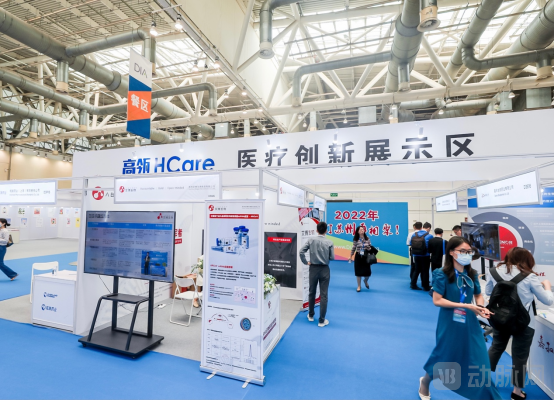
At the DIA Exhibition, 11 Hillhouse Portfolio Companies Make a Group Debut
Life and health research is characterized by its highly interdisciplinary and cross-integrative nature, brimming with exciting scientific frontiers. It is the crown jewel of science and technology, posing a challenge to the limits of human intellect.
Clinical research serves as a critical pillar for innovative development in the life and health industry. The establishment of research-oriented hospitals will comprehensively enhance their capacity for clinical research, playing a pivotal role in leading the development of the biopharmaceutical industry and building an internationally influential hub for biopharmaceutical innovation. Indeed, research-oriented hospitals are poised to become a vital force in the construction of the national life science innovation system.
In recent years, a large number of pharmaceutical R&D enterprises with independent innovation capabilities have emerged in China, achieving remarkable results in the development of innovative drugs. According to research and forecasts by Hillhouse’s healthcare investment and research team, the annual sales volume of China’s innovative drug market is expected to grow by RMB 2 trillion by 2030; this value will be even greater if overseas markets are included. The next 5–10 years will constitute a critical period for cultivating leading Chinese pharmaceutical companies and propelling them into the ranks of globally renowned pharmaceutical enterprises.
Notably, clinical research is a critical component of the pharmaceutical innovation industry and is essential to building a sustainable, internationally competitive ecosystem for pharmaceutical innovation.
Clinical trials are the sole method for verifying the safety and efficacy of drugs in humans, and they represent the most capital- and time-intensive phase in new drug development. However, for a long time, China’s clinical research capacity and resources have remained a weak link in the chain of medical technological innovation. The number of institutions capable of conducting clinical trials remains limited, plagued by numerous pain points such as insufficient capacity, scarce resource allocation (including experts and hospital beds), inadequate professionalism, and insufficient prioritization.
The supply and demand of clinical research resources are unbalanced, and the development of clinical research has lagged behind other segments of the pharmaceutical innovation industry chain. If issues related to clinical research capacity and resources are not addressed in a timely manner, the progress of China’s innovative drug industry will be significantly delayed. Therefore, research-oriented hospitals have become a critical link in the development of the pharmaceutical innovation industry.
Research-oriented hospitals are hailed as a major innovation in modern hospital management and serve as the guiding direction for the construction and development of contemporary hospitals. China first introduced the concept of research-oriented hospitals in 2003. In 2017, “building research-oriented hospitals” was jointly designated by multiple national departments as a major strategy to guide the future development of hospitals, and it is also regarded as an inherent requirement and inevitable path for deepening healthcare system reform.
A review of internationally renowned hospitals and medical centers reveals that they all serve as hubs for industrial R&D and translational research. Mayo Clinic’s sustained investment in research is a key factor behind its consistent top rankings among U.S. hospitals. Its three campuses comprise a total of 2,736 beds, host 60 research centers, and feature 94,000 square meters of research laboratory space. All 766 full-time physicians engage in various research activities, supplemented by 254 principal investigators (PIs) and 4,027 research-support staff. As of the end of 2018, there were 12,760 ongoing research projects. Researchers at Mayo Clinic have made significant contributions to advancing the understanding of disease processes, summarizing clinical practice experiences, and facilitating translation from the laboratory to the clinic.
The NIH is the world’s largest public funder of biomedical research and operates the NIH Clinical Center, a research hospital. Established in 1953, the NIH Clinical Center focuses on tackling rare diseases and conditions with significant impact on public health, while training current and future generations of clinical researchers. To date, the research hospital has enrolled more than 500,000 participants in clinical studies.
How Should China’s Research-Oriented Hospitals Develop? This has been a topic of ongoing discussion among experts and scholars in recent years. On one hand, development must be grounded in reality, taking into account the current state of the national healthcare system and the stage of advancement in the life sciences industry and scientific research. It should focus on resolving critical “bottleneck” challenges at each stage and continuously evolve dynamically. On the other hand, it is essential to move beyond mere theoretical speculation and armchair strategizing; instead, there must be a bold commitment to practical implementation and active exploration, with continuous refinement and improvement driven by accumulated practical experience and market feedback.
Research-oriented hospitals should also assume a significant mission in innovative clinical research and the application of new technologies. For instance, registered clinical trials are merely a regulatory requirement prior to the market launch of new drugs; there is a greater demand for post-marketing expansion of indications and exploration of clinical medication regimens, which enrich the drug lifecycle and broaden clinical application scenarios. Leveraging its influence in the global healthcare sector, Hillhouse has helped build research-oriented hospitals into world-class clinical research centers by introducing top-tier international medical resources, such as the Yale Clinical Research Center and the Mayo Clinic Cancer Center.
Drawing on deep insights into the life and health sector, Hillhouse has built an integrated innovation ecosystem that bridges medicine, industry, academia, research, and finance, serving as a connector, catalyst, and accelerator for technological innovation. Centered in the Yangtze River Delta region and adopting the Massachusetts biotech innovation model from the United States, it promotes the translation of clinical research and collaboration between medical institutions and enterprises, fostering the development of an ecosystem for R&D and manufacturing bases.
On September 24, 2020, Gaobo Changping International Research Hospital became one of the first projects to settle in the Beijing Free Trade Zone. As China’s first research-oriented hospital that meets international standards, focuses on clinical research as its core business, and possesses the capacity to conduct global multi-center clinical trials, the establishment of Gaobo Changping International Research Hospital will serve as a significant complement to the pharmaceutical innovation ecosystem.
As can be seen, new-type research hospitals are driving innovative development in the life and health industry. With pharmaceutical technological innovation as their core objective, these new-type research hospitals are deeply integrating basic research with clinical research, thereby building platforms for new drug clinical trials and incubators for innovative pharmaceutical enterprises.
Hillhouse has completed its layout across the entire “ecosystem,” spanning CRO/CDMOs, research-oriented hospitals, biopharmaceuticals, medical devices, and healthcare services. It encourages collaboration between biopharmaceutical R&D enterprises and research-oriented hospitals within this “ecosystem” to promote the translational application of research findings, thereby closing the loop between industry and medicine and enhancing the efficiency of industrial translation.
Research-oriented hospitals serve as accelerators for the development of the biopharmaceutical industry. Advancing the continuous construction of new-type research-oriented hospitals can significantly change the current reliance on international clinical research technologies, comprehensively enhance China’s capabilities in clinical research and translational application of new drugs, new medical devices, and new technologies, and better support the development of China’s health industry while improving residents’ health outcomes.