

Color Genomics Files for IPO: Building the Largest Public Genomic Database to Advance Preventive Healthcare

General Catalyst
Venture Capital Firm
“The Yellow Emperor’s Inner Canon” states, “The superior physician treats disease before it arises, not after it has manifested; this is what is meant.” The core essence of its concept of “treating pre-disease” lies in taking preventive measures before problems occur. It places strong emphasis on the importance of early diagnosis and treatment, as well as early prevention of diseases.
In modern medicine, early screening and diagnosis of diseases have become a major medical issue. Among them, genetic testing is a significant measure by which humans utilize genetic technology to enable people to predict diseases before they occur, proactively prevent diseases, manage healthy lifestyles, and actively enjoy a healthy life.
In recent years, the implementation of genetic testing has provided a scientific basis for predictive medicine, disease prevention, and health management, while offering robust support for clinical diagnosis and the precise formulation of treatment plans. It has facilitated the integration of "personalized medication" into clinical practice, enabling physicians to deliver targeted precision medicine based on patients' genetic information.
Founded in 2013 and headquartered in California, USA, Color is a genetic testing company. It primarily provides customers with high-quality, affordable, and compliant genetic testing and genetic counseling services. Its vision is to expand the accessibility of genetic testing services by offering tests that are affordable for everyone.
On January 4, 2021, genetic testing company Color announced that it had secured $167 million in Series D financing.

Othman Laraki, Co-founder and CEO

Elad Gil, Co-founder and Board Member
Othman Laraki is the co-founder and CEO of Color. Previously, Othman worked at Google for several years, where he was responsible for developing front-end products, including the Chrome browser. Later, Othman co-founded Mixer Labs and developed the GeoAPI platform, a powerful location engine for developers. After the company was acquired by Twitter in 2009, he served as Vice President of Product at the social media network, helping to expand its user base from 50 million to 200 million.
Othman is a long-term investor and advisor to companies such as Pinterest, AngelList, Slack, and Instacart, and serves on the boards of directors of ESI Group and Frontier Medicines. He holds degrees in computer science and management from Stanford University and the Massachusetts Institute of Technology.
Elad Gil is a serial entrepreneur, operating executive, and investor. He spent many years at Google, where he served as the product manager for Google Mobile Maps and other key products. Later, Elad held the position of Vice President of Corporate Strategy at Twitter and managed multiple product teams, including Geo and Search. He was involved in three acquisitions, including that of the Android team. Elad holds a Ph.D. from the Massachusetts Institute of Technology (MIT), as well as degrees in mathematics and biology from the University of California, San Diego.
1. Genetic Testing Facilitates Disease Prevention
Genetic testing enables the early identification of genetic predispositions during the latent stages of disease, thereby enhancing awareness of preventive healthcare and facilitating early detection, prevention, and treatment. By implementing a series of targeted preventive and therapeutic measures, the risk of developing diseases is reduced.
Approximately 10% to 15% of most cancers are caused by genetic mutations or hereditary factors. Genetic mutations can dramatically increase an individual’s risk of developing cancer. For example, by the age of 80, a BRCA1 mutation can raise a woman’s lifetime risk of breast cancer to 81%.。Genetic testing can inform patients whether they should begin cancer screening several years earlier.
Most cases of heart disease are caused by multiple unhealthy lifestyle choices, but some are due to genetic factors. The Guidelines for Genetic Diagnosis of Monogenic Hereditary Cardiovascular Diseases point out that hereditary cardiovascular diseases caused by gene defects affect approximately 40 million people in total. There are more than 300 types of hereditary cardiovascular diseases, major categories including cardiomyopathy, channelopathies, aortic diseases, as well as hereditary hypertension and familial hyperlipidemia. Individuals with a family history of hereditary heart disease have a higher risk of developing heart disease compared to the general population.
One in every 50 adults with high cholesterol carries the gene for familial hypercholesterolemia; patients with this genetic condition are prone to losing interest in maintaining a healthy diet or engaging in physical exercise.
2. Genetic Testing Facilitates Precision Dosing
Pharmacotherapy is an indispensable component of disease management. Genetic variations can significantly influence the intensity of drug metabolism. Improper medication use carries risks of inducing new diseases, causing disability, or even resulting in death. When individuals take medications, their responses are influenced by a multitude of factors, including genetics. For instance, body weight, concomitant medications, medical history, and genetic makeup all affect how the body metabolizes certain drugs. Color can screen for genes that influence how the human body processes certain commonly prescribed medications.
Through genetic testing, physicians can prevent potential diseases and conduct personalized assessments and diagnoses of drug–patient interactions based on the patient’s physical condition, thereby providing individualized medication guidance. Precision dosing enhances disease cure rates and mitigates adverse drug reactions.
Comprehensive genetic testing is essential for completing population screening. In the past few years,,Color has developed end-to-endProduct Experience: Enabling Individuals to Anticipate Their Risk of Genetic Diseases in Advance. Color has streamlined the genetic testing process by implementing an online registration workflow that caters to users—whether at home or in a clinic—facilitating sample collection and the recording and gathering of detailed health history information.
Patients provide saliva samples at home and then send them toColor. If necessary, the doctor willVerify patient information and address their inquiries. Genetic testing typically takes several weeks to complete. Patients can obtain their test results and receive appropriate guidance from a genetic counselor by phone.
Color features proprietary custom software and advanced CAP-accredited/CLIADual-certified automated laboratory, capable of providing services for common hereditary cancers (BRCA 1&BRCA 2、 Lynch Syndromeand 23 additional genes)Testing services for genes associated with hereditary hypercholesterolemia, heart disease (27 additional genes), and other conditions, as well as genes affecting drug response (14 genes).
Among themBRCA 1&BRCA 2are genes that significantly affect the risk of breast and ovarian cancer,Lynch SyndromeThese are genes associated with an increased risk of colorectal cancer and uterine cancer. By testing for 23 additional genes, a more comprehensive assessment can be made of the risks for breast cancer, ovarian cancer, uterine cancer, colorectal cancer, prostate cancer, gastric cancer, melanoma, and pancreatic cancer.
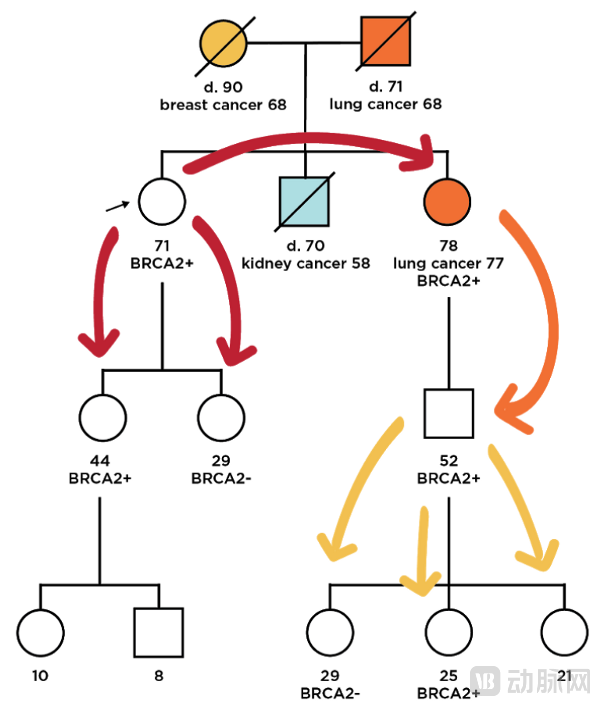
Schematic Diagram of BRCA Gene Testing. Image source: Color official website
Color also offers 30 genetic testing panels certified by the American College of Medical Genetics and Genomics (ACMG) as having actionable clinical implications. Unlike other digital health companies focused on genetic testing, Color consistently emphasizes the importance of genetic counselors.
Color has participated in the National Institutes of Health (NIH) “All of Us” program, which aims to provide software solutions for genetic testing and health data to patients. A key component of this initiative is connecting patients with genetic counselors. Additionally, Color has partnered with cancer clinics through its Color For All initiative to offer free genetic testing services to specific populations.
On October 30, 2020, Color will provide software infrastructure and a test collection kit to support the collaboration between PerkinElmer Health Sciences, Inc. and the California Department of Public Health (CDPH).When operating at full capacity, the newly built Valencia laboratory will conduct daily150,000 COVID-19 tests, therebySignificantly enhanced the state’s existing capabilities and accelerated access for residents across California.ConductCOVID-19 Testing.
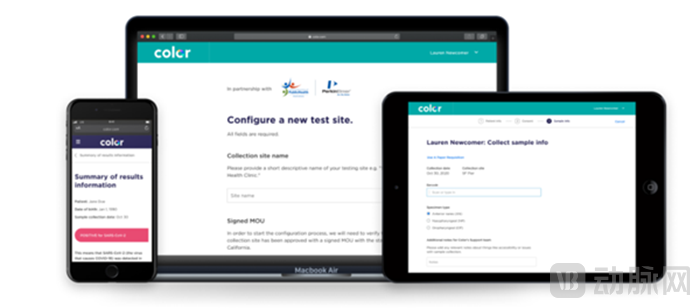
Color Multi-Channel Platform Image Source: Color Official Website
Color’s software can integrate with public health testing infrastructure anywhere—including large laboratories and community-led testing sites such as churches, schools, and local government agencies. It will enable people to quickly and timelyAppear at the collection site, provide samples promptly, and receive results via mobile phone or computer within two days. Meanwhile,Color’s software reports results to CDPH’s new COVID-19 data reporting system, CCRS.
Color Data is a database that contains data from 50,000 individuals who underwentThe aggregation of genetic and clinical information from individuals undergoing genetic testing enables researchers and scientists to identify genotype–phenotype correlations and novel variants for functional analysis, thereby facilitating data-driven drug discovery and development. It is the largest public database of its kind.
On January 4, 2021, health technology company Color announced that it had secured $167 million in Series D financing. This brings Color’s total fundraising to $397 million, with a valuation of $1.5 billion. (Source: Color official website news, Crunchbase)
The Series D financing round was led by General Catalyst, with T. Rowe Price Associates providing advisory services on the funds and accounts, and participation from Viking Global Investors and others.
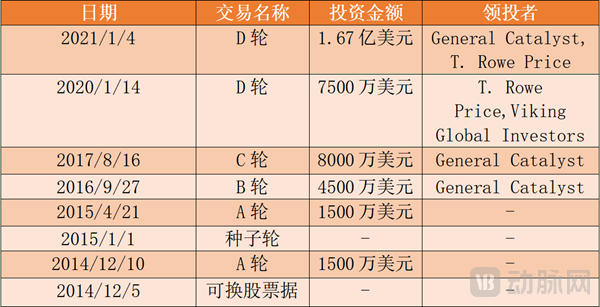
Color’s Historical Financing Rounds (Source: Crunchbase)
Color CEO Othman Laraki stated, “We are building a technology-based national public health infrastructure. During the greatest health crisis of our lifetime (COVID-19), the inability to deliver basic healthcare services was a direct consequence of the lack of a public healthcare service model. Public health is not merely government-funded; a modern public health infrastructure should enable all stakeholders in population health—including governments, businesses, and schools—to affordably meet essential health needs. Sustained investment in technology is key to ensuring access to cost-effective healthcare. We are creating an infrastructure that will serve us for decades.”
Hemant Taneja, General Partner at General Catalyst, stated, “The opportunity to shape the future of public health through technological design cannot be overstated. Color believes that challenges in healthcare are typically not scientific or medical in nature, but rather stem from barriers to access. Big data technology is perhaps the most impactful feature of digital technologies, and Color has leveraged this advantageous position to enter the healthcare sector, becoming one of the most significant companies in the industry.”
The 2019 Research Report on the Market Prospects of China’s Precision Medicine Industry (hereinafter referred to as the “Report”), released by AskCI Consulting, points out that China’s precision medicine industry is in its nascent stage. On one hand, due to the relatively late development of precision medicine in China, industry entry barriers have not yet been established, leading to a continuous influx of new participants and the creation of new markets. On the other hand, technological limitations within the precision medicine industry have temporarily hindered the large-scale adoption of novel therapies, while infrastructure such as gene banks and big data platforms remains underdeveloped.
The report also points out that China’s gene sequencing services are largely in sync with global developments. However, due to policy restrictions, foreign companies have not entered the Chinese market, particularly in the field of clinical gene sequencing services. In the domestic market, there are hundreds of sequencing companies of varying sizes, most of which are concentrated in the basic research services segment, characterized by lower entry barriers and less stringent regulation. The higher-barrier niche sectors—such as reproductive health, major diseases, and pharmaceuticals—are primarily dominated by industry leaders including BGI Genomics, Daan Gene, and Dian Diagnostics.
BGI was founded in 1999 and is a globally leading frontier institution in life sciences. BGI pioneers innovative development in genomics through an integrated “industry-academia-research” model. With branches spanning more than 100 countries and regions worldwide, it has established extensive collaborations across the industrial chain, applying cutting-edge multi-omics research achievements to fields such as medical health, resource conservation, and judicial services.