

Yuankangjian: A Pioneer in Internet Hospital Construction Gaining Recognition from Huawei Cloud and Wenjiang District Park Committee
VCBeat previously reported that, as of the end of April last year, there were only 497 internet hospitals. However, in March this year, the National Health Commission stated that the number of internet hospitals had exceeded 1,100. Within just one year, the number of internet hospitals has seen explosive growth. On one hand, the demand for online medical services, cultivated during the pandemic, continues to rise; on the other hand, the high efficiency and low risk associated with internet hospitals have gained further recognition.
However, during the establishment of internet hospitals, both hospitals and enterprises face a series of specific challenges. Making the firm decision to apply for an internet hospital license is merely the beginning; what follows are critical questions: What are the regulatory policies governing the construction of internet hospitals? Is the investment in developing operational systems for internet hospitals substantial? Is it difficult to meet the mandatory requirements of Level 3 Classified Protection of Cybersecurity? Are there significant challenges in integrating with provincial internet medical supervision platforms? How can internet hospitals be operated effectively? And how can higher-quality services be delivered to patients? ……
Established in 2016, Guangzhou Yuankangjian Information Technology Co., Ltd. (hereinafter referred to as “Yuankangjian”), which initially focused on “helping hospitals manage patients effectively,” recognized the opportunities in building internet hospitals. The company invested over RMB 50 million in a three-year research and development effort to create a standardized operational system for internet hospitals, which was launched in July 2019. Subsequently, Yuankangjian gained acceptance and recognition from Huawei Cloud and the Administrative Committee of the Modern Service Industry Park in Wenjiang District, Chengdu, collaborating with them to deliver internet hospital solutions for clients.
During the development of internet hospitals, how did Yuan Kangjian progressively refine its system to establish a mature model for internet hospital construction? Why has it gained acceptance and recognition from Huawei Cloud and the Administrative Committee of the Wenjiang District Modern Service Industry Park in Chengdu? Amid the current wave of internet hospital development, what are their thoughts on the future? To explore these questions, we interviewed Wan Yaohua, Founder and Chairman of Yuan Kangjian, and Zhou Haijun, Co-Founder and CEO.
A 21-Year Healthcare Industry Veteran and Team
Wan Yaohua, founder of Yuan Kangjian, brings 21 years of experience in the healthcare industry, with a career spanning virtually the entire pharmaceutical sector—from prescription drug advertising to OTC products, from clinical practice to pharmaceutical wholesale, and from chain pharmacies to internet-based healthcare. He has served as Sales Director at multiple pharmaceutical companies, achieving outstanding sales performance. He also acquired the Foshan Minxin Chain Pharmacy, where individual store revenues ranked among the top in the city. As the General Agent for Guangdong Province under Taiji Group’s National Sales Company, he achieved comprehensive provincial coverage of more than 20 OTC products across over 20,000 pharmacies within two years. During his tenure at Datang Hanfang, he successfully expanded numerous clinical products into more than 40 Grade-A tertiary hospitals in Guangdong Province. His extensive industry experience and robust professional network provided a strong foundation for his subsequent entrepreneurial ventures.
Wan Yaohua foresaw the transformative potential of the internet in the healthcare industry at an early stage. In 2016, during a chance conversation with Zhou Haijun, a senior executive from the founding team of a leading domestic pharmaceutical e-commerce company, the two immediately hit it off over their shared vision of leveraging the internet to help hospitals manage patients. One week later, Yuankangjian was founded, marking the point at which these two veterans of the healthcare industry embarked on their new entrepreneurial journey without hesitation.
Despite their passion and ambition, they encountered a tortuous journey. In 2016, internet healthcare was still in its early stages of development. Although Wan Yaohua believed that China did not lack medical resources, the core issues lay in information asymmetry and unequal resource distribution. Moreover, society lacked evaluation standards for the supply of medical services. Consequently, the patient-doctor management model, which was service-oriented, struggled to gain traction, and Yuan Kangjian once hit a bottleneck characterized by sluggish business growth. Troubled by these challenges, Wan Yaohua fell into self-doubt and suffered from sleepless nights.
The turning point came in 2018. With the issuance of a series of policies, including the “Opinions on Promoting the Development of ‘Internet + Healthcare’” by the General Office of the State Council, the construction of internet hospitals across China has flourished. Leveraging its continuous observation and in-depth understanding of the healthcare industry, along with the technical expertise accumulated over several years and proven experience in successfully securing licenses for internet hospitals, Yuan Kangjian rapidly transformed its business model, shifting its core focus to software development for internet hospitals and assistance with licensing compliance. Commenting on this strategic pivot, Wan Yaohua joked, “We have transitioned from being gold diggers to selling shovels.”
To better position itself for growth, Yuan Kangjian rapidly assembled a team of seasoned industry professionals in 2018. This core executive team included Dr. Chen, an associate chief physician with a background in top-tier (Grade 3A) hospitals; Xu Hong, who brought decades of experience as a clinical agent; and Lei Jiahua, a financial executive from internet enterprises with extensive experience in managing multiple rounds of financing. The company also recruited a group of senior professionals in computer information technology.

Among Yuankangjian’s team of over 100 employees, nearly one-third are technical professionals, playing a crucial role in the development of its internet hospital system and the maintenance of secure information technology. As a builder of internet hospitals, Yuankangjian strives to provide one-stop services, significantly simplifying the process for healthcare enterprises to establish internet hospitals while reducing their construction and operational costs.
Where Does Yuan Kangjian’s One-Stop Internet Hospital Construction Service Capability Come From?
“Leveraging its successful experience in applying for and establishing multiple internet hospitals, Yuan Kangjian is well-versed in nationwide implementation policies. It possesses extensive collaborative resources with numerous medical institutions and physicians practicing at multiple sites. Equipped with a standardized internet hospital operation system, a Huawei Cloud-based internet hospital service platform compliant with Level 3 Classified Protection of Cybersecurity, and standard plug-ins for compliant access to provincial medical regulatory platforms, among other compliant, secure, and efficient systems, Yuan Kangjian provides enterprise clients in the healthcare industry with end-to-end application and operational services for internet hospitals,” stated Zhou Haijun, Co-founder of Yuan Kangjian.
Yuan Kangjian’s one-stop service capabilities for building internet hospitals are primarily based on the following aspects:
1. To establish an internet hospital, it is mandatory to have an operational system that is integrated with the offline Hospital Information System (HIS). Developing such a system from scratch in-house requires substantial investment in personnel and funding for technical research and development, as well as considerable time, to ensure compliance with national laws and regulations governing internet healthcare.
Yuan Kangjian offers an online operations system, developed based on the WeChat Official Account platform, that can be rapidly deployed and launched. The system comprises three components: the patient interface, the physician interface, and the administrative backend. It includes essential functional modules such as text-and-image consultations, video consultations, prescription review, consultation records, medical records, electronic prescriptions, shipping address management, and complaints and suggestions, thereby meeting clients’ basic operational needs. Most importantly, the system can be deployed and go live within just seven days, saving costs, time, and effort.
2. The operational system of an internet hospital must comply with the Level 3 Classified Protection of Cybersecurity (also known as MLPS Level 3), which encompasses nearly 300 requirements and 73 assessment categories, including information protection, security auditing, and communication confidentiality. These requirements cover network links, core network devices, and security appliances in the realm of cybersecurity; application security scanning, penetration testing, risk assessment, and vulnerability management in application security; and backup of core critical data in data security. Each detailed requirement tests a company’s financial reserves for technical development and its R&D capabilities within the healthcare sector.
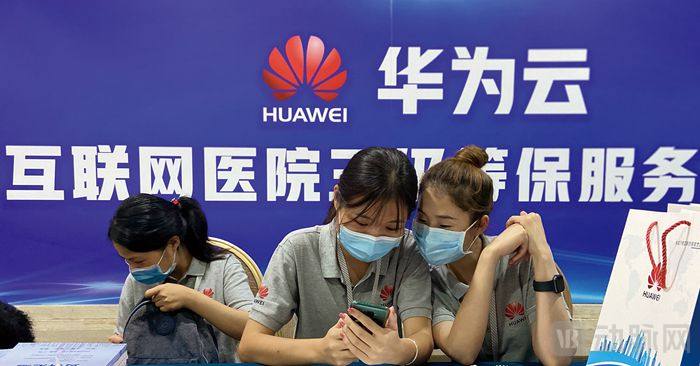
Recognizing Yuan Kangjian’s inherent strengths, Huawei Cloud and Yuan Kangjian joined forces to create the Huawei Cloud Internet Hospital Level 3 Classified Protection Service Platform. As the platform’s exclusive operator, Yuan Kangjian provides its customers with an end-to-end service package covering “classification, filing, rectification, assessment, and certification.” Zhou Haijun stated, “By applying for Level 3 Classified Protection through this platform, the number of assessment items is reduced by 47, the assessment time is shortened by more than 45 days, and costs are reduced by over 40% compared with the self-built data center model.”
3. Internet hospitals must connect to the provincial Internet medical service supervision platform. Taking the Guangdong Provincial Internet Medical Service Supervision Platform as an example, applicant enterprises are required to regularly upload data across four major categories comprising 44 specific items, including information on physicians’ multi-site practice, online prescriptions, and electronic medical records. The system demands 120 consecutive hours of error-free and complete data transmission, with a very low tolerance for errors; any mistake will indefinitely extend the re-application cycle. This integration phase also serves as a critical assessment of the enterprise’s technical development capabilities. Leveraging successful experience from multiple projects across China, Yuan Kangjian has developed plugins that comply with the access standards of provincial medical regulatory platforms, enabling clients to achieve efficient integration and pass the review on the first attempt.
What makes Zhou Haijun most proud is Yuan Kangjian’s in-depth capability to research internet hospital-related policies across various regions. Currently, the specific rules and regulations governing internet hospitals vary from place to place, which affects the speed at which third-party entities can apply for internet hospital licenses. To address this, Yuan Kangjian has established an internal policy research team that has compiled over 400 national and provincial-level (covering all 31 provinces, autonomous regions, and municipalities) internet healthcare policies and regulations into a Compendium of Internet Hospital Policies.
Meanwhile, its policy research team also traveled to demonstration provinces for “Internet + Healthcare,” such as Ningxia and Shandong, where it established smooth communication channels and regular coordination mechanisms with local health commissions and other relevant institutions. This enabled the team to stay updated in real time on requirements for establishing internet hospitals and available preferential policies. During interviews, Zhou Haijun repeatedly stated, “This is the core foundation that allows us to serve clients across China and successfully operate all three models—co-construction, self-construction, and new construction. We will remain committed to this effort.”
To better serve customers across China, Yuankangjian has established branches nationwide to ensure efficient operations. In March 2021, the company launched its 1,400-square-meter Western Regional Operations Center at Zhujiang International in Wenjiang, Chengdu; in April 2021, its Beijing branch was established. Currently, branches in Wuhan, Shanghai, and other cities are in the preparatory stage. Upon completion, these will join the Guangzhou headquarters to form five major operational hubs covering South China, Southwest China, North China, Central China, and East China, thereby accelerating national market expansion.

Through these comprehensive measures, Yuan Kangjian has established the capability to provide one-stop services that enable clients to efficiently and professionally establish internet hospitals with ease and cost-effectiveness. In recognition of Yuan Kangjian’s expertise in building internet hospitals and its influence within the pharmaceutical industry, the Administrative Committee of Chengdu Wenjiang District Modern Service Industry Park entered into an agreement with the company in April 2021 to co-establish a benchmark smart park for internet hospitals in China. The park offers multiple preferential policies, including tax incentives, household registration support for talent, rental subsidies, and streamlined approval processes, which have significantly enhanced Yuan Kangjian’s service capabilities.
Amid the Boom in Internet Hospital Development, What Are the Future Trends?
“Yuan Kangjian positions itself as a builder, promoter, practitioner, and explorer of internet hospitals,” said Zhou Haijun. “Our key differentiator from competitors who assist clients in building internet hospitals lies in our hands-on experience. In Guangdong, we hold licenses for two internet hospitals—one self-built and one newly established. Our internet hospital projects in Chengdu and Tianjin have also been substantially implemented, and we have officially signed a cooperation agreement with a renowned ophthalmic hospital in Wuhan. In serving our clients, we have encountered and resolved all manner of challenges. Our expertise stems first and foremost from our own practical experience, which is the secret weapon enabling us to help clients efficiently build internet hospitals!”
Having successfully assisted over a hundred enterprises across China in obtaining internet hospital licenses, Yuan Kangjian has also recognized potential future industry trends and is leveraging its capabilities to further explore and drive industry development:
1. Establish an Open Internet Hospital Alliance. They have observed that clients applying for internet hospital licenses have diverse needs. For instance, one enterprise launched an internet hospital to support its remote gastroscopy project; another company specializing in food tolerance testing sought to build an internet hospital to complement its online testing services; and an internet technology company applied for an internet hospital license with the aim of promoting its AI-powered Traditional Chinese Medicine (TCM) platform. By fostering collaboration among numerous internet hospital clients, it is entirely feasible to establish an open Internet Hospital Alliance and create a resource-sharing platform, thereby achieving “business complementarity and shared win-win outcomes” and optimizing resource allocation.
2. Establish a Cross-Regional Medical Insurance Payment and Settlement Center. Currently, the integration of internet healthcare services with medical insurance funds remains a significant concern within the industry. Leveraging its industry resources and multi-regional layout of internet hospitals, Yuan Kangjian aims to gradually assist internet hospital clients in connecting to the medical insurance system, thereby building a cross-regional online medical insurance payment and settlement center for shared use by industry practitioners.
3. Help clients build platform-based internet hospitals. The threshold for establishing internet hospitals is gradually rising, evolving from initial clinics to specialized outpatient departments and then to comprehensive outpatient centers. Nevertheless, primary healthcare institutions such as clinics still have a need to provide services to patients via internet-based means. Yuan Kangjian believes that clients with stronger financial and technical capabilities can leverage Yuan Kangjian’s system to deploy internet hospitals in a SaaS model. These platform-level hospitals can accommodate primary healthcare institutions that lack the sufficient financial and technical resources to independently apply for internet hospital licenses. By handling system infrastructure setup, rule formulation, and other core functions, platform-level hospitals can provide primary healthcare institutions with internet-based tools for patient management, thereby promoting industry development.
“Only through continuous innovation and R&D can we build a more robust and comprehensive internet hospital operating system for enterprises, thereby delivering superior services to every customer who trusts us and ensuring the vitality and sustainability of Yuankangjian,” said Wan Yaohua. Regarding future development, Yuankangjian, which has already achieved profitability, does not have an urgent need for pure financial investment; instead, it seeks strategic investors who share its vision for mutual growth.
From the perspective of Yuan Kangjian, the construction of internet hospitals is currently experiencing a new surge due to factors such as the pandemic; however, public hospitals’ investment in this area remains insufficient. According to their observations, only a small number of Grade A tertiary hospitals currently place significant emphasis on the construction and operation of internet hospitals, while the majority continue to focus primarily on traditional offline consultations. This situation presents an optimal window for numerous private medical institutions, pharmaceutical companies, pharmaceutical retail outlets, health management firms, medical technology companies, and pharmaceutical e-commerce platforms to apply for internet hospital licenses, seize market share, and capture future healthcare traffic entry points. Furthermore, as internet hospitals are subject to joint supervision by provincial and municipal authorities, the industry is still exploring best practices for their development. Yuan Kangjian hopes that nationwide policies will be introduced promptly to further promote transformation and development within the healthcare sector.
From June 8 to 11, 2021, the inaugural World Pharmaceutical Retail Industry Conference and the Second Primary Healthcare Development Conference—featuring the “High-Level Forum on Innovation and Exploration: Construction and Practice of Internet Hospitals”—will be held at the Changsha International Convention Center. The event is hosted by the Changsha Municipal People’s Government and the China Pharmaceutical Commerce Association, and organized by Yuan Kangjian. Numerous industry leaders will gather in Changsha, Hunan Province, to jointly explore omnichannel solutions for the pharmaceutical retail sector. In response, Wan Yaohua stated enthusiastically, “This marks our new starting point, and we are full of confidence in the future!”