

Three Internet Marketing Strategies for the Healthcare Industry: Bridging Online and Offline Patient Engagement
Text and photos by Ryan Partners
In recent years, as internet marketing in healthcare has gained increasing prominence, medical institutions have rapidly increased their marketing expenditures to acquire customers amid intensifying market competition. Taking the fast-growing segments of consumer-oriented healthcare—namely medical aesthetics, ophthalmology, and dentistry—as examples, we observe that the medical aesthetics industry has the highest average customer acquisition cost, with average marketing expenses exceeding 30%.

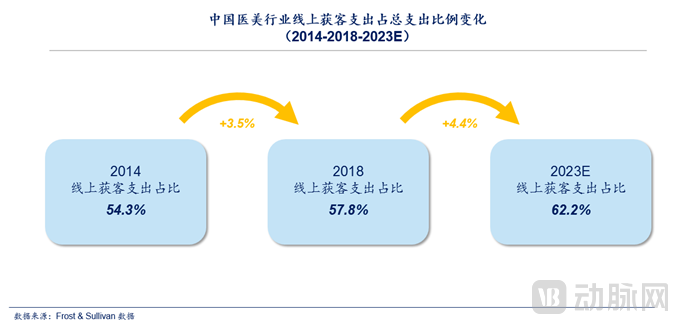
Furthermore, if we delve deeper into internet marketing expenditures, we find that within the medical aesthetics industry, against a backdrop of rising total marketing spending, the proportion allocated to online customer acquisition is also steadily increasing, and is projected to reach 62.2% by 2023.
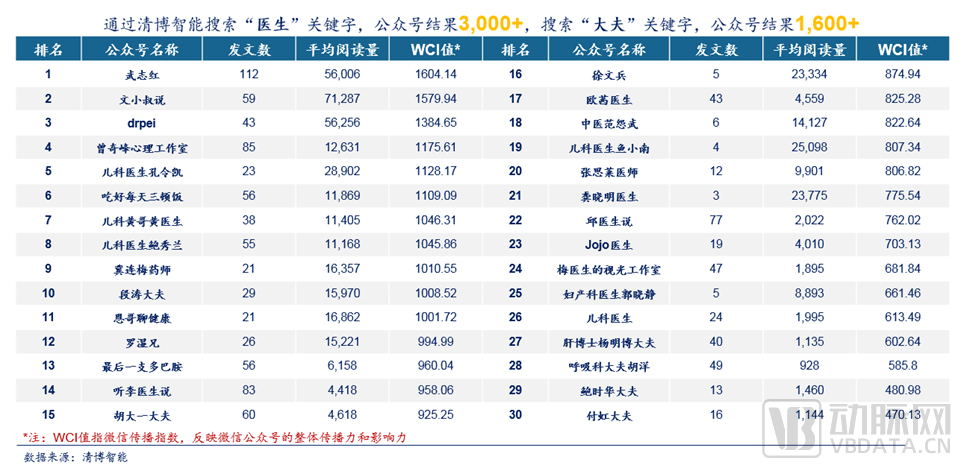
Meanwhile, we also observe that in recent years, beyond medical institutions, physicians at major hospitals have begun leveraging WeChat Official Accounts to build their personal brands. However, with the surge in the number of such accounts and audience fragmentation across other media platforms like Douyin, only top-tier influencers are able to secure greater exposure.
As the internet plays an increasingly prominent role in healthcare, more institutions and platforms are entering the digital health sector, assuming one or multiple roles, leading to growing congestion across all market segments.
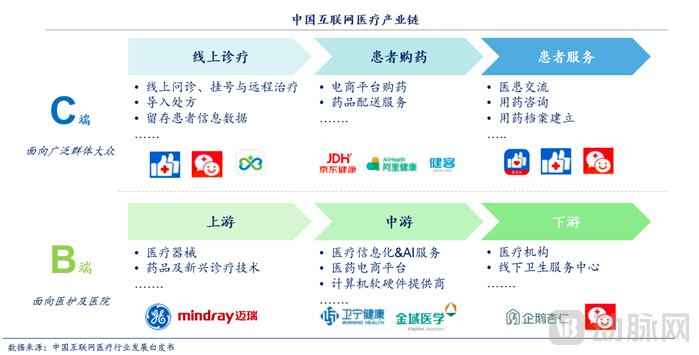
Due to the high degree of homogeneity among products and services offered by the more common online medical consultation platforms currently available, new entrants find it difficult to acquire customers without strong differentiation or substantial capital backing.
Taking the new preconception care center of an internet healthcare company as an example, despite leveraging a robust platform and high-traffic entry points, the center has seen dismal traffic after more than three months of operation amid homogeneous competition. With most physicians maintaining a 0% response rate, it is evident that attracting customers through undifferentiated content has become increasingly difficult.
Consequently, customer acquisition costs for institutions are rising, while conversion rates remain low. In an effort to improve conversion rates, institutions may further increase their investments, thereby creating a vicious cycle.
Taking the medical aesthetics industry as an example, the average customer acquisition cost has increased year by year, rising from RMB 3,000–4,000 per person in 2016 to RMB 5,000–6,000 per person in 2019, while the conversion rate has remained consistently low. In 2019, the number of users who sent private messages on the SoYoung platform was 4.31 times the number of users who placed orders. If the conversion rate is calculated based on active app users, it is even lower, approximately one-tenth of the conversion rate for users who sent private messages.
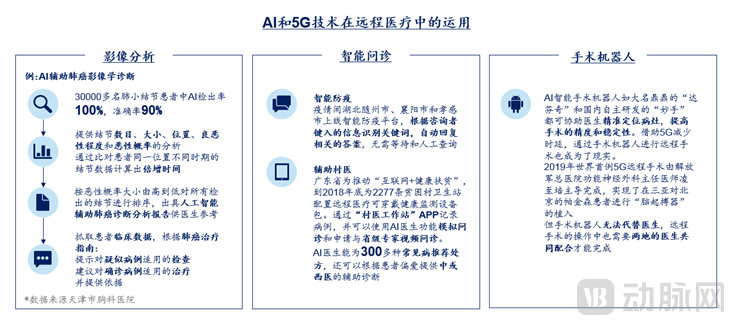
Reviewing the history of internet healthcare development, telemedicine in China has been evolving for 30 years, but its current primary application scenarios remain focused on providing second medical opinions and prescribing medications for follow-up visits. For example:
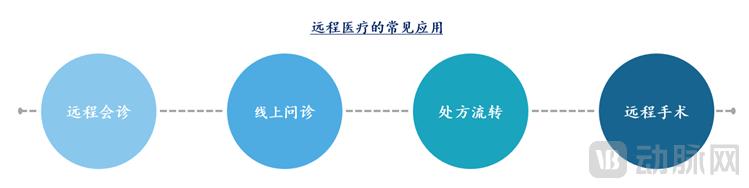
Although the pandemic spurred rapid growth for internet hospitals in 2020, current regulations still impose significant restrictions on the scope of online diagnosis and treatment. For instance, internet-based medical services are explicitly prohibited for initial consultations; internet hospitals may only provide follow-up care for patients with certain common and chronic conditions.
Although the rapid development of AI and 5G technologies in recent years has brought new possibilities to the application scenarios of telemedicine, they still cannot replace the physical medical model and are more often used to assist in diagnosis and treatment.
In the healthcare sector, a purely online model is not well-suited; many mature online platforms are now expanding into offline services to monetize their traffic.
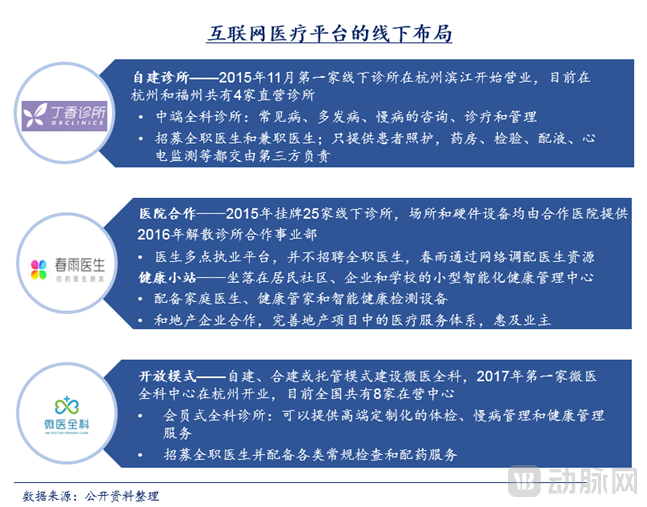
The platform has accumulated a vast pool of high-quality physicians and specialists over the years, and has continuously refined its e-prescription and medication delivery systems through collaborations with physical medical institutions. These advantages facilitate patient referral to offline clinics, thereby monetizing online traffic. Meanwhile, the platform’s data resources enable more precise user profiling, allowing offline clinics to tailor their services to the needs of existing user groups and enhance patients’ willingness to pay.
Taking the Mayo Clinic as an example, the ultimate goal of using an eMR system to integrate all patient data is to support in-person, in-hospital diagnosis and treatment.
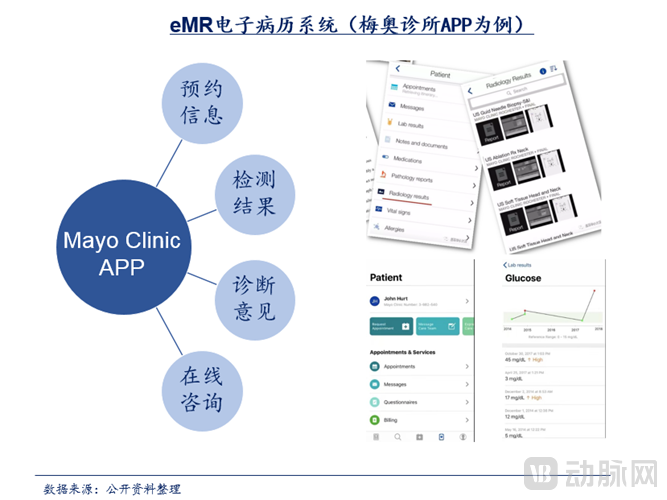
This integrated online-offline model facilitates hospital management and enhances patient care—
Complete and Accurate Information: In contrast to most paper-based medical records, which contain only physician orders and progress notes while other imaging and pathology data are scattered across various departments, the eMR system maintains up-to-date, comprehensive medical records for each patient and integrates with laboratory, pathology, and radiology departments.
Centralized Data Management: Test results obtained at various locations within the hospital are permanently stored in the patient’s personal electronic medical record (EMR) via the eMR system, enabling attending physicians to comprehensively access all data required for diagnosis and treatment.
Timely Access to Medical Records: The integrated system design enables physicians and patients to retrieve all clinical documentation, such as laboratory and radiology reports, from a single location.
The app helps patients gain a better understanding of their treatment process, facilitating smoother communication between doctors and patients. The sharing and instant access to medical records enable seamless coordination across departments and during referrals, providing patients with a more efficient and convenient healthcare experience.
We have previously discussed many pitfalls in internet marketing; finally, let us explore how internet healthcare can effectively establish channels for online-to-offline patient referral.
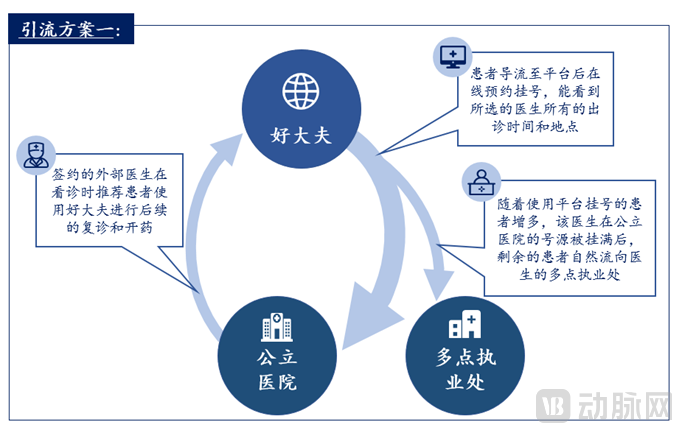
Traffic Acquisition Strategy 1: Directing offline consultations to online platforms, and subsequently channeling patients to multi-site practice locations.
The integration of online and offline healthcare is not merely a simple O2O model, but a solution designed to enhance the accessibility of medical services. Internet hospitals need to establish channels for mutual patient referral between online and offline platforms.
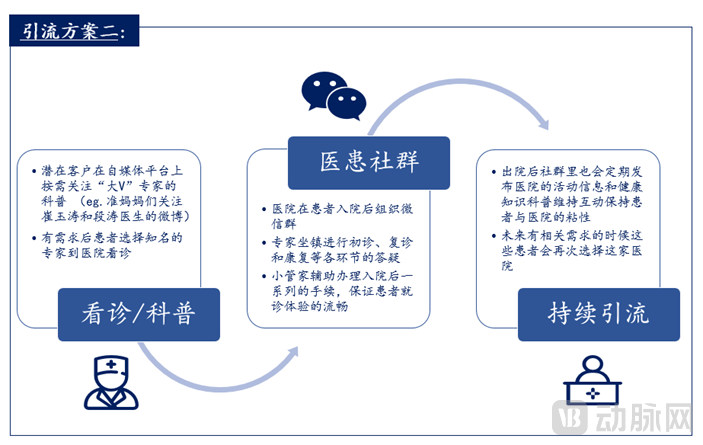
Patient Acquisition Strategy 2: The medical team implements online community-based management for patients
Physical medical institutions can leverage their healthcare teams to implement online community-based patient management, thereby fostering patient loyalty that facilitates broader promotion and sustained patient referral for the institution.
Drainage Strategy 3: Funnel-style drainage to filter precise patient traffic, then direct offline as needed
For large platforms with substantial investment, they can attract physicians to join by curating precise traffic flows, and then direct patients to offline services as needed.
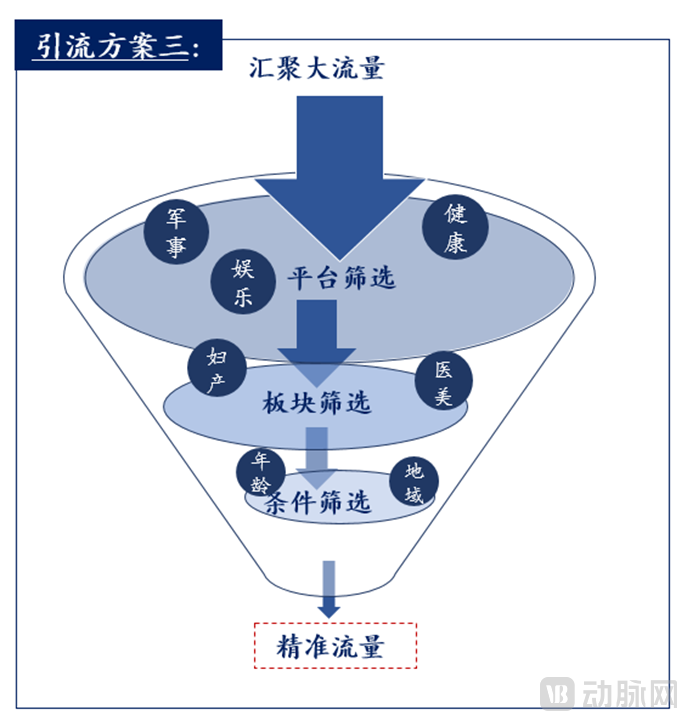
· Major internet platforms such as Tencent aggregate massive online traffic and leverage big data analytics to recommend other products within their ecosystems based on users’ click-through and reading preferences. For instance, users with healthcare consultation needs are recommended Penguin Doctor.
· After joining Penguin Doctor, the platform aggregates traffic data by segment to generate user profiles;
· After obtaining the criteria for the target patient population from collaborating physicians, screen users by geography, age, and gender, and further assess their willingness to pay through offline activities;
· The more closely the final filtered high-precision traffic aligns with physicians’ criteria, the more it incentivizes them to devote greater effort to practicing on the platform.
About Ryan Partners
Ryan Partners provides clients with comprehensive solutions, including global market research, market access strategies, market potential assessments, and other business intelligence services. We help clients address various challenges encountered at different stages of the business cycle, enabling them to evaluate and understand market environments and potential opportunities, thereby enhancing their competitiveness in the global marketplace. Our mission is to provide the strongest assistance and support to ensure our clients’ success in global markets.
Ryan Partners is composed of professionals dedicated to management consulting and research, specializing in vertical industries such as pharmaceuticals and healthcare, fast-moving consumer goods (FMCG), manufacturing, and digital new media, with expert skills and services. Currently, it has branches in Shanghai, China, France, Malaysia, and Singapore, serving multinational corporations and rapidly growing innovative enterprises worldwide.