

Asieris Pharmaceuticals Files for IPO on Shanghai STAR Market, Focusing on Urogenital Tumors and Major Diseases

Asieris
Innovative Drug Developer
On May 26, according to the official website of the Shanghai Stock Exchange (SSE), Asieris Pharmaceuticals (Jiangsu Yahong Meditech Co., Ltd., hereinafter referred to as “Asieris”) submitted its initial public offering (IPO) application, seeking a listing on the SSE’s STAR Market. The sponsoring institution is CITIC Securities Co., Ltd. Prior to this IPO submission, Asieris had completed five rounds of financing:
On December 27, 2017, Asieris Pharmaceuticals completed a Series B financing round of over RMB 100 million, led by Longpan Fund, with follow-on investments from institutions including Kaitai Capital, Zhongguancun Qihang Fund, and Phoenix Investment.
On April 10, 2018, Asieris Pharmaceuticals completed its Series B+ financing round. The amount raised in this round was not disclosed. The investors included Chongde Hongxin, Jinggong Hongyuan Fund, and Longpan Capital.
On March 24, 2020, Asieris Pharmaceuticals completed its Series C financing, raising hundreds of millions of RMB. The round was led by Yanyuan Innovation Capital, with participation from Guozhong Venture Capital, Yifeng Capital, and other investment institutions;
On June 28, 2020, Asieris Pharmaceuticals completed its Series C+ financing, raising hundreds of millions of RMB. This round of financing was participated by Tigermed, Boyuan Capital, Yingke Capital, and Huayin Jintou. Combined with the Series C financing previously led by Yanyuan Innovation Capital, the cumulative amount raised in these two rounds reached RMB 390 million.
On November 11, 2020, Asieris Pharmaceuticals completed its Series D financing round, raising over RMB 700 million. The round was led by Qiming Venture Partners, with participation from Yunfeng Capital, CICC Transfar Fund (under CICC Capital), Yicun Capital, Hengxu Capital, Hongxin Capital, Gopher Asset Management, C&D Emerging Investment, Hanrun Capital, Qinzi Capital, Yueyin Fund, and Haoshuo Zhier.
Asieris Pharmaceuticals was established on March 16, 2010, and was jointly funded by Pan Ke and Zhuang Chengrui. It is aFocusing on tumors of the Urogenital System and other major disease areasa global innovative pharmaceutical company.
As of now, Asieris has seven wholly-owned subsidiaries and one branch, namely Shanghai Asieris Pharmaceutical Technology Co., Ltd., Jiangsu Asieris Pharmaceuticals Co., Ltd., Zhejiang Asieris Pharmaceutical Technology Co., Ltd., Asieris MediTech Co., Ltd. (Asieris Cayman), Asieris Meditech (Hong Kong) Co., Ltd. (Asieris Hong Kong), Asieris Pharmaceuticals (USA), Inc. (Asieris USA), and Asieris Pharmaceuticals (AUS) Pty Ltd. (Asieris Australia).
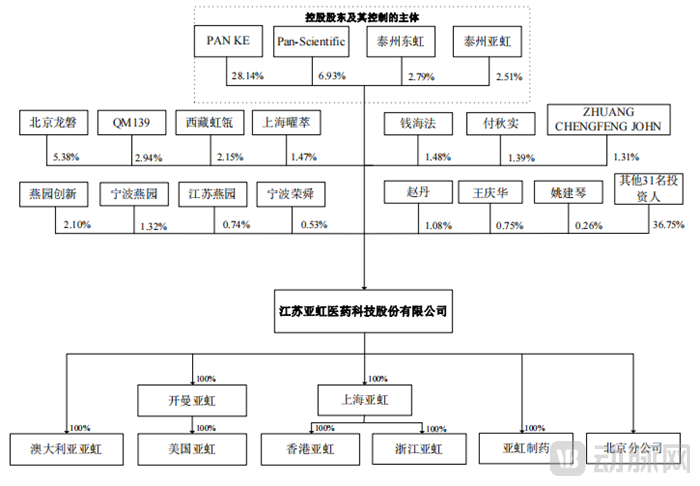
Capital Structure, Source: Prospectus
Asieris Pharmaceuticals’ A-share listing aims to raise RMB 2.07 billion, with the net proceeds after deducting issuance expenses to be invested in the following projects:
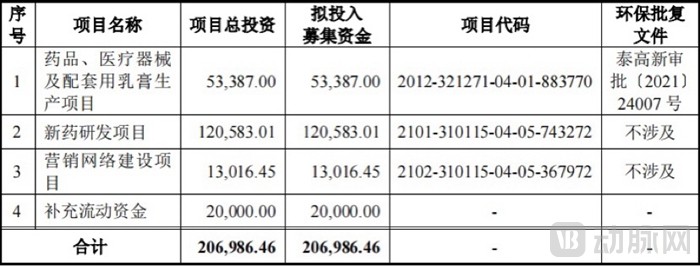
Source: Prospectus
Urogenital tumors can be classified into genital system tumors and urinary system tumors based on the site of onset. Among these, genital system tumors can be further divided into male genital system tumors and female genital system tumors according to gender.
Genitourinary tumors in males encompass a spectrum of neoplasms affecting the urinary and male reproductive systems, including the three most prevalent types—prostate cancer, bladder cancer, and renal cell carcinoma—as well as less common malignancies such as testicular cancer and penile cancer. Among female reproductive system tumors, cervical cancer, breast cancer, endometrial cancer, and ovarian cancer constitute the majority of malignant cases.
According to Frost & Sullivan analysis, the global market size for genitourinary tumors grew from USD 30 billion in 2015 to USD 53 billion in 2019, with a compound annual growth rate (CAGR) of 15.3% from 2015 to 2019,The Global Genitourinary Oncology Market Will Continue to Grow, is projected to reach $89.5 billion in 2024, with a compound annual growth rate (CAGR) of 11.0% from 2019 to 2024;Expected to reach $149.6 billion by 2030, with a projected compound annual growth rate (CAGR) of 8.9% from 2024 to 2030.
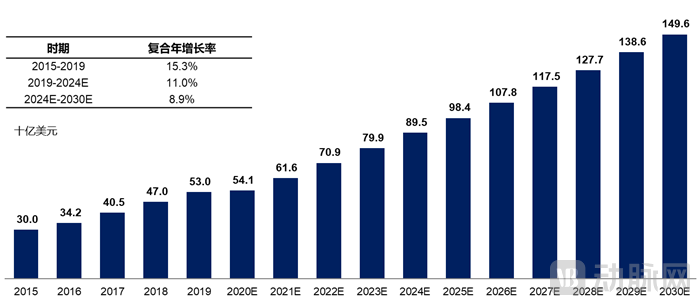
Global Market Size of Genitourinary Tumors, 2015–2030 (Source: Prospectus)
Frost & Sullivan analysis also shows that the market size of genitourinary tumors in China increased from RMB 30.5 billion in 2015 to RMB 51.9 billion in 2019, with a compound annual growth rate (CAGR) of 14.1% from 2015 to 2019.The Chinese urogenital tumor market is expected to continue growing.,Expected to reach RMB 104.4 billion in 2024, with a compound annual growth rate (CAGR) of 15.0% from 2019 to 2024; it is projected to reach RMB 198.7 billion by 2030, representing an expected CAGR of 11.3% from 2024 to 2030.
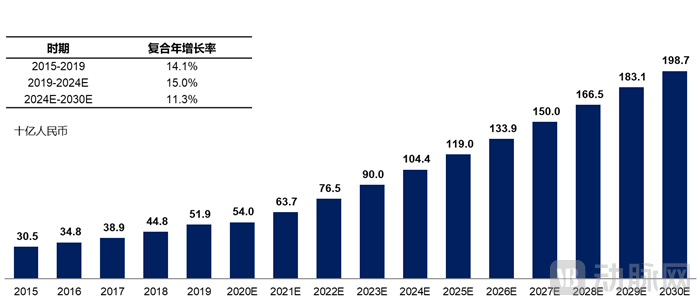
Market Size of Genitourinary Tumors in China, 2015–2030 (Source: Prospectus)
Asieris Pharmaceuticals, positioning itself in the future $100 billion market for genitourinary tumors, has established multiple R&D technology platforms, including the Targeted Immune and Modulation Normalization (TIMN) platform, the Prodrug and Accurate Drug Delivery (PADD) platform, and the Fragment-Based Assembling & Selectively Targeting Chimeras (FASTac) platform.
Leveraging the aforementioned core technology platforms, we have developed the primary drug candidates currently in our pipeline and laid the foundation for the future development of new candidates and the establishment of additional clinical pipelines.
1. The TIMN technology platform facilitates the discovery of targets that modulate the tumor immune microenvironment
Asieris’ independently developed TIMN technology platform features a unique in vitro high-throughput evaluation system based on co-culture of immune cells and tumor cells that simulates the tumor immune microenvironment. Combined with immunological functional assessment techniques utilizing multicolor immune cell analysis, it can help discoverTargeting the tumor immune microenvironment and rapidly evaluating candidate compounds.
Furthermore, Asieris has established a unique in situ tumor evaluation modelAddresses the insufficient reconstitution of the immune microenvironment in subcutaneous xenograft models, providing reliable research tools for further investigation into the mechanisms of the immune microenvironment and efficacy evaluation, thereby accelerating the translation of immunomodulatory drugs into clinical oncology trials.
2. The PADD technology platform is the company’s core prodrug technology platform.
Asieris’ PADD core technology platform employs prodrug technologies utilizing oligopeptide transporter PEPT1 and oligomeric PEG modification strategies. This approach enables the targeted conversion of candidate drug molecules containing specific functional groups or structural motifs into novel prodrug molecules via peptide bonds, ester bonds, disulfide bonds, and other suitable conjugation methods, offeringImproved solubility and stability can enhance pharmacokinetic properties, including gastrointestinal absorption, distribution, and metabolism.。
3. FASTac technology offers high selectivity, enhanced activity, and lower toxicity
The FASTac technology platform is a proprietary target protein degradation product development platform established by Asieris, based on molecular fragment assembly.
Theoretically, targeted protein degradation technology is superior to traditional targeted protein inhibitionIt offers advantages such as strong target selectivity, enhanced activity, and lower toxicity., particularly for the approximately 80% of human cellular protein targets that are considered “undruggable,” this approach will open up vast prospects for new drug development. In the field of oncology, in particular, the development of drugs targeting tumor-specific protein targets via targeted protein degradation technology holds promise for addressing the common challenge of drug resistance in cancer treatment.
Leveraging its core technologies, Asieris currently has all of its key products in the research and development stage, with a main product pipeline comprising 9 products and 12 R&D projects.
APL-1202 Poised to Become a Blockbuster Oral Drug for NMIBC Treatment
In the field of urological diseases, Asieris has identified non-muscle-invasive bladder cancer (NMIBC) as its primary target market. According to Frost & Sullivan analysis, the global NMIBC market size reached USD 1.2 billion in 2015 and grew to USD 1.7 billion in 2019, representing a compound annual growth rate (CAGR) of 10.4% from 2015 to 2019. The global NMIBC market is expected to continue its growth trajectory, reaching USD 3.3 billion by 2024 and USD 8.7 billion by 2030. The CAGR from 2019 to 2024 is projected at 14.1%, while the estimated CAGR from 2024 to 2030 will reach 17.4%.
Asieris Pharmaceuticals focuses on independent R&D and, through strategic collaborations with global leaders, has built a robust product portfolio covering the diagnosis (APL-1706 diagnostic imaging agent) and treatment (APL-1202) of non-muscle-invasive bladder cancer (NMIBC), committed to providing integrated diagnostic and therapeutic solutions for physicians and patients.
Among them,APL-1202 is the first-in-class oral, reversible methionine aminopeptidase 2 (MetAP2) inhibitor to enter pivotal Phase III clinical trials for oncology indications. It is also the first oral targeted therapy for non-muscle-invasive bladder cancer (NMIBC) globally to reach pivotal Phase III clinical trials, with the potential to address an unmet need in this therapeutic area.。
APL-1702 Is Poised to Become a Blockbuster Non-Surgical Treatment for HSIL
High-grade squamous intraepithelial lesion (HSIL) and low-grade squamous intraepithelial lesion (LSIL) of the cervix are precancerous lesions of cervical cancer. In China, due to the influence of various factors, women face an increased risk of HPV exposure and infection, resulting in a large population of patients with cervical precancerous lesions.
The number reached 3.5 million in 2019, with a compound annual growth rate (CAGR) of 1.3% from 2015 to 2019. The number of patients with cervical precancerous lesions is projected to reach 3.6 million and 3.7 million in 2024 and 2030, respectively, with CAGRs of 0.9% for 2019–2024 and 0.4% for 2024–2030.
In the field of reproductive system diseases, Asieris Pharmaceuticals’ investigational drug is APL-1702. APL-1702 is an integrated photodynamic therapy product combining a drug and a medical device, designed as a drug-device combination for the non-surgical treatment of high-grade squamous intraepithelial lesions (HSIL). It can be easily placed at the patient’s cervical os by gynecologists and removed by the patient herself after treatment. Furthermore, APL-1702 demonstrates significant and broad-spectrum clearance effects against HPV. The product is currently in Phase III international multicenter clinical trials.
Currently, there are no approved oral drugs for the treatment of NMIBC or non-surgical products for HSIL available on the global market. APL-1202 and APL-1702 both hold promise to become breakthrough blockbuster products in their respective fields.
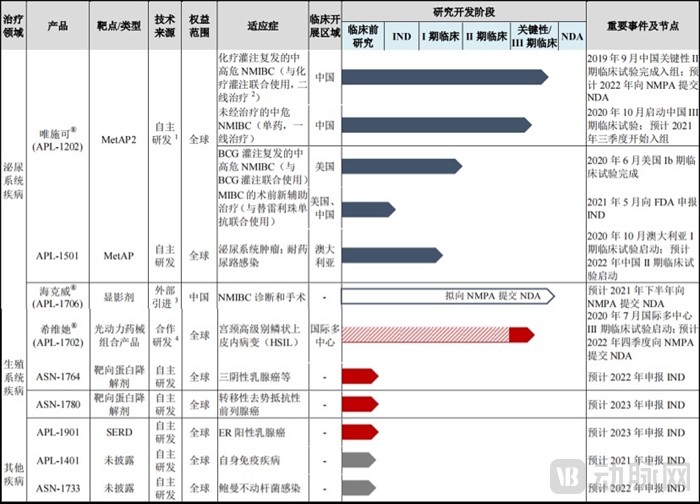
Asieris Pharmaceuticals’ Key R&D Projects (Source: Prospectus)
Regarding its investigational drugs, Asieris and its subsidiaries have obtained a total of 24 granted invention patents in countries and regions including China, the United States, Europe, and Australia, comprising 5 domestic patents and 19 overseas patents. In addition to the granted patents, Asieris has multiple invention patents under examination, covering new drug structures, crystal forms, manufacturing processes, indications, and formulation compositions.
As of now, Asieris has no products on the market. Before its drugs under development generate sales revenue, Asieris needs to invest substantial funds in various areas, including clinical development, regulatory approval, and marketing promotion. From 2018 to 2020, the net cash flows from operating activities for Asieris were RMB -52.83 million, RMB -88.8296 million, and RMB -125.9533 million, respectively.
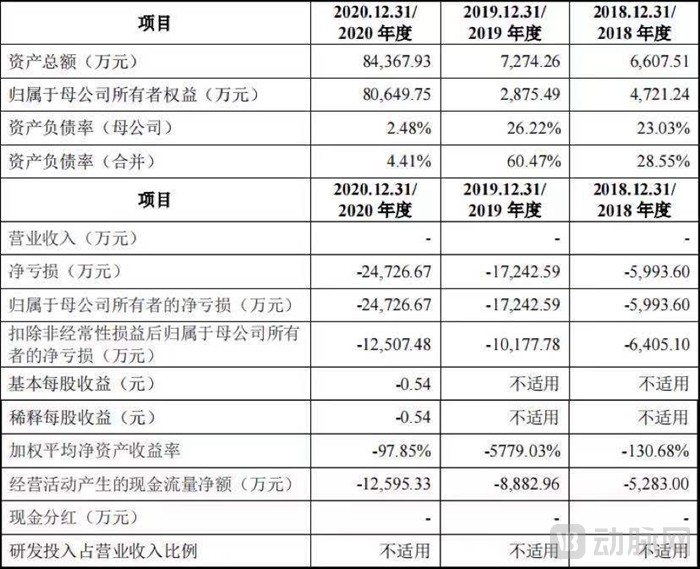
Main products are in the R&D stage and have not yet generated sales revenue. Source: Prospectus
In the future, Asieris Pharmaceuticals will continue to uphold innovative technologies and products as its core driving force, focusing on the global R&D of innovative drugs for urogenital system tumors and related diseases. The company is committed to identifying first-in-class innovations and novel therapeutics that significantly address the limitations of existing treatments. Through independent R&D and strategic collaborations, Asieris will deepen its product pipeline layout in the urogenital field, enhancing both diversity and synergy. By providing healthcare professionals and patients with an integrated portfolio spanning from disease diagnosis to treatment, Asieris aims to deliver comprehensive diagnostic-therapeutic solutions.