

Singular Genomics Launches on NASDAQ, Highlighting New Opportunities in NGS with Flexible, Desktop-Grade Sequencing Platforms

Singular Genomics
Provider of Integrated Gene Sequencing Solutions
On May 27, U.S. time, Singular Genomics, an innovative sequencing technology R&D company, went public on the Nasdaq.
Singular priced its offering at $22 per share, issuing a total of 8.5 million shares and raising $187 million. On May 27, Singular’s stock price rose rapidly at the open, gradually stabilizing after reaching a high of $32.08.By the close of trading that day, Singular’s stock price stood at $25.72, representing a 16.91% increase over its offering price.
Illumina dominates the market; Thermo Fisher is expanding into specialized niches; MGI Tech has risen in prominence over the past two years, challenging Illumina’s hegemony in certain regions. The NGS sequencer industry has largely become a battleground for major corporations in recent years, leaving dwindling opportunities for new entrants.For innovative enterprises seeking to enter the sequencer market, in addition to possessing a solid technological foundation, it is essential to identify appropriate entry points, such as developing miniaturized sequencing instruments or integrating with specific sequencing application scenarios to co-create next-generation sequencing (NGS) solutions.
Singular Genomics is one of them.Its innovative solutions are dedicated to making NGS workflows faster and more flexible, with desktop-scale solutions tailored for scenarios that are difficult for traditional high-throughput sequencers to address.
NGS technology has become relatively mature, but from Singular’s perspective, there is still significant room for improvement.
NGS sequencing instrument manufacturers often emphasize accuracy, speed, and throughput when describing their product performance. Singular, however, has focused on a fourth dimension: flexibility.
During the operation of most NGS sequencers, due to limitations of sequencing consumables, the number of samples is maximized in a single sequencing run. Samples that do not constitute a full sequencing batch are pooled together and sequenced simultaneously in a single reaction.
This operational approach gives rise to two issues. First, pooling different samples together may result in reduced sequencing accuracy or even sequencing failure due to uneven coverage across samples. Second, certain sequencing requests cannot be processed in a timely manner, leading to prolonged turnaround times for sequencing results.
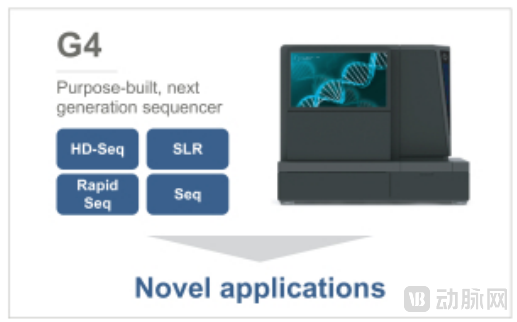
Singular Genomics’ NGS solution, G4, effectively addresses this issue.The G4 design incorporates four sequencing units, maintaining their independence without compromising sequencing throughput. As of the prospectus release, each sequencing unit of the G4 can independently generate 150 million reads, totaling 600 million reads across the four channels. Singular Genomics aims to achieve an independent output of 330 million reads per unit upon the product’s official launch.
In addition, the G4 solution also employs HD-Seq, a rare mutation detection technology.During routine sequencing, rare mutations may be introduced during the sample amplification phase. In certain cases, it is difficult to distinguish between rare mutations and sequencing errors in the final data analysis, leading to inaccurate sequencing results. Currently, conventional approaches to address this issue involve using unique molecular identifiers (UMIs) to label each single-stranded DNA molecule for quantification, or employing duplex sequencing for error correction. However, both methods further complicate an already time-consuming and labor-intensive sequencing process.
The HD-Seq technology employed by the G4 integrates cfDNA capture and amplification during library preparation, while sequencing is performed directly on the flow cell surface, preserving double-stranded DNA integrity throughout the process. Using this approach, the G4 solution has achieved 99.99% accuracy within 100 cycles. Singular Genomics anticipates achieving 99.999% accuracy in sequencing reactions exceeding 100 cycles in the future.
Based on these features, in addition to covering conventional sequencing application scenarios, the G4 solution is particularly well-suited for two major categories of typical use cases:
1. To prevent unexpected failures, the laboratory prefers not to allocate a large number of different samples to the same sequencing unit;
2. Due to different sample types or run modes, samples cannot be pooled into the same sequencing unit.
Singular Genomics is currently testing and developing the G4 solution in collaboration with its partners. Early access is expected to launch in the second half of 2021, with shipments scheduled for the first half of 2022.
Singular’s other product, PX, is even more forward-looking.
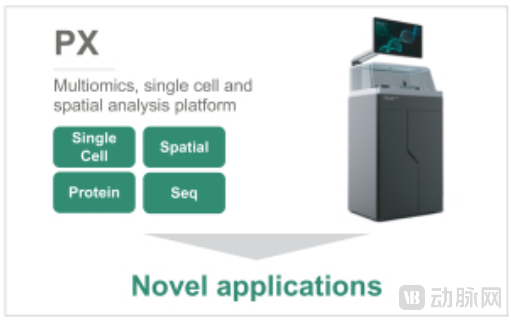
PX is positioned as an integrated multi-omics platform that combines single-cell analysis with spatial transcriptomics, enabling high-resolution imaging while simultaneously offering genomic and proteomic detection capabilities.
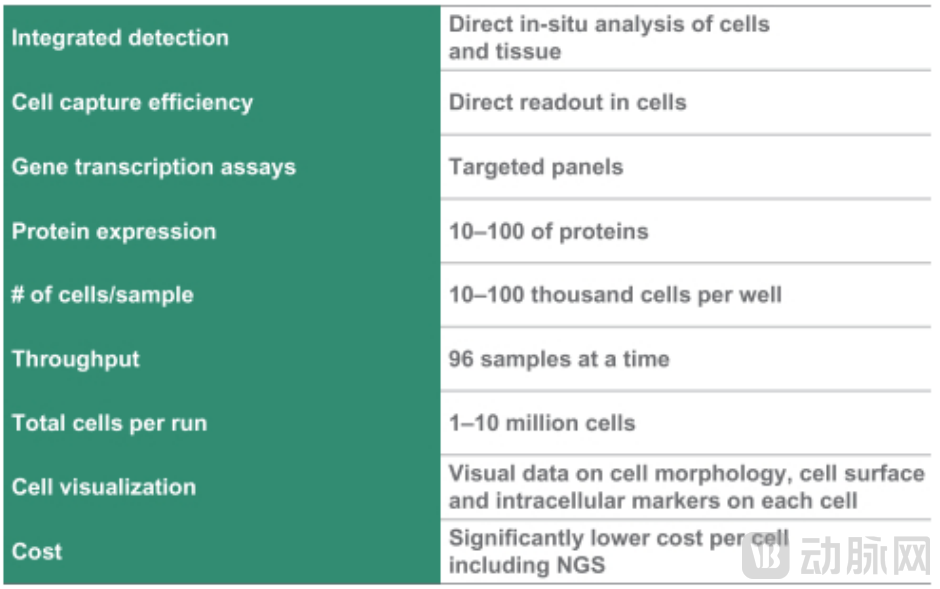
Partial Data of PX
In the future, Singular hopes that PX will realize its value in more cutting-edge yet clinically significant scenarios, such as single-cell RNA counting, single-cell proteomics, single-cell RNA mutation sequencing, and spatial transcriptomics and proteomics.
Specific details regarding Singular’s financing have not been publicly disclosed. According to its prospectus, Singular completed multiple rounds of financing prior to its initial public offering, with participation from globally renowned investment firms such as ARCH Venture Fund and LC Healthcare Fund. It is reported that Legend Capital, a well-known Chinese investment firm, is also an investor in Singular. Legend Capital participated in Singular’s financing starting from the angel round and continued to increase its investment in subsequent Series A, Series B, and Crossover rounds.
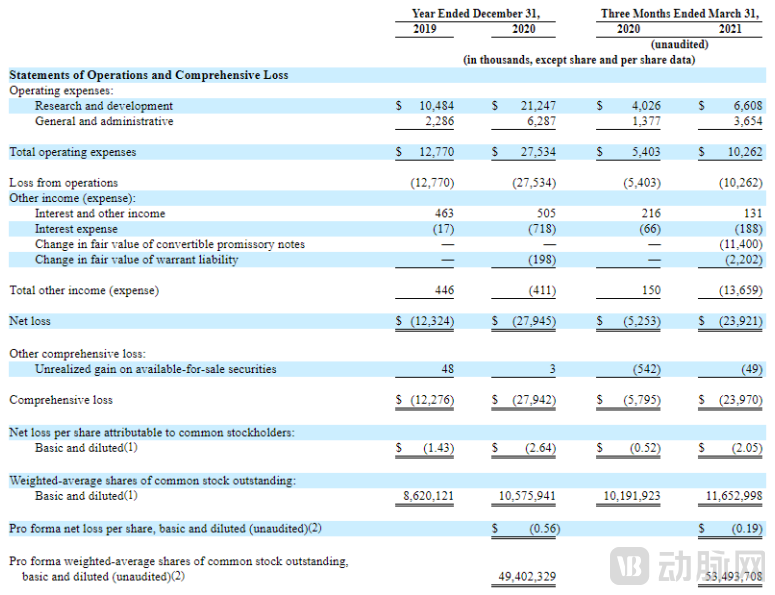
Selected Financial Data of Singular Genomics
Until its IPO, Singular Genomics had not generated any form of revenue. The primary use of funds has been for R&D, with R&D spending exceeding $10 million in 2019 and reaching $21.247 million in 2020. Based on the R&D expenditures in the first quarter of 2021, the company’s R&D spending is expected to continue rising throughout 2021. However, given that its G4 solution is nearing commercialization, Singular Genomics’ revenue-less status is not expected to persist for much longer.
Singular will primarily use the proceeds from this offering to advance the development of its two proprietary products, with the remaining funds allocated to extending its core sequencing capabilities to other platforms and application scenarios, as well as for general corporate purposes.