

Third China Gut Congress: Research Hotspots and Translational Directions in the Gut Microbiome Amid Industry-Academia Integration
The gut is the most sensitive and delicate organ in the human body after the brain, often referred to as the “second brain.” Its functions include digestion, absorption, secretion, excretion, immunity, and more.
From a public health perspective, when gut health is in crisis, it often serves as a reminder for individuals to promptly pay attention to their physical condition and undergo appropriate examinations and interventions. Especially given the continuously rising incidence of intestinal diseases among the population today, sufficient attention must be paid to gut health.
From an academic research perspective, fundamental gut research is currently a key area of medical exploration, encompassing numerous disciplines including medicine, pharmacy, microbiology, zoology, and food science.
From an industrial development perspective, the gut health sector is brimming with abundant opportunities, representing a blue-ocean market awaiting exploration. In particular, as research into the gut microbiome advances, greater translation of scientific findings into practical applications is to be anticipated in the future.
On the eve of World Gut Health Day, the 3rd China Gut Conference was held at the Nanjing International Exhibition Center on May 28. Themed “Love Your Gut, Love Learning, Love Integration,” it is the largest academic and industrial conference focused on gut health in China and even worldwide.
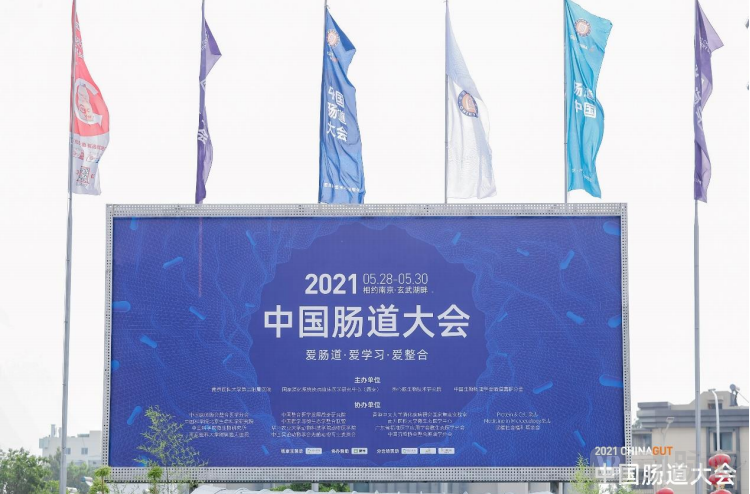
China Gut Conference: Advancing Academia and Industry Together
The China Gut Conference is jointly organized by the Second Affiliated Hospital of Nanjing Medical University, the National Clinical Research Center for Digestive Diseases (Xi’an), the Institute of Gut Biotechnology, and the Gut Microbiota Branch of the Chinese Society for Biophysics.The conference covered clinical, basic, translational, and industry-related aspects of gut health. It featured over 20 academic sub-sessions and multiple corporate satellite meetings, hosted more than 200 academic presentations and industry talks, and attracted over 6,000 attendees.
First, the lineup of the Presidium for this conference is unprecedented.Supported by numerous national academicians, including Chen Wei, Chen Zijiang, Dong Chen, Fan Daiming, Qiao Jie, Rao Zihe, Shen Hongbing, Tong Xiaolin, Wei Fuwen, Wu Qingping, Xu Tao, Yin Yulong, and Zhao Guoping, along with more than 30 experts. At the opening ceremony, Fan Daiming and Shen Hongbing, Academicians of the Chinese Academy of Engineering, and Rao Zihe and Xu Tao, Academicians of the Chinese Academy of Sciences, delivered conference addresses via video.
Seven renowned industry experts, including Zhao Fangqing, Researcher at the Beijing Institute of Life Sciences, Chinese Academy of Sciences; Zhang Faming, Director of the Center for Intestinal Diseases at the Second Affiliated Hospital of Nanjing Medical University; Yu Jun, Director of the State Key Laboratory of Digestive Disease at The Chinese University of Hong Kong; Wei Hong, Professor at Army Medical University; Wang Jun, Researcher at the Institute of Microbiology, Chinese Academy of Sciences; Zhou Hongwei, Professor at Zhujiang Hospital of Southern Medical University; and Lan Canhui, Dean of the Biochan Institute, served as co-initiators of this conference and presented their research reports to all attendees.
Secondly, the conference provided a robust platform for academic and industrial exchange and their integration.In the academic arena, the conference established more than 20 specialized academic sessions and invited domestic and international experts in their respective fields to deliver over 200 academic presentations. These included the China Gut-Brain Axis Conference, the Gut Microbiota and Health Conference, the Infection and Immunity Conference, the Frontiers in Oncology Conference, the Endoscopic Techniques Conference, the Maternal and Infant Health and Microecology Conference, the First Author Forum, and the Translational Medicine Conference.
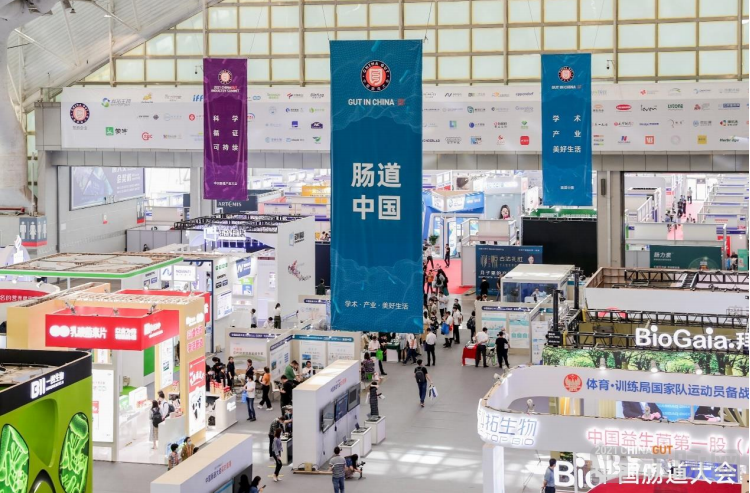
While the conference focused on academic research, the China Gut Industry Conference was held concurrently at the same venue. The event featured eight industry forum sessions, inviting entrepreneurs and corporate representatives from the gut health sector to deliver over 80 industry presentations. Numerous corporate exhibition booths were also set up, featuring companies from a wide range of fields—including probiotics, prebiotics and dietary fiber, genomics and testing, new drug and therapy development, medical devices, health management, nutritional supplements, and foods for special medical purposes (FSMP)—thereby covering the entire upstream and downstream value chain of gut health.
Gut Microbiota Chapter: Building a Think Tank of Chinese Experts in Gut Microbiome Research
At the opening ceremony of the China Gut Conference, the Gut Microbiota Branch of the Chinese Society for Biophysics, established in November 2020, held its launch ceremony on this occasion.The Gut Microbiota Branch is the first national-level secondary branch in China to be named after “microbiota,” and it is voluntarily composed of scholars engaged in research on gut microbiota and metabolism.
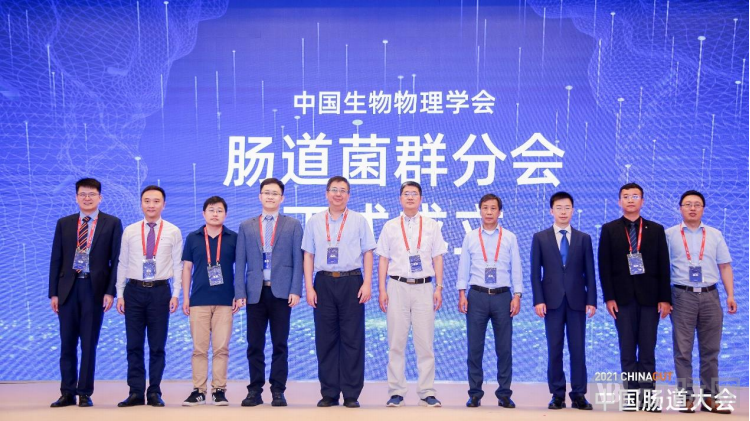
In recent years, with the advancement of DNA sequencing and recombinant technologies, research and interdisciplinary fields centered on the gut microbiome are expected to expand significantly. The establishment of the Gut Microbiota Branch aims to drive theoretical research and technological breakthroughs in this field. By integrating expertise from basic, translational, and clinical research, the branch seeks to foster collaboration and exchange among experts and promote interdisciplinary integration.
Its business scope encompasses four key areas: first, conducting research and monitoring of hot topics in the field of gut microbiota, and providing a platform for scientific exchange and communication; second, organizing specialized academic conferences on gut microbiota; third, promoting interdisciplinary integration between gut microbiota and other fields; and fourth, serving as an expert think tank and advisory body to support future national research on gut microbiota and the formulation of related policies.
Research Report: A Guide to the 7 Major Topics in the Gut Health Field
At the opening ceremony, the seven co-founders of the China Gut Conference delivered presentations based on current research progress and industry trends, highlighting seven hot topics in the field of microbiome research as follows.
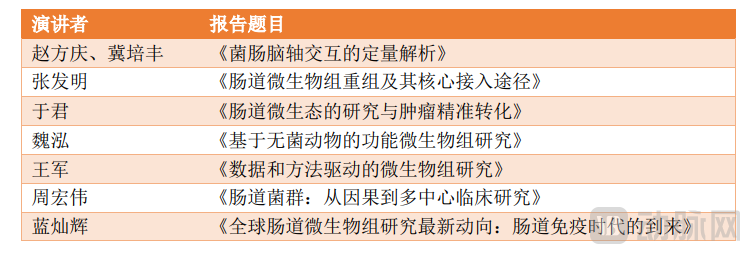
Seven reports explored cutting-edge topics such as the gut–brain axis, gut microbiota, fecal microbiota transplantation, gastrointestinal tumors, infection and immunity, and emerging technologies, laying preliminary groundwork for subsequent academic and industry conferences. These topics represent not only current research hotspots in academia but also key areas of focus for future industrialization. The following provides a brief overview of two of these reports.
The Gut-Brain Axis: The Link Between Gut Microbiota and Neurological Disorders
Commissioned by Researcher Zhao Fangqing, Associate Researcher Ji Peifeng from the Beijing Institute of Life Sciences, Chinese Academy of Sciences, presented to the conference audience on the progress of research into the gut-brain axis.
Researcher Zhao Fangqing first introduced the concept of the gut microbiota–gut–brain axis, stating, “It is a bidirectional system involving the central nervous system and the enteric nervous system. Gut microbiota influence the central nervous system through the gut–brain axis, thereby affecting systemic metabolism and behavior. Conversely, the nervous system can also exert modulatory effects via the brain–gut axis. Recent studies have shown that gut microbiota can regulate cognitive functions such as memory and are significantly associated with various neurological disorders, including anxiety, depression, and autism.”
Associate Researcher Ji Peifeng pointed out, “Modulating the gut microbiota has emerged as a novel strategy for the prevention and treatment of neurological diseases, demonstrating significant potential.” He further introduced the research team’s work on quantifying the gut-brain axis interaction pathways using single-cell technologies.
The Convergence of Creation and Technique: Infinite Possibilities in Clinical Treatment
Professor Zhang Faming, Director of the Center for Intestinal Diseases at the Second Affiliated Hospital of Nanjing Medical University, delivered a report titled “Reconstruction of the Gut Microbiome and Its Core Intervention Pathways.” He analyzed gut microbiome reconstruction from two perspectives—“creation of substance” and “creation of technique”—focusing on three levels: washed microbiota transplantation (WMT), selective microbiota transplantation (SMT), and probiotics/prebiotics, along with the core intervention pathways required, such as endoscopic transintestinal tube placement. He concluded, “Today, I have presented the three levels of microbial reconstitution and the core intervention pathways necessary for reconstruction. Only by achieving resonance between these two aspects can we unlock the limitless possibilities of clinical treatment.”
In this regard, when discussing probiotics and prebiotics, Professor Zhang Faming stated, “The clinical medical value of probiotics and prebiotics is inversely related to their market value as products. We hope that more enterprise-sponsored clinical trials will be conducted in China in the future to demonstrate their medical value.”
According to the design of the “Healthy China 2030” Planning Outline, China’s big health industry is expected to reach a revenue scale of 16 trillion yuan by 2030, covering areas such as sequencing and genetic testing, human and animal nutrition, and new drug and medical device development. The gut health industry is closely related to this sector, accounting for nearly half of the health industry, and its output value will also reach the trillion-yuan level.
Lan Canhui, the conference initiator, stated, “At present, we must not only focus on research but also place greater emphasis on translation. What constitutes the optimal approach to translation? Lifestyle interventions, diet, antibiotics, prebiotics, and probiotics are all issues that require consideration and resolution by scientists and industry professionals.”
By the shores of Xuanwu Lake in Jinling, the three-day China Gut Conference proved to be a dual triumph for both academia and industry in the field of gut health, as evidenced by both the attendees and the content of the exchanges.