

Innovation Works Invests Tens of Millions in USD in Zhishan Biotech, Whose Technologies Fill Multiple Gaps in China's PCR Diagnostics Segments
VCBeat (WeChat ID: vcbeat) has learned that Sinovation Ventures has invested tens of millions of US dollars in Xiamen Zeesan Biotech Co., Ltd. (“Zeesan Biotech”), becoming one of its major shareholders.
Zeesan Biotech, the target of this investment, was established in June 2010. It is a high-tech enterprise integrating the R&D, manufacturing, sales, and service of molecular diagnostic reagents and instruments. Its testing instruments and reagents cover disease detection areas such as genetics, tuberculosis, leukemia, HPV, and COVID-19, and are exported to more than 60 countries and regions worldwide. Zeesan Biotech possesses proprietary core patents and has established three technological platforms: “Multicolor Probe Melting Curve Analysis,” “Ultrafine Magnetic Particle Nucleic Acid Extraction,” and “Automated Instrument Systems.” Its technologies have filled several gaps in niche PCR segments within China. The soon-to-be-launched fully automated molecular diagnostic all-in-one system, Sanity 2.0, provides a one-touch, fully automated, rapid molecular testing platform for multiple diseases, offering solutions to the challenges of precision medicine faced by primary healthcare institutions in China and underdeveloped countries and regions overseas.

As a leading molecular diagnostics enterprise in China, Zeesan Biotech was founded by Professor Li Qingge, Director of the Molecular Diagnostics Engineering Research Center under the Ministry of Education, Professor at the School of Life Sciences of Xiamen University, and Doctoral Supervisor. Professor Li has long been engaged in research on molecular diagnostic technology platforms and has successively led multiple projects, including the National Science and Technology Major Project, the National High-Tech R&D Program (863 Program), the National Natural Science Foundation of China, and various provincial and municipal scientific research funds. He has published more than 100 academic papers, obtained over 50 authorized patents domestically and internationally, and supervised more than 80 doctoral and master’s students. Professor Li was awarded the 5th Chinese Overseas Chinese Community (Innovative Talent) Contribution Award in 2015. His translational achievements in drug-resistant tuberculosis detection were selected as one of the “Top Ten Medical Science and Technology News Items in China” in 2016. His patent for nucleic acid variation detection technology received the only Special Grand Prize for Invention Patents from the Xiamen Intellectual Property Office in 2017, as well as the First Prize for Fujian Provincial Invention Patents.
According to statistics from the “China In Vitro Diagnostics Industry Report (2019 Edition),” China’s IVD market size had exceeded RMB 90 billion by the end of 2019. The 2020 edition of the report noted that, driven by the COVID-19 pandemic, China’s IVD market size surpassed RMB 115 billion. Based on differences in technical principles and methods used for clinical laboratory tests, IVD products can be categorized into various types, including biochemical diagnostics, immunoassays, molecular diagnostics, hematology, and microbiology diagnostics. Among these, biochemical diagnostics, immunoassays, and molecular diagnostics currently constitute the three major segments of the IVD industry. In recent years, immunoassays have accounted for approximately 38% of China’s IVD market, biochemical diagnostics for about 19%, and molecular diagnostics for around 15%; together, these three categories hold more than 70% of the market share.Among these, molecular diagnostics is the fastest-growing segment, with its market share maintaining a rapid upward trend.
Currently, molecular diagnostics are primarily applied in areas such as infectious disease testing, personalized tumor diagnosis and treatment, blood screening, prenatal screening, genetic disease screening, and pharmacogenomics. At present, the most widespread applications of molecular diagnostics focus on the rapid and precise diagnosis of infectious diseases, with the most common tests being for bacterial or viral infections.
Nucleic acid testing for the novel coronavirus predominantly employs fluorescent PCR, a molecular diagnostic technique. In the post-pandemic era, the market size of molecular diagnostics is poised for further rapid expansion. Following the outbreak of COVID-19, the National Health Commission mandated the establishment of urban testing bases and public testing laboratories, thereby perfecting the infrastructure necessary for the explosive growth of the molecular diagnostics market.
Currently, the main technologies in the molecular diagnostics market include membrane hybridization, fluorescent PCR, gene chip technology, and gene sequencing, among which fluorescent PCR is the most widely used technology.
In the field of PCR, developing novel multiplex fluorescent PCR systems for multi-target detection to enhance the detection capacity and throughput of fluorescent PCR is a key direction for future PCR technology development, providing rapid and efficient testing tools for composite genetic testing.。
Multi-target nucleic acid detection is a unique advantage of Xiamen Zeesan Biotech Co.,Ltd. in the field of molecular diagnostics. The company’s multi-color probe melting curve analysis technology platform can increase the number of detection targets for conventional fluorescent PCR by 10–12 times, making it suitable for ultra-multiplex fluorescent PCR testing of complex syndromes.
Professor Li Qingge told VCBeat, “Multi-color probe melting curve analysis technology is built upon the fluorescent PCR platform, which is the most widely used nucleic acid detection platform. Fluorescent PCR offers simple operation and effectively reduces contamination from amplification products, but a major drawback is its limited capacity for detecting targets. Multi-color probe melting curve analysis technology can overcome this bottleneck of limited target detection while retaining the advantages of fluorescent PCR.”
Taking the tuberculosis drug-resistance detection products developed by Xiamen Zeesan Biotech as an example, the presence of drug resistance threatens the control of the tuberculosis epidemic. Tuberculosis drug-resistance testing enables early and precise diagnosis, interrupts the transmission of drug-resistant tuberculosis, and assists physicians in selecting appropriate treatment regimens. However, detecting drug-resistant Mycobacterium tuberculosis often involves multiple loci across several genes, necessitating the analysis of a large number of targets.
During the implementation of China’s National Major Special Project for Infectious Diseases under the 11th Five-Year Plan, Professor Li Qingge successfully developed reagents for detecting drug-resistant tuberculosis mutations. This technology filled a gap both domestically and internationally, providing a comprehensive solution for drug-resistant tuberculosis testing and positioning China at the forefront of global research, development, and translation of such diagnostic reagents.
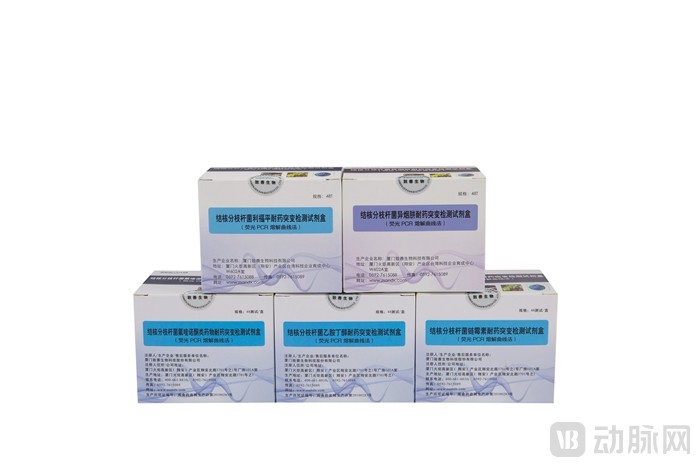
It was also during the process of commercializing this technology that Professor Li Qingge founded Zeesan Biotech. After receiving approval, Zeesan Biotech’s kit for detecting drug-resistant tuberculosis mutations gained widespread market recognition, achieving a leading market share in its domestic niche segment and covering more than 70% of prefecture-level and above designated tuberculosis hospitals in China. The company has also begun to enter markets in Europe, the United States, and Africa.
Currently, Zeesan Biotech has successfully commercialized multiple molecular diagnostic products based on its multi-color probe melting curve analysis technology platform.
Leveraging the advantages of multicolor probe melting curve analysis technology, Zeesan Biotech has also developed multiple test kits, including series for genetic diseases, human papillomavirus (HPV) genotyping, and leukemia.
Notably, Zeesan Biotech offers HPV genotyping assays. Cervical cancer is one of the most common malignant tumors threatening women’s health and is caused by persistent infection with high-risk HPV types. Cervical cancer screening requires determining whether a patient is infected with high-risk HPV types and whether the infection is persistent.Zeesan Biotech pioneered the first single-tube assay for full genotyping of 14 high-risk HPV types, enabling rapid and precise detection. Currently, Zeesan Biotech is also developing HPv full-genotyping products that cover additional genotypes.
Professor Li Qingge stated, “Since its establishment, Zeesan has remained committed to deepening its technological expertise and addressing clinical needs. In the future, Zeesan Biotech will further leverage its technological advantages to expand its molecular diagnostics portfolio for complex diseases, including respiratory infections, gastrointestinal disorders, sepsis, and encephalitis.”
In addition to multi-target detection, another major development direction for PCR technology is the research and development of fully automated, integrated detection instruments. Traditional PCR laboratories have largely relied on manual operations, whereas integrated PCR systems enable more efficient molecular diagnostics.
Amid the trend toward PCR automation, Xiamen Zeesan Biotech Co., Ltd. has also made strategic moves. Its fully automated molecular diagnostic all-in-one system, Sanity 2.0, is poised to obtain a Class III medical device registration certificate through the National Medical Products Administration’s priority review pathway.
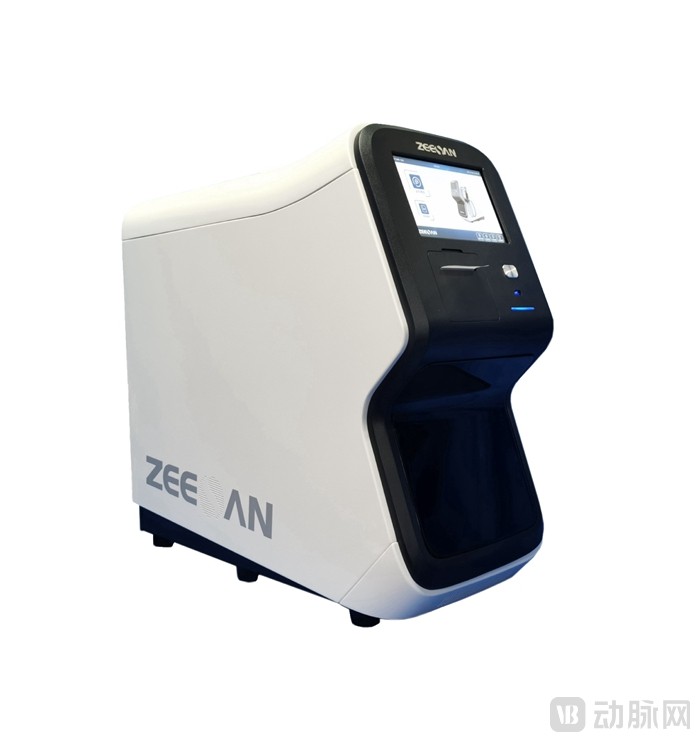
Professor Li Qingge stated, “Automated PCR systems should be designed according to clinical application scenarios, as different settings impose varying requirements for automation. Large central laboratories, with their high specimen volumes, are better suited for batch-processing workstations. Compact all-in-one instruments are more appropriate for settings with limited laboratory conditions and fewer patients; however, it is an oversimplification to assume that all-in-one devices have fewer testing parameters or simpler functionalities.”
As a leading molecular diagnostics enterprise in China, Zeesan Biotech has always adhered to the close integration of industrialization and scientific research, transforming the latest molecular diagnostic technologies into clinical products to serve infectious disease prevention and control as well as precision diagnosis of major diseases. In the future, Zeesan Biotech will continue to accelerate the industrialization of cutting-edge technologies and comprehensively promote the development of precision medicine.
Kai Wu, Healthcare Partner at Sinovation Ventures, stated that Zeesan Biotech currently possesses the most comprehensive global product portfolio for tuberculosis diagnosis and is one of the few Chinese companies in the field of molecular diagnostics capable of directly competing with international IVD giants. Under the leadership of Professor Qingge Li, a renowned scientist worldwide, Zeesan Biotech has continuously developed a series of innovative molecular testing products, forming a product matrix across various fields including tuberculosis, oncology, and genetic disorders. The COVID-19 pandemic enabled Zeesan to expand into the global market, while the launch of its fully automated PCR instruments has significantly enhanced its competitiveness. Sinovation Ventures believes that Zeesan Biotech will rapidly grow into a leading global molecular diagnostics company.
In addition, Wu Kai stated that Sinovation Ventures has made significant investments in the rapidly growing field of molecular diagnostics. Beyond Xiamen Zeesan Biotech, the firm has also invested in highly promising companies such as Aikenuo, YuGuo Biology, and Anzhiyin, and continues to accelerate its strategic layout in this sector.